Dry ice vs PCM gel packs is the single most important decision when you ship temperature-sensitive goods. Choose wrong and you risk product loss, compliance issues, and unhappy customers. Choose right and you reduce costs, minimize claims, and ship with confidence. This article synthesizes and improves your previous drafts to deliver a 2025-ready guide.
Temperature & physics: how dry ice vs PCM gel packs truly differ in performance and set-points
Safety & regulations: what handlers must do, and when hazmat rules apply
Best-fit scenarios: food, pharma, and e-grocery lane choices that actually work
Pack-out design: insulation first, coolant second for longer hold time
2025 trends: reusables, VIP insulation, and validation habits that win
How do temperature and physics differ?
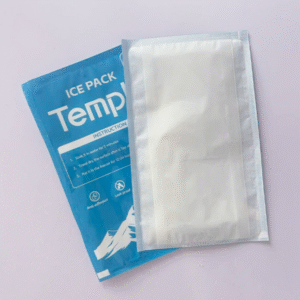
Short answer: Dry ice vs PCM gel packs diverge on temperature and phase behavior. Dry ice sits near −78.5 °C and sublimates to gas, delivering ultra-low cooling. PCM gel packs are engineered to freeze/melt at target set-points (for example −21 °C, +5 °C, or +20 °C), giving stable temperature without gas.
Why you should care: Ultra-low is great for deep-frozen goods, but it can over-cool chilled payloads. PCMs hold a narrow band, helping you avoid cold shock and excursions. In 2025 operations, that stability prevents rework and cuts claims—especially in pharma and meal-kit delivery.
How do set-point PCMs avoid “over-cooling”?
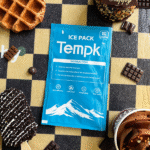
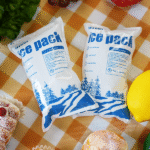
During the phase change, PCMs absorb heat at a nearly constant temperature. A +5 °C PCM buffers a 2–8 °C payload near the middle of the range, while a −21 °C PCM protects frozen foods without pushing them toward −78 °C. The result is predictable thermal behavior with safer handling and easier SOPs—no CO₂ gas and no frostbite risk for the end user.
| Comparison | Dry ice | PCM gel packs | Practical meaning |
|---|---|---|---|
| Working temperature | ~−78.5 °C | Custom set-point (−21 °C, +5 °C, +20 °C) | Match coolant to product label |
| Phase behavior | Sublimates → gas | Melts/freezes; no gas | Venting vs. simple refreeze |
| Hazmat status | Regulated UN 1845 | Non-hazmat | Labels/training vs. easy handling |
| Reuse | Single use | Reusable | Lower cost per cycle |
| User safety | PPE required | Safe to touch | Fewer incidents |
Practical tips
Vaccine lanes (2–8 °C): Use +5 °C PCM packs, not 0 °C ice, to avoid cold shock.
Frozen foods (−30 °C to −10 °C): Use −21 °C PCM packs for short/medium routes; dry ice for ultra-low or long haul.
Consumer deliveries: Avoid hazmat steps at the doorstep—prefer PCM unless ≤−40 °C is mandatory.
Real case: A seafood shipper replaced mixed gel + dry ice with −21 °C PCMs and better insulation for 24–36 h regional lanes. Complaint rates fell, hazmat steps disappeared, and repack time dropped by one-third while maintaining temperature integrity.
When should you choose each method?
Direct answer: Use dry ice for ≤−40 °C or CO₂-beneficial shipments. Use PCM gel packs for −21 °C frozen, +5 °C refrigerated, or +18/+22 °C controlled room temperature (CRT), and when you want simpler handling without hazmat paperwork.
How to decide:
Map product limits. If ≤−40 °C, use dry ice.
Check restrictions. If hazmat blocks your route, choose PCM.
Plan for reuse. PCM programs cut recurring costs.
Pack-out design: insulation before coolant
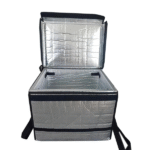
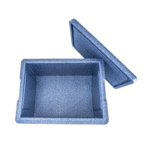
Reducing heat gain matters more than adding coolant. VIP (vacuum insulated panels) outperform thick foam, enabling smaller boxes and longer hold times. Position coolant where heat enters (top/sides) and minimize headspace.
| Pack-out factor | What to do | Why | Impact |
|---|---|---|---|
| Box sizing | Right-size space | Less air = longer hold | Lower freight |
| Insulation | Add VIP | Reduce heat gain | Extend duration |
| Coolant placement | Top/sides | Match heat path | Stable temps |
| Conditioning | Follow SOP | Prevent excursions | Consistency |
Mini “How-To”:
Pre-stabilize payload.
Condition PCM or weigh dry ice.
Load with minimal headspace.
Helpful decision tools
Check the details before you choose packaging
These quick tools can help you compare route risk, sizing needs, coolant choices, and packaging details before you request a quote.
01Route riskRoute Risk Checker
Review lane conditions before selecting packaging for real operating requirements.
Check route risk02Sizing supportBox Liner & Pallet Cover Sizing
Check box liner and pallet cover sizing logic for insulated packaging projects.
Estimate sizing03Ice pack estimateIce Pack Calculator
Estimate gel ice pack quantity for chilled shipments and practical route planning.
Estimate ice packsVerify with data loggers.
Shipping safety and compliance
Dry ice: Needs vented packaging, labeling, and trained handling. Never make a dry-ice package airtight. Mark “Dry Ice/Carbon Dioxide, Solid,” with UN 1845 and net mass (kg).
PCM packs: Usually non-hazmat—just follow supplier SDS and conditioning SOP.
Safety essentials:
Use insulated gloves and ventilation for dry ice.
Confirm carrier CO₂ limits.
For consumer boxes, use only non-hazmat PCMs.
2025 cold chain trends
Sustainability & innovation: Reusable PCMs and VIP insulation are standardizing in global shipping. Shippers now optimize −21 °C and +5 °C programs to eliminate hazmat steps, reduce waste, and validate performance with data loggers.
Key developments
Hybrid cooling: Combining PCMs with small dry-ice loads extends duration.
New PCM chemistry: Higher latent heat, tighter set-points, longer hold times.
Validation culture: Summer/winter lane testing as standard practice.
Market insight: E-grocery, biologics, and specialty foods drive rising demand for −21 °C and +5 °C PCMs. Reusable packaging and closed-loop programs deliver cost and ESG gains, while dry ice remains critical for ≤−40 °C use.
FAQs
Q1: Is a PCM gel pack the same as dry ice?
No. A PCM gel pack is a reusable phase-change coolant at a specific temperature; dry ice is solid CO₂ at −78.5 °C.
Q2: When should I choose −21 °C PCMs instead of dry ice?
For frozen goods not needing ≤−40 °C, choose −21 °C PCMs for safe, non-hazmat shipping.
Q3: Can I fly with dry ice?
Yes—within airline and courier limits with venting and labeling. PCMs have no such restriction.
Q4: What causes most PCM shipment issues?
Improper conditioning and excess air space. Follow SOPs strictly.
Q5: Are PCMs safe for end customers?
Yes. They are sealed, non-toxic, and reusable.
Summary & recommendations
Key points: Dry ice vs PCM gel packs differ in temperature, safety, and rules. Dry ice covers ≤−40 °C lanes but adds hazmat overhead. PCMs handle −21 °C to +22 °C safely and efficiently. Optimize insulation before increasing coolant.
Next steps:
Map SKU temperature requirements.
Choose the lowest-hazard coolant that meets them.
Validate lanes by season.
CTA: Consult a Tempk cold-chain expert to optimize your set-points and packaging.
About Tempk
We create practical, validated cold-chain packaging—reusable PCM gel packs (−21 °C, +5 °C, +18/+22 °C), VIP shippers, and tested SOPs for frozen, refrigerated, and CRT lanes. We focus on compliance, performance, and cost efficiency.