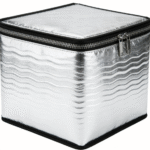
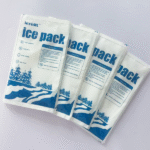
Before preparing a “dry ice pack” for shipping, identify what the component actually is. Solid carbon dioxide, a sealed gel or phase-change-material (PCM) pack, and a water-activated sheet are not interchangeable. They have different hazards, conditioning steps, inspection points and release criteria. The safest instruction is therefore not “freeze every pack”; it is “verify the component, use its approved preparation method and release only a conforming unit.”
This page covers coolant preparation before packout. For complete frozen-system design, use the dry ice packaging design and validation guide. For the assembly sequence after components are ready, follow the cold chain packout instructions guide. Carrier acceptance, labels and booking remain separate dispatch decisions.
1. Resolve the “dry ice pack” name before work begins
The phrase “dry ice pack” is used loosely in product listings and work instructions. It may mean actual solid carbon dioxide, a reusable pack marketed as a dry-ice alternative, a conventional gel pack, a PCM component or a flat sheet that must be hydrated before conditioning. A label alone is not enough to establish identity.
Match the physical item to a controlled record: product code, supplier and specification revision, lot or batch where used, fill material, dimensions, weight range, approved conditioning instruction and intended packaging configuration. If that record is missing or conflicts with the item, hold the component instead of guessing.
| Component | What it is | Preparation question | Do not assume |
|---|---|---|---|
| Solid dry ice | Solid carbon dioxide, transported as Dry ice or Carbon dioxide, solid, UN1845 | Is the actual mass known, can gas escape from the finished package and is the route accepted? | That a sealed container is safer, or that every carrier and service accepts it |
| Sealed gel pack | A flexible or rigid pack containing a formulated gel or liquid | What condition, duration, loading pattern and inspection criteria are approved? | That a harder-frozen pack is always better for a freeze-sensitive payload |
| PCM pack | A component designed around a defined phase-change range | What conditioning method establishes the intended phase state? | That freezer temperature alone proves the required state throughout the pack |
| Hydratable sheet | An initially flat cellular sheet that absorbs water before use | How is it hydrated, drained, conditioned and checked for even fill? | That a dry sheet can be used as supplied or that every cell hydrates equally |
2. Build one controlled preparation route for each component
A preparation instruction should name the exact item, equipment, load pattern, settings, minimum process time or other validated endpoint, allowable hold time, inspection method and person authorized to release it. Copying a time and temperature from a different pack is not a controlled method, even when the items look similar.
For sealed gel and PCM packs, define how units are arranged in the freezer or conditioning chamber. Dense stacks, blocked airflow and mixed loads can produce different internal states while surface readings look similar. Where readiness depends on core condition, use the approved verification method rather than touch, appearance or a single unrepresentative surface measurement.
For hydratable sheets, the instruction needs a defined water source where relevant, immersion or charging method, agitation if required, drain step, acceptable mass or dimensional change, and a way to detect dry or damaged cells. Hydration and thermal conditioning are separate steps; completing one does not prove the other.
Solid dry ice does not follow a freezer-conditioning cycle. Control procurement or production identity, protected handling, loss before use and the actual quantity loaded. Its sublimation rate depends on geometry, insulation, ambient exposure and handling, so a universal “prepare X hours in advance” rule would be misleading.
3. Control equipment, loads and waiting time
Equipment status is part of component status. Before starting a batch, confirm the correct chamber or freezer, usable capacity, setpoint, current condition, alarm status and any required calibration or mapping. Record when the load entered and which instruction version applied. Mixing qualified and unqualified product, different pack types or different start conditions in one undocumented load creates an identification problem even if the equipment remains cold.
| Control point | What to define | Why it matters |
|---|---|---|
| Load pattern | Maximum quantity, spacing, rack or shelf location and whether packs may be stacked | Airflow and thermal contact affect conditioning consistency |
| Start condition | Permitted incoming state and whether mixed-start loads are allowed | The same elapsed time can produce different results from different starting points |
| Endpoint | Approved time, temperature, phase-state or other measurable release criterion | An elapsed-time rule is useful only when its validated conditions are reproduced |
| Hold after release | Maximum waiting time and environment before packout | Released components can drift while staged at the line |
| Exception | Response to alarm, door opening, power loss, late removal or incomplete record | Operators need a hold rule before an event occurs |
4. Release every component at the packing line
“It came from the freezer” is not a release decision. At the line, verify that the component is the approved item, the preparation record is complete and the physical unit remains acceptable. The check should be quick enough for routine use but specific enough to stop a wrong, leaking or out-of-window component.
| Release check | Accept only when | Hold when |
|---|---|---|
| Identity | Product code, type and revision match the packout instruction | The unit is unlabelled, mixed, substituted or cannot be traced to the prepared batch |
| Preparation status | Required cycle or endpoint is complete and within the approved hold window | Time, equipment record, phase state or other required evidence is missing |
| Integrity | Seal, film, cells, ports and surfaces meet the item-specific criteria | There is leakage, swelling, puncture, delamination, contamination or abnormal deformation |
| Quantity | Count or actual mass matches the approved configuration | Operators plan to compensate for a shortage by changing another component |
| Use condition | The component has not exceeded its staging limit or experienced an unresolved alarm | Its status changed after release or the waiting history is unknown |
Where reuse is permitted, previous use does not replace inspection. Define allowed cycles, cleaning, drying, storage, traceability and rejection criteria. The separate dry ice storage and reusable-pack guide explains the storage boundary for solid CO₂ and reusable components.
5. Keep the solid-CO₂ transport boundary separate
Only an item that actually contains solid carbon dioxide belongs in the solid dry ice transport path. Under the current U.S. federal provision, 49 CFR 173.217 addresses carbon dioxide, solid, including packaging that permits gas release and applicable marking conditions. A reusable gel, PCM or hydratable pack is not UN1845 merely because a seller calls it a dry ice pack.
Helpful decision tools
Check the details before you choose packaging
These quick tools can help you compare route risk, sizing needs, coolant choices, and packaging details before you request a quote.
Dry Ice Calculator
Estimate dry ice needs for frozen or ultra-cold shipments before packing.
Estimate dry iceInsulation Material Drop Resistance
Review drop resistance and handling factors before choosing insulation materials.
Check resistanceInsulation Material Reference
Compare insulation material choices for different cold chain packaging needs.
Compare materialsGas release is a finished-package requirement, not a licence to puncture or modify a coolant component. FedEx states that dry ice releases carbon dioxide and requires packaging that allows pressure to escape; its current dry ice shipping instructions also direct businesses to trained preparation and route acceptance. For the complete FedEx package and acceptance workflow, use the FedEx dry ice packaging checklist.
USPS Publication 52, August 2026, likewise defines dry ice as solid carbon dioxide, requires venting and separates domestic air from surface conditions. Check the current USPS Publication 52 and the site’s USPS dry ice dispatch checklist before mailing. These USPS conditions do not automatically transfer to another carrier or country.
6. Use an eight-step preparation and release workflow
- Read the approved packout. Confirm payload, route, packaging version, exact coolant identity and required quantity.
- Match the component. Check product code, type, size, lot or batch where required, and supplier or internal specification.
- Select the correct preparation instruction. Do not share one cycle across solid dry ice, gel, PCM and hydratable products.
- Confirm equipment readiness. Verify the correct chamber, load pattern, status, capacity and required records.
- Run and document the process. Record start, finish, operator, equipment, load and any event that could affect the result.
- Verify the endpoint. Apply the approved time, condition, phase-state, mass or other release criterion.
- Inspect and stage. Check integrity, identify the released batch and control the time and environment before use.
- Release to packout. Confirm identity, status and quantity at the line; record and segregate any exception.
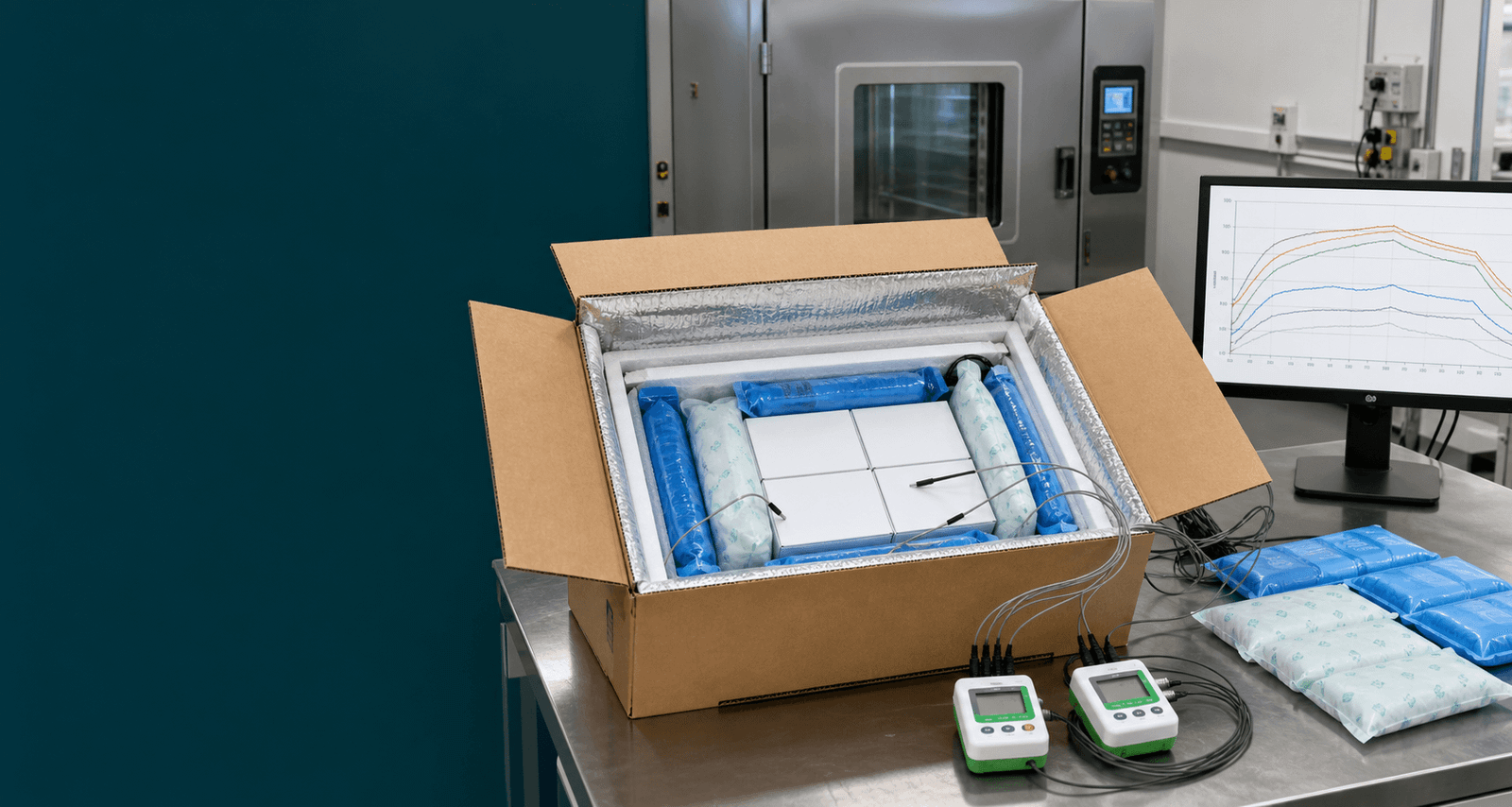
7. Control substitutions, mixed lots and deviations
A same-size pack is not necessarily a thermal substitute. Fill chemistry, phase behavior, mass, film, surface area and conditioning response can change heat flow and payload risk. Treat a supplier, formulation, dimensions, fill mass, cell pattern, conditioning method or loading-pattern change as a review trigger. The packaging owner should decide whether document revision, comparison testing or requalification is required.
Do not “make up” for an unavailable component by adding extra packs, freezing longer, changing their position or switching to solid dry ice without authorization. Each workaround can change the thermal profile, freeze risk, pressure-release needs, payload space and carrier requirements.
- Stop when the component identity cannot be verified.
- Hold mixed or unlabelled conditioned batches.
- Quarantine leaking, swollen, punctured, contaminated or unevenly hydrated units.
- Escalate equipment alarms, power interruptions and missing cycle records.
- Reject an improvised quantity or loading-pattern change.
- Reassess the configuration when the payload, route, duration or packaging revision changes.
For early configuration screening, use the Packaging Selector. If solid CO₂ is already approved for the system, the Dry Ice Calculator can organize estimate inputs; it does not establish an approved quantity or replace testing. Use the Compliance Checklist Generator to structure the transport review for the selected route.
8. Record enough evidence to reproduce the result
The preparation record should let another trained person determine what was prepared, under which instruction, in which equipment, by whom, when, with what result and what happened to exceptions. Avoid free-text-only logs that hide missing fields.
| Record group | Minimum practical content | Decision it supports |
|---|---|---|
| Identity | Component code, type, supplier or internal specification, lot or batch where used, and quantity | Was the correct material prepared? |
| Process | Instruction revision, equipment, load pattern, start and finish, operator and relevant settings | Was the approved route followed? |
| Endpoint | Required measurement or status, actual result and release time | Was the component ready? |
| Staging and use | Released-batch identity, hold limit, line issue time and packout reference | Was the released state preserved until use? |
| Exception | Event, segregation, evidence, reviewer, decision and corrective action | Was a deviation contained and resolved? |
Evidence at component level complements—not replaces—complete package testing. Component release says the coolant was prepared as instructed. Packaging qualification says the assembled system can protect the defined payload under defined conditions. Carrier acceptance says that the shipment can enter the selected service. Keep those decisions distinct.
Frequently asked questions
Is a reusable “dry ice pack” the same as dry ice?
Not necessarily. Dry ice is solid carbon dioxide. Many reusable products use gel, PCM or a hydratable structure and are marketed with “dry ice” language because of their intended cooling role. Check the actual fill material and controlled specification before choosing a preparation or transport path.
How long should gel or PCM packs stay in a freezer?
Use the time, load pattern, equipment conditions and endpoint established for that exact component and packaging system. There is no reliable universal duration. Pack thickness, formulation, starting state, stack density, airflow and equipment performance can all change the result.
Can I prepare coolant packs first and decide the shipping quantity later?
You may manage prepared inventory under an approved hold rule, but the quantity and layout used in a shipment should come from the approved packaging configuration. Do not let extra prepared stock drive an improvised packout.
Does passing the component check mean the shipment is compliant?
No. Component readiness is one gate. The complete package still needs the approved payload and layout, any required qualification, correct solid-CO₂ gas-release design, and the current carrier, route, marking, documentation and acceptance checks that apply to the shipment.