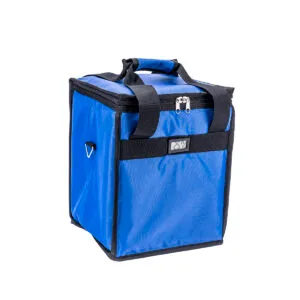
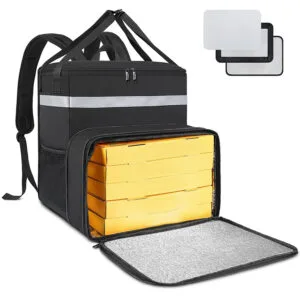
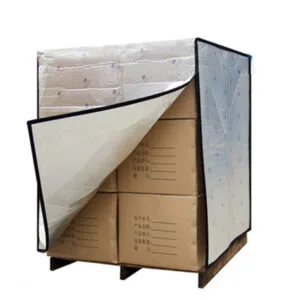
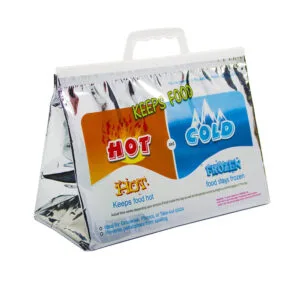
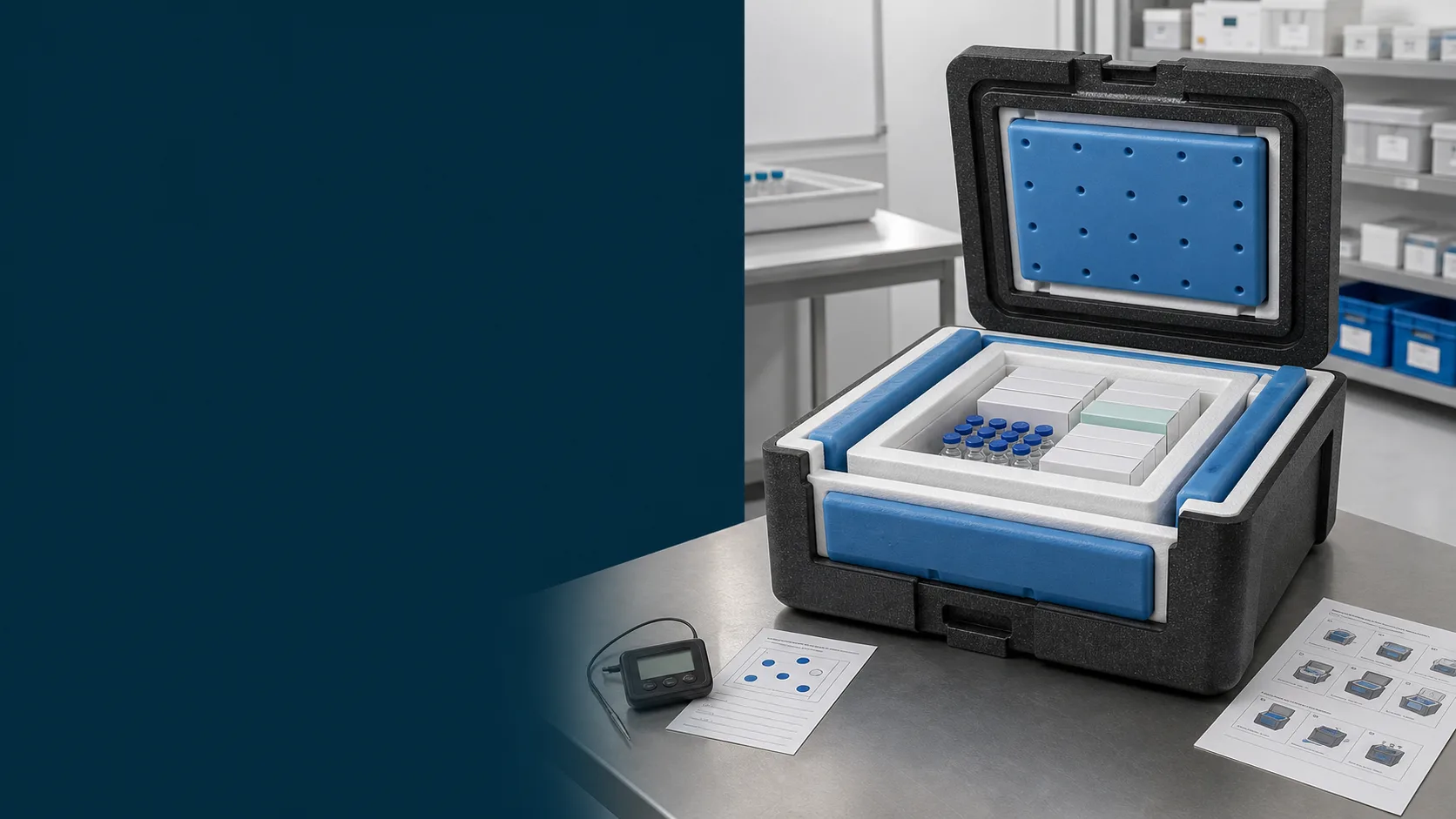
A pharmaceutical cold chain is a controlled system for keeping a medicine within its approved storage and transport conditions from release through delivery. It starts with the product label or approved specification, not with a universal temperature range. The system must connect route knowledge, qualified packaging or equipment, trained operations, temperature monitoring and a documented excursion decision. A cold box, gel pack or data logger can support that system, but none of those components proves compliance on its own.
Why the cold chain matters
Drug expiration dates and labeled storage conditions are supported by stability data. FDA explains that an expiration date reflects the period during which a product is known to retain strength, quality and purity when stored according to its labeled conditions. If storage or transport departs from those conditions, the organization needs evidence and an authorized quality decision rather than an assumption that the product remains suitable.
This is why pharmaceutical cold-chain management is broader than refrigeration. It is a chain of controls that prevents avoidable exposure, records what happened and gives the quality unit enough information to release, hold or investigate a shipment.
Five control gates from label to delivery
| Control gate | Evidence required | Release question |
|---|---|---|
| 1. Product requirement | Approved storage condition, excursion policy, light/humidity limits where relevant | Do we know the exact acceptance criteria for this product and market? |
| 2. Route definition | Maximum duration, seasonal ambient profile, hubs, customs, handoffs and contingency time | Does the design cover the real lane rather than an ideal schedule? |
| 3. System qualification | Packout specification, conditioning method, representative test profile, sensor locations and acceptance results | Does the assembled system have evidence for the defined challenge? |
| 4. Operational control | Work instruction, training, component identity, staging limits, logger setup and change control | Can operators reproduce the qualified configuration? |
| 5. Receipt and excursion review | Shipment condition, temperature record, chain of custody and quality disposition process | Can the receiver make a documented decision when data fall outside limits? |
Gate 1: translate the product label into an operating requirement
The first document should identify the medicinal product, presentation, destination market, labeled storage condition and any approved excursion information. Avoid turning familiar ranges such as 2°C to 8°C into a default for every medicine. Some products require frozen or controlled room-temperature handling, and requirements can differ by market or product state.
FDA’s expiration-date guidance links labeled storage conditions to stability. For multinational distribution, the responsible quality team must also identify the applicable local rules and marketing authorization conditions.
Gate 2: define the lane and its failure points
Map every period when the product is outside controlled storage: packing, staging, pickup, line haul, airports or hubs, customs, last-mile delivery and receiving. Record the longest credible duration, not only the planned transit time. Consider seasonal extremes, weekend holds, missed connections, power loss and delayed receipt.
The EU Good Distribution Practice guidelines say that container and packaging selection should consider the product’s storage and transport requirements, quantity, anticipated external temperature extremes, maximum transportation time including transit storage and the validation status of the packaging or container. This is a useful control model even where another jurisdiction’s rules apply.
Gate 3: qualify the complete system
Qualification should evaluate the assembled shipper or active system under a justified challenge. The evidence needs to identify the insulation, coolant or phase-change components, payload arrangement, conditioning procedure, closure, ambient profile, test duration, sensor locations and acceptance criteria. A component data sheet cannot demonstrate the performance of the complete packout.
Helpful decision tools
Check the details before you choose packaging
These quick tools can help you compare route risk, sizing needs, coolant choices, and packaging details before you request a quote.
Insulation Material Reference
Compare insulation material choices for different cold chain packaging needs.
Compare materialsCoolant & PCM Reference
Compare coolant and PCM options when a route needs added temperature support.
Compare optionsIce Pack Calculator
Estimate gel ice pack quantity for chilled shipments and practical route planning.
Estimate ice packsFor passive systems, confirm both warm and cold risks. Coolant placed too close to the payload can create cold spots; insufficient or incorrectly conditioned coolant can reduce duration. Payload mass and geometry also affect performance. A change in one component may require review because it can alter the thermal balance.
The WHO model guidance for time- and temperature-sensitive pharmaceutical products describes principal storage and distribution controls while noting that local legislation and regulations take precedence.
Gate 4: make the tested design reproducible
A qualified design is only useful when operations can repeat it. The work instruction should specify component part numbers, coolant conditioning, loading sequence, barrier placement, payload limits, logger activation and position, sealing, staging and maximum time before carrier handoff. Training records and change control should be part of the same system.
Monitoring provides evidence of conditions, but a logger does not protect the product. Define accuracy, calibration status, sampling interval, start and stop rules, download method, alarm handling and data retention. WHO’s temperature-mapping resources also emphasize that mapping and monitoring are integral to appropriate pharmaceutical storage conditions.
Gate 5: plan the receiving and excursion decision before shipping
The receiver needs instructions for inspecting the shipper, checking the logger, identifying damage or delay and placing affected product on hold. An excursion should trigger a documented review against approved stability information and quality procedures. Do not use a generic pass/fail rule copied from another product, and do not treat a normal-looking package as proof that the medicine remained within specification.
Record the event timeline, actual temperature data, payload identity, route deviations and packaging condition. The marketing authorization holder, manufacturer or authorized quality function may need to assess the product. Packaging suppliers can explain system evidence but should not make the medicinal-product disposition decision.
How this page fits Tempk’s pharmaceutical content
This page defines the control framework. For packaging architecture and evidence questions, use the pharmaceutical cold-chain packaging guide. For application and product-family navigation, see pharmaceutical cold-chain packaging solutions. If the approved requirement is specifically 2°C to 8°C, review the pharmaceutical 2–8°C packout page. These pages support different decisions and do not replace product-specific qualification or quality approval.
Questions to ask before approving a lane
- Is the current product specification and destination market defined?
- Does the route profile include realistic delays and handoffs?
- Was the complete packout tested with representative payload and sensor locations?
- Can operators reproduce conditioning, loading and staging steps?
- Are logger data, receiving checks and excursion ownership defined?
- Will component, payload, route or carrier changes trigger review?
Start with evidence, then select components
A reliable pharmaceutical cold chain is built by connecting five gates: product requirement, route, qualification, operations and receipt. When requesting a packaging review, provide the labeled condition, payload, lane profile, duration, monitoring plan and available test evidence. That information allows the packaging discussion to focus on a reproducible system instead of an unsupported hold-time claim.