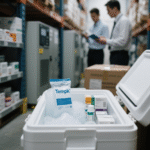
Choose a cold chain monitoring device for the temperature question and decision it must support. A threshold indicator, a continuous logger and a connected alert system provide different information. Device range, accuracy, placement and record access matter more than a “best device” ranking or an AI label.
Define the measurement need
Record the product conditions, expected exposure and whether the process needs a continuous history, an alert or another defined observation. Identify what is being measured:product-relevant location, container air or another justified point.
A surface measurement or vehicle display should not be substituted for product evidence without justification. Define locations and timing through the actual assessment rather than convenience alone.
Compare the device functions
| Function | Selection question |
|---|---|
| Range and accuracy | Is performance suitable over the relevant conditions? |
| Calibration | What valid evidence and review procedure support the readings? |
| Sampling and memory | Will the record cover the intended exposure? |
| Probe or sensor | Is its type and position suitable for the assessment? |
| Connectivity | What happens when transmission is unavailable? |
| Review | Can the responsible person access and interpret the data? |
A connected system may continue logging locally, stop recording or behave differently during a signal gap. Confirm the actual design rather than assuming every device provides uninterrupted usable evidence.
Keep the monitoring method sector-specific
CDC: Vaccine Storage and Handling Toolkit, July2026 gives US provider vaccine-monitoring guidance, including suitable devices and calibration evidence. These vaccine requirements should not be presented as a single universal specification for every food or industrial shipment.
Use the product and process requirements to set the actual method. Do not assign one calibration interval, probe type or alarm threshold across all sectors without the applicable basis.
Helpful decision tools
Check the details before you choose packaging
These quick tools can help you compare route risk, sizing needs, coolant choices, and packaging details before you request a quote.
Ice Pack Calculator
Estimate gel ice pack quantity for chilled shipments and practical route planning.
Estimate ice packsCoolant & PCM Reference
Compare coolant and PCM options when a route needs added temperature support.
Compare optionsRoute Risk Checker
Review lane conditions before selecting packaging for real operating requirements.
Check route riskPlan the response as well as the device
- Link device identity to the load and records.
- Confirm setup and relevant clock information.
- Define who reviews records and alerts.
- Provide cover for unattended periods.
- Retain missing data and departures for investigation.
- Use the responsible product-disposition process.
An alarm is information requiring response; it does not repair exposure. A predictive estimate is not a substitute for a measured trace unless the actual assessment justifies its role.
Check damage, serviceability and the provider’s instructions before further use. Retain data needed for the shipment instead of erasing a record to prepare the device for another trip.
Frequently asked questions
Is the most connected device always the best choice?
No. Match the actual measurement, record and response needs.
Does a threshold indicator show the full temperature trace?
Not necessarily. Understand its stated function and limitations.
Can an alert system automatically certify the product?
No. Use the relevant evidence and authorized assessment.
Connect devices with package records
Use the parcel identity guide for device associations and the carrier monitoring guide for contracted alert and intervention questions.