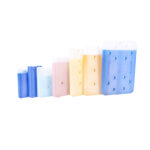
If you’re evaluating a gel cold therapy pack North America manufacturer, you’re really choosing the customer experience you’ll be judged on. You need packs that stay flexible when frozen, feel comfortable on skin, and arrive leak-free in every carton. You also need a supplier that can repeat the same result at scale, not just ship a “pretty sample.”
This article will answer for you:
How a gel cold therapy pack North America manufacturer affects comfort, safety, and repeat orders
Which therapy pack formats sell best across clinics, retail, and e-commerce
A 15-minute shortlist checklist to identify real manufacturing capability
A practical test plan: leak test, freezer bend test, and comfort curve test
Labeling and claims basics that reduce misuse and complaints
2026 trends that matter: comfort-first design, better QC visibility, and longer reuse life
What does a gel cold therapy pack North America manufacturer actually control?
A gel cold therapy pack North America manufacturer controls what users feel in the first 10 seconds: flexibility, cold intensity, and surface comfort. If any one fails, customers stop using the pack and blame your brand. That is why comfort should be treated like a measurable spec, not a vague preference.
Cold therapy should feel like a controlled “cool blanket,” not a stiff brick. When a pack molds to the body, it makes better contact and feels more effective. When it stays rigid, it creates pressure points and complaint tickets.
How do you define “flexible when frozen” in plain terms?
Flexible when frozen means the pack wraps around a joint without sharp creases or hard edges. You can measure it with a simple bend test and a comfort check. Your supplier should be able to explain how gel formulation and film structure support that outcome.
Here is a simple “comfort spec” table you can include in your product brief:
| Comfort factor | What you can measure | What the user experiences | What it means for you |
|---|---|---|---|
| Flexibility at freezer temp | Bend test at −18°C | Wraps a joint easily | Fewer returns and better reviews |
| Skin feel | Film + cover feel | Not sticky, not harsh | Higher daily usage |
| Cold intensity control | Thickness + gel type | Cold but tolerable | Fewer “too cold” complaints |
Practical tips and suggestions
Knees and elbows: choose designs that wrap and stay in place with movement.
Face and dental: choose thin packs with soft edges for comfort.
Post-surgery: choose gentler intensity with longer useful duration.
Practical pattern: Buyers usually get more complaints about “too hard” and “leaks” than “not cold enough.”
Which gel cold therapy pack manufacturer formats sell best in North America?
The best gel cold therapy pack manufacturer formats are the ones that match real routines: clinic protocols, home pain relief, sports first aid, and facial use. A strong lineup is not “more SKUs.” It is fewer SKUs that cover the highest-frequency scenarios.
Most North America demand clusters into a few predictable use cases: physical therapy, orthopedic recovery, sports and fitness, dental and aesthetics, and general home care.
A simple 6-SKU lineup that avoids cannibalization
You can build a strong line with 5–8 SKUs if you choose wisely. Start with one universal rectangle, then add one contoured hero, then add one small facial pack. Add a wrap insert system if you sell into therapy or sports channels.
| SKU type | Best for | Typical buyer | Why it wins |
|---|---|---|---|
| Universal rectangle | General home use | Retail + e-commerce | High volume, easy replenishment |
| Knee/shoulder contour | Joint recovery | Clinics + rehab | Better contact, fewer slips |
| Back/neck insert | Daily pain relief | Retail + PT | Strong routine story |
| Small facial pack | Dental and aesthetics | Medspa + dental | High repeat ordering |
| Wrap system insert | Orthopedic + sports | PT + teams | Stays in place, feels premium |
Practical tips and suggestions
Start with 3–4 SKUs that cover 80% of demand. Add specialty SKUs only when you have data.
Avoid “mini” and “jumbo” versions of the same shape unless you have channel-specific demand.
Wrap systems with removable inserts let you upsell refills and reduce per-use cost.
How do you shortlist a gel cold therapy pack North America manufacturer in 15 minutes?
You can shortlist a gel cold therapy pack North America manufacturer with a 15-minute checklist. Focus on three areas: production basics, quality control, and scaling support. Suppliers who cannot answer clearly on these points will likely cause problems later.
Production basics checklist
Ask about gel formulation, film type, sealing method, and batch traceability. These four items reveal whether the manufacturer controls the process or just assembles parts.
| Question | What you want to hear | Red flag |
|---|---|---|
| Gel formulation | In-house mixing, documented ratios | Outsourced, no spec sheet |
| Film type | TPU or PVC with clear trade-offs | Vague or “whatever you want” |
| Sealing method | RF or heat seal with process control | No mention of seal testing |
| Batch traceability | Lot codes, production records | No traceability system |
Quality control checklist
Ask about incoming inspection, in-process checks, and final QC. The goal is to see if they catch problems before you do.
Helpful decision tools
Check the details before you choose packaging
These quick tools can help you compare route risk, sizing needs, coolant choices, and packaging details before you request a quote.
Packaging Selector
Compare insulated packaging options by product, route, and temperature need.
Find packagingBox Liner & Pallet Cover Sizing
Check box liner and pallet cover sizing logic for insulated packaging projects.
Estimate sizingInsulation Material Reference
Compare insulation material choices for different cold chain packaging needs.
Compare materials| QC stage | What to ask | What it tells you |
|---|---|---|
| Incoming | How do you verify raw materials? | Prevents batch-level failures |
| In-process | How do you check seals during production? | Catches drift early |
| Final | What is your AQL and defect log? | Shows real defect rates |
Scaling support checklist
Ask about lead times, change control, and communication. These items predict how smoothly you can grow with them.
| Scaling factor | What to ask | What it tells you |
|---|---|---|
| Lead time | What is your typical production lead time? | Affects your inventory planning |
| Change control | How do you handle spec changes? | Prevents silent quality drift |
| Communication | Who is my main contact? | Single point of accountability |
How do you write an RFQ for a gel cold therapy pack North America manufacturer?
A good RFQ for a gel cold therapy pack North America manufacturer includes four sections: product specs, volume and timeline, quality requirements, and nice-to-haves. Keep it to 1–2 pages. Clarity beats length.
RFQ template outline
- Product name and description:
- Dimensions (L × W × thickness):
- Gel type and weight:
- Film material preference:
- Sealing method preference:
- Pilot quantity:
- Expected 90-day volume:
- Lead time expectations:
Must-have vs nice-to-have spec grid
Use “must-have” and “nice-to-have” to prevent scope creep. It also helps the manufacturer price what you truly value.
| Spec type | Must-have examples | Nice-to-have examples | What it changes for you |
|---|---|---|---|
| Reliability | No leaks, stable seams | Extra rugged corners | Lower refund rate |
| Comfort | Flexible after freezing | Softer sleeve feel | Higher daily usage |
| Brand | Consistent print placement | Premium unboxing | Better conversion |
| Scaling | Change control | Faster turnarounds | More predictable inventory |
Practical tips and suggestions
Keep RFQs to 1–2 pages. Clarity beats length.
Define your test method first. It prevents performance disputes later.
Ask for change control. It’s the cheapest insurance you can buy.
How do you validate samples from a gel cold therapy pack North America manufacturer?
You can validate a gel cold therapy pack North America manufacturer with three simple tests: leak, bend, and comfort. You do not need a lab to catch most failures early.
Run these tests on a random unit from a carton, not a handpicked sample.
Test 1: Leak resistance and seal integrity
The goal is simple: no seepage under normal abuse. Freeze overnight, drop it, compress it, and inspect seams.
- Freeze overnight
- Drop from waist height 10 times (flat and edge)
- Press under a heavy book for 1 hour
- Check for seepage, seal separation, and film cracks
Test 2: Flexibility when frozen (bend test)
The goal is joint-level wrapping without sharp creases. Bend around a 2–3 inch cylinder and score wrapping behavior.
Test 3: “Comfort curve” test (user experience)
The goal is cold that feels helpful, not painfully harsh. Use a fabric barrier and apply for 10 minutes to confirm tolerable sensation.
| Test | Pass signal | Fail signal | What it means for you |
|---|---|---|---|
| Leak test | No seepage | Sticky film, wet seams | High return risk |
| Bend test | Wraps smoothly | Stiff, sharp folds | Poor comfort and reviews |
| Comfort test | Cold but tolerable | Painfully cold quickly | Low usage and low trust |
Practical tips and suggestions
Control the setup: same freezer time, same rest time, same cover material.
Test both thin and thick designs: customers react differently to intensity.
Run a mini freeze-thaw cycle: it catches separation and stiffness drift.
Real-world rule: The best sample behaves the same across a full production lot.
TPU vs PVC: what should your gel cold therapy pack North America manufacturer use?
Material choice shapes feel, odor risk, and long-term durability. TPU often feels more premium, while PVC is common and cost-effective. Both can work when the process is controlled.
Here is a buyer-friendly comparison:
| Material | Typical feel | Odor risk | Durability | Cost |
|---|---|---|---|---|
| TPU | Softer, more premium | Lower | Higher | Higher |
| PVC | Firmer, more common | Higher if low-grade | Good if well-made | Lower |
Practical tips and suggestions
If you sell into premium or medical channels, TPU is usually worth the cost.
If you sell into retail or promotional channels, PVC can work if you verify odor and seal quality.
Always ask for a sample sniff test and a freeze-thaw cycle before committing.
What labeling and claims should your gel cold therapy pack North America manufacturer support?
Labeling and claims affect how customers use the pack and how they complain. Clear instructions reduce misuse. Accurate claims reduce legal risk.
Basic labeling checklist
- Product name and intended use
- Freezer and microwave instructions (if applicable)
- Maximum application time
- Barrier recommendation (use with cloth)
- Storage and disposal instructions
- Manufacturer or importer contact
Claims to avoid
Avoid medical claims unless you have regulatory clearance. “Pain relief” is usually acceptable. “Treats arthritis” is not.
What are the 2026 trends for gel cold therapy pack North America manufacturers?
Three trends are shaping the market: comfort-first design, better QC visibility, and longer reuse life.
Comfort-first design
Buyers are prioritizing flexibility and skin feel over raw cold intensity. This means softer films, better gel formulations, and more attention to user experience.
Better QC visibility
Buyers want to see defect logs, batch records, and real-time production updates. Transparency is becoming a competitive advantage.
Longer reuse life
Buyers are asking for packs that last 100+ freeze-thaw cycles without degradation. This reduces per-use cost and supports sustainability claims.