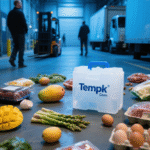
A successful paper insulated box liner bulk order is built on three things: the right route, the right cavity fit, and the right proof. In 2026, paper liners are gaining attention because buyers want a fiber-forward format that stores flat, looks cleaner at unboxing, and fits the wider push toward circular packaging. But a paper liner only becomes a good business decision when it protects temperature-sensitive goods without slowing your line or creating avoidable spoilage. The cold chain packaging market is expanding quickly, paper and paperboard are one of the fastest-growing segments in the U.S. outlook, and regulatory pressure around packaging design is getting sharper as the EU PPWR moves into application from 12 August 2026. (Grand View Research)
What will this guide help you do?
Choose whether a paper insulated box liner bulk order is right for your lane and payload
Understand how fiber-based insulation performs and where moisture changes the answer
Compare suppliers on capacity, validation support, and true commercial value
Build a safer approval process for chilled food, meal kits, and selected healthcare shipments
When is a paper insulated box liner bulk order the right commercial choice?
A paper insulated box liner bulk order is strongest in chilled, moderate-duration lanes where presentation, flat-pack storage, and disposal simplicity matter. That includes meal kits, chilled grocery, dairy, produce, and selected specialty foods. It can also work in some healthcare-adjacent uses if your packaging system is validated and the product risk is appropriate.
The format is attractive because it solves several operational problems at once. Compared with bulkier rigid insulation, paper liners usually store and ship more efficiently. They also help standard cartons feel more engineered and more premium. And because paper-based packaging starts from a stronger fiber-recovery position than many mixed flexible materials, procurement teams often find it easier to defend internally. EPA reports an 80.9% recycling rate for paper and paperboard containers and packaging in its 2018 data series, while AF&PA reported 2024 recycling rates of 60%–64% for paper and 69%–74% for cardboard available for recovery. (US EPA)
That said, the right use case matters. If you are shipping frozen products, long-lane parcels, or highly excursion-sensitive biologics, a paper-only answer may not be enough. In those situations, hybrid structures, PCM support, or higher-performance insulation may be the smarter choice.
Quick decision table
How does paper insulation actually perform?
Paper insulation works by using fiber structure to trap still air and slow heat movement. Commercial cellulose-fiber insulation references commonly place thermal conductivity around 38 to 42 mW/m·K, with broader cellulose ranges around 35 to 45 mW/m·K. That is why paper can perform well enough for many chilled routes. But the category’s weakness is just as important as its strength: moisture. Cellulose references also note that thermal conductivity can rise materially as moisture increases, which means condensation and humid handling conditions can erode performance. (bioresources.cnr.ncsu.edu)
This is the central engineering truth behind every paper insulated box liner bulk order. You are not buying paper in a dry lab. You are buying a liner that will meet gel packs, cold payloads, humid docks, summer vans, and hurried operators. That is why better commercial paper systems increasingly rely on engineered cavities, fiber structure, and barrier support instead of plain bulk paper alone.
Academic work published in 2024 and indexed through 2025 also shows why the category is advancing. Researchers reported paper-based packaging concepts that combine strength, thermal insulation, and water resistance, including a sustainable paper-based material with tensile strength up to 60.93 MPa. That does not guarantee every product on the market is equally good, but it does show that paper-based thermal packaging is becoming more sophisticated rather than standing still. (PMC)
What this means for your order
- Ask how the liner behaves after condensation exposure, not only in dry-condition demos.
- Ask for the finished cavity size after the liner is erected.
- Ask whether the sample reflects production material and production sealing.
- Ask what coolant layout was used in any reported thermal result.
How should you size and validate a paper insulated box liner bulk order?
Sizing and validation are where most costly mistakes begin. Buyers often request a quote using the outer carton only, then discover too late that the installed liner reduces payload space, changes coolant position, and creates empty air gaps. The result is a system that costs more and performs less consistently than expected.
A better process looks like this:
- Define the target temperature range
- Define the maximum dwell time and worst seasonal lane
- Lock the payload dimensions and weight window
- Lock the coolant type and preconditioning method
- Confirm erected liner dimensions, not flat-sheet size
- Run controlled thermal tests
- Confirm pack-out repeatability on the actual line
If your application is food, FDA’s sanitary transportation guidance provides broadly applicable recommendations intended to prevent food safety problems during transport. If your application is pharmaceutical, WHO’s model guidance for time- and temperature-sensitive pharmaceutical products remains relevant, and WHO’s shipping-container supplement states that qualification consists of DQ, OQ, and PQ. For parcel thermal testing, ISTA 7E is designed to evaluate thermal transport packaging exposed to parcel delivery environments. (U.S. Food and Drug Administration)
That gives you a practical approval structure:
- DQ: Is this liner concept right for your use case?
OQ: Does it pass the temperature profile in controlled testing?
- PQ: Does it still work with real operators, real payloads, and real shipping execution?
Validation table
How do you compare suppliers and control total cost?
The cheapest quote is rarely the best paper insulated box liner bulk order. You should compare total delivered value across unit price, freight efficiency, storage footprint, assembly speed, seasonal stability, and failure exposure. A slightly more expensive liner may be cheaper overall if it stores flatter, installs faster, or reduces spoilage and reshipment.
Helpful decision tools
Check the details before you choose packaging
These quick tools can help you compare route risk, sizing needs, coolant choices, and packaging details before you request a quote.
Box Liner & Pallet Cover Sizing
Check box liner and pallet cover sizing logic for insulated packaging projects.
Estimate sizingInsulation Material Drop Resistance
Review drop resistance and handling factors before choosing insulation materials.
Check resistanceCompliance Checklist Generator
Build a practical checklist for packaging review, shipping, and documentation.
Build checklistAsk every supplier the same commercial and technical questions:
- What is the MOQ for each size?
- Can the supplier support forecast-driven replenishment?
- Are samples production-equivalent?
- What is the lead time in peak season?
- What data support the recommended use case?
What are the known limitations of the structure?
A strong supplier should also be honest about where paper is not the right answer. That is often the clearest signal that you are talking to a real cold-chain partner rather than a catalog seller.
2026 market and sustainability outlook
The timing matters. Grand View Research sees strong growth across cold-chain packaging through 2033, while GCCA frames 2026 as a pivotal year for technology, sustainability, and climate preparedness. Together, those signals explain why more teams are testing paper-led insulation now: the market is bigger, the lanes are more demanding, and the packaging conversation is more visible than it was a few years ago. (Grand View Research)
Regulation is also tightening the decision. The EU PPWR entered into force on 11 February 2025 and applies from 12 August 2026, which raises the stakes for packaging design, material efficiency, and end-of-life claims. Buyers who treat a paper insulated box liner bulk order as just another purchasing line item will miss that strategic shift. (EUR-Lex)
2026 developments to watch
More fiber-forward insulation programs: especially in chilled DTC food
More hybrid systems: paper combined with PCM or better moisture barriers for tougher lanes. (ScienceDirect)
More route-specific buying: climate variability is pushing buyers to stop using one generic format for every lane. (Global Cold Chain Alliance)
FAQ
Can a paper insulated box liner bulk order replace EPS everywhere?
No. Paper can be excellent for many chilled applications, but frozen and highly sensitive routes may still require stronger insulation systems or hybrid formats.
What is the first metric I should ask for?
Ask for the finished internal cavity size after the liner is installed. That one number often reveals whether the design will actually work in your carton.
Do I need parcel testing for food shipments?
If you ship by parcel, thermal parcel testing is highly useful. But it should support, not replace, a broader route and payload validation program. (国际安全运输协会)
Is paper always the most sustainable answer?
Not automatically. The most sustainable answer is the one that protects product reliably, avoids waste, uses materials efficiently, and fits local disposal systems.
Summary and recommendation
A well-planned paper insulated box liner bulk order gives you more than a packaging format. It gives you a repeatable shipping system that can improve storage efficiency, support a stronger fiber-based material story, and fit modern chilled-shipping needs. But it only works when you match the liner to the lane, validate the full system, and buy from a supplier that understands real cold-chain risk.
Your best next step is to run one box, one payload, one coolant layout, and two seasonal profiles. That small test will tell you more about commercial readiness than ten unverified claims.
About Tempk
We design passive cold-chain packaging with a focus on fit, repeatability, and real-world pack-out. Our work includes paper-based liners, inserts, foil bubble formats, coolant pairing, and full shipper development for food and life-science applications.
If you are evaluating a paper insulated box liner bulk order, share your carton size, payload type, temperature range, route time, and forecast volume. That lets you compare structures based on shipping reality, not guesswork.