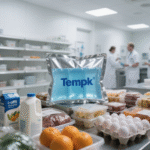
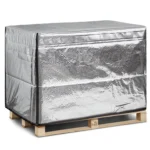
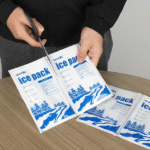
A great refrigerated bag B2B solution protects product quality while making daily work easier. That is the real goal. You are not just buying insulation. You are buying route fit, handling comfort, cleaning speed, temperature discipline, and repeat-order confidence.
That matters more in 2026 because cold-chain demand remains broad, food loss is still a live issue, and procurement teams want stronger proof before approving suppliers. The bag must fit real transport behavior and real commercial review at the same time.
This article will help you:
- understand what separates a B2B-ready refrigerated bag from a consumer-style bag
- evaluate route fit, durability, and thermal performance more effectively
- connect bag choice with monitoring and compliance expectations
- see how sustainability and waste reduction now influence supplier selection
- build a stronger sourcing plan for repeat commercial use
What makes a refrigerated bag truly B2B-ready?
A B2B-ready bag is designed around workflow. It should load quickly, carry safely, clean easily, and hold temperature in ways that match how your team actually works. That means you should define route time, opening frequency, payload type, coolant logic, and carrying pattern before comparing suppliers.
A bag used in grocery last mile behaves differently from one used in healthcare transport or restaurant delivery. One may need a wider opening and better stackability. Another may need better ID control and monitoring. Another may need lighter weight and faster wipe-down. When buyers skip this operational mapping, they often choose a bag that is technically decent but practically wrong.
You should also judge how the supplier thinks. A stronger partner asks about route detail, user behavior, and cleaning process before making claims. That is usually a good sign.
B2B evaluation table
How should you validate thermal performance and monitoring?
Thermal performance should be checked under route reality, not only in static conditions. Hold time depends on ambient heat, opening behavior, fill level, coolant quantity, and start temperature. That is why side-by-side route simulation is often more useful than a headline claim.
For higher-risk products, monitoring becomes important. NIST says continuous temperature monitoring is critical because inappropriate temperatures can damage product quality. CDC guidance also highlights digital data loggers and appropriate probe use. ISTA identifies 7E as the thermal transport testing standard for parcel delivery conditions. Together, these sources point to one buyer lesson: match validation depth to product risk. (NIST 技术系列出版物)
In food and healthcare systems, process guidance also matters. FDA’s sanitary transportation framework addresses practices that create food safety risk, including improper refrigeration. WHO publishes technical guidance for the storage and transport of time- and temperature-sensitive pharmaceutical products. ISO says ISO 22000 can be used across the food chain to manage food safety hazards. (U.S. Food and Drug Administration)
The important point is this: the bag is part of the system, not the whole system. Validation should reflect that.
Why are sustainability and food-loss pressures influencing B2B buyers?
Cold chain tools are increasingly being judged by what they prevent. FAO says transport-side food-loss reduction depends on handling, packaging, temperature management, and airflow. It also points to cooling, infrastructure, packaging, and marketing limitations as major causes of loss in many lower-income settings. UNIDO notes that inadequate storage, poor transport, and heat can push losses very high in some regions. (FAOHome)
At the same time, packaging policy is tightening. The European Commission says PPWR entered into force in February 2025 and begins applying from mid-2026. EPA says efficient and lightweight packaging can save money while reducing waste. OECD points to sustainable packaging and route optimization as practical ways to lower carbon footprint, and its green procurement work shows that 92% of OECD countries had adopted a national GPP strategy. (Environment)
Helpful decision tools
Check the details before you choose packaging
These quick tools can help you compare route risk, sizing needs, coolant choices, and packaging details before you request a quote.
Insulation Material Reference
Compare insulation material choices for different cold chain packaging needs.
Compare materialsDry Ice Calculator
Estimate dry ice needs for frozen or ultra-cold shipments before packing.
Estimate dry iceCompliance Checklist Generator
Build a practical checklist for packaging review, shipping, and documentation.
Build checklistThis changes buyer priorities. A refrigerated bag B2B product is increasingly expected to:
last through repeated cycles
- reduce transport waste
- support clearer procurement review
- fit a more sustainable operating model
- What should you ask suppliers in 2026?
- Ask for a route-based answer, not a catalog answer. Specifically ask:
- which route pattern the bag is designed for
- which structure protects the highest-stress points
- how the liner behaves after repeated cleaning
- what the test conditions were for cold-retention claims
- what documents support the materials and build
- Latest developments
- Route-fit design now matters more than generic insulation claims
- Monitoring is gaining importance in sensitive operations
- Waste reduction and reuse are becoming part of purchase justification
Frequently Asked Questions
Q1: What is the biggest hidden cost in refrigerated bag B2B buying?
Choosing a bag that slows operations. Poor access, weak shape retention, or hard cleaning can cost more than the initial unit price difference.
Q2: How do I test a supplier well?
Use one real route, one real payload, and one real operating pattern. Then compare bags under the same conditions.
Q3: Do I need custom development?
Only if a standard size or layout does not fit your route, product set, or handling method. But many B2B programs benefit from some customization.
Q4: How important is documentation?
Very important. Better documents speed approval, reduce arguments, and support future reorders.
Q5: Should I prioritize durability or thermal hold time?
Usually both matter. But the correct balance depends on route length, opening behavior, and how often the bag is reused.
Summary and recommendations
The right refrigerated bag B2B solution is the one that fits your operation, supports your temperature goals, and survives repeated real-world use. Strong suppliers think in workflows and systems, not only in product pictures.
Your next step is to build a route-based approval sheet covering payload, ambient condition, opening frequency, cleaning expectation, and required documents. Once that is clear, better suppliers become much easier to identify.
About Tempk
Tempk develops reusable thermal transport solutions for food, healthcare, distribution, and route-based cold chain needs. We focus on durability, route fit, and clearer buyer support so the product works where it matters most: in daily use. If you are choosing a refrigerated bag B2B supplier in 2026, we help align product choice with real operating demands.