Vacuum Compressed Liner For Grocery Delivery: How to Choose the Right Liner for Real Shipments
A vacuum compressed liner should be chosen as part of a complete cold chain packout, not as a standalone material purchase. It is a liner format packed under compression to reduce inbound storage and shipping volume before use in grocery or cold chain delivery boxes. The liner can reduce heat transfer inside a carton, but the shipment result depends on the box, payload, coolant, route duration, seasonal exposure, closure method, and how consistently operators pack it.
Buyers searching for vacuum compressed liner for grocery delivery usually want a commercial answer, but the safest purchasing path is technical first and commercial second. Define what the liner must do, confirm that the sample fits the shipment, test the complete packout when temperature risk matters, and then compare price, MOQ, lead time, and supplier controls.
The Simple Role of the Liner
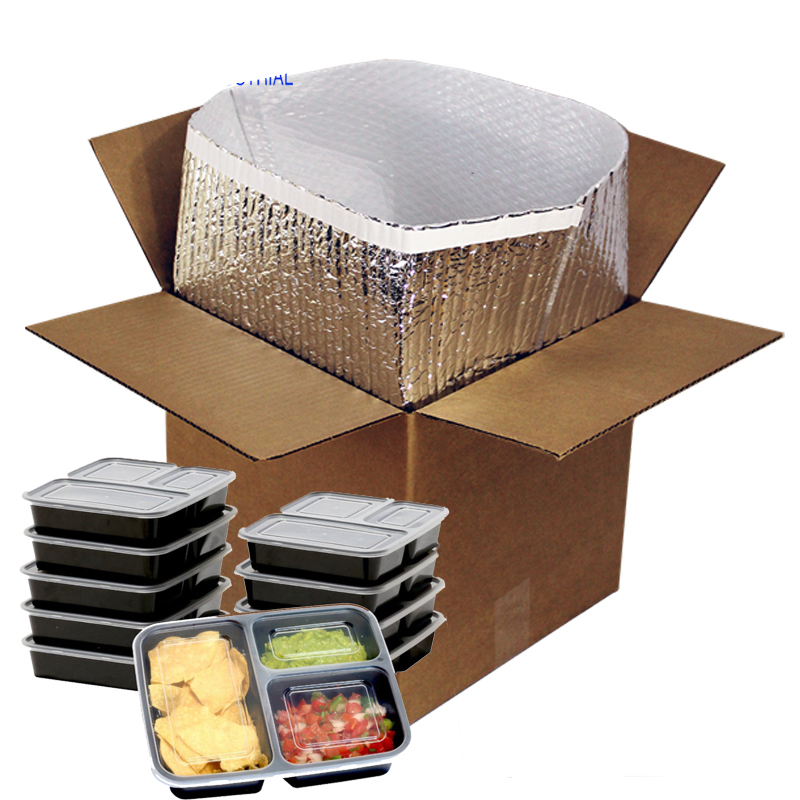
The liner creates a passive thermal barrier inside the outer package. It slows heat gain in warm environments and can help reduce temperature swings during handling. Depending on construction, it may use trapped air, reflective film, paper or fiber layers, foam, laminated films, or other insulating materials. Its job is to protect time, not to replace refrigeration.
The phrase normally describes how the liner is packed and stored, not a true vacuum insulation panel unless the supplier clearly states and documents that construction. The useful question is not whether the liner is generally good. The useful question is whether it is good enough for your product, carton, route, and operating process. A liner that works for a two-hour grocery route may not be suitable for a two-day parcel route or a regulated healthcare shipment.
Start With the Shipment Profile
A practical specification begins with the required temperature range, maximum transit time, starting product temperature, ambient exposure, payload mass, carton size, coolant type, and receiving process. These details define how much heat the package must resist and how much thermal mass the packout needs. Without this profile, supplier quotes are mostly guesses.
For food, the profile may focus on freshness, melt prevention, customer experience, and leakage control. For pharmaceuticals, biologics, vaccines, or samples, the profile should include documented temperature requirements, lane risk, data logger strategy, receiving inspection, and internal quality approval. A general liner is not automatically a qualified temperature-controlled shipper.
Compare Cost by Use, Not by Unit Price Alone
For commercial investigation, compare the full cost structure: unit cost, application fit, sample testing, route duration, and repeat production quality. A lower unit price may still be the wrong choice if the liner reduces usable volume, requires extra coolant, ships inefficiently, slows the packing line, or creates higher complaint rates. The right price is the price of a successful shipment, not just the price of a liner.
Ask suppliers to quote the same drawing, material structure, size, closure style, packing method, and sample reference. If two quotations use different thicknesses or different fold designs, they are not equivalent. If one supplier includes export packing and another does not, the price comparison is incomplete.
Fit and Usable Volume Are Critical
Many liner problems begin with dimensions. Buyers often provide outer carton dimensions, but the liner must fit the internal carton space. After the liner is installed, there must still be enough usable volume for the product, coolant, void control, and closure. Too much liner thickness can reduce payload. Too little coverage can create thermal weak points.
Custom-size and OEM projects should use a drawing that shows open size, folded size, panel layout, closure overlap, and tolerance. The approved sample should be packed with the real product before production. If the liner is vacuum compressed, flat packed, nested, or pre-formed, the buyer should test how it behaves on the packing line.
Thermal Performance Comes From the Complete Packout
No liner should be judged outside its packout. The carton controls structural protection. The liner slows heat transfer. Gel packs, ice bricks, dry-ice-style packs, or phase change materials provide cooling or thermal mass. The closure keeps the system intact. The operator follows the instruction. When any of these elements changes, the thermal outcome can change.
Useful test data should describe the actual system: carton, liner, payload, coolant, start temperature, ambient profile, sensor placement, and acceptance criteria. For strict or regulated routes, consider a formal qualification process and involve packaging, logistics, and quality teams. For lower-risk food or grocery routes, a controlled practical trial may be enough, but it should still match real handling.
Practical Supplier Checklist
A strong supplier review should include internal and external dimensions, usable volume, liner thickness, fold design, closure method, material layers, payload mass, coolant compatibility, and sample-to-production tolerance. Ask whether the supplier can keep the same construction from sample to mass production. Ask how they control cutting, lamination, folding, sealing, packing count, and final inspection. Ask what happens if a material layer, thickness, or packing method changes after approval.
For bulk, wholesale, export, import, OEM, or custom orders, also confirm MOQ, lead time, sample timing, tooling or setup costs, artwork approval if applicable, master carton dimensions, palletization, labeling, and the inspection plan. A supplier that answers these questions clearly is easier to manage than a supplier that only sends a low price.
When a Liner Is Not Enough
Buyers should test recovery after opening, edge fit inside the box, odor, creasing, and thermal behavior after compression because a liner that saves warehouse space can still fail in packout. A liner may be insufficient for long transit times, extreme weather, very small payloads with low thermal mass, products with freeze sensitivity, shipments that wait outdoors, or routes with poor receiving controls. In these cases, the buyer may need a thicker system, additional refrigerant, a qualified shipper, an active temperature-controlled service, or a different lane strategy.
Helpful decision tools
Check the details before you choose packaging
These quick tools can help you compare route risk, sizing needs, coolant choices, and packaging details before you request a quote.
Insulation Material Reference
Compare insulation material choices for different cold chain packaging needs.
Compare materialsCoolant & PCM Reference
Compare coolant and PCM options when a route needs added temperature support.
Compare optionsInsulation Material Drop Resistance
Review drop resistance and handling factors before choosing insulation materials.
Check resistanceThe warning signs are easy to miss. If the product arrives near the edge of its temperature range, if gel packs are fully spent at delivery, if customers report condensation or damage, or if operators must improvise during packing, the liner program should be reviewed. Temperature protection should be repeatable, not dependent on luck.
Sustainability and Customer Experience
Compression can reduce inbound cube and storage demand, but buyers should confirm that the liner still recovers its shape and does not create extra disposal problems after delivery. Also consider the customer experience. A liner that is hard to unfold, messy to dispose of, or confusing to separate can reduce the value of a sustainability claim. Clear instructions and realistic disposal or return options matter.
For B2B buyers, sustainability should also include cube efficiency, weight, reuse rate, damage rate, and product loss. A recyclable liner that fails often is not a responsible choice. A reusable liner that is never returned may not deliver the intended benefit. Packaging teams should measure the whole system.
A Practical Buying Sequence
First, define the shipment profile. Second, choose a liner structure that fits the route risk and carton. Third, request controlled samples and pack them with the real product and coolant. Fourth, run a practical or formal temperature test. Fifth, approve a drawing and retained sample. Sixth, compare quotes using the same specification. Seventh, inspect the first production lot before full rollout.
This sequence protects both procurement and operations. It prevents price from driving the decision before the liner is proven. It also gives suppliers a clear target, which usually improves quotation accuracy and reduces back-and-forth revisions.
FAQ
What is the most important specification for a vacuum compressed liner?
There is no single specification. The most important combination is internal fit, material construction, closure method, usable volume, coolant compatibility, and proven performance in the intended packout.
Can the same liner be used for food and pharmaceuticals?
The same material may be used in different markets, but the approval process is different. Pharmaceutical or critical sample shipments normally need stronger documentation, testing, and quality review.
How can buyers avoid unreliable quotes?
Provide the same drawing, carton size, quantity, packing method, test expectations, and quality requirements to every supplier. Ask for assumptions in writing before comparing price.
Implementation Notes for Procurement and Operations
A buyer can reduce risk by turning the vacuum compressed liner into a controlled packaging item. Give the liner a specification code, connect it to approved carton sizes, and define which products and routes may use it. This prevents operators from substituting a similar-looking liner when the approved size is out of stock. It also gives procurement a stronger basis for reordering because the purchase is linked to a controlled packout instead of a loose product name.
A small pilot can reveal problems before a volume order. Pack several real orders, time the packing steps, inspect liner fit, note condensation, check coolant placement, and ask the receiving team to record package condition. This does not replace qualification for high-risk goods, but it helps the buyer decide whether the liner is practical before committing to wholesale, OEM, import, export, or bulk production quantities.
The pilot should include at least one difficult condition, such as a larger payload, a smaller payload, a warm ambient period, a longer dwell time, or a route with more handoffs than normal. The goal is to learn where the margin is thin. A liner program is stronger when the buyer knows not only when it works, but also when it should be upgraded to a stronger shipper or a different coolant plan.
After approval, keep an internal record of the drawing, supplier, material description, sample date, approved carton, coolant plan, and any test notes. If a future order arrives with a different fold, feel, surface, thickness, or packing method, the receiving team can compare it with the record before releasing the lot. This simple discipline is often enough to prevent silent specification drift in repeat purchasing programs.
How to Keep the Program Stable After Launch
Once the liner is in daily use, review performance at regular intervals. Look at complaints, melted or warmed products, wet cartons, damaged liners, packing delays, and customer disposal questions. These signals often appear before a complete failure. A review can show whether the issue is the liner, the coolant, the carton, the route, the season, or the way operators are packing the box.
For repeat orders, require the supplier to confirm that the new production lot follows the approved construction. This is especially important when raw material prices change or when a supplier suggests a cheaper alternative. Cost savings are useful only when they do not change the thermal margin, fit, appearance, or handling behavior that made the original sample acceptable.
About Tempk
Tempk designs and supplies cold chain packaging for food, pharmaceutical, and other temperature-sensitive shipments. Our publicly listed product range includes gel ice packs, dry-ice-style packs, freezer ice bricks, insulated bags, EPP insulated boxes, cold shipping boxes, medical cooling boxes, insulated box liners, thermal pallet covers, and related cold chain materials. For vacuum compressed liner projects, we focus on practical fit, packout compatibility, and repeatable production details rather than treating a liner as a one-size-fits-all item.
Share your product temperature range, route duration, carton size, payload weight, and expected order pattern to discuss a suitable liner structure or sample plan. For bulk, OEM, export, or custom-size requirements, ask for a specification review before placing a production order.