How to Choose Paper Insulated Box Liner Dubai
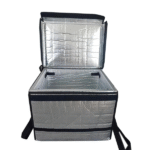
Choosing a paper insulated box liner Dubai starts with a simple boundary: the liner is one part of the temperature-control system, not the whole system. It must fit the carton, protect the payload space, work with the coolant, survive handling, and support the buyer's documentation needs. A good selection process avoids two common mistakes: buying only by unit price and accepting a performance claim without knowing the test conditions behind it.
Selection rule: Define the shipment first, then select the liner. The most useful quote or sample request includes carton dimensions, product temperature range, payload weight and shape, transit time, handover points, coolant type, sustainability target, and the documentation your team expects.
The liner is a component, not a complete cold-chain system
The first decision is the use case. In this topic, the main use case is paper-based liners for chilled food, meal kits, specialty groceries, samples, and e-commerce cold-chain parcels in hot climates. That use case tells you which questions matter. A buyer shipping dry ambient goods may care mostly about presentation and cushioning. A buyer shipping chilled ingredients, lab kits, or temperature-sensitive samples needs to think about heat gain, coolant placement, receiving inspection, and whether the package can handle the warmest part of the route.
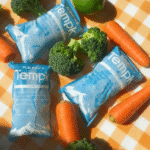
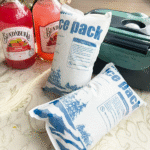
Paper insulation still needs the right coolant, preconditioning, carton seal, and handling process. This is why a responsible specification should include the outer box, liner, coolant, product preconditioning, closure method, and the maximum time the package might sit outside active temperature control. A liner that performs acceptably in a short delivery route may be a poor choice for an export route with customs dwell time or airport transfer. The opposite can also be true: a heavy engineered liner may be unnecessary for a low-risk local delivery where weight and packing speed matter more.
The buyer's practical task is to define the boundary of responsibility. The liner can reduce heat transfer through the carton walls. It can make packing easier when the panel design is repeatable. It can improve the unboxing experience if the surface is clean and instructions are clear. It cannot correct warm product loading, under-conditioned gel packs, a carton left in direct sun, or a route that exceeds the packout design. Treating those limits honestly leads to better sourcing decisions and fewer disappointed receivers.
Translate temperature needs into a buying brief
Hot-climate routes need conservative packout design and realistic ambient profiles before any hold-time claim is used. The liner slows the movement of heat, while coolant or phase change material absorbs heat and helps hold the payload near the desired range. Product loading temperature also matters. If chilled products enter the box already warm, the liner is forced to compensate for a problem it was not designed to solve.
For perishable food, the packaging conversation should be linked to food safety procedures. In U.S.-style food safety language, cold TCS foods are often planned around 41 F or below, and consumer guidance commonly warns against leaving perishable foods at room temperature for extended periods. Those references do not automatically become a universal rule for every market, but they show why food teams should not treat a liner as a decorative accessory.
A useful supplier conversation should therefore move from claims to conditions. Instead of asking only, "How many hours can this liner keep products cold?" ask what product mass was used, where the sensor was placed, which coolant was used, how the coolant was conditioned, which carton was tested, and what ambient profile was applied. ISTA 7E-style thinking is helpful here because it reminds buyers that parcel thermal exposure can include both warm and cold profiles, not just a constant room condition.
The result is a more honest comparison. One liner may look better on a generic data sheet, while another may be easier to pack consistently in your warehouse. If both meet the temperature requirement under your realistic conditions, the simpler packout may be the better commercial decision. If neither has relevant evidence, you should treat both as unproven until sample testing is completed.
Compare liner types by operational fit
Paper or fiber-based liners can reduce reliance on molded foam and may support a cleaner disposal story, but the recovery route must be checked. Coatings, adhesives, film layers, moisture, and food residue can all affect whether a package is accepted by a local recycling system. Recyclable should be treated as a substantiated claim, not a label decoration.
Material choice also affects labor. A liner that arrives flat may store efficiently but require workers to fold, insert, and tape it. A pre-formed liner may speed assembly but take more warehouse space. A moisture-resistant surface may protect the carton from condensation but complicate recycling claims. None of these trade-offs is automatically good or bad; they must be judged against your packing volume, labor cost, shipping cube, and customer expectations.
Paper fiber, kraft surfaces, barriers, adhesives, and coatings must be checked for moisture and recyclability claims. Ask the supplier to explain what each layer does. If a layer is for insulation, ask how it performs when compressed. If a layer is for moisture resistance, ask how it affects disposal. If a surface is intended for food-adjacent use, ask what documentation is available. For biotech or healthcare shipments, ask whether the material creates lint, odor, contamination concerns, or handling issues that your quality team would reject.
A practical material review should include the sample after real handling. Fold it, load it, add coolant, close the carton, open it again, and inspect the corners. Many liner failures are not visible in a flat product photo. They appear when workers pack quickly or when the carton sits under stacked load during transport.
What to put in a quote or sample request
Buyers should request samples that are tested with the same product mass and box size planned for dubai deliveries. The most common sourcing problem is not that buyers ask too many questions. It is that they ask too late, after artwork has been approved, after a box size has been fixed, or after a sales team has promised a delivery condition that the package was never tested to support.
Begin with dimensions. Record the outer carton size, the desired usable internal space, the payload height, and the coolant position. Then describe the product: chilled food, frozen product, biotech reagent, sample kit, cosmetic, or another temperature-sensitive item. A supplier does not need confidential formulation data to make an early recommendation, but they do need enough information to understand heat load and risk.
Next, separate mandatory requirements from preferences. Mandatory items may include product temperature range, route duration, carton size, packout method, packaging material restrictions, or documentation requested by the quality team. Preferences may include surface color, print, social media appearance, unboxing style, or compressed inbound packaging. When those two groups are mixed, the quote becomes harder to compare and the engineering decision becomes less clear.
For B2B orders, also ask about sample-to-production consistency. Will the production liner use the same material as the sample? Are there acceptable tolerances for size, seal width, thickness, or compression? How are lots labeled? How should the buyer inspect incoming cartons? These questions are not excessive. They protect both sides from a common situation where the sample works but the first bulk shipment behaves differently on the packing line.
Helpful decision tools
Check the details before you choose packaging
These quick tools can help you compare route risk, sizing needs, coolant choices, and packaging details before you request a quote.
Dry Ice Calculator
Estimate dry ice needs for frozen or ultra-cold shipments before packing.
Estimate dry iceBox Liner & Pallet Cover Sizing
Check box liner and pallet cover sizing logic for insulated packaging projects.
Estimate sizingCoolant & PCM Reference
Compare coolant and PCM options when a route needs added temperature support.
Compare options| Decision point | Good sign | Red flag |
|---|---|---|
| Fit | Supplier asks for carton and usable payload dimensions | Supplier quotes without dimensions |
| Performance | Supplier explains test conditions and packout assumptions | Supplier gives a universal hour claim |
| Material claim | Supplier separates paper, recyclable, barrier, and hybrid layers | Supplier uses broad eco wording without support |
| Production | Sample approval and production tolerance are discussed | Sample looks good but production control is vague |
| Quote clarity | Price includes packing method, quantity, and documentation scope | Lowest price excludes important cost drivers |
This table is not a substitute for testing, but it makes the supplier discussion more precise. It also helps procurement compare offers that would otherwise look similar. If a supplier cannot answer the middle column, the buyer should treat the quotation as preliminary rather than production-ready.
Red flags before you approve the supplier
A paper liner selected only for sustainability may underperform if condensation, melted gel packs, or direct sun exposure are ignored. This risk usually appears at handover points: a carton waiting at a dock, a parcel sitting in a delivery van, a worker using the wrong coolant orientation, or a receiver opening the box later than expected. The liner cannot control those events by itself, but a realistic packout can reduce their impact.
Hot-climate or export routes add hidden exposure. The package may pass a short warehouse trial but fail during loading, customs waiting, last-mile sorting, or doorstep dwell. Ask whether the proposed packout was evaluated against conditions that resemble the destination lane.
Another common mistake is confusing material identity with performance. Paper does not automatically mean recyclable in every location. Foil bubble does not automatically mean strong thermal control. A custom size does not automatically mean more usable capacity. OEM branding does not automatically mean compliance. A compressed liner does not automatically mean lower total cost. Each claim must be tied to the condition that makes it true.
Documentation should match the risk level. For a low-risk local food program, a simple sample trial, packing instruction, and receiver temperature check may be enough for internal decision-making. For healthcare, biotech, or regulated goods, the buyer may need quality review, calibration records for loggers, lane qualification, and written acceptance criteria. Do not let a product description decide which level of documentation your organization needs.
A common buyer situation
A procurement team may face a gourmet grocery importer sending chilled sauces and fresh items from a fulfillment center to residential customers in Dubai. If the team requests only a price, three suppliers may quote three different constructions that are impossible to compare. If the team provides a real brief, the quotes become more useful. One supplier may recommend a lighter liner for short routes, another may recommend a paper construction for disposal goals, and another may suggest testing before committing to a temperature claim. The buyer can then compare fit and evidence, not only the unit price.
The lesson is not that every project needs a complex laboratory study at the first step. The lesson is that the sample must be tested in a way that resembles the real job. If the buyer changes the product mix, carton, coolant, or destination climate, the old result may no longer apply. This is especially important when a liner program moves from a pilot order to wholesale, OEM, export, or recurring fulfillment.
Environmental claims should be useful and specific
For paper or recyclable-positioned liners, buyers should ask whether the liner is mono-material or multi-layer, whether any film or coating is used, and whether the package can be separated by the receiver. Clear disposal instructions reduce customer frustration and help avoid broad environmental claims that are difficult to support.
Environmental language should be written in the same careful way as thermal language. A good statement tells the buyer what the material is, what parts can be separated, and what the receiver should do after use. A weak statement uses broad words such as green or eco without explaining the material or disposal route. Procurement teams should ask for material declarations and should review claims with the markets where the package will be used.
Sustainability also includes waste prevention. A liner that reduces rejected shipments may be more responsible than a lower-waste package that fails often. A liner that ships flat can reduce storage pressure, but if it takes too long to assemble or creates packing errors, the operational cost may offset the benefit. The better approach is to evaluate waste, cube, labor, thermal performance, and receiver instructions together.
FAQ
What information should I send when asking about paper insulated box liner Dubai?
Send the carton size, usable payload space, product type, required temperature range, transit time, route, coolant preference, quantity, and any documentation needs. This makes the recommendation and quote more reliable.
Why do similar liners have different prices?
Price can change because of material structure, size, compression method, order quantity, packaging density, quality control, printing, export packing, and whether the supplier includes sample or test support.
Can a supplier promise a fixed hold time?
A supplier may share a tested result, but it should be tied to specific conditions. Do not treat a hold-time claim as universal unless your product, route, coolant, carton, and acceptance range match the test.
What is the safest next step before production?
Approve a representative sample, run a packout trial, document the packing method, and define what must not change in production. This protects both procurement and operations.
Conclusion: make the quote and the shipment match
A paper insulated box liner Dubai should be chosen with the same practical discipline as any other packaging component that can affect temperature-sensitive goods. Define the product requirement, confirm the carton and payload, choose a compatible coolant plan, and ask the supplier to explain the evidence behind the recommendation. If sustainability, custom sizing, OEM branding, export handling, or price is important, include those points early instead of adding them after the sample is approved.
The best result is not the most expensive liner or the longest claim. It is the liner that your team can pack consistently, your route can support, your receiver can understand, and your quality or operations team can defend.
About Tempk
Shanghai Tempk Industrial Co., Ltd. uses the Tempk brand for cold-chain packaging products and related temperature-control solutions. When a buyer asks about liners, we focus on practical fit: the real box, the real product, the route, the receiving process, and whether the proposed packout can be tested before scale-up.
Tell Tempk the Dubai delivery model, carton size, product mix, and expected outdoor exposure so we can review suitable paper liner options.