Popsicles and Ice Lollies Cold Chain Packaging Guide for Frozen Delivery
Cold chain packaging guide for popsicles and ice lollies, covering frozen holding, stick alignment, wrapper condensation, dry ice placement, route duration, and Tempk packout selection.
Why popsicles and ice lollies need a specific frozen packout
Popsicles have small mass and a high surface area, so they soften quickly during packing and delivery handoffs. The packout should keep cold around the whole bundle while preventing dry ice marks on the wrapper. Frozen desserts do not fail only when they become liquid. Texture, wrapper condition, lid fit, frost bloom, and carton dryness can all affect whether the receiver accepts the shipment. A route that works for a dense tub may still damage thin popsicle wrappers or push frozen yogurt lids out of position.
For most frozen dessert parcel lanes, the practical target is to keep the product hard frozen through packing, depot dwell, line-haul, last-mile delivery, and doorstep exposure. The dry ice pack or frozen coolant should be sized for the lane and separated from retail packaging so the product stays frozen without pressure marks, wet labels, or crushed lids.
Packout requirements
| Cold chain factor | Popsicles and Ice Lollies requirement |
|---|---|
| Target temperature | -18 C or below |
| Humidity and condensation | Low internal moisture and dry wrapper handling |
| Pre-cooling | Load from a hard-frozen state; avoid staging at room temperature before the shipper is closed |
| Packaging pressure | Medium. Sticks and narrow shapes can bend or print into the wrapper when parcels are compressed. |
| Coolant position | Dry ice above and around the product zone with a separator; avoid direct contact with thin wrappers. |
| Transit duration | Same-day and next-day frozen routes; validate longer lanes with product temperature and wrapper condition checks. |
| Common loss points | Softening, bent sticks, wrapper frost, refreeze ice crystals, box wet-out, and flavor bleed between items. |
| Tempk packaging response | Tempk EPS or PU insulated shipper with dry ice pack, vapor space, dry separator, product bundle restraint, absorbent pad where needed, and a route logger. |
Route design notes
Start by mapping the warm points in the lane: product staging, packing time, handoff to carrier, sort-center dwell, delivery vehicle dwell, and customer pickup. Frozen desserts with smaller unit weight need tighter packout timing because they recover poorly after warm exposure. If the product is packed before the shipper, dry ice, and accessories are ready, the lane has already lost part of its safety margin.
Helpful decision tools
Check the details before you choose packaging
These quick tools can help you compare route risk, sizing needs, coolant choices, and packaging details before you request a quote.
Insulation Material Drop Resistance
Review drop resistance and handling factors before choosing insulation materials.
Check resistanceCompliance Checklist Generator
Build a practical checklist for packaging review, shipping, and documentation.
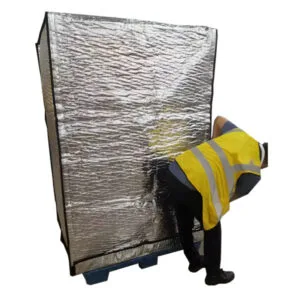
Build checklistBox Liner & Pallet Cover Sizing
Check box liner and pallet cover sizing logic for insulated packaging projects.
Estimate sizingThe inner pack should hold retail units in place without squeezing them. Use dividers, trays, or carton supports when narrow products can bend or cups can press into one another. If the shipment includes mixed flavors or multipacks, check that labels remain readable and that frost or moisture does not make flavors bleed visually into the outer carton.
Comparison with related frozen desserts
| Product | Frozen handling difference | Packaging priority |
|---|---|---|
| Popsicles / ice lollies | Small mass, high surface area, thin wrappers, stick alignment risk | Fast loading, bundle restraint, dry wrapper handling |
| Frozen yogurt | Softer texture, cup and lid pressure sensitivity, label wet-out risk | Lid protection, dry liners, balanced dry ice placement |
| Ice cream tubs | Top-layer softening and carton condition are visible acceptance points | Top cooling, lid protection, carton dryness |
Tempk packaging recommendation
A typical Tempk frozen dessert shipment uses a rigid insulated shipper, a dry ice pack or dry ice-compatible coolant layout, a product restraint layer, dry separators, and a receiving checklist. For direct-to-consumer routes, a compact parcel format can reduce air space and improve cold efficiency. For wholesale or multi-pack shipments, stronger inner dividers and a larger dry ice mass may be needed.
Run the first validation with a temperature logger at the product level and a visual receiving checklist. Check product firmness, wrapper or lid condition, carton dryness, frost, odor transfer, and whether the customer can remove the product cleanly from the shipper. Approve the packout only after testing the real route, product size, order quantity, and warm-season conditions.