VIP box for cheese transport: Practical Selection Guide
The safest way to evaluate a VIP box for cheese transport is to treat it as one part of a controlled packout system. VIP insulation can provide strong thermal resistance in a compact structure, but it cannot define your required temperature range, condition your coolant, prevent poor loading, or write your receiving procedure. For cheese transport, the useful decision is whether the container, coolant, payload protection, monitoring, and documentation all fit the route you actually ship.
Practical answer before you shortlist suppliers
A VIP box for cheese transport is a good candidate when your current package is too large, too close to temperature limits, too weak at handover points, or too hard to document. It is not automatically the right solution for every shipment. The required temperature range, route duration, payload geometry, coolant choice, and evidence expectations should be defined before you compare samples.
Map the shipment before you approve the box
The first specification is not outer dimension, wall thickness, or price. It is the route. A route includes transit time, staging time, vehicle or aircraft handovers, customs or warehouse dwell time, seasonal exposure, and the receiving process. For cheese transport, those points create most of the practical risk because the product is often outside ideal storage conditions when people are moving, checking, or waiting.
A well-chosen VIP container gives you more insulation efficiency than many conventional foam or plastic boxes in the same package volume. That advantage matters when your shipment goal is to protect cheese quality, texture, rind condition, aroma, package cleanliness, and receiving presentation during temperature-sensitive transport. It matters less when the shipment is short, predictable, low value, and already proven with a simpler package. The container should be selected only after you know where the present package fails or where the next route will become harder.
Write the lane as a simple operating story before you request a sample: product leaves storage, operators condition the coolant, the payload is loaded, the lid is closed, a carrier collects the box, handovers occur, the shipment arrives, and the receiver opens it. At each step, ask what could change temperature, damage the payload, or weaken proof. This one exercise usually gives better buying criteria than a long list of generic insulation claims.
Cheese transport must protect quality, moisture, aroma, and presentation
Cheese is temperature sensitive, but it is also a living or moisture-sensitive food in many forms. The arrival complaint may not be a simple warm reading. It may be condensation, label damage, rind change, odor transfer, surface drying, softening, or a texture change that affects retail presentation.
A VIP box can help specialty cheese shipments when summer lanes, courier delays, or export sampling create heat exposure. It should not be designed to make the product as cold as possible. Some cheese products can suffer if they are overcooled or frozen, while others need strict chilled handling.
The buyer should define cheese type, retail packaging, moisture sensitivity, aroma control, acceptable coolant contact, and receiving evaluation. For mixed sample kits, inner dividers and packaging order can be just as important as the outer insulated container.
Treat VIP insulation as thermal margin, not a guarantee
Vacuum insulated panels help reduce conductive heat transfer through the main insulated surfaces. In a shipping container, that can create more usable internal space or a stronger thermal buffer than a thicker conventional wall. The benefit is especially valuable when the payload is high value, the box must stay compact, or freight cost is affected by dimensional weight.
The practical limitation is that a real box is not a laboratory panel. Heat can still enter through the lid, corners, panel joints, damaged areas, and any space where the operator leaves a gap. Coolant can also become a risk if it is under-conditioned, over-conditioned, placed directly against freeze-sensitive goods, or arranged so that air cannot move as intended inside the packout.
For cheese transport, the package should be described as a system: outer container, VIP layer, protective liner, coolant or PCM, payload divider, absorbent or barrier materials where needed, temperature monitor, label, and instructions. If one part changes, the performance of the whole system can change. That is why sample approval should include how the box is packed, not only how it is made.
Build proof into the packout from the beginning
The container does not create compliance on its own. It supports a process. Depending on the product and market, your team may need written procedures, route risk assessment, qualified packaging, temperature monitoring, receiving inspection, and deviation handling. For cheese transport, the most useful packaging evidence is the evidence that helps the receiver decide whether the shipment can be accepted.
Relevant source frameworks may include food safety requirements, dairy handling rules, and local chilled distribution practices. These sources do not all apply in the same way to every shipment. A food route, a medical route, and a cosmetic ecommerce route can have different legal and quality expectations. The buyer should confirm the applicable rules with the quality, regulatory, or food-safety team instead of asking the packaging supplier to make a universal compliance promise.
A practical evidence package often includes product temperature requirement, product packing style, coolant conditioning record, condensation control, label protection, and receiving condition photos. The specific records depend on your product and route, but the principle is stable: do not rely on a packaging claim that cannot be traced to a defined packout and a defined operating condition.
Shortlist the container with practical evidence
| Buyer question | What to ask the supplier | What a useful answer should show |
|---|---|---|
| Temperature requirement | What product range and excursion rules is the packout designed for? | A product-specific range, not a generic cold-chain claim |
| Hold-time claim | What ambient profile, payload, coolant, and pass criteria support the claim? | A test context or a clear statement that further qualification is needed |
| Usable payload space | Does the volume include coolant, dividers, and monitor placement? | A loaded packout drawing or photo, not only gross internal dimensions |
| Coolant compatibility | Which gel pack, PCM, ice, or dry ice path is intended? | Conditioning instructions and separation from sensitive goods |
| Handling and reuse | How should panels, seals, liners, and closures be inspected? | A practical SOP that operators can follow repeatedly |
| Documentation | What records support shipping and receiving decisions? | Logger plan, packout checklist, deviation steps, and receiving criteria |
This table is not meant to slow down purchasing. It prevents the wrong sample from looking attractive. For cheese transport, a sample that fits the payload but lacks clear coolant instructions may create more operational risk than a slightly larger package with better evidence.
Use the table during supplier calls and internal review. If an answer is unavailable, treat it as a verification item rather than a reason to reject the supplier immediately. Good packaging discussions often begin with unknowns; the important point is to identify them before production orders or live shipments.
Helpful decision tools
Check the details before you choose packaging
These quick tools can help you compare route risk, sizing needs, coolant choices, and packaging details before you request a quote.
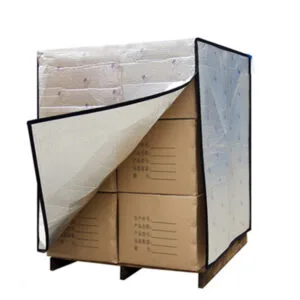
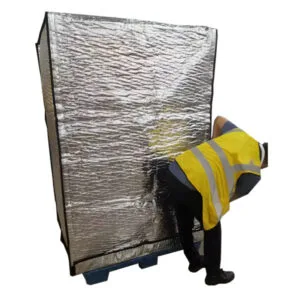
Box Liner & Pallet Cover Sizing
Check box liner and pallet cover sizing logic for insulated packaging projects.
Estimate sizingPackaging Selector
Compare insulated packaging options by product, route, and temperature need.
Find packagingRoute Risk Checker
Review lane conditions before selecting packaging for real operating requirements.
Check route riskExample: turning a vague request into a usable brief
A specialty cheese producer sends mixed sample packs to a distributor during summer and needs arrival quality that supports a purchasing decision. The first request might sound simple: 'Please quote a VIP box for cheese transport.' A better brief describes the product, the required temperature range, the quantity per shipment, the route duration, likely handover points, opening rules, and who will check the shipment on arrival.
With that brief, the supplier can discuss whether VIP insulation is appropriate, what coolant family should be considered, how much usable payload space remains after coolant and dividers, and where the monitor should sit. The buyer can then compare not only price but also packing difficulty, evidence quality, and how much route uncertainty the design can tolerate.
This is a hypothetical example, not a performance promise. The final package should be checked against real product requirements and, where necessary, a test profile or lane qualification. The value of the example is the purchasing logic: convert the product risk into packout requirements before you negotiate box details.
What to confirm before moving from sample to repeat orders
A strong supplier conversation is specific. Ask about internal dimensions and external dimensions, but also ask how those dimensions change after the coolant and dividers are loaded. Ask whether the sample is made from the same materials and construction method as production units. Ask how panel damage is detected, how lids and seals are checked, and what substitutions are allowed if a component is out of stock.
If the container is reusable, the commercial model should include reverse logistics. Who owns the box after delivery? Who cleans it? Who inspects VIP panels and closures? What happens when a receiver loses one component? Reusable packaging can reduce waste over repeated routes, but only when the return loop is controlled enough to protect performance and cost.
For cheese producers, specialty food exporters, dairy distributors, gourmet ecommerce teams, and procurement buyers, the best shortlist is rarely the supplier with the most dramatic performance statement. It is the supplier that can explain limits, show how the packout is assembled, and help your team define what must be verified before the shipment becomes routine.
Avoid these approval shortcuts
Most failures are not caused by one weak material. They come from a mismatch between product needs and the way the package is used. For cheese transport, pay special attention to overcooling or freezing soft cheese, condensation on labels, odor transfer, crushed retail packaging, unplanned dwell time, and using a sealed box without humidity or meltwater control.
- Approving the outer container without approving the loaded packout.
- Comparing gross volume while ignoring how much space the coolant, dividers, and monitor consume.
- Using a hold-time claim without checking the ambient profile and payload behind it.
- Letting operators change coolant position because the instructions are unclear.
- Putting the temperature logger where it is convenient rather than where the payload risk is represented.
- Assuming a reusable container is sustainable without a realistic return, cleaning, and inspection process.
A simple way to reduce these mistakes is to freeze the approved packout as an operating document. Include photos, coolant conditioning instructions, loading order, acceptable substitutions, monitor location, closure method, and receiving checks. If a change is needed, record why the change is being made and whether further review is required.
FAQ
Is a VIP box for cheese transport the same as an active refrigerated container?
No. In most buyer discussions, a VIP shipping box or container is a passive insulated package. It uses high-performance insulation and a selected coolant or PCM strategy, but it does not mechanically refrigerate the payload unless a separate powered system is specified. Treat it as passive packaging that still needs packout design, conditioning, monitoring, and handling control.
What should I verify before approving a VIP shipping sample?
Verify the required temperature range, payload quantity, usable internal space, coolant type, coolant conditioning method, monitor location, route duration, handover risk, and receiving criteria. For cheese transport, also confirm the product-specific risks that matter most, such as freeze sensitivity, meltwater, contamination, formula stability, or documentation requirements.
Can a supplier's stated hold time be used directly for my route?
Not without context. Hold time depends on ambient profile, payload, coolant mass, coolant conditioning, box opening, product starting temperature, and acceptance criteria. Use a supplier's data as a starting point. For regulated or high-value shipments, confirm whether additional testing, lane qualification, or quality approval is needed.
When is VIP insulation not worth the extra complexity?
VIP insulation may not be necessary when the route is short, the product is low risk, the existing package is already proven, or operators cannot manage the required packout. It may also be unsuitable when large palletized dairy loads already controlled in a reefer vehicle, or products whose moisture and aroma profile need a packaging strategy beyond simple insulation. The decision should compare risk reduction, freight impact, reuse control, and evidence needs.
Does reusable VIP packaging automatically improve sustainability?
Not automatically. Reuse can reduce single-use material over repeated lanes, but only when return logistics, cleaning, component inspection, and loss rates are controlled. A reusable VIP container that is frequently lost, damaged, or shipped back inefficiently may not deliver the expected operational or environmental benefit.
Conclusion
A VIP box for cheese transport can be a strong choice when your shipment needs compact thermal protection, better route margin, and clearer evidence than a basic insulated package can provide. It should be selected around the product specification, route conditions, coolant strategy, payload layout, monitoring plan, and receiving process. The main buying rule is simple: approve the system, not only the box.
For cheese transport, the highest-value decision is to define the shipment problem before asking for a quotation. When the risk is clear, VIP insulation becomes a practical tool. When the risk is vague, even a high-performance container can become an expensive guess.
About Tempk
Tempk supplies cold-chain packaging solutions for B2B temperature-sensitive shipments, including VIP and EPP medical cooler boxes, gel packs, PCM packs, insulated boxes, and related packaging options. For cheese transport, we help buyers discuss route conditions, target temperature range, payload fit, coolant direction, and packout details before they scale from sample review to repeat shipment planning. Specialty food teams compare vip boxes, gel packs, dividers, liners, and presentation-focused packout details before launching repeated chilled shipments.
Share your route, payload, target temperature range, and handling limits with Tempk to compare whether a VIP box for cheese transport is the right direction. A practical recommendation should start with your shipment conditions, not a box size alone.