


Temperature intentHold 2-8 C and avoid sub-zero exposure. Keep the product in its original carton when required by the label.
HPV Vaccines Cold Chain Packaging Solution
HPV vaccine parcels are usually smaller than mass seasonal vaccine shipments, but the product value and clinic schedule impact can be high. The packout should protect the original cartons, avoid freezing, reduce light and handling exposure, and give the receiver clear temperature evidence.
What the package needs to control
Coolant ruleUse conditioned gel packs or PCM around the payload cavity, with a spacer so no frozen surface presses on cartons.
Packaging focusCarton crush protection, label visibility, light-aware handling, and a clear logger record for receiving.
Choose the packout by route condition
| Route condition | Packaging setup | Preliminary coolant range | Receiving check |
|---|---|---|---|
| Clinic transfer, 4-12 h | Small EPP shipper or insulated carton, inner carton tray, side coolant. | 0.6-1.2 kg conditioned gel packs or PCM for a 0.5-2 L payload. | Use a buffer layer between coolant and carton; avoid direct top pressure. |
| Parcel lane, 12-24 h | Rigid inner tray, coolant around sides/top, document sleeve outside cold zone. | 1.2-2.4 kg conditioned gel packs or PCM depending on shipper volume. | Check logger minimum, carton corners, and whether coolant shifted. |
| Extended route, 24-36 h | Thicker insulation, balanced coolant, extra spacer layer near payload. | 2.4-3.8 kg conditioned gel packs or PCM for small-to-mid payloads. | If carton crush appears, improve inner tray before increasing coolant mass. |
Use these ranges as a starting point for packaging review. Confirm the final coolant mass with the product label, shipper size, route duration, ambient profile, and a qualified temperature logger test.
How Tempk would build the shipment
Keep product identity readable
HPV vaccine shipments often rely on original cartons and lot labels at receiving. Protect the label face from condensation and abrasion.
Separate cold source from carton
A colder packout can create freeze risk. Use conditioned coolant and spacers to keep the payload in the refrigerated range.
Reduce pressure on small cartons
Use a rigid tray or center cavity so gel packs do not press directly into vial cartons during parcel handling.
Confirm with a logger
Place the logger probe near the product cavity and review minimum temperature, not just arrival feel or coolant state.
Common failure points to prevent
The goal is not only a cold box. The receiver needs a clean, readable, documented shipment that stayed inside the required refrigerated range.
- Sub-zero logger readings from direct frozen gel contact.
- Crushed carton corners in small parcel handling.
- Wet or scuffed labels that slow clinic receiving.
- Route delay that pushes a small shipper beyond validated hold time.
Validation curve and receiving evidence
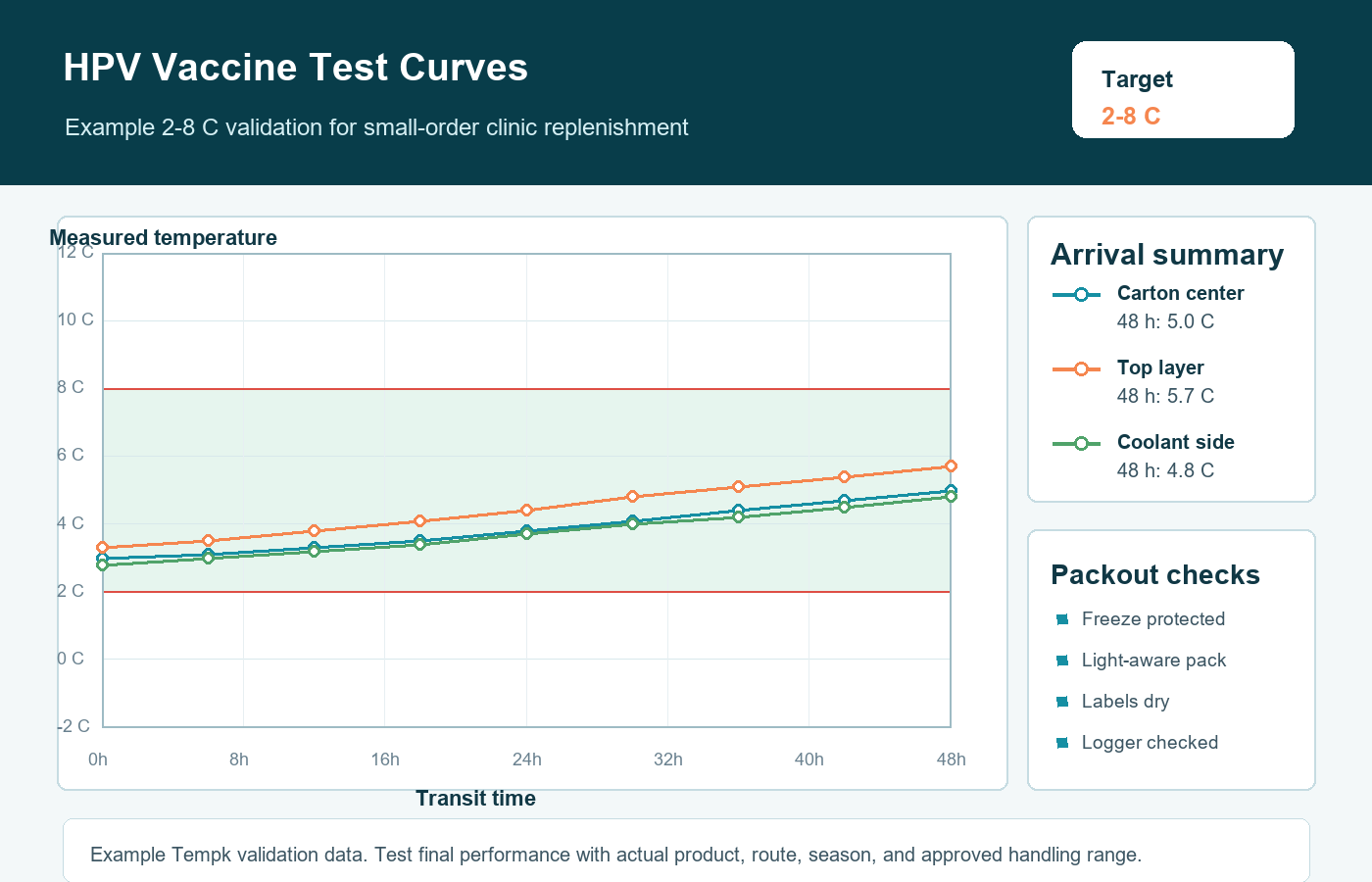
Review the curve with the actual vaccine payload, coolant mass, shipper size, route duration, and season. For vaccines, the minimum temperature and the receiving record are as important as the end temperature.
Related pages for packout planning
Practical route notes
Protect HPV vaccine cartons during multi-site clinic routes
HPV vaccine shipments often support scheduled adolescent clinics or pharmacy replenishment. The packout must stay stable through short receiving windows and repeated handling.
Where this product usually fails
The key risks are freeze contact, delayed clinic handoff, carton scuffing, and staff leaving the shipper closed too long after receipt.
Packaging setup to test first
Keep cartons upright in a payload sleeve with a buffer on every coolant-facing side. Add clear receiving instructions so the clinic moves cartons to refrigeration quickly.
Coolant choice
Use 2 to 8 C PCM or conditioned gel packs. Do not add frozen packs directly beside HPV vaccine cartons to extend duration.
Route validation check
Run the route with the actual carton count and clinic dwell time. Check logger data, carton condition, and the time from delivery to refrigerator placement.
Packout detail
HPV vaccine shipments need clinic-ready receiving
Use case
HPV vaccine deliveries often go to clinics, pharmacies, or adolescent vaccination sites where staff may receive several cartons at once. The shipper should be easy to open, with vaccine cartons clearly separated from coolant and instructions visible immediately.
Packaging choice
Use 2 to 8 C PCM or properly conditioned gel packs, with spacers on every coolant-facing side. Do not add extra frozen packs beside the cartons to extend duration; that can create freeze risk before the route fails on heat.
What Tempk should validate
Tempk validation should include carton count, receiving delay, summer and winter ambient, and logger placement inside the payload. Review minimum temperature first, then maximum temperature and carton condition.
Field packout scenario
Example setup for HPV vaccine clinic deliveries
For HPV vaccine deliveries to clinics or pharmacies, design the payload so staff can identify and refrigerate cartons quickly. Use a spacer on every coolant-facing side, keep cartons upright, and place the logger among cartons rather than against the cold pack. If a route includes several clinic stops, test the longest receiving delay and the smallest payload. Use 2 to 8 C PCM or properly conditioned gel packs; do not solve duration by adding unconditioned frozen packs beside the cartons. The receiving check should confirm no freeze event and clear handoff instructions.
Custom packout support
Need this lane built around your product and route?
For fixed carton sizes, payload limits, branding requirements, seasonal lanes, or validation targets, Tempk can adapt this solution into a custom cold-chain packout.
Need this vaccine route checked before shipment?
Send the product label requirement, payload volume, destination type, route duration, ambient condition, and required logger report. Tempk can help compare insulation, coolant placement, and validation steps before you ship.
Request a packout review