Selecting a 20 Liter Commercial Ice Box Supplier: A Requirement-to-Evidence Guide
The most useful way to select a 20 liter commercial ice box supplier is to move through a requirement-to-evidence sequence. First define the product and temperature need. Then model payload and coolant space, map the route and handling risks, select construction, and decide what testing or documentation must support approval. This sequence keeps commercial discussions anchored to the application rather than to broad claims about liters, insulation, duration, or price.
For last-mile delivery, pharmacy support, small catering runs, sampling, route sales, and field operations, procurement, operations, engineering, and quality teams should work from the same controlled brief. Compact size improves mobility but does not remove the need to define temperature, duration, coolant, opening behavior, and monitoring. The sections below combine buyer, engineering, operational, and supplier-control perspectives into one decision path, ending with implementation checks that help the approved sample remain representative of production and real use.
| Decision answer: Select the compact commercial ice box only after confirming the payload, usable geometry, temperature requirement, route, coolant, handling, evidence, and production controls. Compact size improves mobility but does not remove the need to define temperature, duration, coolant, opening behavior, and monitoring. |
|---|
Use a Requirement-to-Evidence Decision Path
A controlled decision can be organized into four gates. Gate one defines the product and required condition. Gate two confirms that payload, coolant, internal geometry, handling, and route fit the proposed box. Gate three evaluates evidence, including drawings, material data, test reports, manufacturing controls, and application limits. Gate four approves implementation, including instructions, monitoring, receiving, change control, and supplier responsibilities. A project should not move forward merely because one gate looks strong while another remains undefined.
The gates also create useful ownership. Operations can define the route and work method; engineering can review geometry, materials, and failure modes; quality can set evidence and deviation rules; procurement can compare scope and commercial terms. For small-route operators, commercial buyers, distributors, and procurement teams, this shared structure reduces repeated clarification and makes quotations comparable. It also exposes when a request is still a concept rather than a purchase-ready specification. The final approval record should show what was confirmed, by whom, using which evidence, and for which application boundary.
- Gate 1 – Product, temperature condition, sensitivity, and consequence of failure
- Gate 2 – Payload envelope, coolant, route, handling, hygiene, and user fit
- Gate 3 – Materials, drawings, tests, quality controls, and stated limitations
- Gate 4 – Pilot, instructions, monitoring, receiving, change control, and launch approval
Begin With a Clear User Requirement
Write a user requirement that another team could apply without hearing the original sales discussion. Identify the payload, packaging, initial condition, required temperature condition, maximum time, delay allowance, ambient exposure, openings, vehicle or carrier, handling, cleaning, and receiving decision. For last-mile delivery, pharmacy support, small catering runs, sampling, route sales, and field operations, also state the consequence of a failure and whether the shipment can be replaced, quarantined, or investigated without major disruption.
Turn the primary objective – provide a compact insulated container that is easy to carry and fits constrained vehicles while preserving enough usable payload space – into measurable acceptance points. Separate functions supplied by the physical container from those supplied by coolant, monitoring, work instructions, the carrier, and receiving. Then assign owners for unresolved assumptions. A controlled user requirement prevents the final approval from depending on vague phrases such as durable, medical, food grade, leakproof, long lasting, or suitable for cold chain.
- Defined payload, packaging, quantity, mass, and temperature condition
- Normal lane plus delay, seasonal, opening, and handover assumptions
- Packout components, conditioning, placement, and loaded configuration
- Handling, restraint, hygiene, labels, monitoring, and receiving decisions
- Required drawings, test evidence, production controls, and change ownership
Turn the Unique Risks Into Approval Criteria
The approval record should resolve the project-specific risks before commercial release: assuming twenty liters equals twenty liters of sellable payload, overloading the handle, choosing an unstable tall shape, and neglecting coolant displacement. It should also state how the proposed configuration will provide a compact insulated container that is easy to carry and fits constrained vehicles while preserving enough usable payload space. These are not background comments; they are requirements that need an owner, evidence, and an acceptance decision. Where a condition cannot yet be proven, the record should identify the remaining test, pilot, or quality action.
Use an application matrix that connects low-mass but durable shell, insulation continuity, handle attachment, lid alignment, and wear resistance with the route, handling, hygiene, monitoring, and supplier controls. Include the three decisive points: Measure the payload and coolant together, including the space needed to avoid crushing products or blocking the lid. Test the loaded carry in the actual vehicle, doorway, stair, and handover process. Balance insulation thickness with internal space instead of maximizing either one in isolation. The final choice should be explainable to procurement, quality, operations, and the supplier without relying on a sales presentation or personal memory.
Capacity Must Be Proven With a Packout
Convert the catalog description into a controlled payload envelope. Request clear internal length, width, and height at the points where the payload actually sits, then place the intended coolant, separators, racks, monitor, and product in a drawing or physical trial. A 20-liter rating describes nominal space; it does not state how many saleable units, vaccine cartons, specimens, or dairy packs can be loaded without disturbing the approved arrangement.
Approval should cover external footprint and loaded mass as well as internal fit. The proposed container has to enter the vehicle, pass through doors, sit securely, allow the lid to close without compression, and remain manageable at delivery. Where summer and winter packouts differ, document both. The accepted specification should state the usable payload for the defined configuration and identify any dimensional tolerance that could change packing, restraint, or thermal performance.
| Decision gate | Project-specific confirmation | Acceptable evidence | Owner |
|---|---|---|---|
| Product requirement | Provide a compact insulated container that is easy to carry and fits constrained vehicles while preserving enough usable payload space | Approved user requirement and product information | Product and quality teams |
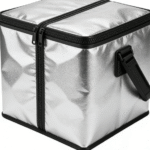
| Physical and operating fit | 20-liter; one-person lift, comfortable grip, secure lid, stable base, easy access, and optional tie-down or shoulder-carry compatibility | Packout drawing, sample trial, route observation, and cleaning review | Engineering and operations |
| Performance boundary | Compact size improves mobility but does not remove the need to define temperature, duration, coolant, opening behavior, and monitoring. | Traceable thermal, mechanical, monitoring, and application evidence | Engineering and quality |
| Supplier control | Internal dimensions, loaded-weight guidance, handle and closure tests, sample measurements, and thermal test conditions | Control plan, records, audit evidence, and change agreement | Procurement and quality |
| Implementation | Test the loaded carry in the actual vehicle, doorway, stair, and handover process. | Approved pilot, instructions, training, receiving, and escalation plan | Operations and quality |
| Lifecycle decision | driver time, usable payload per trip, freight, damage, handle life, cleaning, and replacement frequency; right-sized routes, reduced empty cube, durable high-use construction, and efficient return to the packing point | Comparable business case and periodic performance review | Procurement and operations |
Mobility Is the Main Design Constraint
The approval record should close three application-specific gaps before the project moves to production or launch.
- Approval requirement: Measure the payload and coolant together, including the space needed to avoid crushing products or blocking the lid.
- Approval requirement: Test the loaded carry in the actual vehicle, doorway, stair, and handover process.
- Approval requirement: Balance insulation thickness with internal space instead of maximizing either one in isolation.
Assign an owner and supporting evidence to each requirement. If one remains uncertain, keep it as an open approval item rather than hiding the uncertainty inside a broad supplier claim.
Define Temperature Performance With Conditions Attached
Convert thermal claims into approval statements with conditions attached. The specification should identify the required product range, packout revision, payload range, coolant and conditioning, ambient profile, duration and delay margin, openings, sensor plan, and acceptance criterion. Where different seasons use different packouts, approve each configuration explicitly rather than treating them as informal operator adjustments.
Create an evidence ladder. Start with design calculations or development comparison, move to representative laboratory testing, add lane qualification when the risk requires it, and use operational monitoring to verify controlled use. Each step answers a different question. Approval should be based on the level that matches product value, sensitivity, regulatory context, recoverability, and route variability, not on the most impressive certificate name in a proposal.
Select the Supplier and the Control System Together
Evaluate the proposed manufacturer against the approved requirement, not against a generic supplier questionnaire. Confirm whether the offer covers the box only or a wider scope that includes coolant, inserts, packout drawings, testing, qualification support, monitoring, labels, spare parts, training, and deviation assistance. Request internal dimensions, loaded-weight guidance, handle and closure tests, sample measurements, and thermal test conditions. Every important claim should point to a controlled document, sample, test condition, or production control.
Complete commercial and quality due diligence together. Review approved material sources, critical processes, inspection records, calibration, tooling maintenance, nonconformance, corrective action, subcontracted components, and engineering change notification. Agree who owns drawings, molds, product revisions, records, and retesting decisions. A supplier is ready for approval when it can recreate the accepted configuration and explain how changes will be evaluated before they reach a shipment.
Helpful decision tools
Check the details before you choose packaging
These quick tools can help you compare route risk, sizing needs, coolant choices, and packaging details before you request a quote.
Box Liner & Pallet Cover Sizing
Check box liner and pallet cover sizing logic for insulated packaging projects.
Estimate sizingCompliance Checklist Generator
Build a practical checklist for packaging review, shipping, and documentation.
Build checklistRoute Risk Checker
Review lane conditions before selecting packaging for real operating requirements.
Check route risk- Scope of supply, documentation, testing, qualification, and support
- Controlled specification, approved sample, bill of materials, and revision link
- Critical processes, inspections, records, calibration, and corrective action
- Subcontractor control, tooling maintenance, substitutions, and change notification
- Commercial responsibility for defects, rework, spare parts, and future orders
Create an Evidence Ladder for the Decision
Organize approval evidence by the decision it supports. Drawings and material records establish what the product is. Mechanical tests address handling and restraint. Thermal development tests compare designs. Qualification tests a defined packout against an approved requirement. Route monitoring shows how the controlled method behaves under operational variability. The approval record should identify which level is required and why, rather than accepting a collection of unrelated reports.
Before relying on any report, compare the tested version, payload, coolant, conditioning, initial temperatures, ambient profile, duration, openings, orientation, sensors, acceptance criteria, and deviations with the planned use. Record gaps and decide whether they are acceptable, require analysis, or require additional testing. A report name or pass statement is not enough. The supported conclusion must remain traceable to the configuration that procurement and production will actually purchase.
A Controlled Rollout Prevents Expensive Surprises
Implementation should move from representative sample to controlled pilot before full production or route launch. Confirm the exact bill of materials, drawings, colors, markings, accessories, packaging, and instructions. Use the pilot to test packing time, user errors, loaded ergonomics, vehicle fit, restraint, cleaning, monitoring, and receiving. For a temperature-controlled application, verify that the pilot follows the intended coolant and payload configuration rather than an easier demonstration setup.
After approval, freeze the critical specification and define change control. Train packers, drivers, couriers, cleaners, and receivers on the parts of the process they own. Establish a first-production review and monitor early shipments for recurring issues. A launch should include escalation contacts and a method for segregating suspect boxes or components. Periodic review can use damage, deviation, return, cleaning, and temperature data to refine the system without weakening the qualified or approved boundary.
Build a Cost Model Around Risk and Utilization
Build a risk-adjusted business case with one-time, recurring, and failure costs separated. One-time items may include design, tooling, samples, validation, and launch. Recurring items can include units, coolant, monitoring, labor, cleaning, freight, inspection, storage, and replacement. Failure costs may include product hold, reshipment, deviation investigation, customer disruption, and lost route capacity. Use project data or clearly identified assumptions rather than a generic savings percentage.
Compare alternatives on the same approved scope. A lower unit price is not lower cost if usable space is poor, freight cube is high, packout labor is slow, or quality escapes are frequent. A technically stronger design is not automatically better if it adds cost without addressing a route risk. The approval team should document the trade-off it is accepting and the operating measure that will show whether the expected value is achieved.
Applying the Decision Path to a Typical Project
Apply the full decision path to a typical project. A last-mile operator chooses a twenty-liter box to improve driver mobility, then discovers that the coolant and divider reduce payload capacity more than the catalog image suggested. The cross-functional team first approves the user requirement, then confirms payload and coolant fit with a physical sample. It records loaded handling, route exposure, hygiene, monitoring, and receiving needs before selecting the evidence level and commercial scope.
The chosen manufacturer supplies controlled drawings, materials, test reports, and a pilot batch. Procurement compares the quotation against the approved scope; quality checks change control and acceptance criteria; operations runs the pilot with normal users. Launch occurs only after unresolved gaps have owners and dates. The final record links the requirement, configuration, evidence, instructions, and production version so future changes can be assessed coherently.
Final Procurement Questions
What must be approved before the purchase order is released?
Approve the user requirement, product revision, internal and external dimensions, materials, packout components, test or qualification basis, critical inspection criteria, labels, packaging, documentation, commercial scope, and change-control responsibilities. For temperature-sensitive use, also approve the payload, coolant conditioning, ambient and duration assumptions, sensor plan, operating instructions, receiving criteria, and unresolved limitations.
How is an approved sample kept consistent with production?
Link the sample to controlled drawings, bill of materials, approved material sources, process settings, critical dimensions, inspection methods, and a pilot batch. Retain a reference sample where useful, but do not rely on appearance alone. The supplier should notify the buyer before changes to tooling, resin, insulation, hardware, seal, insert, coolant, subcontractor, process, or packaging that could affect function.
Who owns qualification and compliance decisions?
Responsibility should be allocated in the project agreement. The supplier can provide accurate product data, samples, reports, and technical support; the buyer normally defines the product limits, lane, acceptance criteria, quality system, and applicable market obligations. A contract manufacturer or testing laboratory may perform work, but that does not remove the need for the product owner and quality team to approve suitability.
When is a custom design justified?
Customization is justified when a standard product cannot meet critical payload geometry, usable capacity, restraint, cleaning, branding, route, accessory, or operating needs. Compare the value with tooling, development time, MOQ, change risk, test requirements, spare parts, and future revisions. A custom shape should solve a documented requirement rather than add complexity that can be handled with an insert or process change.
What is the most important limitation of a compact commercial ice box?
Compact size improves mobility but does not remove the need to define temperature, duration, coolant, opening behavior, and monitoring. The buyer should therefore avoid treating a capacity label, material name, or generic duration as a complete performance statement. Confirm the payload, coolant, route, openings, ambient exposure, handling, monitoring, test conditions, and receiving decision that define the intended use.
Conclusion: Approve a System You Can Explain and Repeat
A suitable 20 liter commercial ice box supplier is the result of disciplined specification rather than a single feature. The most reliable decision connects payload, temperature condition, route, usable space, construction, coolant, handling, hygiene, evidence, production control, and operating ownership. When those elements are explicit, procurement can compare offers fairly and operations can repeat the approved method without relying on memory or broad sales language.
- Start with the product and lane, then confirm physical fit and packout.
- Match the required evidence to the risk and application boundary.
- Approve supplier controls, implementation, monitoring, and change management together.
- Maintain one traceable link from requirement to evidence to operating instruction.
About Tempk
Tempk is a Shanghai-based cold-chain packaging company established in 2011. Its publicly presented range includes gel and water-based ice packs, EPP and plastic insulated boxes, vacuum-insulated solutions, insulated bags and liners, pallet covers, and temperature-monitoring products. For a project, Tempk can review the product type, required temperature condition, payload, route, season, handling, and receiving process before discussing a standard or customized configuration. Final suitability still depends on the buyer’s application review, testing, qualification, and operating controls.
Next Step
For a more useful quotation, provide Tempk with the packout dimensions, operating lane, handling conditions, documentation needs, and customization priorities.