Cooler Box OEM Price: How to Compare Real Quotes
A useful answer to cooler box OEM price starts with a simple distinction: the factory piece price is only one layer of the buying decision. The most useful way to compare quotations is to divide the decision into product definition, project cost, production cost, logistics, and lifecycle control. That structure makes hidden differences visible: a cheap unit may carry expensive freight, a premium unit may include engineering that another quote omits, and a strong sample may still fail commercially if the production specification is not controlled.
Define the exact OEM product before requesting a number
A supplier can quote this accurately only when the buyer defines the boundary of the requirement. Usable volume is shaped by the real product, secondary packaging, dividers, coolant, liners, and clearance needed to close the lid without forcing it. At the quotation stage, oversizing can increase material and freight cube; undersizing can force a redesign, create packing variability, or leave too little coolant space. The strongest final decision links the specification, evidence, commercial term, and operating consequence in one record. Send a payload drawing or representative sample and ask the supplier to show how much space remains for coolant and protective inserts. For sourcing teams, nominal liters are not a substitute for usable internal dimensions. For that reason, drawings and physical samples usually tell procurement more than a product name or nominal capacity alone.
This factor is easy to overlook because it often sits outside the headline unit price. The thermal path depends on wall material, wall thickness, joints, lid fit, closures, internal air space, and how coolant surrounds the payload. Before mass production, thicker or more complex insulation consumes more material and may increase outside dimensions, which can raise packing and freight cost even when the internal payload volume stays the same. The strongest final decision links the specification, evidence, commercial term, and operating consequence in one record. Ask for internal and external dimensions together, plus drawings or samples that show the lid joint, wall section, and usable payload space. From an engineering standpoint, a material with better laboratory insulation properties can still perform poorly if the complete box has leakage paths, large empty spaces, or an unsuitable packout. For that reason, drawings and physical samples usually tell procurement more than a product name or nominal capacity alone.
This factor is easy to overlook because it often sits outside the headline unit price. Color, logo, labels, inserts, dividers, handle style, molded marks, carton printing, and private-label packaging can all be part of an OEM or wholesale program. At the quotation stage, each option can add setup time, tooling, minimum order quantities, print plates, separate inventory, inspection steps, or packaging labor. The strongest final decision links the specification, evidence, commercial term, and operating consequence in one record. Separate must-have custom features from nice-to-have branding before requesting quotations, then ask suppliers to price each option transparently. Operationally, bundled customization can make price comparison difficult unless the same feature set is quoted by every supplier. A useful cost-reduction discussion therefore asks which feature, setup, or volume assumption can change without damaging the operating requirement.
Taken together, payload geometry, insulation architecture, and customization scope should be treated as one sourcing conversation rather than separate afterthoughts. For cooler box OEM price, this matters because a supplier can only hold a price against assumptions that are visible and stable. A controlled RFQ gives the supplier room to propose alternatives while preserving the functions that the buyer has identified as non-negotiable. The result is a quotation that can be compared on evidence instead of on marketing language.
Separate one-time cost, unit cost, and landed cost
The commercial effect becomes clearer when the specification is written as an operating requirement. Custom molded shapes, handles, hinge features, logos, lid geometry, inserts, and integrated details can require dedicated tooling or mold modification. In practical terms, tooling may be quoted separately, amortized into unit price, or shared across a forecast, so two low-looking quotations can have very different economics over the planned volume. The strongest final decision links the specification, evidence, commercial term, and operating consequence in one record. Ask who owns the tooling, what changes are included, what triggers a new tool, how maintenance is handled, and whether the tool can support future volume or design revisions. Operationally, a cheap first sample does not prove that the production tool, cycle, material, and tolerances will be the same. A useful cost-reduction discussion therefore asks which feature, setup, or volume assumption can change without damaging the operating requirement.
The strongest sourcing teams treat this as a controlled input rather than a last-minute purchasing detail. Production setup, mold heating, color preparation, printing, assembly, quality inspection, and carton packing create fixed work that is spread over the order quantity. In practical terms, larger runs can reduce the fixed cost per unit, but they also increase inventory exposure, cash tied up in stock, storage demand, and the cost of a design change. The strongest final decision links the specification, evidence, commercial term, and operating consequence in one record. Request price breaks at realistic annual volumes rather than one artificially large quantity, and ask whether repeat orders can use the same setup and packaging specification. For a repeat-order program, the lowest tier price is not automatically the lowest total cost if demand is uncertain or product changes are likely. A useful cost-reduction discussion therefore asks which feature, setup, or volume assumption can change without damaging the operating requirement.
This is where many quotations stop being comparable. Landed cost links factory price with export packing, origin charges, international freight, insurance if applicable, customs-related charges, duties or taxes, destination handling, local delivery, and inventory effects. Operationally, bulky insulated products can shift the economics toward shipping efficiency, especially when freight is priced by volume rather than actual mass. The strongest final decision links the specification, evidence, commercial term, and operating consequence in one record. Build a per-unit landed-cost worksheet using the supplier packing data and your own forwarder or customs information rather than asking the manufacturer for a single universal landed number. Before mass production, duty rates and taxes depend on classification, origin, destination, and current rules, so they should be verified for the specific transaction. For an international program, keep the factory quotation, packed shipment data, and forwarder estimate as separate inputs so a freight change does not silently rewrite the product comparison.
Taken together, tooling and mold economics, order quantity and MOQ, and landed cost modeling should be treated as one sourcing conversation rather than separate afterthoughts. For cooler box OEM price, this matters because a supplier can only hold a price against assumptions that are visible and stable. A controlled RFQ gives the supplier room to propose alternatives while preserving the functions that the buyer has identified as non-negotiable. That approach makes the final price easier to explain internally and easier to defend during supplier review.
| Decision layer | Price question | Evidence to keep |
| Product | What exact cooler are we buying? | Drawing, sample and specification |
| Project | Which one-time costs apply? | Tooling, artwork and development quote |
| Production | How does price change with volume? | Tiered quote and quality plan |
| Logistics | What is the delivered cost? | Packing data, trade term and freight model |
| Lifecycle | What happens after receipt? | Reuse, storage, inspection and change controls |
The table is useful only when every supplier is answering the same requirement. Keep the underlying drawing, packing assumption, quantity, and trade-term basis with the commercial comparison so a later revision does not turn the columns into different products.
Make the sample a controlled commercial reference
The strongest sourcing teams treat this as a controlled input rather than a last-minute purchasing detail. An approved sample establishes dimensions, fit, surface, closure behavior, branding, packout compatibility, and other visible requirements that production units should reproduce. Operationally, changes after approval can create rework, new tooling, scrapped packaging, delayed launches, or split inventory, which are often more expensive than careful sample review. The strongest final decision links the specification, evidence, commercial term, and operating consequence in one record. Freeze a signed drawing, sample reference, color standard, print artwork, carton specification, and inspection points before mass production. For sourcing teams, a hand-finished prototype may not represent the surface, tolerance, cycle, or material of molded production. That record also gives purchasing, quality, and operations the same reference when a later lot looks or behaves differently from the approved sample.
The commercial effect becomes clearer when the specification is written as an operating requirement. For repeat orders, dimensions, lid fit, wall condition, molded defects, hardware, labels, carton strength, and cleanliness can matter as much as the initial sample. For a repeat-order program, inspection and controlled production add cost, but uncontrolled variation can create packing delays, returns, damage, or a loss of confidence across a large batch. The strongest final decision links the specification, evidence, commercial term, and operating consequence in one record. Agree on measurable acceptance criteria, inspection frequency, defect handling, traceability, and what happens when a raw material, mold, component, or process changes. At the quotation stage, generic claims such as “high quality” are not substitutes for defined acceptance criteria. That record also gives purchasing, quality, and operations the same reference when a later lot looks or behaves differently from the approved sample.
The commercial effect becomes clearer when the specification is written as an operating requirement. A change in material grade, density, supplier, mold, wall section, component, adhesive, print process, or packing method can affect fit, durability, appearance, or thermal behavior. Before mass production, uncontrolled changes can trigger requalification, field complaints, repacking, or mixed inventory that costs more than a disciplined notification process. The strongest final decision links the specification, evidence, commercial term, and operating consequence in one record. Require advance notification for defined changes and agree on when a new sample, test, or approval is needed before the changed product ships. From an engineering standpoint, the phrase “same product” should be defined by controlled specifications, not visual similarity alone. That record also gives purchasing, quality, and operations the same reference when a later lot looks or behaves differently from the approved sample.
Taken together, sample-to-production control, production consistency and quality control, and change control should be treated as one sourcing conversation rather than separate afterthoughts. For cooler box OEM price, this matters because a supplier can only hold a price against assumptions that are visible and stable. A controlled RFQ gives the supplier room to propose alternatives while preserving the functions that the buyer has identified as non-negotiable. That approach makes the final price easier to explain internally and easier to defend during supplier review.
Treat thermal claims as system claims, not material slogans
From a buyer’s perspective, the important point is not the label but the mechanism behind the cost. Gel packs, ice bricks, phase change materials, water ice, or dry ice are separate cooling components whose conditioning and placement affect the complete thermal system. For a repeat-order program, a quote for the cooler alone may look low until coolant quantity, conditioning labor, separators, absorbent materials, liners, and replacement stock are added. The strongest final decision links the specification, evidence, commercial term, and operating consequence in one record. Clarify whether coolant is included, optional, or supplied by you, and request a repeatable packout instruction if temperature control is part of the project. Operationally, the box is the insulating enclosure; the coolant supplies cooling capacity. Neither should be evaluated in isolation for a temperature-sensitive route. If the shipment is temperature-sensitive, the approval record should state the payload, coolant condition, packing sequence, monitoring method, and the route or test profile used to judge acceptance.
Helpful decision tools
Check the details before you choose packaging
These quick tools can help you compare route risk, sizing needs, coolant choices, and packaging details before you request a quote.
Packaging Selector
Compare insulated packaging options by product, route, and temperature need.
Find packagingBox Liner & Pallet Cover Sizing
Check box liner and pallet cover sizing logic for insulated packaging projects.
Estimate sizingDry Ice Calculator
Estimate dry ice needs for frozen or ultra-cold shipments before packing.
Estimate dry iceThis factor is easy to overlook because it often sits outside the headline unit price. For temperature-sensitive shipping, performance depends on the complete configuration: enclosure, coolant, payload, conditioning, pack pattern, ambient exposure, route, and operating procedure. For a repeat-order program, development testing, laboratory work, documentation, and repeat studies after major design changes can be real project costs even when they are not part of the molded box price. The strongest final decision links the specification, evidence, commercial term, and operating consequence in one record. Ask what test method, ambient profile, payload, coolant, acceptance criteria, and sample configuration support any performance statement. For formal cold-chain programs, determine whether standards such as ISTA thermal methods are relevant to your quality process. For sourcing teams, a stated hold time should never be treated as universal unless the test conditions match the intended use. If the shipment is temperature-sensitive, the approval record should state the payload, coolant condition, packing sequence, monitoring method, and the route or test profile used to judge acceptance.
From a buyer’s perspective, the important point is not the label but the mechanism behind the cost. Expanded polypropylene is a closed-cell bead foam used where low weight, cushioning, thermal insulation, moisture resistance, and repeated handling are useful. Before mass production, a molded EPP program may carry tooling, density, geometry, surface, color, and secondary-operation decisions that do not appear in a simple catalog price. The strongest final decision links the specification, evidence, commercial term, and operating consequence in one record. Ask the supplier to state material grade, molded density or an equivalent controlled specification, wall geometry, internal dimensions, and what is included in the quoted piece price. For sourcing teams, ePP insulation slows heat transfer, but it does not by itself prove a temperature range or a fixed hold time for a packed shipment. For that reason, drawings and physical samples usually tell procurement more than a product name or nominal capacity alone.
Taken together, coolant and packout, thermal and transport evidence, and EPP construction should be treated as one sourcing conversation rather than separate afterthoughts. For cooler box OEM price, this matters because a supplier can only hold a price against assumptions that are visible and stable. A controlled RFQ gives the supplier room to propose alternatives while preserving the functions that the buyer has identified as non-negotiable. This is the difference between price shopping and controlled sourcing.
Build an OEM supplier comparison that survives scale-up
At scale, this factor becomes less forgiving because small assumptions multiply across the order. A meaningful comparison uses the same internal dimensions, material family, wall or shell structure, accessories, customization, packing method, quantity, trade term, and quality requirements. From an engineering standpoint, when these inputs differ, the price gap may reflect a different product rather than a more or less competitive supplier. The strongest final decision links the specification, evidence, commercial term, and operating consequence in one record. Create a comparison sheet that records included and excluded items, one-time charges, sample cost, tooling, carton packing, spare parts, and freight basis. Operationally, a unit price without a controlled specification is only a preliminary number. Documenting the assumption now makes later negotiation, approval, and repeat ordering much easier.
This factor is easy to overlook because it often sits outside the headline unit price. Cooler boxes are bulky relative to their mass, so cartons, nesting ability, stacking, pallet pattern, and container utilization can strongly influence delivered cost. For sourcing teams, a slightly cheaper unit can become more expensive after export packing and transport if it ships with excessive empty volume or needs heavy protective cartons. The strongest final decision links the specification, evidence, commercial term, and operating consequence in one record. Ask for packed carton dimensions, units per carton, gross weight, pallet pattern if used, and loading assumptions so your forwarder can compare freight on the same basis. In practical terms, do not infer delivered economics from factory unit price alone. For an international program, keep the factory quotation, packed shipment data, and forwarder estimate as separate inputs so a freight change does not silently rewrite the product comparison.
At scale, this factor becomes less forgiving because small assumptions multiply across the order. Lead time can include tooling, sampling, artwork, material preparation, molding, secondary operations, inspection, carton production, export booking, and seasonal factory loading. For a repeat-order program, rush production or split shipments can erase a unit-price advantage, while large safety stocks can increase carrying cost and hide quality problems until too much inventory is built. The strongest final decision links the specification, evidence, commercial term, and operating consequence in one record. Ask for a milestone schedule, identify long-lead items, and separate sample, tooling, mass-production, and shipping lead times instead of relying on one headline number. For sourcing teams, a quoted lead time is only useful when its start point, assumptions, and approval gates are clear. Documenting the assumption now makes later negotiation, approval, and repeat ordering much easier.
The strongest sourcing teams treat this as a controlled input rather than a last-minute purchasing detail. Deposits, balance timing, tooling payments, sample charges, inspection holds, and payment method determine how much cash is committed before goods are received. Before mass production, a small unit-price discount can be offset by unfavorable cash timing, financing cost, or the risk of paying too much before acceptance evidence is available. The strongest final decision links the specification, evidence, commercial term, and operating consequence in one record. Compare payment terms alongside price and define what documentation or inspection releases each payment milestone. Commercially, commercial terms should be reviewed with the buyer’s finance and legal teams, especially for new suppliers or large custom programs. Documenting the assumption now makes later negotiation, approval, and repeat ordering much easier.
Taken together, quotation normalization, freight cube and packing efficiency, lead time and production planning, and payment terms and cash exposure should be treated as one sourcing conversation rather than separate afterthoughts. For cooler box OEM price, this matters because a supplier can only hold a price against assumptions that are visible and stable. A controlled RFQ gives the supplier room to propose alternatives while preserving the functions that the buyer has identified as non-negotiable. The result is a quotation that can be compared on evidence instead of on marketing language.
Practical example
Imagine an OEM buyer wants a branded reusable cooler for a delivery program. A supplier can quote quickly from a photo, but the result is still provisional until payload dimensions, lid clearance, wall structure, handle requirement, color, logo method, carton packing, quantity, and destination are fixed. If the box will carry temperature-sensitive goods, coolant layout and test evidence become additional project inputs. The example shows why the best OEM price normally appears after the requirement becomes more detailed, not before.
Frequently asked questions
What information is needed for an accurate OEM cooler box quotation?
At minimum, provide internal or payload dimensions, intended material or construction, wall and lid expectations, coolant or insert needs, customization, order quantity, packing method, destination, and requested trade term. If the box is part of a temperature-sensitive system, also provide the required product temperature condition, route duration, ambient exposure, and whether test evidence is needed. The supplier can then quote the defined project rather than a generic capacity.
Does a larger order always reduce the OEM unit price?
Larger production runs can spread setup and tooling-related effort over more units, but the best commercial quantity also depends on inventory risk, demand certainty, storage, design stability, and freight. A lower tier price can be a poor decision if it forces you to hold excessive stock or makes a later design change expensive.
Should tooling be included in the unit price?
Either structure can work. What matters is transparency. Ask whether tooling is a one-time charge, amortized into the piece price, refundable, transferable, or tied to a minimum volume. Also confirm tooling ownership, maintenance, expected revision process, and what happens if the project changes.
Can a supplier guarantee temperature performance from the box material alone?
No responsible comparison should rely on the material alone. Thermal performance depends on the complete configuration, including the cooler, wall geometry, lid, coolant, payload, packout, conditioning, route, and ambient profile. Ask for evidence that matches your intended use and define the acceptance criteria before treating a performance statement as a purchasing fact.
Conclusion
A credible answer to cooler box OEM price is built from a controlled specification rather than a universal price range. Define usable space and construction first, separate tooling and customization from recurring unit cost, normalize quantity and packing assumptions, and calculate delivered economics on the same trade-term basis. If the cooler is part of a temperature-sensitive shipment, require evidence for the complete packout instead of treating the insulation material as proof. Finally, protect the approved design through production quality and change control. Those steps give purchasing a price that can be compared, explained, and repeated.
About Tempk
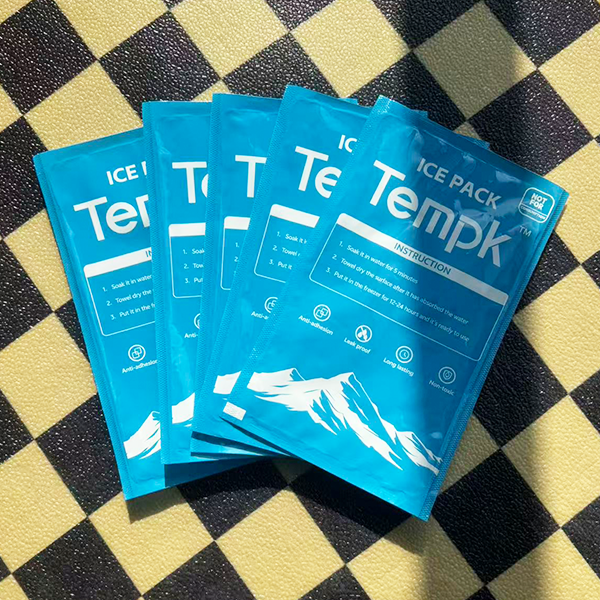
Tempk supplies cold-chain packaging products including EPP cooler boxes and insulated shipping solutions for food, grocery, pharmacy, and logistics applications. Public product information shows project options such as custom size, wall thickness, color, logo, inserts, dividers, labels, coolant matching, and packing method. For buyers discussing price, the useful starting point is a project brief that defines payload, route, coolant, customization, order quantity, and packing expectations. Temperature performance or qualification should then be reviewed against the specific packout and supporting evidence rather than assumed from the box material alone.
Next step: For a cleaner supplier comparison, send Tempk one controlled RFQ covering the product, quantity tiers, packing, delivery term, and evidence required before production approval.