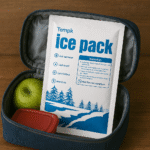
Gel Ice Pack Ice Cream Supplier: Procurement and Packout Strategy
The largest risk in a gel ice pack ice cream supplier program is approving the component before defining the shipment. A sealed pack can be well made and still be wrong for ice-cream e-commerce, sample distribution, catering transfer, and frozen-dessert wholesale. The final decision should connect the required product condition, route exposure, payload, insulation, pack placement, conditioning, and evidence. That approach turns a vague bulk enquiry into a specification that purchasing, operations, and quality can all defend.
| Operational takeaway: Buy the packout result, not a stand-alone marketing promise. Define what must be protected, simulate how the shipment is handled, test representative extremes, and keep the approved bill of materials and instructions under change control. |
|---|
A Supplier Decision Begins With the Shipment
The decision chain is product condition, route exposure, packaging system, operating process, and evidence. Product condition states what must be protected and what extremes can cause harm. Route exposure covers time, ambient conditions, handovers, delays, and receipt. Packaging combines insulation, coolant, payload, void space, and closure. Operations cover conditioning and pack assembly. Evidence shows whether the complete design meets predefined acceptance criteria.
Apply that chain to gel ice pack ice cream supplier. The component should be described as a finite cold source that may slow heat gain but is not automatically equivalent to dry ice, mechanical freezing, or a qualified deep-frozen shipper. If the enquiry does not yet define the acceptable product condition, representative payload, insulation, route, and dispatch process, the responsible supplier response is a set of questions rather than a universal recommendation.
Put ownership beside every link. Product or quality teams approve the acceptance range; logistics describes the lane; packaging engineering owns the design; operations owns conditioning and assembly; procurement manages the controlled specification and supplier; receiving teams inspect and escalate. A gap between owners is a failure mode.
| Approval principle: No single material property proves shipment performance. Approval should connect controlled component data, a repeatable packout, representative testing, and a managed operating process. |
|---|
A Data Sheet Is Useful Only When It Changes a Decision
| Specification or evidence | Operational question | What approval should record |
|---|---|---|
| Dimensions and filled-weight tolerance | Will the pack fit, contact, feed, and count consistently? | Nominal value, tolerance, inspection method, and sample |
| Formulation or phase behavior | Does conditioning and thermal response fit the product limit? | Product-specific data, method, lot or revision, and use boundary |
| Film and seal controls | Can the pouch survive the real mechanical hazards? | Construction, test approach, acceptance rule, and change notification |
| Packout test | Does the complete system work for representative payload and exposure? | Protocol, configuration, sensors, acceptance criteria, results, and deviations |
| Safety and compliance documents | Are materials, claims, contact, and market use supported? | Applicable documents, review owner, scope, and expiry or revision |
For this application, emphasize phase state, initial pack temperature, latent and sensible heat, pouch contact, thermal bridges, seals, and low-temperature film behavior. Each item matters because it changes fit, heat transfer, containment, safety, or process stability. Do not collect documents without a review purpose. A certificate stored in a folder is not a control unless its scope matches the exact product and intended use.
Nominal values need tolerances and methods. Two suppliers can list the same dimensions but measure them differently; a pack can meet average filled weight while producing unacceptable extremes. Define how many units are measured, at what condition, with what equipment, and how results are recorded. Use risk to decide the depth of control.
Specifications should also state what is not claimed. Avoid universal language about compliance, hold time, reusability, food contact, biodegradability, or freeze protection. A clear limitation increases credibility and gives sales, quality, and customers the same boundary.
The RFQ Should Describe the Job, Not Just the Pack
The requirements brief should identify the application as ice-cream e-commerce, sample distribution, catering transfer, and frozen-dessert wholesale; the destination market as frozen-food parcel and local delivery markets; and the users as ice-cream brands, frozen-dessert manufacturers, distributors, and fulfillment teams. Describe the product being protected, its approved dispatch and receipt conditions, freeze sensitivity or other limits, and whether temperature control is a safety, quality, stability, or comfort requirement.
Add the packout context: insulation and internal dimensions, payload range, usable space, coolant count and proposed position, expected route and delays, carrier mode, seasonal profiles, conditioning equipment, packing rate, storage, and receiving process. If information is unknown, mark it for a trial rather than filling the gap with an assumed number.
Define component needs around test conditions, pack conditioning, low-temperature toughness, filled weight, dimensions, lot traceability, and evidence for the intended frozen route. State the required documents, language, artwork, packaging, lot identification, shelf or storage controls if justified, and change-notification process. Ask suppliers to identify exceptions and suggest what additional information they need.
Separate mandatory requirements from preferences. A mandatory item protects safety, compliance, fit, or approved performance. A preference may improve labor, appearance, or cost but can be traded. This makes supplier comparison fair and avoids eliminating a technically sound option for a cosmetic feature.
Pilot the Final Construction in the Final Workflow
Stage one is document and sample review. Confirm identity, construction, dimensions, fill, seals, safety information, intended market documentation, storage, and conditioning. Stage two is bench work: condition the pack in the planned equipment, check fit and handling, and screen mechanical failure modes. These steps remove obvious mismatches before a costly thermal program.
Stage three tests the full packout under a protocol that reflects payload extremes and credible route exposure. Record the exact bill of materials and assembly. Stage four is an operational pilot with trained staff, production-rate conditioning, normal staging, carrier handling where appropriate, and receiving review. A laboratory success can fail if the line cannot reproduce it.
Stage five approves the controlled specification, supplier, packout instruction, training, incoming checks, records, and escalation process. Release production only after open deviations are resolved or formally accepted by the responsible owner. Keep retained samples and test records linked to the approved revision.
Reassessment is triggered by meaningful change: payload, box, insulation, coolant, film, fill, supplier site, conditioning equipment, carrier, route, market, claim, or operating process. Not every change needs a full qualification, but every change needs a documented risk decision.
What Commonly Breaks After a Successful Sample
The first failure mode is using the coolant to solve a problem outside its boundary. Examples include trying to remove field heat, compensate for warm staging, replace required dangerous-goods packaging, create therapeutic authorization, or make an uninsulated box temperature controlled. In this program, a known poor fit is long or hot parcel lanes where testing shows the packout cannot maintain the required frozen quality, or payloads needing temperatures below the pack's effective range.
The second is configuration drift. Operators add or remove packs, change orientation, substitute a similar-looking unit, leave void space, or use a different payload. Prevent drift with controlled images, part identification, line clearance, count verification, and exception instructions. Audit the real packout, not only the written procedure.
The third is conditioning drift. Dense freezer loading, defrost cycles, short conditioning, or warm staging changes the starting state. Monitor process capability during peak volume. If readiness cannot be verified, improve the equipment or procedure rather than extending a guess.
The fourth is silent supplier change. Film, resin, additive, seal process, production site, dimensions, or case packing can shift while the commercial part name remains. A quality agreement and meaningful change notification allow the buyer to decide whether inspection or retesting is required.
Helpful decision tools
Check the details before you choose packaging
These quick tools can help you compare route risk, sizing needs, coolant choices, and packaging details before you request a quote.
Insulation Material Drop Resistance
Review drop resistance and handling factors before choosing insulation materials.
Check resistanceCompliance Checklist Generator
Build a practical checklist for packaging review, shipping, and documentation.
Build checklistBox Liner & Pallet Cover Sizing
Check box liner and pallet cover sizing logic for insulated packaging projects.
Estimate sizingThe Same Specification Must Serve Quality and Regulatory Teams
The compliance frame includes food-safety and quality controls, carrier rules for alternative refrigerants, and product-specific frozen-storage requirements. Use FDA frozen-food storage guidance, USDA mail-order food guidance, and applicable carrier rules when relevant, but confirm scope, current status, and local implementation. A supplier declaration can support a material claim; it cannot transfer the shipper's responsibility for route, product, labeling, or finished-pack approval.
Quality control preserves the approved design through lot traceability, manufacturing checks, incoming inspection, complaint handling, corrective action, document control, and change management. Regulatory review controls claims, intended use, contact, market access, warnings, and records. The two functions should approve the same product description.
Avoid the word "compliant" without naming what is covered. A pouch might meet an agreed material requirement but the shipment can still fail a temperature criterion. A packout might pass a chamber profile but still lack required marks for a biological shipment. Precise claims make gaps visible before dispatch.
Prepare a release file containing the approved specification, sample, test evidence, packout, conditioning method, safety and market documents, supplier approval, training, receiving plan, and change triggers. This file should be practical enough that a new team member can understand why the component was selected and what would invalidate the decision.
Cost, Waste, and Reliability Belong in One Model
The total-value review includes price, inbound freight, storage, conditioning energy, labor, line speed, usable payload, outbound weight and volume, product loss, complaints, investigation, return, cleaning, and disposal. The sustainability priorities are avoiding failed deliveries, comparing refrigerant and insulation mass, recovery options, freezer energy, and right-sized packaging. Do not assign benefits that the actual logistics model cannot deliver.
Compare alternatives after they meet the same acceptance criteria. A lower-cost pack that requires more units, more freezer space, or more labor may not be cheaper. A custom shape can create value if it reduces error or improves space utilization, but it can also add tooling, forecast risk, and single-source dependency.
For reuse, calculate the closed loop rather than citing an assumed cycle count. Define inspection and retirement, loss, cleaning, return distance, reverse-logistics capacity, and backup inventory. If those controls are absent, describe the pack as physically reusable only with caution; commercial reuse has not yet been established.
After launch, review exceptions and packaging consumption. Reduce material through controlled trials and repeat the risk assessment. The goal is not the lightest theoretical packout but the lowest responsible system burden for successful, reproducible deliveries.
A Practical Approval Path
An ice-cream brand replaces dry ice with standard frozen gel packs to simplify handling but does not repeat its summer parcel test. The coolant name changed less than the thermal duty did.
The team first confirms the product requirement and the route rather than changing coolant immediately. It then compares the current packout with Standard frozen gel pack, Low-temperature PCM pack, and Dry ice or active frozen transport only where those options fit. Each trial keeps the payload, insulation, conditioning record, sensor plan, and acceptance criteria controlled so the result can be interpreted.
Procurement records component cost and supply terms, operations records conditioning and packing burden, and quality reviews evidence and deviations. The chosen configuration is the one that meets the defined requirement with a reproducible process and acceptable total burden. No performance duration is carried forward unless the controlled test provides evidence for it.
Before scale, the team pilots production units from a traceable lot and checks the final case and pallet configuration. It also defines what happens after a missed pickup, damaged pouch, conditioning interruption, or supplier change. Those exception rules turn a successful trial into an operational system.
Frequently Asked Questions
What is the first specification to define?
Define the protected product's acceptable condition and the consequence of exposure. That decision drives coolant behavior, pack placement, monitoring, test criteria, and route choice. A component dimension is important, but it should not be the first design input.
Can one packout cover every season and payload?
Sometimes one robust configuration can cover a defined range, but that must be demonstrated. Minimum and maximum payload and credible hot and cold profiles can produce different risks. Do not extend an approved configuration beyond its evidence without review.
Who is responsible for the completed shipment?
Responsibilities vary by contract and regulation, but the buyer, shipper, brand owner, quality team, carrier, and supplier each control different elements. The organization releasing the shipment should ensure the finished system and process meet applicable product and route requirements.
What should happen after a leaking pouch is found?
Quarantine affected inventory, protect product and staff according to the safety information, record the lot and condition, and investigate whether the cause was manufacture, conditioning, packing, payload puncture, or transport. Do not return a damaged pack to service.
From Sourcing to Controlled Use
A sound gel ice pack ice cream supplier decision connects the protected product, route, payload, insulation, conditioning, pack placement, production specification, and evidence. The supplier should control the component and communicate changes; the buyer should approve the complete use and operating process. Neither side should turn a generic pack into a universal performance or compliance promise.
Before ordering at scale, confirm the boundary, test representative conditions, pilot the final construction, and define incoming inspection and exception handling. Use FDA frozen-food storage guidance, USDA mail-order food guidance, and applicable carrier rules where applicable, while verifying the current rules for the actual market and product. Optimize cost and waste only after the acceptance requirement remains protected.
About Tempk
Tempk is the cold-chain packaging brand of Shanghai Tempk Industrial Co., Ltd. We work with B2B buyers on gel packs, phase change materials, insulated packaging, and related temperature-controlled packaging components. For ice-cream e-commerce, sample distribution, catering transfer, and frozen-dessert wholesale, our useful role begins with the shipment details: product requirement, payload, route, insulation, conditioning, and handling. We do not treat one coolant format as universal. The aim is to help buyers compare a practical configuration, sampling plan, and supply specification before moving from evaluation to bulk production.
Discuss the Application
Share the product type, acceptable condition, route, payload, insulated container, packout process, and target order volume with Tempk. Ask for a practical recommendation for gel ice packs used around frozen desserts and the documents or trials needed before scale.