Distributor Dry Ice Pack for Biologic Logistics: Approval Gates
A distributor dry ice pack for biologic logistics should enter routine use only after the product, material, lane, qualification, inventory, monitoring, and quality gates are closed. This protects the distributor from treating solid carbon dioxide, water-activated hydration sheets, gel packs, and PCM packs as interchangeable cold sources. It also keeps approved biologic conditions ahead of warehouse convenience. The final program must identify which payloads and routes each packout code covers, how components are conditioned and traced, what monitoring data mean, who decides excursions, and how supplier changes, CAPA, reverse logistics, and sustainability remain controlled after launch.
Gate 1: Approve the Product and Material Identity
Start with a controlled biologic distribution profile. Record approved or supported storage and transport conditions, freeze sensitivity, excursion basis, primary container, secondary assembly, orientation, light or agitation concerns, minimum and maximum payload, and the authorized disposition process.
Biologics are diverse; FDA’s category includes vaccines, blood products, proteins, cells, tissues, and gene therapies. No universal setpoint should be applied to all of them. Packaging and distribution criteria come from the exact product label and stability program.
Then resolve the coolant term.
Solid dry ice is carbon dioxide, solid. It sublimates, creates extreme cold, loses mass before and during shipment, can damage freeze-sensitive product or brittle materials, and requires carbon dioxide gas release.
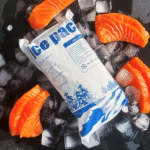
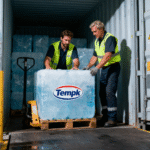
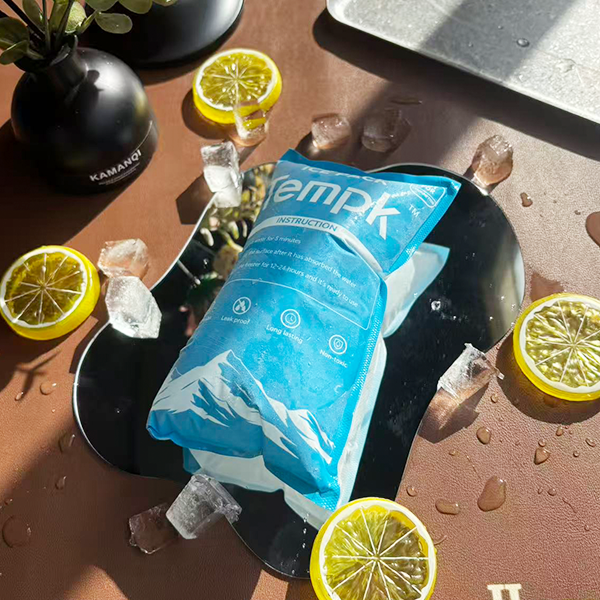
A hydrate dry ice pack can be a water-activated sheet rather than carbon dioxide. Tempk’s official instruction identifies its hydration sheet as not being dry ice and directs users to add water and freeze it. It is therefore treated as a frozen aqueous coolant with hydration, expansion, conditioning, seal, and leakage controls.
Gel and PCM packs receive separate identities based on their actual formulation, container, phase behavior, and instructions. A distributor material code should map only to approved packout codes; physical resemblance cannot authorize substitution.
Gate 1 closes when quality approves the product requirement and material master.
Gate 2: Build the Distributor Packout Catalog
A controlled catalog links each biologic and lane group to a specific shipping-system revision.
The catalog entry identifies:
primary and secondary package;
coolant or refrigerant item, quantity, condition, and position;
insulated container and structural outer;
separators, supports, absorbent, and dunnage;
minimum and maximum payload;
monitor and mapped placement;
closure, venting, marks, and labels;
packout and receiving SOP;
qualified warm and cold profiles;
permitted lanes, services, seasons, and contingency.
Separate functions remain visible. Coolant absorbs heat; insulation slows heat entry; containment protects contents; the outer survives distribution; the monitor records conditions; qualification supports the system. No component alone makes the shipment temperature controlled or compliant.
Lane grouping needs a written rationale. A direct regional service, international air lane, weekend route, and remote location may require different operating envelopes. Use order-management rules or barcode checks so operators cannot select a packout solely by box size.
Payload grouping also needs limits. A minimum load can be a cold-side or warm-side challenge. A maximum load can crowd coolant or create an internal warm area. If dummy load or dunnage is used, catalog it as an approved item and specify placement.
Gate 2 closes with controlled drawings, bills of materials, eligibility rules, and revisions.
Gate 3: Review Evidence Before Qualification
| Evidence gate | Approval question | Evidence required |
|---|---|---|
| Product | What condition and excursions are supported? | Label, stability basis, container information, quality procedure |
| Coolant | What is the actual material and conditioned state? | Technical specification, safety information, instructions, production sample |
| Manufacturer | Can routine lots match the development sample? | Lot controls, inspection, traceability, quality agreement, change notification |
| Payload | Which minimum and maximum orders are covered? | Load drawings, geometry, dunnage, bracket rationale |
| Lane | What exposure and delay are credible? | Route map, service, handovers, seasonal data, contingency |
| Thermal test | Were warm and cold risks mapped? | Protocol, profiles, sensor map, instruments, raw data, pass criteria |
| Physical test | Do materials, seals, labels, and supports survive? | Conditioned distribution tests and post-test inspection |
| Operations | Can warehouses reproduce the packout? | Conditioning study, SOP, training, pilot, error controls |
| Monitoring | Does the device support a defined decision? | Placement rationale, configuration, calibration or accuracy evidence, data workflow |
| Sustainability | Does the comparison use successful deliveries? | Defined boundary, packaging, energy, returns, damage, excursions, product loss |
Do not close evidence gaps with generic certificates or supplier assurances. Mark them for testing, documentation, or quality decision. A manufacturer’s report can support approval when its configuration is comparable, but the distributor must assess applicability.
Gate 3 closes when the qualification protocol can be written without guessing critical inputs.
Gate 4: Qualify the System and Lane Envelope
The approved protocol specifies the exact production-equivalent components, payload brackets, starting conditions, conditioning, profiles, duration, sensor positions, instruments, physical challenges, and acceptance criteria.
Use justified hot and cold profiles. ISTA 7E provides parcel thermal profiles, and Standard 20 provides an insulated-container design and qualification process. WHO guidance addresses shipping-container qualification and route profiling for time-and-temperature-sensitive products. USP General Chapter 1079 supports a risk-based storage and transport framework. The chosen test must match the distribution question.
Helpful decision tools
Check the details before you choose packaging
These quick tools can help you compare route risk, sizing needs, coolant choices, and packaging details before you request a quote.
Packaging Selector
Compare insulated packaging options by product, route, and temperature need.
Find packagingInsulation Material Drop Resistance
Review drop resistance and handling factors before choosing insulation materials.
Check resistanceCompliance Checklist Generator
Build a practical checklist for packaging review, shipping, and documentation.
Build checklistMap sensors at credible warm and cold locations. State what each measurement represents. A sensor beside dry ice is not a complete payload measurement. Instrument range, interval, accuracy evidence, response, calibration status, and data capacity should fit the test.
Test or justify minimum and maximum payloads and product families. Challenge component and operating tolerances that can reasonably occur. Do not add arbitrary abuse, but do not test only the ideal assembly.
Assess physical and thermal performance together. At low temperatures, plastics, films, labels, adhesives, and seals can change. Vibration and drops can move a coolant or damage containment. Condensation can weaken an outer or obscure identification. Confirm venting remains functional after closure and physical stress when solid dry ice is present.
Run an operational pilot. Warehouse personnel condition, pick, scan, assemble, monitor, mark, tender, and receive packages using the intended systems and timing.
Gate 4 closes with approved reports, resolved deviations, and a defined lane and payload envelope.
Gate 5: Release Inventory, Monitoring, and Traceability
Incoming controls verify item, revision, lot, quantity, condition, and required documents. Quarantine unexplained changes or damage.
Solid dry ice requires ventilated storage, protected handling, safe tools, trained staff, and a method to determine net quantity at tender. Inventory loss through sublimation should be planned and measured.
Hydration sheets need status control from dry through hydrated and conditioned states. Conditioning records should identify method, equipment, time or acceptance, batch, release, and storage. Gel and PCM packs need equivalent conditioning controls. A pack that feels cold is not automatically in the approved state.
Traceability links supplier lot, receipt, release, conditioning, packout revision, product, payload, operator, monitor, shipment, lane, and disposition as required by risk. This supports targeted holds and supplier investigations.
Monitoring data need integrity and ownership. Link device ID, configuration, mapped position, clock, start and stop, original file, reviewer, and decision. Define real-time alert coverage and interventions. At receipt, protect product, inspect the system, retrieve data, and escalate deviations.
Inventory continuity should be planned without authorizing silent substitution. Define approved alternate suppliers or components only after comparability assessment and required testing. During a shortage, the warehouse should place the affected packout code on controlled hold rather than replacing a coolant with a similar-looking item. Procurement, packaging, quality, and operations decide whether another approved configuration can serve the order. Forecasting should include conditioning lead time, freezer throughput, dry-ice availability, component shelf life where supported, seasonal volume, and quarantine stock. This prevents a supply interruption from becoming an undocumented change to a qualified shipping system.
Gate 5 closes when a routine shipment can be reconstructed from controlled records.
Gate 6: Operate Deviation, CAPA, Supplier, and Return Loops
A deviation begins when an approved requirement or process is not met: temperature alarm, underconditioned coolant, wrong packout code, blocked vent, damaged outer, component leak, missing data, carrier delay, or unapproved substitution.
Protect product and preserve evidence. Product-quality disposition uses approved stability information and procedure. The investigation reconstructs device, location, trace, payload, component lots, conditioning, assembly, route, and receipt.
Root cause may be product, package, process, equipment, person, supplier, carrier, data, or a combination. Correction addresses the immediate event. CAPA addresses systemic risk with actions, owners, due dates, effectiveness checks, and trend review.
Supplier quality agreements support complaints and investigations. Changes to material, formulation, fill, seal, dimensions, process, site, subcontractor, insulation, or labels are assessed before use. Risk determines whether documentation, inspection, comparison testing, or requalification is needed.
Reverse logistics is another controlled loop. Returned systems remain quarantined until cleaning, inspection, reconditioning, and release. Track loss, damage, history, repair if allowed, and retirement. Use measured return and performance data for sustainability claims.
Hypothetical Gate-6 Investigation
A distributor receives repeated warm alerts on one international lane using a qualified solid-dry-ice packout. Product is held under procedure and reviewed against stability data.
Trend analysis shows alerts occur after a specific carrier hub. However, packout records also show lower net dry-ice quantity at tender on late-afternoon shipments because refrigerant was weighed early and staged too long.
The investigation identifies two contributors: staging loss inside the distributor’s process and hub delay outside it. CAPA moves final weighing closer to tender, adds a maximum controlled staging time, revises data capture, and works with the carrier on service and contingency. The packout is re-evaluated under the revised worst-case exposure. Effectiveness monitoring tracks dry-ice quantity, alert rate, and lane duration.
This hypothetical example avoids blaming a coolant or carrier before evidence is connected.
Gate 6 remains active throughout the program lifecycle.
Frequently Asked Questions
Can a distributor approve a new coolant by dimensional fit alone?
No. Fit is only one attribute. Coolant identity, phase behavior, conditioning, thermal capacity, cold-side effect, seal integrity, material documentation, payload interaction, physical performance, and supplier control can change the qualified system. Perform a documented change assessment and appropriate testing. Update the baseline after approval. Do not substitute silently.
Who owns lane qualification when a third party packs the product?
Responsibilities can be allocated by agreement, but accountability must be explicit. Product owners define stability requirements; distributors or packers control execution; carriers control transport segments; quality approves evidence and disposition. A contract should define qualification, records, deviations, changes, audits, and communication. Document every operational interface.
Is solid dry ice required for frozen biologic logistics?
Not universally. Use it only when product stability, package materials, qualified performance, safety, and transport rules support it. Other passive or active solutions may be considered. The correct choice depends on the product and lane, not the word “frozen” alone. Review alternatives with quality. Document the selection rationale.
What data should be included in a distributor trend review?
Review temperatures, alerts, payloads, lanes, durations, carrier events, damage, coolant condition, conditioning deviations, component lots, packout revisions, complaints, product disposition, returns, and reshipments. Normalize results where useful so growth in shipment volume does not hide rates. Review both rates and counts. Investigate recurring adverse patterns.
Can sustainable packaging goals override the qualified bill of materials?
No. Sustainability changes should follow controlled redesign, risk review, and qualification. Reduce excess where evidence supports it, but protect the biologic’s approved conditions and containment. Compare candidates on equivalent successful-delivery criteria and include product loss, energy, returns, and end of life. Approve changes before use.
Approve a Living Distribution Program
Distributor approval is not a one-time box test. It begins with product and material identity, builds controlled packout and lane codes, qualifies warm, cold, and physical risks, and releases inventory and data systems. Monitoring, deviations, CAPA, supplier changes, reverse logistics, and sustainability keep the baseline effective. Solid dry ice and hydration sheets remain distinct, and no coolant, insulation, logger, or certificate replaces the qualified system and product-quality decision.
About Tempk
Tempk’s official catalog includes hydration coolant sheets described as hydrate dry ice packs, gel packs, and insulated packaging categories. Its hydration-sheet instruction differentiates the product from solid dry ice and directs water activation followed by freezing. A distributor can assess Tempk through exact item specifications, instructions, production-equivalent samples, lot information, and relevant documentation. Tempk components should then enter the distributor’s qualification, inventory, traceability, and change-control system. Product-specific biologic ranges, payloads, durations, certifications, and compliance must not be assumed without applicable evidence.
Provide Tempk with the controlled component requirement and distributor evidence table. Ask for the sample and documentation needed to qualify an approved packout code rather than a general cooling promise.