A Five-Gate Scorecard for an Eco-Friendly Insulated Box Bulk Supplier
Do not score a box as "green" until it has passed its protection gate. Do not score it as reusable until the return system exists. And do not approve it for bulk production until the tested construction is tied to controlled materials and change notification. Those rules turn the search for an eco-friendly insulated box bulk supplier into a defensible procurement process. The five gates below move in sequence from intended use to environmental evidence, operational reality, production control, and lifecycle economics. A candidate can be promising at one gate and still fail the project at the next.
Gate 1: define the protected service, not the empty box
The purchased service is delivery of a defined payload in acceptable condition. The empty container is only one input. Write the requirement around the product, packout, route, and receiving decision.
Start with product-approved transport conditions and sensitivity. Then define normal and edge payloads, including the dimensions that remain after coolant and spacers are installed. Describe the journey from preconditioning through final receipt: expected duration, credible delay, seasonal exposure, vehicle or parcel environment, openings, handovers, and storage at each end. Identify what will be monitored and how a deviation is assessed.
This document is often called a user requirement specification, design brief, or performance specification. Its name matters less than its clarity. It should distinguish mandatory acceptance criteria from optimization targets. Product quality, packaging integrity, applicable safety requirements, and traceable configuration are usually non-negotiable. Lower material use, more efficient freight cube, verified recycled content, reuse, or a preferred recovery pathway can be optimization targets subject to proof.
Insulation slows heat flow; refrigerant and packout design manage the thermal load. A gel pack, phase change material, or dry ice arrangement is not interchangeable without analysis. Neither is a data logger a protective component. Keeping these roles separate prevents a supplier from "improving" one item while unintentionally changing the system.
The output of Gate 1 is a controlled statement of intended use with responsible reviewers from operations, quality, procurement, and sustainability. If stakeholders cannot agree on the service, they are not ready to compare boxes.
Gate 2: test the environmental claim as a claim
"Eco-friendly" is too broad to verify. Replace it with one or more specific statements and interrogate each statement using the same five questions:
What exact attribute is claimed?
Which component or system does it cover?
What is the comparison or baseline?
What geographic and lifecycle boundary applies?
What evidence and method support it?
ISO 14021 establishes requirements and guidance for self-declared environmental claims. The US Federal Trade Commission's Green Guides likewise seek to prevent misleading environmental marketing, including broad benefit and recyclable claims. Neither allows a purchaser to skip local legal review, but both reinforce the need for qualified language.
ISO 14040 and ISO 14044 provide the framework and requirements for life-cycle assessment. Their logic is especially valuable for insulated shipping because packaging options deliver a service over different numbers of trips and with different payload space. A comparison should use a functional unit such as successfully delivering a defined quantity under the required conditions-not simply manufacturing one box.
The environmental file may contain verified material composition, component masses, recycled-content evidence, recovery information, a reuse-system description, or a comparative life-cycle study. Evidence must match the product revision and production scope. A declaration about a corrugated outer carton cannot silently become a claim about the foam insulation or complete shipper.
The output of Gate 2 is approved claim language with a boundary and supporting file. If the supplier cannot define the claim, score it as unsubstantiated rather than giving partial credit for good intentions.
Gate 3: prove that the logistics system activates the feature
A design feature creates potential. Operations determine whether that potential is realized.
| Sustainability pathway | Operational condition required | Field evidence to collect | Stop signal |
|---|---|---|---|
| Source reduction | Required protection with less material, coolant, void, or freight cube | Packout mass, usable payload, damage and temperature outcomes | Repacking, extra coolant, or rising failures |
| Reuse | Recovery, cleaning, inspection, identification, and redeployment | Returns, losses, rejects, repairs, turnaround, successful rotations | Units routinely discarded, stockpiled, or uncleanable |
| Material recycling | Collection, separation, acceptable condition, and processor access | Destination coverage, receiver behavior, processor acceptance | "Recyclable" material sent to disposal in practice |
| Recycled content | Controlled input and documented calculation | Supplier declaration and change history for the named component | Claim cannot be tied to production lots or scope |
| Freight efficiency | More payload per pallet, vehicle, or parcel volume without higher risk | External cube, pallet pattern, usable payload, damage | Smaller walls cause product loss or unstable loads |
This gate is where many reuse programs fail. ISO 18603 defines requirements and assessment procedures for reusable packaging, including the associated system. A returnable insulated box therefore needs ownership, a route back, condition criteria, cleaning where needed, and an end-of-life decision. Durability alone does not establish reuse.
Recycling needs the same realism. Resin identification or technical recyclability does not establish collection. Survey the destination markets and account for contamination, films, tape, labels, adhesives, and mixed construction. Instructions should match what receivers can actually do.
For one-way packaging, examine right-sizing before substituting materials. A portfolio of packouts can match payload and lane, but too many variants increase training and selection errors. Use a small, governed family with clear decision rules. Monitor whether a theoretically efficient size causes more packing mistakes.
The output of Gate 3 is an operating plan and measurement set. If no one owns returns or recovery verification, the environmental benefit should remain a hypothesis.
Gate 4: connect test evidence to the production revision
A thermal graph is useful only when you can identify what was tested. Request the box and component revision, payload, coolant and conditioning, preconditioning, sensor placement, ambient profile, physical conditioning, acceptance criteria, and result handling. Confirm whether the report represents gross cavity or the usable payload you intend to ship.
ISTA Standard 7E provides standardized heat and cold profiles for parcel thermal testing. ISTA Standard 20 offers a standardized design and qualification process for insulated shipping containers. ISO 22982-1 specifies general requirements for temperature-controlled transport packages used in parcel shipping, and ISO 22982-2 addresses testing specifications. WHO guidance for time- and temperature-sensitive pharmaceutical products includes qualification of shipping containers. These references can shape evidence, but relevance must be decided for the product and lane.
Bulk approval needs a bridge from development to production:
a released drawing and bill of materials or controlled component specifications;
critical dimensions, tolerances, and workmanship criteria;
Helpful decision tools
Check the details before you choose packaging
These quick tools can help you compare route risk, sizing needs, coolant choices, and packaging details before you request a quote.
Insulation Material Reference
Compare insulation material choices for different cold chain packaging needs.
Compare materialsCompliance Checklist Generator
Build a practical checklist for packaging review, shipping, and documentation.
Build checklistRoute Risk Checker
Review lane conditions before selecting packaging for real operating requirements.
Check route riskan identified reference configuration;
incoming, in-process, and finished inspection aligned with risk;
lot or batch identification sufficient for investigation;
handling of nonconforming product and complaints;
retention of relevant records;
advance notification and approval rules for change.
ISO 9001 is a general quality-management standard that can support consistent provision and controlled processes. If certification is part of supplier qualification, verify its site and scope. Then evaluate the item-specific controls. A certificate cannot tell you whether the lid tolerance, foam density, liner seam, or VIP source in your approved shipper is being maintained.
Change control deserves explicit attention. Tool repair, material-source substitution, recycled-content variation, adhesive change, print process, plant transfer, or component redesign may affect thermal, physical, hygiene, appearance, or recovery performance. The agreement should define which changes require notice, evidence review, new samples, or retesting. "No change to fit and function" is not sufficient when an environmental claim also depends on composition or process.
The output of Gate 4 is a production-ready specification package. No bulk purchase order should refer only to a quotation or catalogue name.
Gate 5: compare total lifecycle cost and risk
Unit price is a starting input. The decision should also consider coolant and secondary packaging, assembly labor, storage, freight cube, pallet efficiency, product loss, qualification, monitoring, reverse logistics, cleaning, loss, repair, replacement, and end-of-life management. Do not invent a universal payback period; calculate with your own network data.
A reusable system often moves costs between departments. Procurement sees a higher asset cost, transport sees return freight, operations sees cleaning, finance holds inventory, and sustainability credits avoided single-use packaging. A single-use system may hide disposal at customer sites. Bring these costs into one model with documented owners and assumptions.
Use scenarios rather than one forecast. The base case can reflect observed operations. A downside case can reduce return rate or increase damage. Another can model route growth, longer dwell, or a recovery market change. The purpose is not to predict perfectly; it is to identify which assumptions control the decision and which data the pilot must collect.
Practical scenario: two lanes, one procurement event
Imagine a healthcare distributor shipping the same product from one warehouse to hospitals and independent clinics. Hospital totes return on scheduled vehicles. Clinic parcels disperse through a carrier network.
Gate 1 confirms the same product condition but different route and handling profiles. Gate 2 requires specific claim evidence for both proposed systems. Gate 3 reveals that reuse is operationally credible for hospitals but not for dispersed clinics. Gate 4 qualifies and controls a reusable packout for the closed loop and a right-sized one-way packout for parcels. Gate 5 compares actual return, cleaning, freight, packaging, and loss data.
The procurement decision uses two controlled solutions rather than forcing one "green box" across both networks. Selection rules are embedded in the shipping process so packers do not improvise. Environmental reporting separates the two pathways and uses observed data.
Build the approval dossier before negotiating volume
At the final sourcing review, each candidate should be represented by a compact dossier. This makes commercial negotiation less likely to reopen technical decisions.
The dossier should include the intended-use statement, approved configuration, usable payload, packout instructions, test evidence and limitations, environmental claims and boundaries, production controls, change rules, operating plan, and field measurement plan. Add the quotation tied to the same revision, including components, tools, documentation, packing, delivery basis, and requested commercial terms.
Receiving inspection should be ready before the first bulk lot arrives. It can check identity, packaging condition, critical dimensions or features, labeling, quantity, and supporting records according to risk. Establish what happens when a lot fails: quarantine, investigation, concession review, replacement, or rejection. An urgent shipping schedule should not be allowed to invent the disposition process.
The dossier is also the baseline for improvement. If field data indicate overpacking, damage, poor returns, or recovery failure, the team can revise the system through change control rather than starting from memory. That makes sustainability a managed performance outcome.
Frequently asked questions
Does an ISO standard certify that a box is eco-friendly?
No single ISO reference makes that universal declaration. ISO standards address different topics such as environmental claims, life-cycle assessment, packaging optimization, reuse, recycling, and transport-package testing. Determine which standard is relevant, what conformity or test statement is actually made, which organization made it, and whether it covers the exact product and site.
How much recycled content should an insulated box contain?
There is no safe universal percentage. The appropriate level depends on the material, performance, manufacturing control, product-contact role, regulation, and available evidence. Ask the supplier to document the percentage, component, calculation method, source category, production scope, and change controls. Then confirm that the resulting packout still meets its intended use.
Is a lower thermal-conductivity material always more sustainable?
No. It may permit thinner walls or less coolant in a particular design, but the full outcome also depends on material production, protective layers, usable payload, damage, service life, recovery, and product loss. Compare completed systems under the same functional unit and relevant test conditions instead of ranking isolated data-sheet values.
When should a buyer request lane-specific qualification?
Request it when generic or standardized profiles do not adequately represent important route risks, or when the product's quality system requires additional evidence. Use route data, seasonal exposure, dwell, handovers, payload, and delay scenarios to define the study. Standardized testing can remain a useful baseline without being treated as a universal guarantee.
What should trigger re-evaluation after launch?
Material or component changes, tooling or site transfers, altered coolant or packout, new payloads, longer lanes, new seasons, recurring damage, temperature events, poor returns, changed cleaning, and recovery-market changes may all trigger review. Define triggers in advance and decide which require document assessment, samples, verification, or formal requalification.
Conclusion
The five gates keep environmental ambition connected to cold-chain reality. Define the protected service, qualify every claim, build the return or recovery operation, link evidence to controlled production, and compare lifecycle cost with observed data. A supplier passes only when the proposal works across all five. That approach reduces greenwashing risk, prevents technical decisions from drifting during volume negotiation, and creates a baseline for genuine improvement.
About Tempk
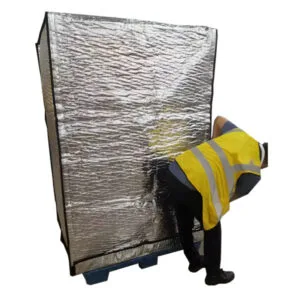
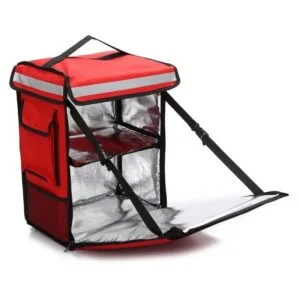
Tempk is the brand of Shanghai Tempk Industrial Co., Ltd. It offers cold-chain packaging solutions including gel and water ice packs, phase change materials, insulated liners and bags, EPS, EPP, and VIP boxes, thermal pallet covers, medical coolers, temperature data loggers, and validation and packout support. For a bulk sourcing project, these elements can be discussed as a complete configuration shaped by payload, route, monitoring, recovery, and evidence needs. Suitability, test basis, environmental claims, and commercial terms should be confirmed for the specific project.
Send Tempk your intended-use brief and five-gate evidence requirements to discuss a bulk packout that can be evaluated before it is scaled.