Insulated Box for Logistics Provider Service Design: Five Decision Gates
Buying an insulated box for logistics provider use is easy; defining a defensible service around it is harder. The container must fit the payload, thermal challenge, transport network, packing operation, evidence requirement, and recovery model. Insulation only slows heat transfer, so performance comes from the assembled packout and the people who prepare and handle it. A five-gate review helps teams avoid premature product selection. Each gate produces a decision that commercial, operations, procurement, and quality teams can use before the service reaches a live shipment.
Gate One: Define the Insulated Box for Logistics Provider Service Envelope
Customer requests often arrive as "chilled delivery," "frozen box," or a desired number of hours. None is detailed enough to select packaging. Turn the request into a service envelope: a controlled description of the product, payload, route, conditions, handling, and evidence the provider is prepared to support.
Begin with the product owner's approved transport condition. Do not assign a common industry range just because the product is food, medicine, or a laboratory sample. Different products within the same category can have different limits and different responses to a brief excursion. Record who owns the specification and who will evaluate an event outside it.
Define the payload as an envelope rather than a catalog capacity. Include the smallest and largest anticipated load, actual product-pack dimensions, mass, starting condition, orientation, and any secondary containment. Then calculate usable space after coolant, dividers, absorbent material, or other mandatory components are installed. Gross internal volume is not a shipping promise.
Map time from the start of packing to transfer into suitable storage at destination. Scheduled carrier transit is only one segment. Include staging, collection cutoff, hub dwell, customs or security review, delivery attempts, and consignee intake. Identify credible delay cases and decide whether the design must cover them or whether another contingency will apply.
The output of Gate One should be short enough to review but precise enough to prevent silent assumptions. If a field remains unknown, assign an owner and do not let a supplier's default become the requirement by accident.
Gate Two: Choose the Right Control Architecture
An insulated box is one possible part of temperature-controlled distribution. Select its role by comparing control architectures, not by adding every available layer.
A general handling container protects against impact, dirt, or water but may have limited thermal function. An insulated box reduces heat exchange but does not create cooling. A passive shipping system combines an insulated enclosure with conditioned coolant and a controlled arrangement. An active container uses powered heating or cooling. A refrigerated vehicle controls its cargo space, while a temperature logger records conditions without changing them.
These functions can be combined, but more components do not automatically mean better control. A passive shipper placed in a refrigerated vehicle may provide useful protection during transfers. It can also encounter a colder environment than its hot-weather design anticipated. A data logger can reveal exposure but cannot compensate for missing coolant. A durable plastic outer shell can improve handling while saying nothing about the qualification of the thermal system inside.
Coolant is equally specific. Water-based packs and engineered phase-change materials store thermal energy near their phase transition. Their conditioning and placement influence both duration and local cold risk. Dry ice creates very low temperatures and carbon dioxide gas, requiring an appropriate vented design, safe handling, and mode-specific dangerous-goods controls. The words "ice pack" or "PCM" do not identify an interchangeable component.
Choose a candidate architecture by asking:
- Can it support the product's required condition without creating an opposite-side risk?
- Does the complete packout fit minimum and maximum payloads?
- Can origin staff condition and assemble it repeatably at forecast volume?
- Can the network handle its weight, orientation, closure, and external dimensions?
- Can the destination receive it and, if reusable, return it?
- Is there a credible path to generate or obtain the required evidence?
The result is not yet an approved service. It is a candidate configuration ready for Gate Three.
Gate Three: Verify the Evidence Boundary
The key procurement question is not "Has this box been tested?" It is "What exact system was tested, under which conditions, against what criteria, and how does that relate to our service envelope?" A useful evidence review separates supported facts from supplier assumptions and from work that the logistics provider still needs to perform.
| Evidence item | What a useful record reveals | Decision it supports |
|---|---|---|
| Component definition | Box, lid, insulation, coolant, insert, closure, and version | Whether the purchased packout matches the test article |
| Payload definition | Size, mass, starting condition, layout, and load range | Whether actual shipments fall inside the supported envelope |
| Thermal challenge | Ambient sequence, test duration, orientation, and handling | Whether the test reasonably represents the proposed lane |
| Conditioning method | Equipment, set condition, preparation, verification, and staging | Whether origin operations can reproduce the tested state |
| Sensor plan | Locations, calibration status, interval, and uncertainty approach | Whether hot, cold, and central regions were characterized |
| Acceptance criteria | Product-space limits and treatment of deviations | What "pass" actually means |
| Results and review | Curves, repeat runs, deviations, margin, and approval | How robust the solution appears and where its boundaries lie |
| Change control | Component identity and notification process | Whether later supply remains connected to the evidence |
This table prevents headline duration from becoming the entire qualification argument. Two systems can meet the same endpoint while showing different early cold risk, late warming, gradients, or repeatability. Review the curves and operational conditions, not only a certificate title.
Testing should match risk. ISTA Standard 7E provides thermal profiles developed for parcel-delivery testing and can be used with a broader qualification process. WHO technical materials for temperature-sensitive pharmaceuticals describe qualification of shipping containers, route profiling, and transport monitoring. EU GDP expects medicinal products to remain within defined transport conditions and equipment to be suitable for use. FDA sanitary transportation requirements may apply to covered food movements by motor or rail in the United States. ISO 23412 covers a particular indirect, refrigerated parcel-service model and distinguishes it from a parcel that carries its own refrigerant. ATP and IATA requirements may matter for certain international perishable-food or air movements.
None of those references gives blanket approval to an insulated box. Determine which standards, regulations, customer requirements, and internal procedures apply to the product, jurisdiction, and mode. Record the edition or source used. Seek qualified regulatory or quality input when scope is uncertain.
Qualification should address the complete configuration. For a high-risk or regulated service, the plan may include design review, operational testing under defined ambient challenges, performance work on representative routes, physical distribution tests, and controlled monitoring. A successful field shipment is useful evidence about that event but does not establish universal suitability. Conversely, a chamber test does not prove that packers, hubs, and receivers will execute the method correctly.
Gate Three closes only when the approving team understands what is supported and which limits belong in the service description.
Helpful decision tools
Check the details before you choose packaging
These quick tools can help you compare route risk, sizing needs, coolant choices, and packaging details before you request a quote.
Packaging Selector
Compare insulated packaging options by product, route, and temperature need.
Find packagingInsulation Material Drop Resistance
Review drop resistance and handling factors before choosing insulation materials.
Check resistanceBox Liner & Pallet Cover Sizing
Check box liner and pallet cover sizing logic for insulated packaging projects.
Estimate sizingGate Four: Engineer Repeatability at Every Handover
A qualified packout can still fail as an operation. Convert the accepted configuration into role-based instructions and controls.
At origin, assign controlled storage locations for box components and coolant. Verify that conditioning equipment has enough capacity for peak volume, including recovery after door openings and new loads. Identify components so staff cannot casually substitute a similar pack. Define payload staging, maximum assembly exposure, exact load order, spacers, logger location, closure, seal, label, and release check.
Use visual work instructions where orientation matters. Include the reason for high-risk details. A packer is less likely to remove a barrier when the instruction explains that it prevents direct coolant contact. Training should end with a demonstrated packout and a documented competency decision. Temporary workers and contingency sites need the same control, not an abbreviated guess.
At carrier acceptance, record custody and any service-specific handling requirement. Hubs need a short response for a damaged shell, open lid, wet package, missing label, or delay. If inspection requires opening, define who is authorized, how components are protected, whether the system can be restored, and how the event is recorded. Do not let an informal repack erase the relationship to qualification.
At destination, align delivery with receiving capability. The consignee should know where the shipment goes, which checks to perform, how to stop or read monitoring equipment, and whom to contact. An excursion alarm is a signal for assessment. It is not, by itself, a universal release or rejection rule. Product stability information and the responsible quality decision are required.
Practical example: launching a two-hub healthcare lane
Imagine a provider wants to add an overnight healthcare parcel service through two hubs. The packaging supplier offers a passive box with favorable chamber data. Instead of relying on the duration statement, the provider compares the tested ambient profile and payload with its service envelope. It finds that the intended minimum payload is smaller and the second hub can hold parcels beyond the planned cutoff.
The team adds an evaluated minimum-load arrangement, defines a delay escalation at the second hub, and runs a controlled pilot using the final packing staff and receiving process. Monitoring shows that data retrieval at destination is inconsistent, so the launch pauses while the responsibility and training are corrected. No fabricated customer outcome is needed to see the lesson: operational evidence can reveal a weak process even when the box itself performs as expected.
Routine review should combine temperature events with process signals. Track packout deviations, conditioning exceptions, damaged closures, missing loggers, unread records, hub holds, receiving delays, and component substitutions. Trends can reveal loss of control before a headline temperature excursion occurs.
Gate Five: Scale Cost and Sustainability Without Losing Control
Unit price is a small part of service cost. A one-way system requires inbound storage, assembly, coolant conditioning, labor, freight cube, destination waste handling, and replacement after every shipment. A reusable system adds asset purchase, identification, reverse transport, collection dwell, cleaning, drying, inspection, repair, loss, storage, and retirement. Compare the options over the same shipment function and actual network.
Reusable boxes tend to make more operational sense when lanes are frequent, destinations are known, backhaul exists, assets can be scanned, and a central facility can inspect and clean them. A remote or highly dispersed network can spend substantial resources recovering empties or may lose units before they complete enough cycles. The environmental result depends on actual completed uses and return movement, not on the word "reusable."
For one-way packaging, right-sizing can reduce material and freight cube, but it must preserve the supported payload and thermal design. Ask whether destination facilities can separate and recover the actual components. A theoretical recycling pathway is not the same as local collection. For reusable packaging, specify compatible cleaning agents, rinse and dry conditions, inspection points, replacement parts, and retirement criteria. A damaged liner or wet insulation may be both a thermal and hygiene concern.
Packaging regulation and customer reporting expectations are increasing attention to life-cycle design, recyclability, and reuse in several markets. The European Union's packaging and packaging-waste framework is one current example, but obligations depend on operator, packaging format, route, and timing. Obtain current market-specific advice rather than describing any box as automatically compliant.
Scale in controlled steps. Start with samples that match the proposed production design. Verify fit and ergonomics. Generate or review thermal and physical evidence. Pilot the final process at manageable volume. Freeze the bill of materials and instructions. Establish supplier change notification and incoming checks. Expand only after early deviations are understood.
Frequently Asked Questions
How many insulated-box sizes should a logistics provider offer?
There is no universal number. Build sizes around real payload clusters, coolant space, handling equipment, and evidence rather than filling every gap in a catalog. Too few sizes can create inefficient air space or unsupported loads; too many increase inventory and training complexity. A controlled platform can use common external footprints with clearly approved internal configurations.
Should the supplier or logistics provider qualify the packout?
A supplier may provide valuable design and test evidence, but the logistics provider and product owner must decide whether it supports the intended payload, lane, operations, and applicable quality requirements. Responsibilities should be documented. Customer-specific testing, route work, or approval may still be needed, especially when the service differs from the supplier's evaluated configuration.
Is a temperature logger proof that the product remained acceptable?
A logger documents readings at its sensor location. Interpreting those readings requires the approved product limits, sensor and calibration context, placement, time, and an excursion process. It cannot show every point in the payload or protect the shipment. Product acceptability should be decided by the authorized party using relevant stability and quality information.
What changes should trigger reassessment?
Review changes to box material or geometry, coolant, conditioning, payload range, internal components, closure, logger location, route, hub, mode, service time, cleaning, or supplier. The required response can range from a documented assessment to additional qualification. Establish triggers before launch so operational and commercial changes do not bypass quality review.
Conclusion
An insulated box for logistics provider service should pass five gates: a precise shipment envelope, a suitable control architecture, evidence that matches its use, repeatable handovers, and a scalable life-cycle model. The central discipline is keeping claims attached to the exact packout and conditions that support them. Insulation, coolant, payload, route, people, data, and recovery all belong to the design. When those elements remain connected, the provider can quote clear service boundaries, investigate exceptions, and improve performance without relying on a universal box claim.
About Tempk
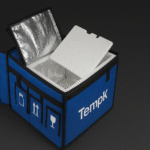
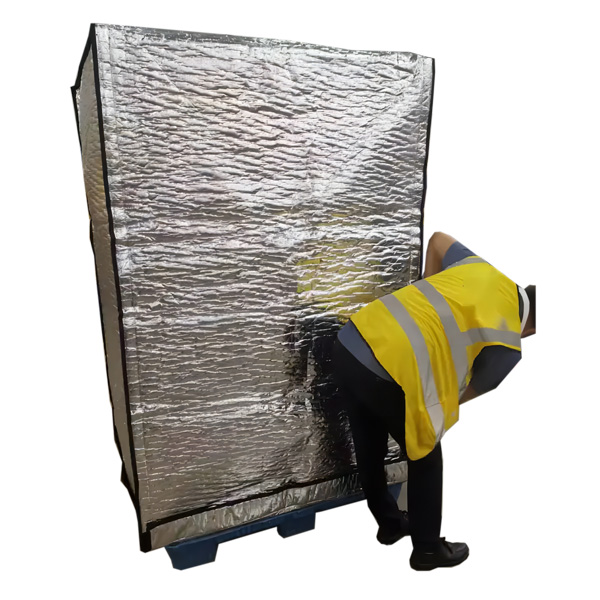
Tempk provides business-focused temperature-control packaging categories, including insulation boxes, ice packs, insulated bags, and thermal pallet covers. We can discuss candidate packaging and customization in the context of payload, route, packout, handling, and reuse requirements. For logistics providers, the practical value is a conversation about the complete use case, followed by review of the configuration and supporting information needed for the customer's own operational and quality decision.
Share your service envelope with Tempk, including payload dimensions, required conditions, route stages, monitoring needs, and return model. Use that information to compare candidate insulated packaging before committing to volume.