Specify a Compact EPP Storage Container Around the Work
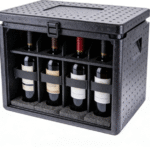
Buying a compact EPP storage container by nominal capacity is like choosing a drawer by the size of the room: the number says little about what will fit or how people will use it. A sound specification begins with the payload and spends a limited “space budget” on protection, insulation if needed, operator access, closure, and handling features. It then checks the exterior against shelves, vehicles, worktops, and the empty return. EPP brings useful low-weight, insulating, and resilient material behavior, but those attributes must be translated into part-level and application-level evidence. The result should be the smallest format that passes the entire operating cycle, not simply the smallest box available.
Set the Space Budget for a Compact EPP Storage Container
A compact container has two competing boundaries. The outside must fit the operation, while the inside must fit the full packout. Neither boundary can be inferred reliably from a single capacity figure.
Define the exterior limit first. Record the maximum length, width, and height allowed by the tightest real location. That might be the clear opening between van shelves, the available depth beneath a receiving counter, the footprint of a cart, or the stack height under a rack beam. Include protrusions and use conditions: molded grips, lid ribs, labels, a raised closure, or the room needed to lift the lid. A box that fits only while closed may not fit the work.
Next, define the payload zone. Measure the largest approved payload in its normal packaging and orientation. Do not use the product's nominal dimensions if overwrap, caps, folded documents, or a secondary carton travels with it. If multiple items share the box, show their arrangement and the legitimate variation between loads.
The space between those boundaries has to pay for every function:
EPP wall sections and lid engagement;
corner radii and any wall taper;
fitted inserts, separators, absorbent material, or restraints;
coolant or phase-change components where the design genuinely requires them;
clearance around a temperature monitor or identification device;
finger access and a safe removal path;
headspace that allows the lid to seat without pressing on the payload.
This is why gross internal volume is rarely the decisive procurement value. A cylindrical bottle may waste the corners of a rectangular cavity. A shallow tray may need a wide opening but little height. A coolant pack placed against the wall can create a narrow central payload zone even though the stated capacity remains unchanged. Internal drawings should show the narrowest useful section, not merely the largest cavity measurement.
The space budget also exposes when compact is the wrong goal. If the payload must be squeezed, coolant must be omitted, a logger blocks closure, or the receiver must invert the box to unload it, the proposed format has exceeded its budget. Move to a different geometry, revise the insert, divide the order, or select a larger container. Small size is not an efficiency when it transfers work and risk to every shipment.
The Three Clearances That Decide Usability
Dimensioned drawings are necessary, but they do not show motion. Three types of clearance determine whether a compact EPP box will work at normal speed.
Packout clearance
Packout clearance is the space needed to assemble the load in the correct order. A fitted insert might need to enter at an angle. A coolant component may require a spacer that prevents direct product contact. A document pouch may cross a molded feature. Observe the actual loading sequence and confirm that no step relies on compressing a carton, flexing a primary pack, or holding the lid down while another operator closes it.
Packout clearance should include removal. A cavity can accept a tray yet provide no place to grip it. Pull tabs, finger wells, removable straps, or a slightly wider opening can solve this, but each option needs a hygiene and durability review appropriate to the use.
Workflow clearance
Workflow clearance is the space around the box while it is carried, opened, scanned, stacked, or placed in a vehicle. Measure more than the static footprint. A lid may swing or lift into a rack. A label on the top may become unreadable below another unit. A low side grip may be blocked when boxes sit closely together.
Observe loaded handling from the lowest and highest expected positions. EPP can reduce tare mass, but compact payloads are often dense. Grip location, carry distance, gloves, sightline, and the tendency to hold the lid all influence ergonomic risk. Do not approve a carry claim with an empty sample.
Return clearance
Return clearance is the volume and process space needed after delivery. A container that uses a van efficiently outbound can consume its full cube empty. Nesting or folding may help, but those features change part geometry, assembly, inspection, and often cleaning. If the box remains rigid, establish an empty stack pattern and a designated holding position at the receiver.
Return clearance includes time as well as volume. Empty units may wait for a backhaul, inspection, cleaning, drying, or release. The pool must cover those states. Without cycle data, a buyer cannot responsibly assign a generic pool size or claim that a reusable design will replace a particular number of disposable boxes.
A hypothetical clearance failure
Consider a distributor planning destination-specific kits for a multi-drop route. A candidate EPP box fits six units across the vehicle shelf when closed. During the trial, drivers discover that only the front units can be opened in place. Rear units must be removed and set on the floor, labels are hidden when two boxes are stacked, and empty lids do not remain paired with their bases.
No invented delivery result is needed to reach a decision. The static shelf count overstated efficiency because workflow and return clearances were omitted. The team can test a lift-off lid with a controlled retention method, a different label face, fewer units per shelf, or another exterior proportion. The practical metric is not maximum closed-box count; it is how reliably a complete stop can be executed and reversed.
Choose the Smallest Format That Passes the Route
A stage-gate review keeps the buying decision in the right order. A candidate that fails an early gate should not advance on the strength of a material claim or an attractive unit price.
| Gate | Question the candidate must answer | Review method | Stop condition |
|---|---|---|---|
| Role | Is this storage, protective handling, insulation, or a defined temperature-controlled packout? | Written use statement approved by operations and quality | Product role remains ambiguous |
| Payload | Does the largest normal load fit with all functional components and removal access? | Representative loaded sample or dimensioned packout model | Compression, interference, or inaccessible contents |
| Exterior | Does the complete envelope fit every critical rack, cart, vehicle, and work surface? | Physical route walk with opening and scanning steps | Static fit only, with no working clearance |
| Handling | Can operators lift, identify, hand over, and close it through normal conditions? | Loaded usability trial with intended users | Unsafe grip, blocked view, repeated repacking |
| Evidence | Do documents support the exact material, part, contact role, and any claimed performance? | Technical-file review against a claim list | Generic certificate used for a specific conclusion |
| Recovery | Can the operation identify, inspect, clean, dry, return, and retire units? | Reverse-logistics pilot and responsibility map | No owner or release process for returned assets |
| Production | Will ordered units match the approved sample and controlled drawing? | Inspection plan, traceability, and change-control agreement | Critical features or changes are uncontrolled |
The sequence prevents two common mistakes. First, a thermally impressive concept should not survive if the payload cannot be retrieved safely. Second, a well-fitting reusable box should not be described as sustainable until the return and recovery system is credible. Each gate produces a decision record that purchasing can compare across suppliers without inventing missing data.
“Smallest that passes” also leaves room for variability. If one payload configuration is unusually large but legitimate, decide whether the main format must accommodate it. Sometimes a second approved size is more efficient. Sometimes standardizing one slightly larger box reduces errors, spare inventory, and training. Compactness should be optimized at system level, not per unit in isolation.
Multi-drop routes deserve an explicit configuration comparison. One consolidated box means fewer assets and cleaning events, but repeated opening may disturb other orders. Destination-specific boxes improve segregation and retrieval, yet increase scans, labels, and empty returns. Run both configurations through the real stop sequence. Count motions and exceptions rather than relying on a general belief that smaller is faster.
Write an Acceptance Specification Suppliers Can Answer
A good request for quotation contains questions that can be answered with drawings, samples, documents, and defined tests. It does not ask whether the product is simply “high quality.”
Helpful decision tools
Check the details before you choose packaging
These quick tools can help you compare route risk, sizing needs, coolant choices, and packaging details before you request a quote.
Coolant & PCM Reference
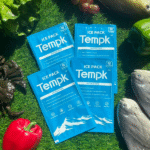
Compare coolant and PCM options when a route needs added temperature support.
Compare optionsPackaging Selector
Compare insulated packaging options by product, route, and temperature need.
Find packagingCompliance Checklist Generator
Build a practical checklist for packaging review, shipping, and documentation.
Build checklistBegin with material identity. Request the EPP grade or controlled material specification and the evidence relevant to the application. Established EPP producers describe the material family as lightweight, resilient, insulating, chemically resistant, and recyclable, but grades vary. Even BASF's published molded-density range for its standard Neopolen portfolio is a supplier range, not a density requirement for your box. Ask which density and process controls apply to the proposed part, and why they fit its geometry and function.
Control the molded part next. The drawing should identify:
exterior envelope and measurement datums;
narrowest usable internal dimensions;
lid engagement and closure interfaces;
insert, stack, and grip interfaces;
label or identification area;
critical dimensions and agreed tolerances;
separate components and their material identities;
drawing revision and approved sample reference.
Visual criteria should address bead fusion, incomplete filling, surface damage, contamination, edges, and molded details without pretending appearance alone proves performance. Functional gauges or fit checks can be more useful than measuring every noncritical dimension. If a lid and insert must work together, test that assembly as received.
For repeated use, ask for application-relevant mechanical evidence and define inspection limits. EPP's resilience does not establish a universal drop rating or reuse count. Loads, heights, impact surfaces, closure condition, aging, and acceptance criteria matter. A sensible specification says which hazards the container must withstand and how pass or fail will be judged; it does not copy an unsupported number from a generic brochure.
Cleaning requires equally specific language. Identify the proposed cleaner, concentration, process temperature, contact time, rinse, drying, and repetition expected in the trial. Confirm compatibility for the exact grade and complete part, including labels, adhesives, inserts, or attached closures. Define what surface change, odor, distortion, or loss of fit is unacceptable. If food or sensitive goods are involved, quality or food-safety review should approve the release process.
Food-contact documentation must match intended use. FDA materials make clear that food packaging components and their authorization are considered in relation to use conditions. Ask about exact material, colorants and additives, direct or indirect contact, food type, temperature, and duration. A statement that polypropylene is commonly used with food does not settle the status of every EPP grade and finished construction.
Finally, connect the sample to production. Specify incoming checks, lot identification, nonconformance handling, and prior notice of changes to material, density, tooling, process, components, or manufacturing location where those changes could affect approval. The required control should reflect application risk. The goal is simple: the product delivered at scale should remain the product that passed the route gates.
Decide Whether Temperature Control Is Actually Required
EPP insulation is valuable, but an insulated storage container and a qualified passive thermal shipper are different products. Clarify the need before adding coolant or quoting hold time.
For general storage, service kits, or protective dunnage, insulation may be incidental. The buyer can focus on geometry, impact hazards, cleanliness, and handling. For chilled groceries or prepared food on a managed route, insulation may reduce heat exchange, while the food-safety plan defines temperatures and operational controls. For medicines, biological materials, or other temperature-sensitive products, the required product range, route duration, ambient challenges, and quality documentation become central.
A passive temperature-controlled system consists of more than an EPP shell. It includes the coolant or phase-change component, its conditioning, payload amount and geometry, spacing, loading sequence, closure, any outer packaging, and operating instructions. Sensors or data loggers can record conditions, but they do not cool the shipment. Replacing one component can change system behavior even when the outside box is unchanged.
If a supplier presents thermal evidence, review its scope. Confirm the exact container construction, payload, coolant, conditioning method, ambient profile, test duration, sensor placement, acceptance range, and opening assumptions. Ask whether the proposed route and load fall within that evidence. ISTA Standard 20 and 7E can support defined insulated-container qualification and testing work; naming them does not certify an unrelated box or guarantee every lane. WHO guidance for time- and temperature-sensitive pharmaceuticals likewise emphasizes controlled storage and distribution systems, with local requirements taking precedence.
“When is compact not enough?” has a clear thermal answer. It is not enough when the required payload, conditioned coolant, separation, logger, and closure cannot coexist in the tested arrangement. Removing coolant or reducing clearance to preserve nominal payload space changes the system. Choose another size or design, then assess the complete configuration. Never let a capacity target rewrite the product's temperature requirement.
Design the Reuse Loop Before Buying the Pool
A durable part without a return process is only potentially reusable. Operational reuse requires ownership, collection, identification, inspection, cleaning, drying, release, and retirement. ISO 18603 treats reusable packaging together with the associated reuse system, which is a useful procurement boundary even when formal conformity is not being claimed.
Start with an asset-state map. At any moment, a container may be ready, loaded, in transit, waiting at a receiver, returning empty, awaiting cleaning, drying, quarantined, or retired. Give each state an owner and a location. Decide how a unit moves back to “ready” and which records demonstrate release.
Tracking detail should match risk. A closed internal loop may use batch or location controls. A complex network may need unique asset identification and scans. Useful events can include dispatch, receipt, empty return, inspection, cleaning, quarantine, and retirement. Do not add data fields that no one uses, but do not leave operations unable to distinguish a clean released unit from an uninspected return.
Environmental claims should follow measured circulation. EPP producers describe the material as recyclable, yet actual recovery depends on local collection, contamination, attachments, labels, and recycler acceptance. Reuse outcomes also depend on return distance, empty cube, cleaning, loss, damage, and the number of completed trips. The U.S. EPA's life-cycle materials perspective supports looking beyond one material attribute. A quantified impact claim needs a product- and system-specific assessment.
Current market rules make that discipline more relevant. The EU Packaging and Packaging Waste Regulation generally applies from August 2026 and addresses packaging across its life cycle. It does not make an EPP design automatically compliant. Buyers placing packaging on a market should determine their specific role and obligations, including any implementation, labeling, composition, reuse, and waste requirements, with appropriate legal or compliance review.
Plan retirement while the product is still being specified. Ask whether labels and attached parts can be removed, whether the exact grade is accepted by an identified recovery route, and how contaminated or mixed-material units are handled. Define damage thresholds that remove units from service. A credible statement is not “this box is endlessly reusable”; it is “this system inspects every return, records retirement, and has a verified path for acceptable material.”
Conclusion: Compact Is a Verified Operating Fit
A compact EPP storage container should be the output of a sizing process, not the input. Set the exterior limit from real workspaces. Build the payload zone from the complete load outward. Protect packout, workflow, and return clearances. Then choose the smallest format that passes handling, evidence, recovery, and production gates.
EPP offers a useful combination of low mass, resilience, insulation, and molded design freedom. Keep those benefits at the material and part level until tests justify a broader claim. If temperature control is required, evaluate the exact passive system and route. If reuse or recyclability supports the purchase, verify the loop and recovery path. The next practical step is a loaded route trial backed by a supplier specification that quality, operations, and procurement can all read the same way.
About Tempk
At Tempk, our official range includes insulated EPP cooler boxes and coolant products for cold-chain packaging. We can help translate a compact-container request into questions about payload shape, usable space, handling points, return conditions, and the proposed packout. Where temperature-sensitive goods are involved, we keep the EPP box in the context of the complete configuration and the evidence needed for the route. Buyers should review product-specific documents and qualification needs with their quality or logistics teams before deployment.
Ready to specify rather than guess? Send Tempk the payload, external space limits, route steps, cleaning method, and any temperature requirement to discuss a representative compact EPP storage container configuration.