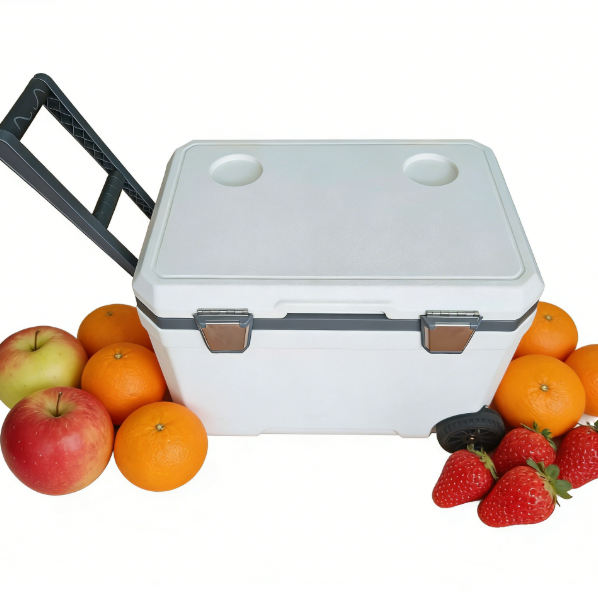
How to Specify a Durable Heat-Insulating EPP Cooler Box
A durable heat-insulating EPP cooler box should be specified by the functions it must retain after real use: safe handling, full lid seating, stable stacking, consistent coolant placement, cleanable surfaces, and thermal performance for a defined packout. EPP contributes lightweight cushioning and insulation, but no material claim proves a fixed service life or hold time. Buyers need a complete operating envelope, production-representative mechanical and thermal tests, functional inspection limits, and a reuse system that controls cleaning, components, returns, and change.
Write the cooler’s job as a controlled route
Start with a route map. Record where the empty cooler is stored, how coolant is conditioned, where packing occurs, how long the box waits before departure, which vehicle and handovers follow, how often it is opened, how receiving unloads it, and how the empty unit returns for cleaning.
For each stage, identify temperature, time, air movement, sunlight, floor contact, moisture, stack condition, and responsible operator. A short route can be difficult if the box sits on a hot dock or opens repeatedly. A long route can be controlled when the ambient profile and handovers are stable. Duration alone is not enough.
Define the exact role:
- an insulated tote within a refrigerated operation;
- a passive cooler with gel packs or phase change media;
- a parcel shipper with an outer protection layer;
- a reusable healthcare packout;
- a hot-food or cold-food delivery carrier;
- a general handling box whose insulation is secondary.
The role determines the evidence. A general tote may need fit, handling, and cleaning trials. A temperature-controlled shipper may need a complete thermal qualification, monitoring plan, packing instruction, and quality approval.
Define payload range and usable space
Measure the product in its final shipping presentation. Include cartons, bottles, meal trays, bags, absorbent pads, dividers, labels, sensors, and coolant. Record the minimum and maximum normal load. The box must work at both boundaries or have separate configurations.
External dimensions control pallet pattern, rack fit, trolley, vehicle cube, door clearance, and return storage. Internal dimensions describe the molded cavity. Usable dimensions describe what remains after corner radii, wall taper, lid engagement, ribs, handles, coolant, inserts, and loading clearance. Procurement should approve all three.
A tolerance stack is necessary. The largest payload can meet the smallest cavity. Frozen gel packs may become rigid or change shape. Labels can wrinkle. Flexible bags can expand. If the lid is forced over the load, it may appear closed while one corner leaks.
Plan controlled zones for product, coolant, separators, sensor placement, and closure clearance. Support fragile items at strong surfaces. Restrain dense coolant so it cannot strike the payload during handling. A filler module may be needed for partial loads, but it must be identified and included in the bill of materials.
Treat the lid as a critical thermal component
Walls attract attention because their thickness is visible. The lid interface often determines real repeatability. It is opened frequently, mixed with different bodies, loaded by stacks, exposed to impacts, and sometimes used incorrectly as a handle or surface.
A good lid locates positively, seats fully around the perimeter, tolerates normal dimensional variation, and remains practical with wet gloves. The rim should carry closure forces without thin lips or sharp transitions. Stack load should pass through designed contact zones and should not bow the lid into the payload.
| Closure variable | Why it matters | How to verify |
|---|---|---|
| Overlap and corner engagement | Controls air exchange and alignment | Cross-fit multiple lids and bodies |
| Lid flatness | Affects full perimeter seating | Measure after conditioning and loaded dwell |
| Opening and closing force | Influences correct operator use | Cold, warm, wet, and gloved trials |
| Payload headspace | Prevents incomplete closure | Maximum-load and overfill checks |
| Stack contact | Transfers vertical force | Full-load dwell on actual pallet |
| Strap, latch, or seal | Adds retention and configuration control | Repeated use and cleaning compatibility |
| Probe or label path | Avoids lifting the rim | Packout inspection and thermal sensitivity trial |
The lid should be part of routine incoming and return inspection. A small crushed rim may matter more than broad cosmetic scuffing.
Engineer handles, corners, and base for the full mass
The packed mass includes product, coolant, inserts, and retained water if drying is poor. Specify one- or two-person lifting and carrying distance. Handles need enough opening for the intended gloves, rounded edges, and a load path into broad wall and base sections.
Through-grips create a direct opening and reduce wall section. Recessed grips preserve the wall but can reduce internal space or trap water. Separate rigid handles add wear resistance while introducing attachments, mixed materials, and cleaning details. Evaluate the complete trade-off.
Corners and edges absorb many route impacts. Generous radii reduce stress concentration. Long flat panels can bow and may need ribs, yet internal ribs should not press on product or complicate cleaning. Base features should remain stable on pallets, trolleys, conveyors, and wet vehicle floors.
Observe dragging and misuse during a route pilot. If the base wears rapidly, more foam may not be the best solution. A trolley, rigid skid, outer shell, or handling change can address the mechanism. Durability engineering begins with failure analysis rather than added thickness everywhere.
Keep the thermal claim attached to the packout
An EPP cooler slows heat transfer but does not actively cool or heat. In a passive system, coolant provides stored thermal capacity while the box reduces exchange. Product temperature is influenced by coolant identity, quantity, conditioning, placement, separation, payload thermal mass, starting temperatures, headspace, ambient profile, openings, and sensor location.
A duration claim is meaningful only when those variables are disclosed. Ask suppliers for the complete test configuration and report. Compare claims only after normalizing the setup. A full, water-rich payload can behave differently from a light partial load. A continuously closed chamber test can behave differently from a delivery route.
Select coolant around the approved product range. Direct contact with frozen media can create local cold exposure. Spacers or conditioned phase change materials may reduce that risk. Dry ice requires a dedicated design and transport controls; it is not a simple substitute.
Temperature loggers support evidence and route review. They do not create thermal protection. Sensor positions should represent likely warm and cold locations, and receiving needs a documented decision rule.
Use a test ladder instead of one certificate
Different tests answer different questions:
- Material data helps select an EPP grade and supports early models.
- Part checks evaluate fusion, dimensions, lid fit, handles, and stack features.
- Packed mechanical tests evaluate shock, vibration, compression, restraint, and payload condition.
- Thermal packout tests evaluate a defined coolant, payload, and ambient profile.
- Route pilots evaluate normal operators, openings, handovers, return, and cleaning.
- Ongoing monitoring confirms that the process remains within its operating envelope.
ISTA 7E can provide standardized thermal profiles for insulated shipping container testing. Suitable ISTA procedures and ASTM D4169 can structure distribution tests. They apply to specified packaged products under stated conditions; they are not universal product certifications.
For reuse, consider conditioning the box mechanically and through cleaning before repeating a critical thermal test. This asks whether wear changes performance. Accelerated cycles can compare designs, but they should not be converted into a guaranteed trip count without a validated relationship to field use.
Write acceptance criteria before testing. For temperature, define the product range and analysis method. For mechanics, define payload damage and retained box functions. For cleaning, define visible soil, odor, drainage, dryness, labels, and component compatibility.
Helpful decision tools
Check the details before you choose packaging
These quick tools can help you compare route risk, sizing needs, coolant choices, and packaging details before you request a quote.
Compliance Checklist Generator
Build a practical checklist for packaging review, shipping, and documentation.
Build checklistBox Liner & Pallet Cover Sizing
Check box liner and pallet cover sizing logic for insulated packaging projects.
Estimate sizingDry Ice Calculator
Estimate dry ice needs for frozen or ultra-cold shipments before packing.
Estimate dry iceInspect retained function at every return
A reusable cooler should have a fast return check and a more detailed periodic inspection. The quick check can identify gross contamination, incomplete lid fit, rim damage, unsafe handles, unstable base, missing coolant components, and unreadable identification. Detailed checks can use gauges or master samples for critical interfaces.
Create clear disposition categories:
- clean and ready;
- needs rewash or drying;
- needs approved replacement of a secondary component;
- temporarily restricted to a defined lower-risk use;
- requires engineering review;
- permanently retired.
Repairs should be controlled. Adhesive patches or improvised inserts can change hygiene, thermal leakage, payload fit, or recyclability. Repair only under a documented method and reassess the affected function.
Track the failure location. Repeated handle tears may indicate overload or poor geometry. Rim crush may reveal overfilling or stack misuse. Base abrasion may indicate dragging. Missing plugs or dividers point to component control. Data turns retirement cost into design improvement.
Make cleaning part of the design input
Define the cleaning method before approving the part. State detergent or sanitizer, concentration, temperature, contact time, mechanical action, rinse, and drying. Confirm compatibility with the exact EPP formulation and every secondary component. A general polypropylene resistance table is not proof for repeated hot washing of a printed, strapped, or sealed assembly.
Closed-cell EPP resists bulk water absorption, but recesses, scratches, lid joints, labels, drains, and damaged areas can retain water or soil. Surfaces should be accessible and drain in the actual drying orientation. Clean units need protection from dirty returns.
Direct food-contact use requires documentation for the exact construction, intended food, contact conditions, and market. European controls include general food-contact safety, good manufacturing practice, and specific plastic measures. United States use also depends on an appropriate regulatory basis. “Food safe” should have a defined scope.
Healthcare routes may require cleaning or disinfection procedures under the organization’s quality system. EPP material does not by itself establish pharmaceutical compliance. The complete distribution process, packout, monitoring, training, and qualification remain relevant.
Design the reuse economics honestly
A reusable cooler is an asset and a service loop. Total cost includes purchase, coolant, tooling if custom, packing labor, return transport, tracking, washing, drying, inspection, storage, loss, repairs, retirement, qualification, and product loss. Calculate cost per successful shipment or cycle.
Do not assume a universal service life. Pilot a controlled number of boxes and track actual returns, damage, rewash, loss, and turnaround. The number of boxes required depends on peak outbound demand and days before clean return, not only daily shipments.
Empty cube can dominate reverse logistics. Fixed EPP coolers may return mostly air. Nesting reduces volume but introduces taper and different stack geometry. Collapsible alternatives reduce cube but add joints and cleaning. Backhaul availability and route density decide which is best.
Sustainability follows the same system boundary. EPP can be recyclable where suitable collection and processing exist. Reuse can reduce single-use packaging demand, but washing and returns add impacts. Product protection can be significant because spoiled food or medicine carries embedded resources. Use observed loop data and an identified end-of-life pathway rather than generic claims.
The European Packaging and Packaging Waste Regulation entered into force in 2025 and generally applies from 2026, increasing attention to minimization, recyclability, reuse, and documentation. Exact obligations vary, so companies operating in the European market should confirm current duties for their packaging and role.
Lock production consistency and interchangeability
Reusable fleets mix components. Bodies and lids should be interchangeable within approved revisions. Test cross-pairs across mold cavities and lots. Identify cavities where appropriate so variation can be traced.
The supplier should control EPP grade, density strategy, bead conditioning, molding, fusion, cooling, part conditioning, trimming, dimensions, weight where meaningful, color, and identification. Critical dimensions need defined datums and measurement timing.
A production control plan can focus on minimum opening, usable cavity, lid engagement, rim continuity, base contact, stack registration, handle sections, coolant pockets, and insert locations. Part weight is a process indicator, not a complete functional test. Define sampling and reaction rules for nonconformance.
Change control should include material grade, density target, colorant, additives, recycled content, mold repairs, venting, key process settings, production site, lids, straps, labels, inserts, coolant components, and packing instructions when performance can change. Risk-based retesting protects the qualification.
Buyer questions for a credible cooler program
- What product range and payload range are approved?
- What is the cooler’s exact role in the temperature-control system?
- Which coolant and conditioning procedure are included?
- What are the minimum usable dimensions and closure clearance?
- How do handles and stack features carry the full packed mass?
- Which damage modes can change thermal function?
- What mechanical and thermal test configurations support the proposal?
- How will minimum loads, openings, and seasonal conditions be handled?
- What cleaning, food-contact, or healthcare documentation applies?
- How are bodies, lids, inserts, and coolant components identified and controlled?
- What are the return, wash, tracking, and retirement plans?
- Which production or process changes require reassessment?
A disciplined supplier will distinguish general material properties, tested configurations, and open assumptions. That distinction reduces procurement risk.
Frequently asked questions
What makes an EPP cooler “durable” rather than merely reusable?
Durability means the cooler retains defined functions through expected handling and cleaning. It should remain safe to lift, stable to stack, able to close fully, consistent in coolant and payload fit, cleanable, and identifiable. Reusability is an intended operating model; durability is supported by design, testing, inspection, and field data.
Is the thickest EPP cooler the best insulated option?
No. Thickness can reduce conduction, but lid leakage, openings, bridges, payload mass, coolant, headspace, and opening events may dominate. Thick walls also reduce payload space or increase freight cube. Compare complete production packouts under the same test profile and include durability of the closure.
Should every returned box be thermally retested?
Usually not. Routine functional inspection can screen lid fit, rim, handles, stack, coolant locations, contamination, and identification. Periodic thermal verification can confirm the fleet remains aligned, with additional testing after significant damage, repair, material or design change, or a trend in shipment data. The quality plan should set the frequency by risk.
How can buyers prevent mixed components?
Use clear revision marking, color only as a secondary cue, molded identifiers, scan codes where justified, and mistake-resistant geometry. Control bodies, lids, inserts, straps, plugs, and coolant under a bill of materials. At packing, verify the complete configuration rather than assuming that any lid or insert that physically fits is approved.
Conclusion
The best durable EPP cooler program controls a chain of functions. The box must fit the payload, protect it mechanically, close repeatedly, locate coolant, survive stacks and cleaning, and return in an inspectable state. Thermal evidence belongs to the complete packout, while durability evidence belongs to retained function after use. A test ladder, return inspection, fleet data, production control, and change management keep both aligned.
About Tempk
Tempk supplies insulated packaging, cooling media, temperature-monitoring products, and related cold-chain solutions. We can help buyers frame a reusable EPP cooler specification around payload range, usable space, target temperature condition, coolant, closure, handling, route, cleaning, and return. Any performance duration and route suitability should be evaluated for the exact production packout and documented conditions.
Share the current cooler, payload, route profile, failure history, and reuse process to identify which design and control changes are most important.