Which High-Density Insulated EPP Box Fits You in 2025?
Last updated: December 16, 2025.
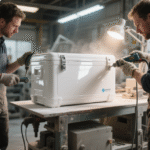
A high-density insulated EPP box is a simple way to keep chilled and frozen goods stable on real routes. It combines insulation with toughness, so your lid keeps sealing after drops, stacks, and returns. Technical data sheets for molded EPP often show thermal conductivity around 0.035–0.041 W/m·K and water absorption below 1 vol-% under test conditions (values vary by grade).
This article will answer for you:
How a high-density insulated EPP box for last-mile delivery prevents temperature drift
What “high density” really changes (and what it doesn’t) in a high-density insulated EPP box
How to size a high-density insulated EPP box for gel packs, PCM, or dry ice
A fast decision tool to choose a high-density insulated EPP box by lane risk
A packing + cleaning workflow you can standardize in 30 days
Why does a high-density insulated EPP box matter for cold chain?
A high-density insulated EPP box matters because temperature loss and handling damage usually happen together. When corners crush or lids lift, warm air leaks in fast. High density improves shape retention, so seals stay consistent and your cold time becomes more repeatable. That means fewer “arrived warm” disputes and fewer crushed-product refunds.
high-density insulated EPP box
In plain language, your box is not just insulation. It is also your “door.” A door that stays square keeps cold air in. A door that warps turns your route into a gamble, especially on multi-stop delivery days.
How does high density change real performance in a high-density insulated EPP box?
High density is not “magic insulation.” It is mostly “toughness insurance.” A tighter foam structure typically resists dents, edge crush, and lid gaps that appear after repeated stacking. If your route includes many stops, every lid-open event is a mini heat shock. Keeping the lid fit tight helps you recover faster after each open.
| What changes in a high-density insulated EPP box | What you see | Why it matters | Practical meaning for you |
|---|---|---|---|
| Stronger edges | Fewer crushed corners | Better seal consistency | Fewer temperature spikes |
| Better stacking stability | Less lid lift | Less air exchange | More predictable hold time |
| Longer reuse life | Fewer “soft boxes” | Lower replacement rate | Lower cost per trip |
Practical tips you can apply today
High-drop-risk routes: pick a high-density insulated EPP box with reinforced corners.
Stacked deliveries: prioritize designs with a deep lid seat and stable rim.
Reusable programs: track trip counts and retire boxes before seal failure.
Field example: A meal-kit operator cut collapse-related returns by switching to a high-density insulated EPP box for same-day multi-stop routes.
high-density insulated EPP box
What is a high-density insulated EPP box in plain language?
A high-density insulated EPP box is a reusable container made from expanded polypropylene (EPP) foam, molded in a higher density so it stays stiff and resilient over many trips. Think “tough gym mat,” not “crumbly foam.” It absorbs bumps, keeps its shape, and still slows heat flow.
high-density insulated EPP box
EPP grades are commonly molded across a wide density range; for example, one manufacturer lists achievable molding densities of 20–100 kg/m³ for its EPP grades. Knauf Industries
What should you expect to see on a high-density insulated EPP box spec sheet?
You don’t need a long lab report. You need a short checklist that predicts daily performance: lid fit, wall thickness, density options, and stacking features.
high-density insulated EPP box
| Spec to ask for | What it tells you | Good sign | Practical meaning for you |
|---|---|---|---|
| Density options | Durability vs weight tuning | Multiple grades offered | Easier lane matching |
| Wall thickness | Hold-time potential | Matches route time | Fewer “late-day” warms |
| Lid design | Air leakage risk | Deep seat + stable rim | Less drift at handoff |
| Stack features | Crush risk | Interlocks / flat stacking | Fewer deformed lids |
Practical tips and suggestions
If your box returns weekly: buy for reuse life, not the lowest upfront price.
If your team packs fast: choose a lid that closes cleanly in one motion.
If you handle wet loads: pick textures and grips that stay safe when damp.
Practical example: A regional grocery program improved chilled compliance by standardizing one high-density insulated EPP box and one validated ice-pack layout.
high-density insulated EPP box
How do you choose a high-density insulated EPP box for your lane?
Choose a high-density insulated EPP box by matching route time, temperature target, and handling intensity. If you optimize only for insulation, you may overpay or create packing errors. If you optimize only for strength, you may lose hold time because you picked the wrong size.
high-density insulated EPP box
A fast way to choose is the 3-Match Rule: time match, temperature match, handling match. If one of these is wrong, your “best” box becomes a bad system.
The 60-second lane risk score for a high-density insulated EPP box
Give each item 0–3 points and add them up.
Route time: <4h (1) · 4–8h (2) · 8–12h (3)
Stops & opens: 1–2 stops (1) · 3–8 stops (2) · 9+ stops (3)
Handling intensity: light (1) · moderate (2) · heavy stacking/returns (3)
Heat exposure: shaded/cool (0–1) · mixed (2) · hot sun/doorstep (3)
Score interpretation:
0–4: standard insulated packaging may work, but a high-density insulated EPP box improves durability.
5–8: a high-density insulated EPP box is a strong fit for repeatability and reuse.
9–12: use a high-density insulated EPP box plus validated pack-outs and monitoring.
high-density insulated EPP box
| Score band | Best starting choice | What to validate | Meaning for you |
|---|---|---|---|
| 0–4 | Mid-wall, mid-density | Basic hold test | Simple, low cost |
| 5–8 | High-density insulated EPP box | Pack-out repeatability | Fewer exceptions |
| 9–12 | High-density insulated EPP box + strict SOP | Worst-day route test | Fewer claims |
Practical tips and clear actions
Avoid “one size fits all”: use 2–3 box sizes that match your SKU families.
Test lid fit under load: stacking can create gaps you won’t see on a bench.
Pilot your worst lane first: if it works there, scaling is easy.
Real-world case: A DTC food brand reduced re-ships after locking one high-density insulated EPP box size per product family.
high-density insulated EPP box
What density and wall thickness should your high-density insulated EPP box have?
Density is about strength and consistency. Wall thickness is about hold time. Higher density usually reduces dents and lid drift over reuse. Thicker walls usually extend cold time but reduce internal volume. The best high-density insulated EPP box is the one your team can pack correctly every day.
high-density insulated EPP box
Use a simple mental model: density protects the seal, and thickness buys time. If you ignore either, your performance becomes unpredictable.
A quick comparison: what changes when you increase density in a high-density insulated EPP box?
| Design choice | Primary benefit | Trade-off | Practical meaning for you |
|---|---|---|---|
| Higher density | Better stacking, fewer cracks | Slightly higher weight | Fewer damaged returns |
| Thicker walls | Longer cold time | Less payload space | May need a larger size |
| Better lid seat | Lower air exchange | Tighter QC needed | Fewer warm spikes |
Practical tips and suggestions
If product value is high: prioritize consistency over minimal cost.
If labor is your bottleneck: pick designs that reduce pack-out steps.
If you run pooling: choose higher density to extend usable life.
Practical example: A pharmacy network stabilized city routes after validating one high-density insulated EPP box pack-out and retiring boxes with rim damage early.
high-density insulated EPP box
How do you pack a high-density insulated EPP box without surprises?
Packing decides results more than the foam does. A high-density insulated EPP box performs best when you use a repeatable layout of product, coolant, and spacing. Your goal is not “as cold as possible.” Your goal is “stable and safe” until handoff.
high-density insulated EPP box
If your team improvises pack-outs, you will get random hot spots. If you standardize one recipe per lane, your temperature curve becomes predictable.
Pack-out recipe builder for a high-density insulated EPP box
Pick your shipment type and follow the matching recipe.
Chilled 2–8°C (most food & pharma):
Condition gel packs/PCM to your SOP temperature
Add bottom coolant + separator sheet
Center payload, avoid direct wall contact
Add top coolant, close lid fast
Frozen (below −18°C):
Increase refrigerant mass and reduce empty air
Use tight dividers so product cannot drift
Minimize open time between stops
Mixed orders:
Separate “freeze-risk” items from coolant zones
Use partitions and label sections clearly
| Pack-out element | Good practice | Bad practice | What it means for you |
|---|---|---|---|
| Coolant placement | Top + sides for warm risk | Random placement | Fewer hot spots |
| Separation layer | Barrier between pack & product | Direct contact | Less product damage |
| Empty air control | Inserts/dividers | Big voids | Less drift over time |
Practical tips and clear actions
Lid discipline rule: close the box between stops, even for 30 seconds.
Photo SOP: one image per SKU kit beats a long text document.
Two-check rule: one packs, one verifies, then seal and dispatch.
Helpful decision tools
Check the details before you choose packaging
These quick tools can help you compare route risk, sizing needs, coolant choices, and packaging details before you request a quote.
01Sizing supportBox Liner & Pallet Cover Sizing
Check box liner and pallet cover sizing logic for insulated packaging projects.
Estimate sizing02Packaging choicePackaging Selector
Compare insulated packaging options by product, route, and temperature need.
Find packaging03Route riskRoute Risk Checker
Review lane conditions before selecting packaging for real operating requirements.
Check route riskhigh-density insulated EPP box
Operational case: A dark-kitchen network reduced pack-out variation by adding a lid diagram inside every high-density insulated EPP box.
high-density insulated EPP box
How do you validate a high-density insulated EPP box in 2025?
Validate a high-density insulated EPP box by testing worst-case conditions: hottest day, longest route, and the most handling events. Your goal is not a perfect lab number. Your goal is repeatable safety in real operations, with a pass/fail rule your team can follow.
high-density insulated EPP box
Start simple. Run the exact pack-out you plan to use, then measure product temperature at key points: after staging, after mid-route opens, and at final handoff. If you change coolant type, box size, or the packing layout, treat it as a new test.
Validation checklist you can run in one week
| Validation step | What you do | What you record | Practical value |
|---|---|---|---|
| Thermal route test | Simulate the longest lane | Product temps at checkpoints | Confirms hold time |
| Drop/stack check | Handle like real life | Cracks, lid fit, rim gaps | Prevents leak risk |
| Pack-out repeat test | Different workers pack | Layout variation rate | Improves consistency |
Practical tips and suggestions
Always test the “bad day”: heat waves and delays are the real risk.
Use the same materials every test: changing gel packs ruins comparability.
Lock one approved pack-out: if you change it, retest before scaling.
high-density insulated EPP box
Field example: A network validated one high-density insulated EPP box pack-out for city routes and reduced temperature investigation events.
high-density insulated EPP box
How does a high-density insulated EPP box support E-E-A-T?
A high-density insulated EPP box supports E-E-A-T when you can show documented process control and repeatable results. In cold chain, trust comes from proof, not claims.
high-density insulated EPP box
Here are simple ways to demonstrate credibility:
Documented packing SOPs (one-page, photo-first)
Training records for pack-out teams
Validation runs with clear pass/fail criteria
Condition checks of box condition over reuse cycles
high-density insulated EPP box
Practical tip: Provide a “pack-out spec sheet” for each shipment type, and add a quick condition check at pickup and delivery.
high-density insulated EPP box
How do you clean and reuse a high-density insulated EPP box?
Cleaning is not about harsh chemicals. It is about repeatability and drying. A high-density insulated EPP box lasts longer when you protect the rim, dry fully, and remove damaged units early. Most “odor problems” come from trapped moisture, not the foam itself.
high-density insulated EPP box
Treat cleaning like brushing teeth. A simple routine, done every time, beats a complex routine that nobody follows.
A simple cleaning guide for a high-density insulated EPP box
Dry wipe first (removes most odor sources)
Wash with mild detergent and warm water
Rinse fully (residue causes smell later)
Sanitize using your approved method
Dry completely before stacking
Inspect rim + lid fit (15 seconds)
Tag and remove damaged boxes
| Cleaning step | Time | Tools | Practical meaning for you |
|---|---|---|---|
| Dry wipe | 30–60 sec | cloth/paper | Removes residue fast |
| Wash + rinse | 2–4 min | mild soap + water | Keeps reuse stable |
| Dry | 10–30 min | airflow | Prevents musty odor |
| Inspect | 15–30 sec | visual check | Stops leaky boxes early |
Practical tips and suggestions
Do not stack wet boxes: trapped moisture turns into odor quickly.
Protect corners: corner wear often predicts seal failure.
Track trips: a simple QR label helps you retire boxes on time.
Field example: A pooled-delivery program extended high-density insulated EPP box life by adding a 15-second inspection after wash-out.
high-density insulated EPP box
High-density insulated EPP box vs EPS vs VIP: what’s the real trade-off?
Pick the system that reduces your total cost per successful delivery. EPS can be a great single-trip insulator. VIP can deliver extreme insulation in limited space, but it needs careful protection. A high-density insulated EPP box often wins when you control returns and need durability after many cycles.
high-density insulated EPP box
Material numbers can help you sanity-check claims. But your route results still depend on wall thickness, lid seal, and pack-out.
Quick material sanity check (not a promise of hold time)
Molded EPP: thermal conductivity often reported around 0.035–0.041 W/m·K (grade dependent). Knauf Industries
EPS board: measured around 0.028–0.032 W/m·K in heat-flow tests (temperature dependent). 材料与产品数据库
VIP (fumed silica core): about 0.004 W/(m·K) after production (performance changes with aging and edges). VIPA International
The cost-per-use calculator for a high-density insulated EPP box (interactive)
Use this simple formula:
Cost per use = (box cost + average repair cost) ÷ expected trips
True cost per use = cost per use + (average claims cost per trip)
If a high-density insulated EPP box cuts claims, it can become cheaper even with a higher upfront price.
high-density insulated EPP box
| Option | Best for | Weak spot | What it means for you |
|---|---|---|---|
| EPS shipper | Single-trip lanes | Cracks + waste | Low upfront cost |
| VIP build | Space-limited, high value | Fragile edges | Needs careful handling |
| High-density insulated EPP box | Return loops + rough lanes | Needs SOP discipline | Lower cost per trip |
Practical tips and clear actions
If you cannot retrieve packaging: EPS may be the simplest choice.
If you run pooling: a high-density insulated EPP box usually wins on cost per use.
If your space is tiny: VIP can help, but protect it from puncture and crushing.
Real-world example: An operator improved sustainability mainly by reducing damage and re-ships, not by changing materials alone.
2025 latest developments and trends for high-density insulated EPP box programs
In 2025, the biggest shift is “packaging as a system.” Teams are designing for return loops, scanning, and predictable pack-outs, not one-off shipments. Reusable pooling is growing, and boxes are being shaped for conveyors, stacking, and fast lid closure. Modular inserts are also improving pack-out speed and reducing mistakes.
high-density insulated EPP box
high-density insulated EPP box
Regulation is pushing in the same direction. The EU’s Packaging and Packaging Waste Regulation entered into force in February 2025, and its general application date is August 12, 2026. Environment
EU policy also sets the direction that all packaging should be recyclable by 2030, and it highlights restrictions on PFAS (“forever chemicals”) in packaging from August 2026. Environment+1
Latest progress snapshot
Reuse loops scale up: more operators move from single-use foam to managed returns.
high-density insulated EPP box
Traceability grows: QR tracking links each high-density insulated EPP box to trip counts and cleaning cycles.
high-density insulated EPP box
Design gets simpler: fewer voids, clearer labels, more standard sizes. Environment
Market insight: customers judge cold-chain quality by “arrived perfect,” not “arrived fast.”
high-density insulated EPP box
Common questions about high-density insulated EPP box
Q1: How long can a high-density insulated EPP box keep products cold?
It depends on wall thickness, lid seal, pack-out, and ambient heat. For many same-day routes, a validated pack-out can hold chilled ranges for hours with a safety buffer.
high-density insulated EPP box
Q2: Is a high-density insulated EPP box always better than EPS?
Not always. EPS can be excellent for single-trip insulation. A high-density insulated EPP box usually wins when you need stacking durability, washing, and many reuses.
high-density insulated EPP box
Q3: How do I stop product freezing inside a high-density insulated EPP box?
Use separator layers so coolant does not touch the product. Condition packs to your SOP and keep freeze-sensitive items away from cold surfaces.
high-density insulated EPP box
Q4: What’s the fastest way to improve performance without changing the box?
Standardize pack-outs. The same high-density insulated EPP box can perform very differently when workers improvise under time pressure.
high-density insulated EPP box
Q5: How do I know when to retire a high-density insulated EPP box from reuse?
Retire it when lid fit loosens, corners crack, or the rim deforms. Those defects create air leaks that quietly reduce hold time.
About Tempk
At Tempk, we build cold chain packaging systems that work on real routes: repeated handling, condensation, fast turnarounds, and return loops. We support high-density insulated EPP box programs with lane-fit selection, pack-out standardization, and reuse workflows that reduce temperature drift and handling damage.
high-density insulated EPP box
Next step: Share your payload type, temperature band, route time, and stop count. We’ll suggest a starting high-density insulated EPP box size and a pack-out recipe you can pilot.