Request documentation that identifies the supplied article or material and its intended conditions of use. Relevant questions can include food type, contact time, contact temperature, and repeated-use assumptions. The purpose is not to collect a generic certificate with a familiar logo. It is to establish whether the evidence relates to the component and application you are buying.
Separate the outer carrier from the primary food package. When food remains inside closed trays, the carrier's role may differ from an application involving direct contact. However, do not assume that an outer location removes every relevant contact or contamination question. Spills, condensation, and routine handling should be considered within the actual use assessment.
Coolant leakage is another practical review point. Ask how the coolant product is identified, what instructions address damage, and how staff should respond to a leaking unit. Do not describe a gel as suitable for food contact merely because a supplier calls it non-toxic. The responsible food-safety process should determine whether affected food or packaging can be retained.
Cleaning chemicals and repeated use can change the exposure conditions of an article. Confirm that the proposed process is compatible with the complete assembly, including adhesives, seals, labels, and removable parts. A declaration for one component does not automatically establish that the assembled container can tolerate every detergent, sanitizer, wash temperature, or drying method used in a commercial kitchen.
Thermal evidence must represent the way catering staff use the box
A closed-box test can be useful for a transport application, but it does not answer every service question. If staff will open the container repeatedly, the test plan should address that behavior. Define the load, starting conditions, coolant preparation, external exposure, access pattern, and intended protection period before interpreting a duration claim.
The initial food condition is especially important. A test using prechilled contents cannot establish a safe cooling process for a warm cooked load. Insulation slows heat exchange, which can be helpful for holding and unhelpful when rapid cooling is required. The food preparation process and the container's holding task need separate approval by the relevant team.
Sensor placement should match the assessment. Package air, food surface, and product core measurements can respond differently. Ask what was measured and why it represents the decision you need to make. Avoid treating a favorable air-temperature trace as a universal statement about every food item in the container. The food-safety team should define the acceptance method.
Include realistic load variation. A full set of trays and a small partial load can distribute thermal mass and air space differently. Partial unloading also changes the arrangement during service. The manufacturer should explain the supported operating envelope and whether different arrangements require separate instructions. Staff should not be expected to infer thermal behavior from how full the container looks.
Consider a hypothetical menu trial with chilled desserts in shallow trays. The load fits, but the first arrangement places delicate items against the coolant units. A revised separator may improve the physical arrangement, yet its thermal effect still needs review. This is why food quality, packaging contact, and temperature protection should be evaluated together rather than treating colder as universally better.
Ask for the full conditions behind any hold-time statement. Confirm whether the report used the same container size, lid, coolant, load, and opening pattern. If the proposed catering application differs, identify the additional assessment needed. A duration printed on a product page is not an operating limit until its basis and relevance are understood.
Translate the technical review into factory and kitchen controls
The approved sample should be tied to a specification that production can reproduce. Identify the relevant dimensions, closure features, contact materials, inserts, and markings. Agree how changes will be communicated. A new material source or altered tooling may be acceptable, but its effect should be reviewed before it becomes an unannounced difference in delivered stock.
Incoming inspection should focus on the features that matter to the operation. Staff can check correct identity, visible defects, lid fit, tray fit, completeness, and obvious damage. The appropriate sampling and measurement plan depends on the purchase and quality arrangement. Do not replace meaningful checks with an assumption that every unit matches the demonstration sample.
Cleaning instructions should be practical enough for the actual facility. Identify which components are removed, the compatible process, inspection points, drying expectations, and reassembly. Cleaning removes soil; sanitizing addresses a different food-safety objective. The responsible team should define when each is required and verify the process for the surfaces and use involved.
Helpful decision tools
Check the details before you choose packaging
These quick tools can help you compare route risk, sizing needs, coolant choices, and packaging details before you request a quote.
Insulation Material Drop Resistance
Review drop resistance and handling factors before choosing insulation materials.
Check resistancePackaging Selector
Compare insulated packaging options by product, route, and temperature need.
Find packagingBox Liner & Pallet Cover Sizing
Check box liner and pallet cover sizing logic for insulated packaging projects.
Estimate sizingObserve the first cleaning trial rather than reviewing only the finished appearance. Can staff reach the joints? Do components trap water? Are labels still legible? Is the lid easy to match to the body afterward? A process that produces an apparently clean surface while leaving uncertain component identity can create a packing problem at the next dispatch.
Define retirement and repair rules. A damaged surface, loose closure, missing insert, or uncertain contamination history should lead to a clear assessment. Avoid promising a fixed number of reuse cycles without evidence for the actual service conditions. The practical decision is whether the unit remains suitable under the approved criteria, not whether it has reached a marketing target.
Retain a record of the accepted configuration and its limits. If the kitchen later changes tray dimensions, cleaning chemistry, menu presentation, or delivery practice, someone should review whether the original assessment still applies. The manufacturer can support the review with product information, but the catering operator owns its food-handling process and local compliance decisions.
Retain a representative accepted sample or another suitable reference for features that are difficult to describe with a single dimension. Lid engagement, insert seating, and surface condition can be easier to compare when the buyer and manufacturer refer to the same approved example. The reference should have clear status and should not become an untracked working container whose condition changes with routine service.
After a cleaning or material change, review more than visual cleanliness. Check whether the assembly still closes, whether parts remain identifiable, and whether the approved fit is preserved. Determine whether further technical evaluation is warranted for any functional change. This connects the hygiene review to the package's ongoing usability instead of treating the two as unrelated approvals.
Technical questions that deserve precise answers
Is a smooth inner surface always easier to keep suitable for use?
Surface accessibility and condition are important, but suitability depends on the complete construction and cleaning process. Joints, removable parts, damage, and trapped liquid can matter as much as the broad surface finish. Review the actual sample after representative use and cleaning. Ask your food-safety team to define acceptable condition and the response to defects.
Can the same insulation result be applied to every box size?
Not automatically. Size changes alter geometry, usable space, coolant placement, and the relationship between the load and the enclosure. Ask for evidence supporting the specific size and configuration you intend to purchase. A shared material or product family does not establish an identical protection period or equivalent performance during repeated opening.
Does a reusable gel pack need an identified preparation method?
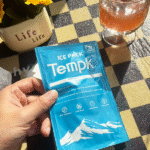
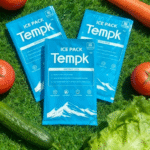
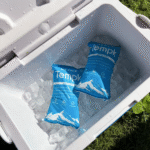
Yes, when the packout depends on its thermal state. The instruction should explain how the selected coolant is prepared and recognized as ready for use. It should also address damaged units and uncertain preparation history. Do not exchange coolant formats or adjust quantities informally, because those changes can affect both payload space and thermal behavior.
Should the factory's food-contact document cover the cleaning method?
Ask how the supplied article's intended-use conditions relate to repeated cleaning and reuse. The relevant documentation and compatibility information should be reviewed together, rather than assuming a generic declaration covers every process. Your compliance and food-safety teams should determine what additional evidence is needed for the target market, contact arrangement, and actual cleaning conditions.
A technically sound catering container is an assembly whose materials, temperature behavior, contact conditions, and service process make sense together. Use the factory's documents to establish facts, then use representative trials to establish operational fit. Keep unsupported performance and hygiene assumptions out of the final specification.
About Tempk
Tempk supplies insulated packaging and several coolant formats that can be evaluated as parts of a catering assembly. We offer customization options for buyers working through tray space, coolant placement, and identification needs. The practical value lies in comparing those components against the intended use rather than selecting them from material terminology alone. Request the information available for the exact product, then review contact conditions, cleaning, and thermal requirements with the relevant teams. A specific proposal and representative sample give that discussion a clearer basis than a generic food-grade claim.
Ask Tempk for the relevant product information and sample options when reviewing a cold chain ice box catering service manufacturer for your operation.