Temperature Controlled Shipping Solutions: Choose the Control Before the Container
The best temperature controlled shipping solutions do not begin with a cooler box. They begin by identifying where the product could leave its approved condition, which part of the transport chain can prevent that exposure, and what evidence the receiver needs. An insulated parcel, a refrigerated truck, a powered air-cargo container and a thermal pallet cover may all be useful—but they solve different portions of the problem.
A shipment can pass a laboratory thermal test and fail operationally because a package waits at customs, a warehouse has not conditioned the coolant correctly, or the receiving site cannot accept the goods. A solution therefore includes equipment, packaging, route design, monitoring, procedures and an exception plan. Buyers should select the minimum set of controls that can be demonstrated to work together for the real product and distribution network.
Define the product-condition contract before choosing technology
Temperature control is always product-specific. Many refrigerated vaccines and some pharmaceuticals use the +2°C to +8°C range, but there are also controlled-room-temperature, frozen and ultra-low-temperature products, along with foods and cosmetics that have very different tolerances. The approved product labeling, stability information, quality agreement or applicable handling specification defines what is acceptable. The shipping-solution vendor cannot replace that source with a universal range.
Begin with a requirement record containing the product and presentation, temperature boundaries, any time-and-exposure allowances approved by the product owner, protection against freezing or light where relevant, payload size, loading temperature, destination and acceptance rule. For mixed loads, verify whether the contents can share a temperature condition and whether physical separation or orientation constraints create other conflicts.
A good specification also identifies what counts as successful delivery. Arrival within a planned number of hours is not enough if the receiving facility cannot access temperature data, the payload is damaged, or the product is outside its approved condition. Define who can release a shipment and what happens after an alarm. In healthcare distribution, this authority is normally held within the relevant quality, clinical or program arrangements rather than by the packaging seller.
The route clock should continue until the product returns to appropriate storage or controlled use. It must not stop at the customer’s loading dock just because the courier’s tracking system marks the package delivered.
Map the route into controlled, buffered and exposed stages
Draw the actual shipment as a sequence of stages: origin inventory, preparation, assembly, staging, collection, sortation or consolidation, line haul, transfers, customs if applicable, last-mile distribution and receiving. Mark each stage controlled if active refrigeration or suitable managed storage protects the product, buffered if the payload relies on its packaging reserve, or exposed if no adequate control is established.
The risk frequently concentrates at interfaces. A long refrigerated road journey may be predictable while unloading at a warm cross-dock is not. A well-packaged air parcel may wait far longer than anticipated at import clearance. A temperature-monitoring alert that no one is authorized to act upon does not solve either problem.
Assign an owner and a contingency to each exposed stage. Can the transfer be shortened? Can the cargo enter a conditioned room? Could departure be moved to avoid a weekend closure? Is a more reliable courier class available? Packaging redesign is appropriate when the exposed interval remains necessary; process improvement may be better when the exposure is avoidable.
For medicinal distribution in the European Union, the EU Good Distribution Practice guidelines emphasize a risk-based approach to transportation, product-defined storage conditions, suitable containers and controls for deviations. They call attention to unloading, reloading and intermediate storage. This is a sector-specific quality framework, not a universal legal requirement for all foods, cosmetics and packages. It nevertheless illustrates why a real shipping solution must have named operational responsibilities.
Choose the architecture by what must be controlled
Four main architectures cover many business cases. They should be compared as operating systems rather than catalog items.
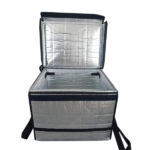
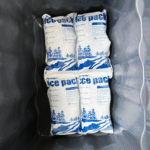
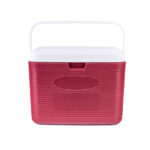
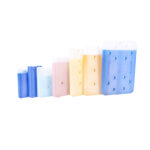
Passive parcel packaging uses insulation and preconditioned coolant, such as gel packs, ice bricks or a specified PCM, to buffer an individual shipment without on-board powered refrigeration. It can suit bounded courier routes or controlled last-mile transfers when the packout is qualified for its payload and exposure. Its finite thermal reserve, conditioning workload and limited usable volume must be considered.
Refrigerated vehicles and storage facilities control the environment around many items. They can be the backbone of pallet and distribution-center movements, but they still require appropriate loading, airflow, door-opening management, monitoring and contingency. The presence of a refrigeration unit does not prove uniform cargo temperature at every position.
Active temperature-controlled containers use powered heating or cooling equipment and can address selected high-value or challenging freight lanes. They add equipment booking, energy, maintenance, service coverage, custody and potential return obligations. Without reliable infrastructure, an active solution can introduce a different failure mode rather than eliminate risk.
Thermal pallet covers, blankets and liners reduce or delay environmental influence on freight during specified stages, such as ground handling or a controlled transfer. A pallet cover is not an autonomous refrigerator or a complete proof that all cartons remained within their accepted band. Its role should be defined by an exposure study and the rest of the transport process.
| Shipment challenge | Likely control strategy | Key proof to ask for |
| Individual parcels through a standard courier network | Qualified passive packout with controlled conditioning | Payload-specific thermal profile, SOP and receiving evidence |
| Consolidated pallets between managed depots | Refrigerated transport and controlled staging | Equipment suitability, cargo temperature coverage and handoff plan |
| Demanding air freight with uncertain transfer times | Suitable passive or powered cargo solution plus hub controls | Complete itinerary, ambient assumptions, equipment or packout evidence |
| Brief exposure during pallet transfer | Process improvement and, where justified, thermal pallet protection | Demonstrated exposure reduction and clear protection limits |
| Variable route with frequent exceptions | Service redesign, contingency storage and layered protection | Documented decision tree and ability to execute interventions |
A layered system is often stronger than choosing one technology to do everything. For example, a refrigerated trunk route can carry passive last-mile cartons so those cartons remain buffered after departure from a controlled depot. The correct boundary of each technology should be stated in the route plan.
Product category changes what “good” looks like
Pharmaceuticals and biologics may require strict protection against warming, freezing or both, along with documented history and a formal excursion-review process. EU GDP provides one relevant distribution framework; requirements vary by product and jurisdiction. Monitoring systems support traceability and investigation, not automatic medical product release.
Vaccines have additional program- and product-specific constraints. The WHO Guidelines for the International Packaging and Shipping of Vaccines, seventh edition published in 2025, addresses the complexity of international shipments, including ultra-low-temperature cases. CDC’s Vaccine Storage and Handling Toolkit was updated in July 2026 for United States provider contexts and directs users toward manufacturer-specific product information. It also distinguishes routine provider transport from emergency transport. A dry-ice solution appropriate for a specified ultra-low vaccine shipment must not be generalized to ordinary refrigerated clinic shipments.
Helpful decision tools
Check the details before you choose packaging
These quick tools can help you compare route risk, sizing needs, coolant choices, and packaging details before you request a quote.
Compliance Checklist Generator
Build a practical checklist for packaging review, shipping, and documentation.
Build checklistPackaging Selector
Compare insulated packaging options by product, route, and temperature need.
Find packagingIce Pack Calculator
Estimate gel ice pack quantity for chilled shipments and practical route planning.
Estimate ice packsFresh, chilled and frozen foods have diverse temperature, hygiene, moisture and shelf-life needs. A frozen seafood export load and a chilled meal kit should not share a generic refrigerant recommendation. Some hazards are reduced by correct storage and handling; others require suitable insulation and thermal media. Requirements must be verified against the product and applicable food regulations, not inferred from a marketing range.
Clinical samples, diagnostics and research materials can require special safety packaging, secondary containment, traceability and transport classification in addition to temperature control. A thermal shipper alone does not resolve dangerous-goods or biological-substance packing requirements where they apply.
Cosmetics and specialty materials may be sensitive to both excessive heat and freezing, without necessarily requiring continuous refrigeration. For these shipments, the design should target actual permitted exposure and product behavior. Adding deeply frozen packs to a heat-sensitive formulation may create an unnecessary low-temperature problem.
Evaluate qualification evidence at the correct level
There are several different questions behind a statement that a shipment is “validated.” The first is whether the product condition is defined by an authorized source. The second is whether a component has known characteristics. The third is whether the complete loaded system meets a particular thermal challenge. The fourth is whether the real operating process can reproduce that result. The fifth is whether actual shipment records support a receiving decision.
For a passive parcel, request the exact enclosure, coolant identity and mass, conditioning steps, payload minimum and maximum, drawing, thermal profile, measurement positions, equipment status, acceptance criteria and test records. For an active container, evaluate the controlled operating mode, loaded distribution, service arrangements and contingency if energy or equipment becomes unavailable. For a refrigerated vehicle, review the relevant cargo conditions, loading pattern, handling of doors and monitoring strategy.
ISTA Standard 20 gives a process framework for insulated shipping-container design and qualification; ISTA 7E supplies standardized parcel thermal exposure profiles. Their applicability depends on the shipment and the approved test program. A successful standard-profile test is not proof of universal performance, an individual product’s post-excursion usability or legal approval across jurisdictions.
An environmental profile describes what the package experienced outside. A payload logger records what a sensor measured inside or next to the load. Neither graph should be mislabeled. During development, multiple positions may help identify the hottest and coldest areas; routine monitoring locations should follow an explicit rationale. An electronic logger is an evidence tool, not a temperature-control component.
A qualification has boundaries. New carton dimensions, changed gel formulation, additional coolant, a revised operator sequence, different seasonal lanes or a newly outsourced hub may require assessment. Define a change-control process instead of silently extending old test results to new arrangements.
Turn monitoring into an action plan
A temperature record has value only if someone knows what to do with it. The monitoring plan should name the responsible party, instrument status, probe location, how readings are collected, how alarms are escalated, and who makes the product disposition decision. For connected telemetry, specify availability of communications and the feasible actions during transport. A notification from an aircraft or a sealed container that cannot be accessed may have a different operational role from an alarm on a refrigerated truck whose driver can take corrective action.
At receipt, staff should check package integrity, identity, logger condition, recorded temperatures, any signs of leaking or damaged coolant, and prompt transfer to accepted storage. Suspected excursions should follow the product-specific quality or safety process. Do not treat lack of a logger alarm or the remaining cold feel of a pack as universal proof of product safety.
For shipments across multiple contractors, include operational conditions in the transport agreement: permitted handling sites, storage environment during delays, documentation transfer, reporting timelines and disposition authority. This prevents a temperature problem from turning into an ownership dispute.
Compare total operating cost, not equipment price
A passive box may have a low purchase cost but require significant freezer space, conditioning labor, coolant inventory and freight volume. An active freight unit may cost more upfront yet reduce consumables in a particular route, while adding equipment rental, power and service obligations. Refrigerated distribution can benefit from consolidation, but fixed vehicle schedules and empty running affect its economics. Pallet covers and reusable containers add cleaning, recovery, damage and inspection questions where appropriate.
Use cost per shipment accepted under the required condition as an organizing metric rather than assuming the least expensive package is the most economical. This does not require inventing an industry failure rate. It requires accounting for the actual packaging spend, transport, labor, exceptions and losses within the company’s own records.
Consider a hypothetical two-stage pharmaceutical distribution network. A central depot sends consolidated cartons on a refrigerated vehicle to regional facilities, which then deliver small orders through parcel couriers. A one-size-fits-all powered solution may not be practical for last-mile parcels, while unprotected cartons could fail during doorstep delays. A qualified passive packout for the last stage, paired with controlled upstream storage and trained receiving staff, can create clearer boundaries and fewer handoff assumptions. Its suitability still depends on product and route evidence.
Write an RFQ that creates comparable proposals
Request one common response format from suppliers and carriers. It should document the product condition, route map, anticipated worst-case exposure, quantity and payload shape, architecture, components or equipment model, operational procedure, thermal or equipment qualification evidence, monitoring strategy, scope limitations, contingency plan, production or maintenance changes and total operating-cost assumptions.
Separate established capability from proposed development. A manufacturer’s catalog component can be a candidate without being a qualified system for your route. A courier’s advertised refrigerated service can be useful without demonstrating that every handoff is controlled. A reputable proposal should show which elements are already supported by evidence and which need a pilot or validation plan.
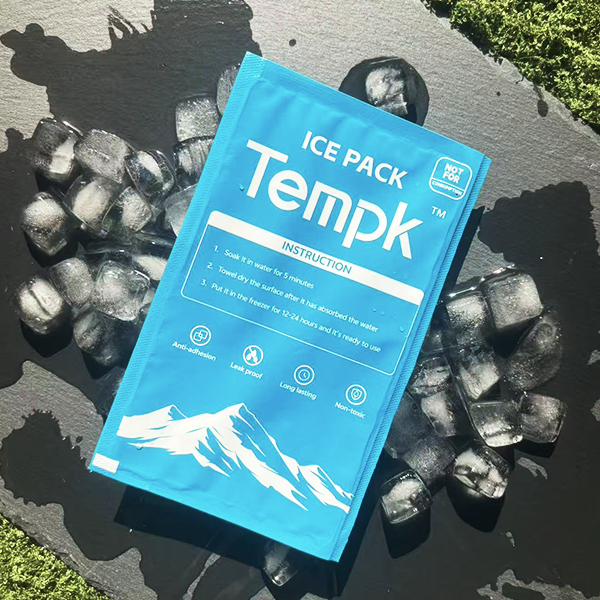
Tempk publicly describes gel ice packs, PCM media, insulated bags, EPP/VIP medical coolers and pallet thermal protection, with packout-planning support. These are potential pieces of a temperature controlled shipping solution; their applicability depends on the product requirement and the rest of the route. A focused next step is to provide a complete shipment brief and ask for an architecture, sample configuration and test-evidence plan rather than a universal shipping-duration promise.
The commercial decision
Select the shipping control that addresses the least controlled stage of the actual route, then verify the complete chain from preparation to receiving. A trustworthy solution defines what is protected, for how long and under which conditions, who performs each operation and what happens when those conditions change. That is more useful than buying a sophisticated container while leaving transfer, monitoring and exception decisions unresolved.