How to Select a Vaccine Insulated Shipping Box
A vaccine insulated shipping box should be selected as part of a complete packout, not as an empty container. The right choice depends on the vaccine manufacturer's labeled transport conditions, the payload, the route and delay risk, the coolant arrangement, and the evidence used to qualify the assembled system. Insulation material alone cannot prove a hold time or protect a freeze-sensitive product.
Procurement, quality, logistics, and packaging teams should define a useful requirement before comparing suppliers. Passive shippers can support refrigerated, frozen, and other temperature-controlled vaccine movements. Product-specific instructions and the receiving market's requirements always take priority.
Define the shipment before choosing the box
Start with a user requirement specification that describes the shipment in operational terms. A supplier cannot select a defensible configuration from an outer dimension and a requested number of hours alone. The following inputs determine whether a candidate system is suitable:
- Vaccine presentation and the transport conditions stated in the package insert, manufacturer instructions, or applicable authorization document.
- Minimum and maximum payload, including secondary packaging, diluent, trays, and any void fill.
- Origin, destination, transport modes, transfer points, planned duration, weekend exposure, and a justified delay allowance.
- Expected ambient profile for the relevant lanes and seasons, including airport or vehicle dwell periods.
- Freeze sensitivity, heat sensitivity, light protection, orientation, and physical protection needs.
- Single-use or reusable operation, cleaning expectations, return logistics, labeling, and tamper-evidence needs.
- Temperature monitoring, acceptance criteria, receiving responsibilities, and excursion escalation procedures.
For the United States, the CDC Vaccine Storage and Handling Toolkit directs providers to product-specific manufacturer guidance and distinguishes short-distance provider transport from commercial shipping. For international vaccine shipments, the WHO 2025 shipping guideline provides a separate framework for route profiling, packaging qualification, monitoring, and receipt. These sources serve different use cases and should not be treated as interchangeable rules.
Compare insulation architectures by use case
EPS, EPP, polyurethane, and vacuum insulation panels can all be useful, but they solve different constraints. The finished system should be compared on qualified performance, usable payload, total shipping weight, dimensional weight, durability, and handling requirements rather than on a single material property.
| Architecture | Practical strengths | Important tradeoffs | Typical decision question |
|---|---|---|---|
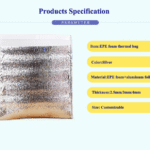
| EPS foam | Low mass, widely available, and suitable for many single-use designs | Bulkier walls may reduce payload efficiency; surface damage and disposal routes vary | Is a single-use shipper acceptable for this lane and waste stream |
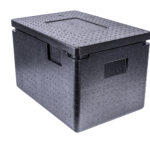
| EPP foam | Tough, cleanable, and well suited to reusable handling | Higher unit cost and a return process may be needed | Will reuse frequency and return logistics justify the system |
| PU insulated box | Rigid construction and broad configuration options | Weight, repairability, and end-of-life handling require review | Does the route need a rugged reusable enclosure |
| VIP or VIP hybrid | Thin insulation can improve payload efficiency for demanding thermal designs | Panels need protection from puncture and edge heat paths; replacement controls matter | Does freight or payload value justify a higher-performance insulation package |
A published thermal conductivity value describes a material under stated test conditions. It does not establish how long a loaded shipper will remain within a vaccine's acceptance range. Panel joints, lid geometry, coolant placement, payload mass, conditioning, and ambient exposure all influence system performance.
Match the coolant to vaccine sensitivity
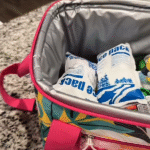
The cold source must be selected with the same care as the insulation. Frozen water packs can create a freeze hazard for sensitive products if the layout, conditioning, and separation are not appropriate. Chilled water packs or phase change materials may reduce that risk in some designs, but their suitability still needs to be demonstrated in the complete packout.
Helpful decision tools
Check the details before you choose packaging
These quick tools can help you compare route risk, sizing needs, coolant choices, and packaging details before you request a quote.
Box Liner & Pallet Cover Sizing
Check box liner and pallet cover sizing logic for insulated packaging projects.
Estimate sizingCompliance Checklist Generator
Build a practical checklist for packaging review, shipping, and documentation.
Build checklistCoolant & PCM Reference
Compare coolant and PCM options when a route needs added temperature support.
Compare optionsThe WHO guideline describes the use of water-based packs, PCM packs, or dry ice according to vaccine and packaging class. Dry ice is associated with ultra-low-temperature applications and brings separate handling, ventilation, labeling, and transport considerations. It should not be substituted into a refrigerated packout without product-specific and regulatory review.
- Ask for the coolant type, nominal phase-change point, fill mass, container material, dimensions, and conditioning procedure.
- Confirm the permitted orientation and whether the packout uses spacers or barriers to prevent direct contact with the payload.
- Specify the number and position of coolant packs for each approved payload configuration.
- Control freezer or refrigerator loading so every coolant unit reaches the required conditioning state before packing.
- Treat any change in coolant formulation, fill weight, container geometry, or supplier as a controlled change requiring assessment.
Protect usable payload and packing repeatability
Nominal box volume is not the same as usable vaccine payload. Coolant, dividers, buffer layers, monitors, and dunnage consume internal space. Request an internal drawing for the approved configuration and confirm the minimum and maximum payload that the qualification covers. A design that performs with a full load may behave differently with a small load because the thermal mass and air space have changed.
A repeatable packout needs a controlled loading sequence. The work instruction should show component orientation, coolant positions, payload limits, logger placement, closure method, and any maximum assembly time. Photographs or isometric diagrams are more reliable than a short written note when several packers or facilities will use the system.
Review qualification evidence before purchase
Supplier test reports are useful only when their test article matches the system you intend to buy and operate. Review the complete configuration and the limits of the evidence. The WHO guideline for international vaccine shipping links route profiling with operational and performance qualification. It also makes clear that the target temperature for qualification comes from the pharmaceutical manufacturer's transport requirement, not from a monitor alarm setting.
| Evidence item | What to verify |
|---|---|
| System description | Container model, insulation, coolant, payload, spacers, monitor, closure, and all approved variants |
| Ambient test profile | Temperatures, dwell times, duration, sequence, and why the profile represents the intended lane and season |
| Payload and conditioning | Actual or simulated load, starting temperature, coolant conditioning, assembly sequence, and closure time |
| Sensor map | Probe count and locations, including expected hot and cold points and the payload reference position |
| Acceptance criteria | Product-specific temperature limits, duration, physical integrity, and rules for reviewing excursions |
| Repeatability | Number of successful runs, variability, deviations, and the approved operating range |
| Change control | Which material, supplier, route, payload, or process changes trigger documented assessment or requalification |
Specify monitoring and receipt
A temperature logger records what happened; it does not create thermal protection. Define the required device, probe or sensor location, start procedure, logging interval, download method, and ownership of the data review. WHO recommends an electronic data integrator in every international vaccine shipping container, with additional placement considerations for large containers. Local programs and product manufacturers may impose different or additional requirements.
The receiving SOP should state who checks the seal, container condition, monitor status, and product temperature record. It should also define where the product is held while an excursion is assessed. CDC guidance advises that vaccines exposed to inappropriate temperatures should not be administered unless the manufacturer or public health authority confirms that safety and effectiveness have not been compromised.
Use a complete supplier RFQ
A useful request for quotation gives suppliers enough information to propose a system and identify gaps. Include the following fields:
- Target product and labeled transport requirements, including freeze sensitivity and any orientation constraints.
- Minimum and maximum payload dimensions, mass, and starting condition.
- Lane, modes, seasonal profile, planned duration, delay allowance, and handling events.
- Required shipper type, reuse model, cleaning method, labeling, security, and disposal constraints.
- Requested qualification documents, test configuration, raw data, calibration records, packout drawings, and deviation summary.
- Sample quantity, pilot plan, production acceptance criteria, lot traceability, and notification requirements for material or process changes.
Sources
- CDC Vaccine Storage and Handling Toolkit July 2026. US provider guidance on storage, monitoring, transport, and excursion handling
- WHO Guidelines for the International Packaging and Shipping of Vaccines Seventh Edition. International vaccine shipping, route profiling, qualification, and monitoring guidance
- Tempk Vaccine Carrier VIP Board Cooler Box. First-party product information for the Tempk VIP shipper range
- Tempk EPP Foam Box for Medical Cold Storage. First-party product information for reusable EPP medical boxes