Cold Chain Bio-Vegetables Quality Standards in 2025?
Bio (“organic”) vegetables win on crispness, clean appearance, and trust—and you only keep that promise if cold chain Bio-vegetables quality standards are clear, measurable, and repeatable. One short warm window can quietly consume shelf life, while a “too cold” setting can damage chill-sensitive items later. In 2025, buyers also expect stronger proof through records—especially for leafy greens on traceability lists.
This article will help you:
- Build cold chain Bio-vegetables quality standards that your team can follow under pressure
- Set temperature lanes so leafy greens thrive and chill-sensitive crops are not harmed
- Reduce the three biggest losses: dehydration, condensation, and bruising
- Create a receiving checklist that cuts disputes and prevents bad product from spreading
- Protect organic integrity (no commingling, no prohibited substance contact)
- Build a simple KPI dashboard and weekly self-audit that drives continuous improvement
- Understand 2025 expectations for traceability readiness and timelines
Why do cold chain Bio-vegetables quality standards matter in 2025?
Direct answer: cold chain Bio-vegetables quality standards matter because organic value disappears first in quality, not safety. Customers judge you by texture, color, and smell. If your standards are inconsistent, shrink rises, claims increase, and trust drops.
Your vegetables are basically “living water systems.” If they warm up, they “breathe” faster and lose water. If they swing in temperature, they sweat, then soften, then decay. If they get crushed, damage shows up later when it is too late to fix.
The 3 most common failures (and the fastest fixes)
| Failure | What you see | Why it happens | What it means for you |
|---|---|---|---|
| Dehydration | limp leaves, weight loss, dull color | low humidity, strong airflow, warm staging | shrink + markdowns |
| Condensation | droplets, slime, mold risk | temperature swings, sealing warm product | rejections + waste |
| Bruising | dark spots, soft areas | rough handling, vibration, over-stacking | complaints + returns |
Practical tips you can use this week
- Control the first hour: pre-cool quickly after harvest and keep product cold through pack-out.
- Stop silent warm minutes: add a staging time limit (start with 15 minutes) and actually time it.
- Handle like eggs: small bruises become obvious later, right when your customer opens the box.
Real-world example: A distributor cut shrink after enforcing a “no warm staging” rule and switching to moisture-protective packaging for leafy greens.
What should cold chain Bio-vegetables quality standards include?
Direct answer: cold chain Bio-vegetables quality standards are the measurable rules that protect freshness, organic integrity, and proof across storage, transport, and receiving.
A useful standard answers five questions:
- How cold (by vegetable group)?
- How humid (or what packaging creates the right micro-climate)?
- How handled (limits on time out of control, stacking, vibration)?
- How verified (checks, logs, photos, exceptions)?
- What happens when reality breaks the plan (delay protocol)?
A simple 4-layer model you can train in 2 minutes
| Layer | What you control | What you measure | Practical benefit |
|---|---|---|---|
| Freshness | temperature, RH, time | pulp temp, RH proxy, shelf-life outcomes | fewer limp greens |
| Safety | sanitation, handling discipline | cleaning checks, dwell time notes | fewer discard events |
| Organic integrity | segregation, contamination prevention | labels, barriers, cleaning SOPs | protects the “bio” claim |
| Proof | traceability + monitoring | lot codes, event timestamps | faster investigations |
Which vegetables need different cold chain Bio-vegetables quality standards?
Direct answer: you need different cold chain Bio-vegetables quality standards because vegetables fail in different ways. Leafy greens fail by water loss and slime. Tomatoes fail by chilling injury if stored too cold.
Instead of writing a different SOP for every SKU, group by “how it fails”:
Practical grouping table for quality control
| Vegetable group | Typical risk | Handling priority | What it means for you |
|---|---|---|---|
| Leafy greens | wilting + slime | high humidity + gentle handling | biggest shrink driver |
| Herbs | fast dehydration + aroma loss | tight moisture control | premium product loss |
| Brassicas (broccoli/cauliflower) | yellowing + dehydration | stable cold + airflow | shelf life drops fast |
| Root vegetables | drying + scuffing | cushioning + stable temp | hidden losses, still costly |
| Chill-sensitive fruiting veg | chilling injury | avoid “too cold” | damage shows later |
Tips that prevent “mixed-box chaos”
- Don’t mix “near-freezing greens” with “chill-sensitive tomatoes” in one temperature setting.
- Use simple labels on totes: Leafy / Herbs / Brassica / Roots / Chill-sensitive.
- Train one rule: “Stable and correct beats very cold sometimes.”
How do temperature lanes strengthen cold chain Bio-vegetables quality standards?
Direct answer: temperature lanes make cold chain Bio-vegetables quality standards practical, because they stop accidental “too cold” damage and reduce humidity swings.
The key idea: one setting cannot serve all vegetables
- Lettuce quality is optimized near 0°C, with shorter life at warmer temperatures.
- Tomatoes are chilling sensitive below about 10°C with enough exposure time.
- Cucumbers are also chilling sensitive below about 10°C (and can be faster to show damage).
A lane map you can deploy today
| Lane | Typical setpoint logic | What belongs here | Biggest risk |
|---|---|---|---|
| Lane A: Near-freezing | around 0–2°C, high RH environment | leafy greens, many brassicas | dehydration if RH strategy is weak |
| Lane B: Chill-sensitive | keep ≥10°C for sensitive items | tomatoes, cucumbers | chilling injury if placed in Lane A |
| Lane C: Mixed-box compromise | a managed compromise zone | mixed assortments (when unavoidable) | uneven quality across SKUs |
Plain-language rule: Your cold chain Bio-vegetables quality standards should require Lane B separation when you ship tomatoes or cucumbers.
Operational controls that make lanes real (not just labels)
| Control item | Standard you set | How you verify | Practical meaning |
|---|---|---|---|
| Pre-cool before packing | “No warm pack-out” rule | pulp temp spot checks | better shelf life |
| Staging time | max minutes out of control | timer + checklist | fewer silent excursions |
| Door discipline | doors closed between picks | supervisor spot checks | fewer heat spikes |
| Time outside lane | threshold + action | logger notes + exception form | less “unknown damage” |
Quick decision tool: “Do I split lanes or not?”
Answer “yes/no”:
- Does the load include tomatoes or cucumbers?
- Is the route longer than 2 hours or does it include a cross-dock?
- Are you seeing late complaints (softening, pitting, blotchy color)?
If you answered yes to any, split lanes (or split packaging) to protect cold chain Bio-vegetables quality standards. ()
Real-world example: A retailer reduced “mealy tomatoes” complaints after moving tomatoes out of the near-0°C leafy greens lane. ()
How do humidity rules fit cold chain Bio-vegetables quality standards?
Direct answer: humidity is the hidden lever in cold chain Bio-vegetables quality standards. Too dry causes wilting. Too wet causes slime. Your goal is controlled moisture, not maximum moisture.
FAO compatibility guidance commonly groups many vegetables into 0–2°C with very high relative humidity for storage compatibility, and also warns about ethylene sensitivity for many items. (FAOHome)
A simple moisture strategy (easy to train)
| Moisture goal | What you do | What you avoid | Practical meaning |
|---|---|---|---|
| Reduce wilting | liners + correct pack density | open crates in dry air | crispness stays |
| Avoid slime | reduce temperature swings | warm-to-cold shocks | longer shelf life |
| Prevent pooling | drain + keep packs upright | water collecting in corners | fewer rejects |
Three condensation triggers to add to your SOP
- Sealing warm product into tight plastic.
- Moving product from warm staging into a cold room without stabilization.
- Frequent door opening that creates micro “weather changes” around produce.
Practical tips
- Use breathable inner packaging for leafy items that sweat easily.
- If you see droplets inside bags, improve stability before you add more “wet protection.”
- Track “slime events” like you track customer returns—it’s a process signal.
How does pre-cooling support cold chain Bio-vegetables quality standards?
Direct answer: pre-cooling is the first quality gate for cold chain Bio-vegetables quality standards because it removes field heat fast—before shelf life is consumed.
FAO describes pre-cooling as the rapid removal of field heat from fresh produce. (FAOHome)
Pre-cooling methods (choose by product and workflow)
| Method | Best for | Why it works | Watch-outs |
|---|---|---|---|
| Forced-air | packed leafy greens | cools through vented packs | can dry product if airflow is harsh |
| Vacuum cooling | leafy greens | very fast heat removal | needs correct packaging and process |
| Hydrocooling | sturdier items | fast surface cooling | water quality + sanitation discipline |
| Room cooling | low-risk short lanes | simple | often too slow for premium “bio” quality |
*(Cooling method options for lettuce and leafy products are commonly listed in postharvest handling guidance.) ()
A “time budget” standard your team can follow
In your cold chain Bio-vegetables quality standards, define:
- a maximum minutes from harvest to pre-cool start
- a maximum minutes from cold storage to seal and dispatch
- what to do if you exceed either limit (return to controlled storage, re-pack, or re-route)
Practical tips
- Cooling cannot happen through solid walls. Keep packs vented where needed.
- Pre-cool product; don’t expect the vehicle to do it for you.
- Pilot one lane first, then scale once it is stable.
Real-world example: A packhouse improved shelf-life consistency after enforcing a harvest-to-pre-cool timer and recording it by lot.
How should packaging support cold chain Bio-vegetables quality standards?
Direct answer: packaging supports cold chain Bio-vegetables quality standards when it protects against crush, manages moisture, and maintains airflow—consistently on your real routes.
Packaging is a micro-environment. It controls:
- airflow across surfaces
- moisture escape vs moisture trapping
- vibration transfer
- stacking pressure
Packaging options you can standardize
| Packaging approach | Strength | Weakness | Best use case |
|---|---|---|---|
| Vented crate | strong airflow | dehydration risk | cooling-focused lanes |
| Lined crate | moisture retention | condensation risk | leafy greens with stable temps |
| Rigid container | crush protection | higher cost | premium deliveries |
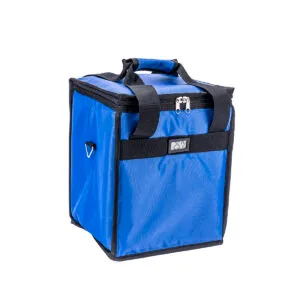
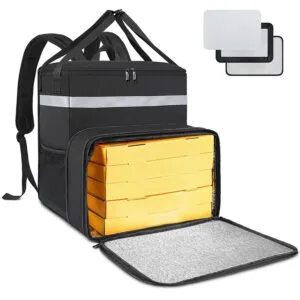
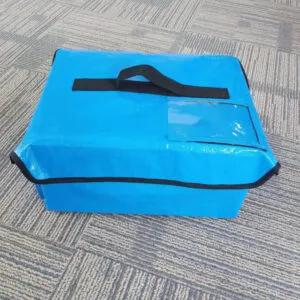
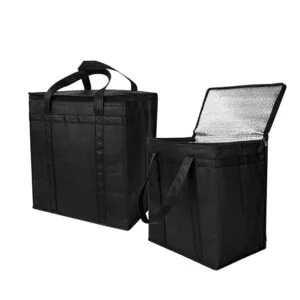
| Insulated shipper | temperature buffering | requires process discipline | long routes or last-mile risk |
Route risk matrix (turn packaging into a clear rule)
| Route type | Risk pattern | Packaging rule | What it means for you |
|---|---|---|---|
| Short urban (≤2 hours) | many door opens | small insulated totes + fast handoffs | fewer heat spikes |
| Cross-dock / hub | extra handoffs | rigid containers + clear lane labels | fewer crush + lane errors |
| Long haul | vibration + time | cushioning + moisture strategy | fewer bruising claims |
| Mixed assortment | mixed needs | split by lane or split by packaging | fewer “one setting hurts all” issues |
“Dry vs Wet risk” packaging selector (interactive)
Answer two questions:
- Does it wilt easily? (yes/no)
- Does it release moisture? (yes/no)
- Wilt yes + moisture low → prioritize humidity retention (liners, gentle airflow).
- Wilt yes + moisture high → balance retention + drainage/absorbency.
- Wilt no + moisture high → prioritize drainage and airflow to reduce rot.
Real-world example: A retailer reduced rot after using “absorbent only when moisture is present” instead of adding pads everywhere.
Helpful decision tools
Check the details before you choose packaging
These quick tools can help you compare route risk, sizing needs, coolant choices, and packaging details before you request a quote.
Compliance Checklist Generator
Build a practical checklist for packaging review, shipping, and documentation.
Build checklistRoute Risk Checker
Review lane conditions before selecting packaging for real operating requirements.
Check route riskPackaging Selector
Compare insulated packaging options by product, route, and temperature need.
Find packaging
How do you protect organic integrity inside cold chain Bio-vegetables quality standards?
Direct answer: organic integrity is part of cold chain Bio-vegetables quality standards because “bio” is a trust claim. You must prevent commingling with non-organic and prevent contact with prohibited substances.
USDA organic guidance emphasizes management practices and physical barriers to prevent loss of organic integrity through commingling or contamination. ()
Organic integrity controls to standardize
- Physical segregation zones (storage + staging)
- Dedicated or verified-clean totes and tools
- Label discipline (lot IDs stay attached and readable)
- Approved cleaning agents and documented use
- Clear “rework” rules if labels or seals are damaged
Handoff integrity checklist (simple and enforceable)
| Handoff point | Integrity risk | Control | Record |
|---|---|---|---|
| Shared dock | pallet mix-up | dedicated organic staging zone | dock photo + scan |
| Shared vehicle | commingling | barrier + load map | load diagram + seal |
| Repack room | contamination | approved cleaning SOP | sanitation log |
| Returns loop | residue from prior loads | wash + inspection | cycle record |
Practical tips
- Separate organic and conventional physically, not just on paperwork. ()
- Add a visible “organic-ready” inspection tag for reusable totes.
- If you outsource transport, include organic integrity clauses in your SLAs.
Real-world example: A distributor reduced certification headaches after assigning dedicated organic totes and documenting barrier controls.
How should receiving standards reduce disputes in cold chain Bio-vegetables quality standards?
Direct answer: receiving standards are where cold chain Bio-vegetables quality standards become fair and measurable. Without them, you argue about opinions instead of fixing causes.
Your receiving standard should be fast and consistent:
- temperature condition checks (use a consistent method)
- visual checks (color, damage, slime, pooling)
- packaging integrity
- a simple decision: Pass / Hold / Fail
Receiving checklist and acceptance table
| Check item | “Good” looks like | “Fail” looks like | Practical meaning |
|---|---|---|---|
| Texture | crisp, resilient | limp, rubbery | shelf life already consumed |
| Surface | dry-to-touch | slime, pooling | high decay risk |
| Color | natural, bright | yellowing/browning | heat/age signal |
| Damage | minimal bruising | heavy bruising | shrink will rise fast |
| Packaging | intact + labeled | torn/wet/unlabeled | integrity + contamination risk |
“Dispute-proof receiving packet” (keep it simple)
- 3 photos per exception: overall pallet, close-up defect, label/lot code
- temperature reading + method noted
- time received + time unloaded
- pass/hold/fail reason from a short list
Real-world example: A retailer reduced supplier conflict after standardizing three reject reasons and requiring a photo for each.
How do you monitor and prove cold chain Bio-vegetables quality standards?
Direct answer: cold chain Bio-vegetables quality standards get stronger when you measure a few things consistently and review them on a schedule.
Start with a “minimum viable dashboard”
Track four metrics before you buy fancy systems:
- Receiving condition (pass/hold/fail + reason)
- Receiving temperature method + result (be consistent)
- Time outside control during pack-out and staging
- Complaint codes by product group (wilt / slime / bruise / odor)
KPI dashboard template (copy into your ops sheet)
| KPI | Definition | Data source | Target trend | Action if out of control |
|---|---|---|---|---|
| Wilt rate | % units failing texture | receiving checks | down | raise humidity protection + cut staging time |
| Condensation/slime rate | % with droplets/slime | receiving + complaints | down | reduce temp swings + stop sealing warm product |
| Bruise rate | % with crush/bruising | receiving photos | down | upgrade packaging + stacking rules |
| Lane compliance | % shipments in correct lane | label + SOP audit | up | retrain + fix picking errors |
| Exception count | # excursions/delays | logs | down | update route plan + delay protocol |
| Organic integrity incidents | commingling/label failures | audit | down | strengthen segregation + labeling |
Monitoring levels (choose what fits your scale)
- Basic: timestamps + receiving checks (good for small operations)
- Lane testing: loggers on sample shipments (best for new routes)
- Continuous: dashboard + alerts (best for high volume)
Traceability readiness in 2025 (why “proof” matters more now)
FDA information indicates the Food Traceability Rule compliance timeline was proposed to be extended, with a congressional directive not to enforce before the updated date. (U.S. Food and Drug Administration)
The Food Traceability List includes categories like fresh leafy greens, and guidance documents describe how these categories are defined. (U.S. Food and Drug Administration)
Practical takeaway: even if you are not “fully digital,” start capturing:
- lot code
- location IDs (farm/packhouse/hub)
- key timestamps (cooling, packing, shipping, receiving)
- transformation note (whole vs fresh-cut)
Interactive self-audit: Are your cold chain Bio-vegetables quality standards working?
Run this weekly. Score each item 0–2 (0 = no, 1 = partial, 2 = consistent).
Temperature discipline (0–8)
- Product is pre-cooled before packing (FAOHome)
- Staging time is timed and limited
- Lane labels are used on every tote
- Corrective actions happen when a lane is broken
Moisture control (0–8)
- Leafy greens have a humidity strategy (liners + stability) (FAOHome)
- Condensation events are tracked with a cause note
- Wet packaging is removed from circulation quickly
- You’ve reduced door-open swings in packing and receiving
Handling + integrity (0–8)
- Stacking rules are enforced
- Mixed loads are separated by group
- Organic integrity controls are in place ()
- Receiving checks are consistent across sites
Score (max 24):
- 20–24: strong standards, scale confidently
- 14–19: good, fix the weakest link first
- 8–13: high risk of shrink and disputes
- 0–7: standards exist on paper only
How do you write SOPs that make cold chain Bio-vegetables quality standards real?
Direct answer: the best SOP for cold chain Bio-vegetables quality standards is short, visual, and usable during peak time.
One-page SOP template (ready to post)
- Pre-cool: product must be cooled before pack-out.
- Pack fast: seal within a defined time window.
- Moisture check: no pooling water, no wet cartons.
- Load rules: heavy bottom, leafy protected, lanes separated.
- Staging limit: maximum minutes before pickup.
- Delay protocol: if delayed beyond threshold, return to controlled storage or re-pack.
Training that sticks (without long classroom time)
- Use photos of “good vs fail” conditions (wilt/slime/bruising).
- Teach one “why” sentence: “We protect crispness and shelf life.”
- Retrain after exceptions, not only on a calendar.
Real-world example: A farm hub improved consistency after converting a long SOP into a one-page visual checklist with timing rules.
How does last-mile delivery affect cold chain Bio-vegetables quality standards?
Direct answer: last-mile is where cold chain Bio-vegetables quality standards break most often, because control shifts and door opens multiply.
Last-mile rules that protect quality
- Deliver the most sensitive items first (leafy greens, herbs).
- Keep containers closed between drops.
- Avoid leaving totes in sun or near warm engines.
- Use confirmation for doorstep delivery of leafy greens.
| Last-mile risk | What it looks like | Standard to apply | Practical meaning |
|---|---|---|---|
| Doorstep dwell | unattended deliveries | “No drop without confirmation” | less wilt and waste |
| Multi-stop routes | long time in vehicle | sensitive-first routing | better freshness |
| Warm vans | heat spikes | insulated totes or reefer | fewer temperature swings |
2025 trends shaping cold chain Bio-vegetables quality standards
In 2025, cold chain Bio-vegetables quality standards are shifting from “keep it cold” to lane-based control + proof + repeatability. Three changes matter most:
- Lane clarity: separating near-0°C leafy greens from ≥10°C chill-sensitive vegetables reduces hidden damage. ()
- Traceability readiness: leafy greens are on traceability lists, and timelines have been communicated with updated compliance and enforcement intentions. (U.S. Food and Drug Administration)
- Integrity discipline: organic integrity expectations emphasize preventing commingling and prohibited substance contact. ()
Latest progress snapshot (what it means for you)
- More buyers ask for a simple audit trail: “show me lot + time + condition.”
- More operations reduce shrink by focusing on warm minutes, not only truck temperature.
- More teams adopt monthly KPI reviews to keep standards from drifting.
Frequently Asked Questions
1) What do cold chain Bio-vegetables quality standards include?
They include temperature lanes, moisture rules, handling limits, receiving checks, organic integrity controls, and records that prove consistent performance.
2) Is colder always better for cold chain Bio-vegetables quality standards?
No. Tomatoes and cucumbers can suffer chilling injury below about 10°C, so lane separation matters. ()
3) What temperature is best for lettuce quality?
Guidance indicates lettuce quality is optimized near 0°C, with shorter shelf life at warmer temperatures. ()
4) What causes slime on leafy greens during cold chain?
Usually condensation from temperature swings plus time. Reduce swings, avoid sealing warm product, and stop pooling water.
5) What is the fastest improvement I can make this week?
Limit staging time and pack-out warm exposure. Many failures start before transport begins.
6) How do I protect organic integrity during transport?
Use physical barriers, segregation zones, clean equipment rules, and labeling discipline to prevent commingling and contamination. ()
7) Are leafy greens included in U.S. traceability lists?
FDA materials list fresh leafy greens and describe related categories and definitions. (U.S. Food and Drug Administration)
8) What records are the “minimum viable proof” for 2025?
Lot code, locations, key timestamps, receiving condition results, and exception notes—captured consistently at every handoff. (U.S. Food and Drug Administration)
9) How often should I review cold chain Bio-vegetables quality standards?
At least monthly for KPIs and seasonally for SOP updates, especially before hot months.
10) How can ISO 22000 relate to my standards?
ISO 22000 is a food safety management system standard used across the food chain to structure hazard control and system discipline. ()
Summary and recommendations
Cold chain Bio-vegetables quality standards work when you control temperature stability, moisture balance, gentle handling, organic integrity, and receiving discipline—and you can prove it with simple records. The biggest losses usually come from dehydration, condensation, and bruising, often triggered by warm staging and process inconsistency rather than distance alone.
Action plan (start now)
- Assign your top SKUs to temperature lanes and label every tote.
- Set a staging time limit and time it for two weeks.
- Standardize packaging by route risk and moisture risk.
- Implement one receiving checklist with Pass/Hold/Fail.
- Run the weekly self-audit and fix the top failure cause first.
About Tempk
At Tempk, we help cold chain teams turn standards into repeatable daily behavior—temperature lane design, moisture-smart packaging logic, receiving SOPs, and KPI rhythms that reduce shrink. We focus on practical implementation so your bio-vegetables arrive crisp, clean, and consistent, with the records you need when buyers or auditors ask.
Call to action: If you want to upgrade cold chain Bio-vegetables quality standards, start by identifying your top failure (wilt, slime, or bruising), then implement one lane or SOP change this week and measure the result.