Cold Chain Ice Box Catering Service Manufacturer: Specify a Service-Ready System
The right cold chain ice box catering service manufacturer helps you evaluate a container against the complete food-service task, not just an empty-box specification. Start with the required food condition, prove the tray and coolant arrangement, assess access and handling, and test the actual delivery and service pattern. Then confirm cleaning, return-to-service, and production consistency before placing a bulk order. This approach exposes the practical reasons a box can fail even when it looks large, durable, and well insulated, while giving procurement a clear basis for comparing offers and approving customization.
Follow one load from the kitchen to its final holding point
Choose a representative service and describe what happens to the food at every stage. Begin with its condition before packing, then include staging, vehicle loading, travel, unloading, venue access, and transfer to service or appropriate holding equipment. The purpose is to locate the actual protection interval. Do not stop the description at the estimated driving time.
The starting condition needs independent control. A passive ice box intended for chilled holding is not a substitute for a suitable food-cooling process. Establish how food reaches the required condition before loading. Ask the manufacturer to state whether its proposed evidence represents prechilled contents and what assumptions apply to the container and coolant at assembly.
Confirm the relevant food requirements with the responsible team. The FDA Food Code is a model used by adopting jurisdictions, and its general cold-holding provision for applicable safety-controlled foods is not a universal specification for every menu or country. Local rules, product quality, and the particular food process determine the operating criteria. Keep these criteria separate from the manufacturer’s marketing language.
Define the destination clearly. A staffed kitchen with available refrigeration is different from a temporary event where the box remains in use during setup and service. If repeated access is part of the task, it belongs in the assessment. A closed-box transport result cannot be assumed to cover an opening pattern that was never evaluated.
Identify the most consequential uncertainty. It may be a delayed venue handover, an unfamiliar carrying route, a partial load, or an unpredictable return. Assign a way to resolve it during the trial. This produces a useful brief for the manufacturer and prevents the purchasing process from treating every unknown as a reason to request a larger container.
Make the sample prove fit, access, and handling before thermal claims
Bring the actual tray, lid, meal carton, and trolley arrangement into the review. Confirm that the payload fits with coolant, separators, and other required components in place. A nominal liter capacity does not establish usable space. The sample should demonstrate normal loading and unloading without tilting food unnecessarily or removing protective packaging.
Access should follow the service sequence. Staff may need the top tray first, a particular order at a delivery stop, or a small portion of a larger load during setup. Observe whether the design requires prolonged searching or repeated rearrangement. A slightly different format can be more useful than extra capacity when it reduces disturbance to the remaining food.
Review loaded handling with the people who perform it. Check grip, balance, lid movement, trolley fit, and the actual route through doors, lifts, or uneven surfaces. The complete loaded mass should be assessed under your workplace safety arrangements. Do not infer easy handling from an empty sample that feels light in a meeting room.
Look for design features that make correct assembly obvious. Defined coolant positions, identifiable inserts, and clear orientation can reduce reliance on memory. Customization should be considered where it removes a real ambiguity. A custom logo alone does not address a tray that blocks the closure or a coolant unit that staff routinely place in different positions.
Evaluate the smallest and largest intended loads. A box selected for a peak event may be inconvenient or thermally different when partially filled. Ask whether the same arrangement is supported across the proposed range and what instructions apply. An approved smaller option may be preferable to a large container that encourages improvisation on routine orders.
Ask for evidence that answers the operating question
Once the physical arrangement is plausible, examine the supporting information. The thermal evidence should identify the container, lid, coolant, payload, preparation, exposure, and measurement method. The question is whether it supports your planned use, not whether its headline duration is longer than another supplier’s claim.
| Approval subject | Evidence to review | What the buyer should not assume |
| Food condition | Defined loading and holding criteria | A cold container can safely cool any warm load |
| Payload arrangement | Representative trays with all components present | Nominal volume equals usable food capacity |
| Thermal behavior | Relevant test conditions and measurement locations | One closed-box result covers repeated service access |
| Contact suitability | Documentation for the article and intended use | A resin label approves every contact condition |
| Cleaning | Compatible process and representative trial | Every component tolerates the kitchen’s usual wash |
| Repeatability | Controlled specification and change notification | Future deliveries automatically match the sample |
Treat this as a release discussion rather than a paperwork exercise. A supplier may have useful existing evidence for part of the task while another part needs a buyer trial or additional technical assessment. Record that distinction so missing information does not become an implicit approval.
Temperature measurements need context. Air inside the box, food surfaces, and food cores can behave differently. The food-safety and technical teams should decide what to measure and how the result relates to acceptance. A favorable graph cannot answer a question it was not designed to measure.
Contact documentation should identify the relevant component and conditions. A carrier around sealed trays is not the same application as direct contact with unpackaged food. Review food type, time, temperature, and repeated use where applicable. Ask which documentation supports the supplied article rather than accepting a general statement that its material is food grade.
Cleaning compatibility belongs in the same review. Detergents, sanitizers, wash conditions, drying, and repeated handling may affect different parts of the assembly. The manufacturer should explain known limitations and intended methods. Your operation should verify that the process is suitable for the actual surfaces and food-handling use, rather than choosing chemicals by trial and error.
Run a rehearsal that includes the inconvenient parts of service
Use normal staff and normal equipment for the trial. Let operators follow the proposed instruction and record where they hesitate or invent a workaround. A supplier-led demonstration can be helpful, but it should not conceal an instruction that only the demonstrator understands. The eventual system has to work after the supplier leaves.
Include the access pattern and load changes that the approval will cover. For multi-stop deliveries, observe partial unloading. For events, include the planned staging and service access. For transfer to a kitchen, verify the receiving handover. The technical plan should determine how these actions are represented in temperature evaluation and how results will be assessed.
Imagine a caterer trialing a new box for an outdoor reception. The container performs satisfactorily during closed transport, but staff leave the lid open while sorting several tray types at the venue. The useful correction may involve loading order, separate service units, or a different staging process rather than a different insulation material. Any revised arrangement should then be evaluated against the actual task.
Helpful decision tools
Check the details before you choose packaging
These quick tools can help you compare route risk, sizing needs, coolant choices, and packaging details before you request a quote.
Dry Ice Calculator
Estimate dry ice needs for frozen or ultra-cold shipments before packing.
Estimate dry iceIce Pack Calculator
Estimate gel ice pack quantity for chilled shipments and practical route planning.
Estimate ice packsInsulation Material Drop Resistance
Review drop resistance and handling factors before choosing insulation materials.
Check resistanceRehearse a foreseeable delay. Staff need to know what to do when access is blocked, service is postponed, or the receiving contact is unavailable. The answer should come from the approved food-handling process. Adding coolant or continuing service without review should not become an undocumented response to schedule pressure.
After the event, follow the container back. Check whether lids and inserts return together, whether labels remain readable, and how spills are handled. Observe cleaning and drying rather than examining only the final appearance. A container can be technically reusable yet operationally unavailable because preparation takes longer than the business planned.
Document trial changes and their effects. A revised separator, different coolant format, or altered loading sequence may improve the process, but it also creates a new configuration. Identify which results apply to which version. The final approval should describe the arrangement that actually passed the relevant checks, not the original sample name.
Decide how unresolved items will be closed. A successful handling rehearsal does not complete a missing contact review, and a thermal result does not approve an unsuitable cleaning method. Assign each issue to the relevant owner. This allows procurement to progress without treating one favorable observation as permission to skip the remaining decisions.
Buy the repeatable arrangement and its support
The final order should identify the approved assembly and the services included. Confirm the body, lid, inserts, coolant options, markings, and packaging for delivery. State whether the purchase is standard stock, a modification, or custom manufacture. Ask for actual sample, tooling, minimum-order, and lead-time terms for that specification.
Control the link between sample and production. Retain the relevant drawing, component identities, and acceptance criteria. Agree what changes the manufacturer will notify and who reviews them. A small dimensional alteration can matter when trays depend on a precise fit, while a labeling change can affect dispatch identification or return sorting.
Plan replenishment of service parts. A reusable body may remain sound while a lid, insert, or coolant unit needs replacement. Confirm compatibility and availability instead of assuming the same-looking part will always fit. The cost and timing of keeping complete assemblies in service should be visible before committing to a fleet.
Build the return-to-service process into staffing and space planning. Returned, cleaned, dried, inspected, and ready-to-pack units are different inventory states. Use clear segregation and identification so busy staff do not select an incomplete or uncertain unit. Fleet availability should be measured at the point of readiness for the next load.
Compare total cost using actual operating inputs. Include preparation, packing, handling, freight, cleaning, returns, replacements, and relevant losses. Do not accept an unsupported percentage saving based solely on reusable construction. Where the data is incomplete, use the pilot to establish a baseline and retain the uncertainty in the business case.
Environmental claims should follow the same discipline. Compare equivalent food protection and consider actual collection or return arrangements. A recyclable material does not establish that the complete package will be recycled at the venue. A reusable label does not establish enough successful cycles to support a specific claim. Ask for supportable component facts and combine them with your operating evidence.
Finally, establish a review trigger for change. A new menu format, larger tray, different venue, revised cleaning process, or altered delivery sequence may affect the original approval. Make that trigger visible to planners and kitchen managers. The best manufacturing partnership is easier to maintain when both parties know which operating changes require another discussion.
Separate the acceptance decisions
Hold a short release review that distinguishes physical fit, food-contact assessment, thermal evidence, handling, cleaning, and commercial scope. Each owner should identify the evidence accepted and any remaining limitation. A positive overall impression should not hide a missing decision. This format helps procurement understand whether an order is for further evaluation stock or for an arrangement ready for routine service.
Keep a simple packing reference at the point of use. It should show the actual tray and component arrangement, not an attractive photograph of an empty container. Ask a staff member who did not attend the trial to follow it and identify an intentionally incomplete set during a controlled training exercise. The result tests whether the purchasing decision has been translated into usable instructions.
When the first bulk delivery arrives, repeat the relevant fit and identity checks against the accepted reference. This is the last opportunity to detect a sample-to-production mismatch before the new stock becomes mixed with the working fleet.
Final questions before the bulk order
What should be sent with the initial request for quotation?
Provide the food presentation, actual tray dimensions, required starting and holding conditions, load range, delivery and service pattern, handling equipment, and cleaning process. Explain whether the box will remain closed or be opened repeatedly. Include the return model for reusable packaging. This allows the manufacturer to propose a relevant arrangement rather than a generic capacity and price.
Can one successful event trial approve every future use?
No. The result supports the conditions represented by that trial and any justified operating envelope. Changes in food presentation, load, access, route, or preparation may need review. Record the approved use clearly and identify who assesses exceptions. A successful event is useful evidence, but it should not become an unlimited performance claim.
What is the strongest reason to request customization?
A specific operational need that standard products do not address well, such as tray fit, controlled coolant placement, identification, or access. Define the problem and assess whether the proposed change improves the task without creating new issues. Customization should remain tied to drawings, samples, and relevant evidence, rather than being treated as an automatic advantage.
A service-ready purchase is one the kitchen can load, the driver can handle, the venue can use, and the return team can prepare again. Approve those relationships before scaling. Then preserve them through clear specifications and change control so the next production order supports the same food-service task.
About Tempk
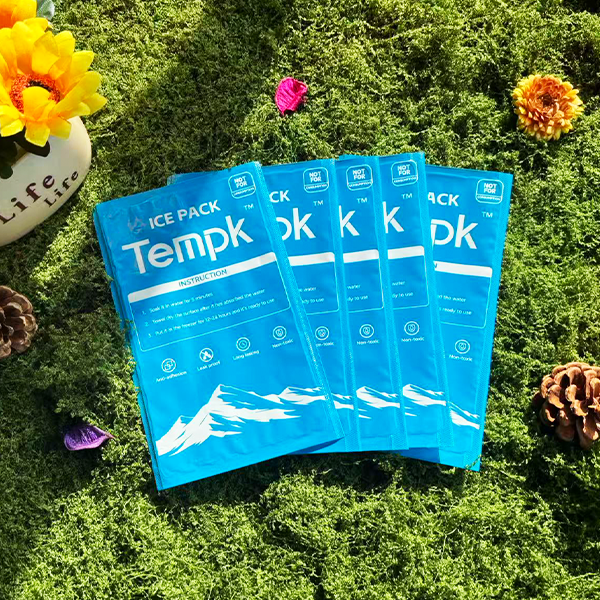
Tempk’s insulated packaging, reusable gel packs, and ice bricks give catering buyers options for assessing the container and coolant arrangement together. We offer customization choices that can address actual payload or packing needs, rather than appearance alone. Bring your trays, service pattern, and handling requirements into the discussion, then review the specific proposal and available documentation against the intended food operation. This keeps the product choice connected to a service-ready specification instead of an empty-box capacity or an unsupported cooling claim.
Ask Tempk to review your service-ready specification when selecting a cold chain ice box catering service manufacturer for bulk or custom purchasing.