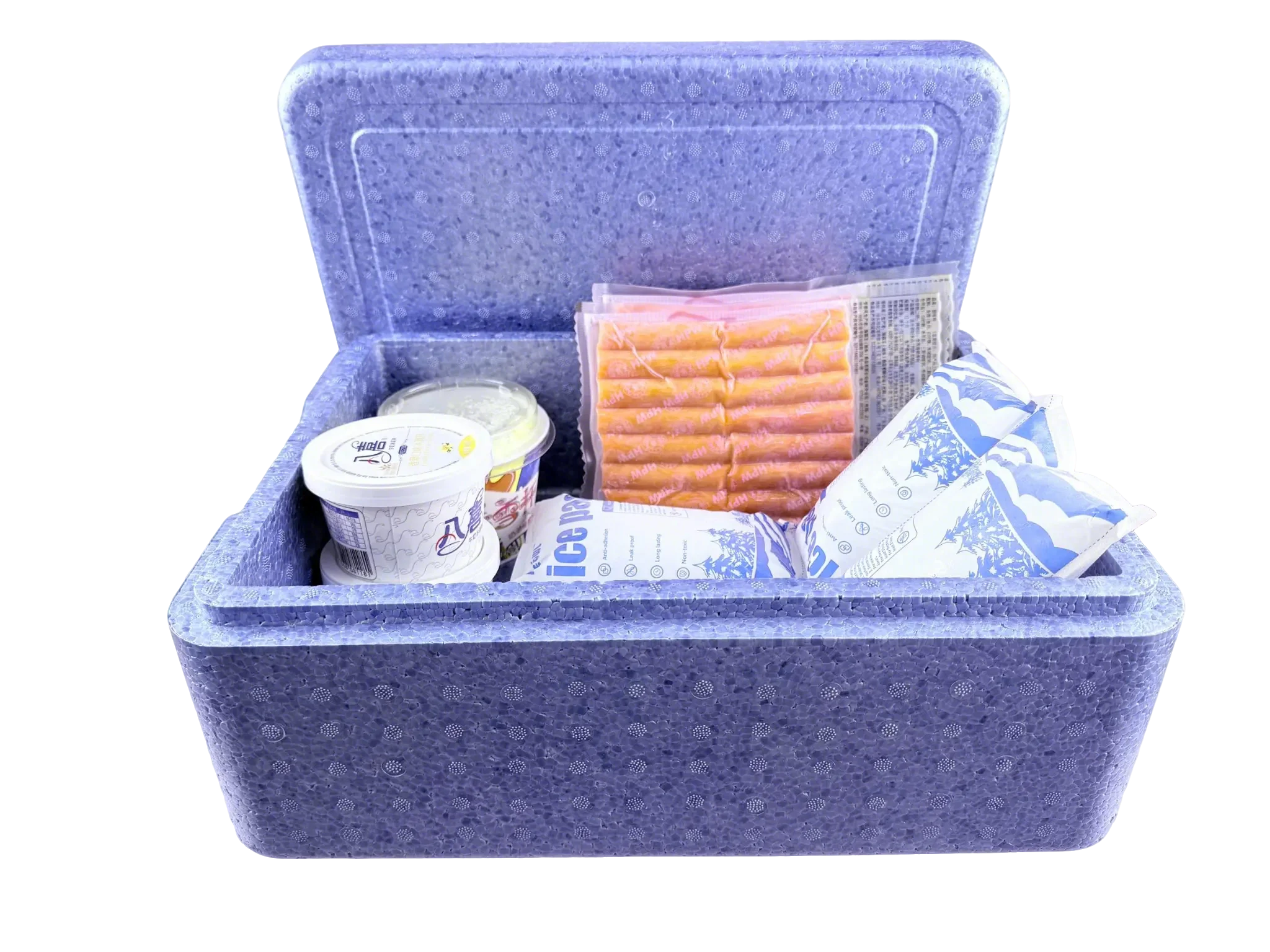
Compact EPP Transport Box: A Better Way to Specify a Small Shipper
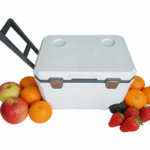
Two costly discoveries are that coolant leaves too little payload space and a supplier’s thermal claim covers a different packout. A compact EPP transport box can be a practical choice for protected, insulated movement, especially where low package mass and repeated handling matter. The purchase should still begin with the shipment, not the foam. Define the product conditions, route exposure, usable space, refrigerant arrangement, evidence, and operating process first. Then the box can be evaluated for a real job instead of an appealing list of material properties.
The Product Decision Has Three Layers
Buyers often ask for one item and receive answers about three different things. Separating them prevents confusion at the quotation stage.
The first layer is the physical carrier. This includes the molded EPP base and lid, wall geometry, closure, handles, inserts, identification area, and dimensions. Its job may include insulation, impact protection, convenient handling, and stack interaction. Those functions can be inspected and tested, but they do not determine a product’s temperature condition by themselves.
The second layer is the thermal configuration. A passive temperature-controlled packout combines the insulating box with conditioned gel packs or phase change materials, payload, secondary packaging, spacers, barriers, and a precise loading pattern. Starting temperatures and permitted assembly time are part of this layer. Change the refrigerant, payload quantity, arrangement, or box design and the thermal behavior can change.
The third layer is the controlled shipping process. It covers where components are stored, who conditions coolant, how operators load and close the box, which logger is placed where, how the shipment is labeled, how handovers are managed, what receiving staff check, and how data or excursions are reviewed. Reuse adds collection, cleaning, inspection, release, and retirement.
These layers answer different questions:
- Can the container physically carry and protect the load? Review dimensions, structure, closure, ergonomics, and distribution hazards.
- Can the defined packout maintain the required conditions? Develop and test the complete configuration under justified thermal challenges.
- Can the organization reproduce and control it? Establish instructions, training, records, monitoring, change control, and deviation handling.
A material declaration can support the first question. A thermal report can support the second if it matches the exact configuration. Neither proves the third. This is why broad phrases such as pharma grade, validated material, or cold-chain compliant need clarification. Quality expectations normally apply to a product, package, process, or organization within a defined scope, not to EPP in the abstract.
Turn the Lane Into a Specification
A useful request for quotation begins with a short route brief. It does not need to contain confidential product details, but it should give a supplier enough information to see the constraints. If facts are not yet known, mark them as decisions rather than filling the gaps with assumptions.
| Shipment question | What to record | Why it changes the solution |
|---|---|---|
| What condition must the product remain within? | Approved transport or storage requirement and any freeze, heat, or light sensitivity | Guides refrigerant selection, separation, acceptance criteria, and monitoring |
| What is the journey clock? | Packing start, planned transit, handovers, receiving delay, and a justified delay allowance | Defines the exposure period that qualification must address |
| What actually occupies the box? | Product count, secondary packaging, dimensions, mass, orientation, and loading extremes | Determines usable payload space and thermal mass |
| What ambient challenge is credible? | Seasonal route data, vehicles, facilities, ramps, doorstep exposure, and opening events | Supports selection of a relevant test profile rather than a convenient chamber setting |
| How will the unit be handled? | Parcel or freight network, drops, vibration, compression, stacking, manual carry, and security needs | Drives structural design and mechanical test selection |
| Is it one-way or returned? | Ownership, recovery route, cleaning location, turnaround, loss control, and end-of-life path | Determines whether a reusable format is operationally and environmentally credible |
| What evidence is required? | Internal quality approval, customer documents, applicable guidance, test reports, and trip records | Sets the documentation scope early |
This table turns vague preferences into design inputs. It also prevents external dimensions from becoming the only basis of comparison. A box can appear compact while providing little usable payload after thick walls, coolant, dividers, and monitoring equipment are included. Ask for a loading drawing or physical packout trial, not merely a gross-volume figure.
Transit time may exclude staging, missed connections, carrier dwell, and delayed unpacking. Qualification duration and ambient conditions should cover justified lane risks; an impressive hold-time claim under an unrelated payload or profile is not more useful.
Opening behavior is another specification input. A sealed parcel and a multi-stop service box are different systems. Each opening exchanges internal and external air, disturbs component positions, and may expose the payload while staff search for an item. If access during the route is intended, include it in development and test instructions rather than treating it as an operator detail.
Where EPP Earns Its Place
Expanded polypropylene is a molded, mainly closed-cell polypropylene foam. The cellular structure gives it a useful combination of low mass, thermal insulation, energy absorption, resilience, low water uptake, and resistance to certain chemicals. It can be molded into integrated shapes, allowing recesses, ribs, grips, locating features, and lid interfaces to be designed into a part.
Those properties can be particularly helpful in a compact carrier. Low shell mass leaves more of the handling allowance for payload and coolant. Resilience can suit repeated movement where a brittle insert would suffer from ordinary knocks. Molded locating features can make a packout easier to reproduce. An EPP lid and base can also be handled without a separate rigid shell in some applications, reducing the number of loose components.
Every advantage has a boundary. The behavior of a molded part depends on material grade, density, processing, geometry, and condition. Chemical resistance must be checked against the actual cleaner, disinfectant, label adhesive, and exposure. Low water uptake does not make lid joints leakproof or establish a sanitation process. Impact resilience does not mean the box can be used indefinitely without inspection. Recyclability as a thermoplastic does not guarantee local collection or successful recovery.
Alternatives should be kept in the conversation. A one-way insulated shipper may suit a route with no return flow. A rigid outer case may be preferable where security, hardware, or severe mechanical protection dominates. An active powered system may be considered when the route, duration, payload value, or control strategy makes passive packaging unsuitable. An uninsulated reusable tote may be enough for movement entirely within a controlled environment. The question is not whether EPP is the best material in general; it is whether its balance of mass, insulation, protection, molding freedom, and reuse fits this operating model.
Test a representative sample with secondary packaging and coolant. Check clearance, lid seating, movement, balance, label scanning, stacking, and unpacking under realistic workplace conditions. This usability review does not replace qualification, but it can eliminate a poor design early.
Make the Proof Follow the Configuration
The evidence should become more specific as the claim becomes more specific. Material technical information may confirm that the foam is EPP and describe properties measured under stated methods. Finished-part drawings and inspection records establish dimensions and construction. Mechanical testing examines hazards such as drops, vibration, and compression. Thermal qualification examines the complete packout. Operational records show whether routine shipments followed the approved process.
For insulated parcel systems, ISTA Standard 20 provides a structured design and qualification process, and ISTA 7E provides standardized thermal profiles derived for parcel delivery environments. A business may use those resources or justify another approach, but it should not cite a profile name as though it were a package result. ASTM D4169 can inform distribution testing through sequences of anticipated shipping hazards. The thermal and mechanical questions may interact, yet each needs clear methods and acceptance criteria.
Helpful decision tools
Check the details before you choose packaging
These quick tools can help you compare route risk, sizing needs, coolant choices, and packaging details before you request a quote.
Ice Pack Calculator
Estimate gel ice pack quantity for chilled shipments and practical route planning.
Estimate ice packsBox Liner & Pallet Cover Sizing
Check box liner and pallet cover sizing logic for insulated packaging projects.
Estimate sizingCoolant & PCM Reference
Compare coolant and PCM options when a route needs added temperature support.
Compare optionsA useful thermal report identifies the tested box version, production samples, coolant and conditioning, payload and loading extremes, packout diagram, starting conditions, ambient profile, sensor locations, monitoring equipment, repetitions, acceptance limits, deviations, and results. It should also state what the conclusion covers. If the buyer plans a different gel pack, adds a divider, reduces payload, changes the lid, or extends the route, the relevance of the report must be reviewed.
Temperature mapping within the packout matters because a single air sensor can miss local hot or cold locations. Development studies can help identify challenging positions; qualification sensor placement should then be justified. Shipment loggers used in operation serve a different purpose. Their accuracy, calibration status, interval, response, placement, start method, alarms, data retrieval, and report workflow must support the intended decision. A logger provides evidence of conditions at its measurement point. It cannot compensate for an inadequate package.
Regulatory and industry references should be applied with equal attention to scope. Good distribution practice for medicines may require defined storage conditions and responsibilities to be maintained through transport. IATA’s temperature-control framework may apply to healthcare cargo booked and handled under its time- and temperature-sensitive process. WHO publishes specific performance and verification resources for vaccine cold boxes, coolant packs, and monitoring devices. None of these makes an ordinary EPP box universally suitable. The responsible quality and logistics teams should identify the requirements for the particular product, lane, and market.
Finally, control the documents that reproduce the evidence: bill of materials, drawings, packout instructions, coolant-conditioning procedure, component storage, maximum assembly time, closure and label steps, logger settings, receiving inspection, and excursion process. Qualification is useful only when operations can repeat what was qualified.
Treat Reuse as a Managed Fleet
The financial and environmental case for reuse depends on achieved circulation, not a label. A compact EPP box may be physically capable of multiple trips, but the organization needs enough units in the right places, a return service, a cleaning and drying process, inspection capacity, quarantine stock, and reliable identification. Losses and slow returns can force emergency purchases or disrupt dispatch even when the boxes themselves remain sound.
Consider a hypothetical company moving temperature-sensitive control materials between a central facility and two satellite laboratories. The route is scheduled, vehicles return to the hub, and receiving staff can scan a box before placing it in the return area. This makes a reusable EPP format worth exploring, but it does not settle the decision.
The team first fixes the approved transport condition from the product documentation and maps the worst credible dwell at each handover. It develops a packout with a defined coolant arrangement and runs thermal and distribution studies. In parallel, operations pilots serialized boxes. Staff record returns, cleaning time, closure damage, label residue, missing inserts, loading errors, and scanner failures. The pilot reveals that removable paperwork sleeves interfere with stacking, so the location is redesigned before the configuration is frozen and tested again as required.
For routine use, every returned unit moves through a simple status flow: used, received, inspected, cleaned, dried, released, or quarantined. The inspection focuses on functional risks such as lid deformation, crushed walls, deep cuts, contamination, missing components, and unreadable identification. Retirement is based on those criteria rather than an unsupported universal cycle count.
Supplier change control also protects the fleet. Buyers should agree which changes will be communicated, including material grade, molding process, tool, density target, dimensions, colorant where relevant, lid geometry, inserts, and outsourced production. The quality team can then decide whether a document review, sample comparison, targeted test, or broader requalification is appropriate. Without that connection, replacement boxes may look identical while no longer matching the evidence file.
At end of service, the business should know whether local recovery accepts clean EPP and how attached labels, tapes, straps, or other materials are removed. If no recovery route exists, claims about recyclability should be phrased as material potential rather than achieved outcome. The same honesty should be applied to reuse: track actual returns, damage, cleaning, and retirement, then improve the loop with evidence.
Frequently Asked Questions
Is EPP always better than EPS for a small transport box?
No material is always better. EPP is often considered where resilience and repeated handling are important, while other foams or composite shippers may fit one-way cost, local recovery, geometry, or thermal needs differently. Compare complete systems using the same payload, route, ambient challenge, handling risks, documentation scope, and operating model. Do not choose from the material name alone.
How do I calculate usable payload space?
Begin with the actual internal geometry, then place all required coolant, separators, secondary packaging, void-control parts, and the logger as the approved loading plan requires. The remaining accessible envelope is the usable payload, subject to mass and orientation limits. Confirm it with a physical loading trial. A published gross internal volume may not represent what can be shipped safely.
Can the same EPP box use either gel packs or PCM?
Possibly, but the components are not automatically interchangeable. Different refrigerants can have different phase behavior, conditioning instructions, dimensions, contact risks, and thermal capacity. Changing them can alter payload temperatures and usable space. Treat the refrigerant and its arrangement as controlled parts of the packout, and review or test any substitution before use.
What changes may trigger retesting?
Potential triggers include changes to the box material, density, wall or lid geometry, tooling, coolant, conditioning, payload, secondary packaging, loading pattern, sensor position, route duration, ambient profile, or operating instructions. The effect and risk of each change should determine the response. Not every change requires the same work, but every relevant change deserves documented assessment.
Conclusion: Buy a Reproducible Shipment
The strongest compact-box specification does not begin with a promise about EPP. It begins with a defined payload and condition, a credible journey clock, an ambient and handling risk profile, and a decision about one-way or return operation. EPP can then be judged for what it contributes: a light, molded, insulating, impact-absorbing shell.
Build the coolant, payload, separators, monitoring, and instructions into one controlled configuration. Ask for evidence that matches it. Pilot the human and return processes, define inspection and change control, and confirm applicable requirements with the responsible specialists. When those pieces align, a compact EPP transport box becomes more than a container; it becomes a reproducible element of a managed cold-chain process.
About Tempk
Tempk supplies cold-chain packaging options that can be considered as parts of a defined shipment system. These include standard gel packs, engineered phase-change-material options, insulated packaging with EPP designs, and packout design or testing support. Our role can include discussing how payload, route exposure, refrigerant placement, usable space, customer-selected monitoring, and evidence affect the packaging choice. Final performance and suitability must be established for the customer’s actual product, configuration, lane, and quality requirements.
Define the shipment before the order: Share your route, payload, required conditions, return model, and evidence needs with Tempk to compare appropriate options.