If the material is solid carbon dioxide, the safest ordinary disposal method is to let it sublimate in its compatible, vented container in a secure, designated and well-ventilated location. Keep people and animals away. Do not seal it, put it in a sink or toilet, place it in ordinary trash, or leave it in an occupied or uncontrolled area. If the item is a gel pack, phase-change pack or water-activated ice pack, these instructions do not apply: use the product label, safety data sheet and local waste rules instead.
Identify the coolant before choosing a disposal method
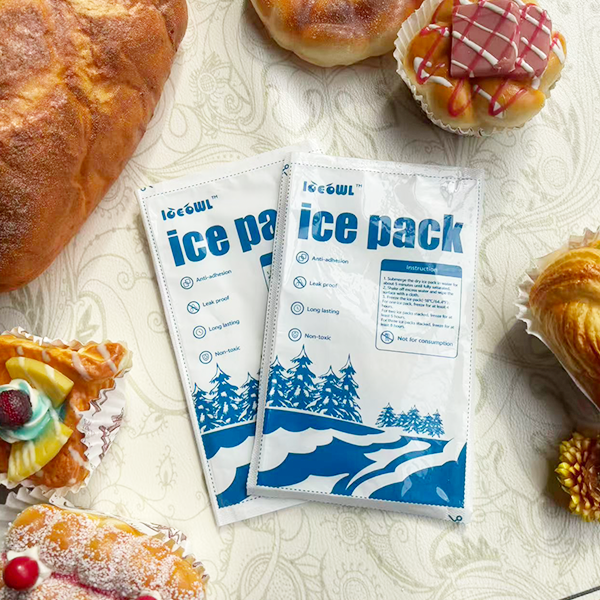
“Dry ice pack” is used inconsistently. It can mean loose dry ice or pellets packed around a shipment, a vented pouch containing solid CO2, or simply a reusable frozen pack marketed as a dry-ice alternative. Those products do not behave the same way. Start with the label and the shipment paperwork. Look for “dry ice,” “carbon dioxide, solid,” “CO2,” or “UN1845.” If the pack must be soaked in water or frozen before use, it is not solid dry ice.
If the identity is still unclear, do not cut, puncture or empty the pack. Ask the shipper or manufacturer for the safety data sheet. The dry ice pack versus dry ice guide explains the coolant categories in more detail.
| What the package says or does | Likely material | Next step |
|---|---|---|
| Dry ice, carbon dioxide solid, CO2 or UN1845; solid pieces disappear without liquid residue | Solid carbon dioxide | Use the controlled sublimation steps below |
| Freeze before use; flexible or gel-like after thawing | Gel, water or PCM coolant pack | Follow the label, SDS and local waste instructions |
| No readable label, damaged pack or unknown residue | Unknown | Isolate it without sealing or puncturing it and contact the supplier or workplace EHS |
Dispose of a small amount of confirmed dry ice in seven steps
- Read the supplier instructions. Confirm that the remaining material is solid CO2 and check for any shipment-specific return or handling requirement.
- Choose a controlled location. Use a secure, designated and well-ventilated place where children, pets, customers and untrained staff cannot enter. Do not use a public corridor, occupied room, cold room, refrigerator, freezer or vehicle cabin.
- Keep the correct container vented. Leave the dry ice in a compatible container that cannot become airtight. Do not tighten a lid, knot a bag or block a vent opening.
- Protect people and surfaces. Keep the container upright on a stable surface that will not be damaged by extreme cold. Use tongs or dry, loose-fitting insulated gloves if the material must be moved. Never handle it with bare skin.
- Let it sublimate without acceleration. Do not pour water over it, heat it, crush it or try to make it disappear faster. The time varies with mass, shape, insulation, airflow and surrounding conditions.
- Keep the area restricted and observe from a safe position. Do not lean into a cooler or place your face near a container. If anyone develops headache, dizziness, confusion or breathing difficulty, leave the area and call local emergency services from a safe location.
- Confirm that no solid remains. Only after the dry ice has completely sublimated should the outer packaging be handled through its separate material-specific waste or recycling route.
Cornell Environment, Health and Safety recommends allowing unused dry ice to sublimate in its vented container in a secure, designated, well-ventilated location. Its guidance also says to restrict access and keep dry ice out of plumbing, trash receptacles and uncontrolled areas. The Cornell dry ice tip sheet is a useful reference for planning the location and response.
Do not put dry ice in these places
| Place or action | Why it is unsafe or unsuitable | Safer decision |
|---|---|---|
| Sealed bottle, jar, cooler or tied bag | Sublimation generates gas and can pressurize a closed container | Use a compatible container that continuously vents |
| Sink, toilet, sewer or floor drain | Extreme cold can damage fixtures and piping; rapid gas release can create additional hazards | Keep it out of plumbing and allow controlled sublimation |
| Trash can, dumpster or waste compactor | The receptacle may be closed, handled by another person or compacted before the solid is gone | Wait until no solid CO2 remains, then classify the empty packaging separately |
| Freezer, refrigerator, cold room or closed vehicle | CO2 can accumulate in a poorly ventilated enclosure and equipment may not safely manage the gas or temperature | Use an assessed, ventilated location |
| Public walkway, balcony edge or shared outdoor space | Someone may touch, move, close or mistake the container for ordinary waste | Use a controlled location with restricted access |
| Hot water, heater or direct flame | Added heat can cause rapid vaporization and uncontrolled gas release | Let the material sublimate without forced heating |
The University of Pennsylvania EHRS likewise instructs users not to put dry ice in sinks or floor drains and to let it sublimate in an open container in a well-ventilated space. The Penn cryogens and dry ice SOP also makes clear that monitoring and ventilation needs depend on the operation. NIH PubChem notes that contact with water can cause vigorous boiling and rapid vaporization, which is why adding water is not a disposal shortcut.
Do not open a swollen, bulging or pressurized package
A swollen pouch, bowed lid or visibly pressurized container is not a normal small-quantity disposal task. Do not touch it, move it, puncture it, loosen the cap or attempt to create a vent. Clear people from the immediate area and contact local emergency services, the shipper or the workplace safety team from a safe location. Follow their instructions rather than improvising.
The same escalation applies when a large spill occurs in a poorly ventilated room, a CO2 alarm activates, the amount is unknown, or anyone has symptoms. Carbon dioxide is colorless and odorless, so smell cannot confirm that an area is safe.
Workplaces need a quantity-and-room assessment
A warehouse, laboratory, clinic or receiving dock should not copy a household checklist and call it an SOP. The plan should identify the maximum dry ice quantity, container type, room volume, ventilation, occupancy, access control, monitoring decision, responsible person and emergency response. It should also define what happens when packages arrive damaged or the quantity is greater than expected.
Helpful decision tools
Check the details before you choose packaging
These quick tools can help you compare route risk, sizing needs, coolant choices, and packaging details before you request a quote.
Ice Pack Calculator
Estimate gel ice pack quantity for chilled shipments and practical route planning.
Estimate ice packsCompliance Checklist Generator
Build a practical checklist for packaging review, shipping, and documentation.
Build checklistInsulation Material Drop Resistance
Review drop resistance and handling factors before choosing insulation materials.
Check resistanceThe CDC/NIOSH carbon dioxide entry lists an occupational recommended exposure limit of 5,000 ppm as a time-weighted average, a 30,000 ppm short-term limit and a 40,000 ppm immediately dangerous to life or health value. These are occupational exposure benchmarks, not universal alarm settings for every room. A facility-specific assessment should determine whether CO2 or oxygen monitoring is needed and where alarms belong.
- Document the material identity and the normal and maximum quantity handled.
- Confirm that ventilation remains effective during off-hours, not only while the receiving area is busy.
- Keep disposal containers identifiable, vented and protected from accidental closure or compaction.
- Train staff to recognize symptoms and leave rather than attempting an unprotected rescue.
- Review the SOP after a packaging, quantity, room or ventilation change.
If leftover quantity is a recurring problem, review the shipment design rather than treating disposal as the only fix. The dry ice duration planning guide explains why route time and measured loss matter, while the dry ice packaging design guide covers packout qualification and change control.
Handle the empty packaging as a separate material
Once no solid dry ice remains, identify every packaging component before choosing a waste or recycling stream. A plastic film code does not guarantee that a local curbside or store-drop program accepts the item. Contamination, multilayer construction, labels, absorbent materials and local rules can change the answer. Do not claim that a package is recyclable or compostable unless its documented construction and an available local collection route support that claim.
If the package held an unknown substance or leaked residue, stop and use the supplier’s SDS and local waste authority instructions. Do not wash unidentified contents into a drain.
Frequently asked questions
How long does dry ice take to disappear?
There is no reliable universal time. Mass, geometry, insulation, airflow and ambient conditions all change the sublimation rate. Plan the location so it can remain secured for as long as necessary, and confirm visually that no solid remains.
Can I put dry ice in the freezer until trash day?
No. A household freezer is an enclosed appliance, not an assessed dry ice disposal area. CO2 can accumulate inside, and the extreme temperature can affect equipment. Use a secure, designated and adequately ventilated location instead.
Can completely sublimated dry ice go in the trash?
Dry ice itself is gone after complete sublimation. What remains is packaging, which must be classified by its actual material, contamination and local collection rules. Never place a package in trash while solid CO2 remains inside.
What if my “dry ice pack” is still soft or contains liquid?
It is probably not solid CO2, or its identity is uncertain. Do not puncture it or follow dry ice sublimation instructions. Read the label and SDS, then ask the manufacturer or local waste authority how that specific gel, PCM or other coolant should be handled.