What Exactly Is a Dry Ice Pack vs Dry Ice?
Intro: A dry ice pack is not always the same as dry ice. In shipping and cold-chain work, a dry ice pack can mean a polymer-based PCM sheet you hydrate and freeze, or a pouch that actually contains solid CO₂. Knowing which one you have helps you hit the right temperature, avoid hazards, and stay compliant in 2025. This article merges and improves the three drafts you provided.
What a dry ice pack is and why the term causes confusion (long‑tail: dry ice pack vs dry ice)
When to choose a dry ice pack or true dry ice for your lane
How to pack, label, and handle each refrigerant safely and efficiently
2025 trends: reusable −21 °C PCM, hybrid pack‑outs, and greener materials
What is a dry ice pack and why does the term confuse buyers?
Short answer: A dry ice pack is not always solid CO₂; it’s often a reusable phase‑change pack designed for set‑point cooling near 0 °C or −21 °C. Some vendors also use “dry ice pack” to describe packaged dry ice. That’s why you’ll see the same phrase on two very different products.
Plain‑English breakdown: If your pack recharges in a freezer and is reusable, you’re holding a PCM sheet or plate—no CO₂ inside. If your pack vents gas and requires gloves and labels, it’s true dry ice (solid CO₂). This distinction matters when you need chilled (2–8 °C), frozen (≈−20 °C), or ultra‑cold (≈−78 °C) performance.
How does a dry ice pack work (PCM sheet) compared with dry ice?
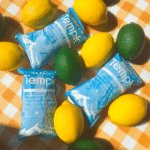
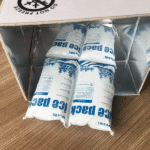
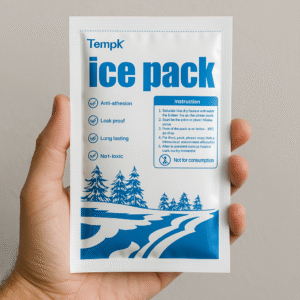
PCM “dry ice pack”: A flexible sheet with super‑absorbent polymer cells that you soak, freeze, and reuse. It freezes like water, holds a steady set‑point (often around −21 °C or 0 °C), and releases no gas.
Dry ice (solid CO₂): Carbon dioxide frozen at about −78.5 °C. It skips the liquid phase and turns straight into gas (sublimation), so packages must vent. It delivers very deep cold for long durations but carries frostbite and CO₂ exposure risks.
| Attribute | Dry Ice Pack (PCM) | Dry Ice (Solid CO₂) | What it means for you |
|---|---|---|---|
| Core material | Hydrated polymer/PCM | Frozen CO₂ | Pick based on whether you need reusable set‑point cooling or ultra‑cold power |
| Working temp | ~0 °C or ~−21 °C | ~−78.5 °C | Protect chill/frozen goods vs. keep items rock‑solid frozen |
| Phase change | Freezes/melts | Sublimates (solid→gas) | No gas vs. CO₂ gas requiring venting |
| Hazmat status | Generally non‑hazmat | UN 1845, Class 9 | Simplified shipping vs. labeling, training, ventilation |
| Reuse | Reusable hundreds of cycles | Consumed in transit | Lower waste and steady OPEX vs. one‑time use |
| Typical use | Produce, 2–8 °C pharma, D2C frozen meals | Ice cream, deep‑frozen seafood, ultra‑cold biologics | Match your lane and product tolerance |
Practical tips you can apply today
If the label lists a set‑point (e.g., −21 °C), it’s a dry ice pack (PCM), not CO₂.
If it mentions UN 1845 or “vent packaging,” you’re dealing with dry ice.
Pre‑chill product, refrigerant, and shipper. This reduces load and extends hold time.
For frozen foods, wrap the payload with a dry ice pack on all sides for uniform contact.
For dry ice, always allow gas to escape; never shrink‑wrap or seal it in an airtight liner.
Real‑world example: A meal‑kit brand replaced two gel bricks with two −21 °C dry ice pack sheets and improved void fill. Warm‑arrival complaints fell in peak summer while freeze damage remained flat.
When should you choose a dry ice pack vs true dry ice?
Rule of thumb: Use a dry ice pack for refrigerated and standard frozen lanes; use dry ice for ultra‑cold lanes or when you need CO₂ atmosphere. This balances product quality, compliance burden, and cost.
Why it works: A dry ice pack delivers controlled cold near its set‑point, preventing over‑freezing of produce and biologics. Dry ice provides extreme cold and long buffers but triggers hazmat rules and demands ventilation and PPE.
A quick decision framework (check all that apply)
Your lowest allowable product temp is ≥ −30 °C → choose a dry ice pack (−21 °C).
Helpful decision tools
Check the details before you choose packaging
These quick tools can help you compare route risk, sizing needs, coolant choices, and packaging details before you request a quote.
01Sizing supportBox Liner & Pallet Cover Sizing
Check box liner and pallet cover sizing logic for insulated packaging projects.
Estimate sizing02Ice pack estimateIce Pack Calculator
Estimate gel ice pack quantity for chilled shipments and practical route planning.
Estimate ice packs03Checklist supportCompliance Checklist Generator
Build a practical checklist for packaging review, shipping, and documentation.
Build checklistYou need ≤ −40 °C for days → choose dry ice.
You want reusable, non‑hazmat cooling → choose a dry ice pack.
You benefit from CO₂ atmosphere in‑box → choose dry ice.
You ship by air with hazmat limits → prefer a dry ice pack.
| Scenario | Target range | Best choice | Why | Watch‑outs |
|---|---|---|---|---|
| Produce & 2–8 °C pharma | +2 °C to +8 °C | Dry ice pack (0 °C or +5 °C) | Gentle, steady cooling | Pre‑condition packs and shipper |
| D2C frozen desserts (24–48 h) | −25 °C to −10 °C | Dry ice pack (−21 °C) | Reusable and non‑hazmat | 360° wrap to avoid hotspots |
| Deep‑frozen biologics/seafood | ≤ −40 °C | Dry ice | Ultra‑cold buffer | Ventilation, PPE, UN 1845 labeling |
| Long lanes with delays | −30 °C to −10 °C | Hybrid: dry ice pack + small dry ice | Extends hold without over‑freezing | Extra weight; hazmat rules apply |
Packing and compliance essentials (copy‑and‑use)
2025 dry ice pack and cold‑chain trends that matter
What’s new in 2025: Reusable dry ice pack systems (especially −21 °C plates) are replacing one‑way gel in frozen food lanes. Hybrid pack‑outs (PCM + a small dry‑ice charge) help cover delays without over‑freezing sensitive items. Research into biodegradable “jelly ice” and better insulation (VIP panels) reduces waste while improving hold time.
Latest developments at a glance
Reusable PCM designs: Longer life, cut‑to‑fit sheets ease returns and reverse logistics.
Validation by data: More teams size dry ice pack loads with route data loggers, not guesswork.
Hybrid strategies: A thin layer of dry ice above PCM adds a safety buffer for carrier hiccups.
Greener materials: Emerging hydrogels and recyclable films reduce end‑of‑life impact.
Market insight: Frozen D2C continues to expand, while pharma tightens compliance. Expect stricter carrier enforcement on dry‑ice declarations and broader adoption of non‑hazmat PCM for routine frozen and refrigerated lanes.
Dry ice pack FAQs (and dry ice basics)
Is a dry ice pack the same as dry ice?
No. A dry ice pack is usually a reusable PCM pack set around 0 °C or −21 °C; dry ice is solid CO₂ at ≈ −78.5 °C.
How long does a dry ice pack stay cold?
Plan for 24–36 h per box with good insulation and full 360° contact; add sheets or better insulation for longer lanes.
Can I fly with a dry ice pack?
Generally yes—it is not UN 1845. If you add dry ice, follow airline limits and vent the package.
When should I avoid dry ice?
Avoid it with freeze‑sensitive goods and in poorly ventilated spaces. Use a dry ice pack for controlled chill or standard frozen.
What’s the safest way to handle dry ice?
Wear gloves and eye protection, and ensure ventilation. Never seal dry ice in a rigid airtight container.
Summary and next steps
Key takeaways: Choose a dry ice pack for steady, reusable cooling in chilled and standard frozen lanes; choose dry ice for ultra‑cold or multi‑day frozen shipments. Size refrigerant by your lane and insulation—not guesswork. Hybrid pack‑outs can bridge gaps when delays occur.
Action plan: Map each SKU to an allowable temperature band, select the lightest‑hazard refrigerant that meets it, validate with data loggers in both summer and winter, and standardize SOPs by lane length. Call to action: Get a tailored pack‑out plan and a hold‑time estimate for your lanes—contact Tempk today.
About Tempk
Tempk designs cold‑chain packaging you can deploy quickly and at scale. Our portfolio includes reusable dry ice pack plates (−21 °C, +5 °C, +18/22 °C), validated shippers, and hybrid pack‑out SOPs. We build to food‑grade standards and focus on low‑waste, high‑reliability performance.