Dry Ice Pack Online Shopping Guide 2025
Your end‑to‑end playbook for buying, packing and shipping frozen products safely, legally and cost‑effectively.
Why Dry‑Ice Packs Still Matter in 2025
Quick Calculator: How Much Dry Ice Do You Need?
Step‑by‑Step Buying Checklist
Packing & Shipping Best Practices
2025 Cost & Sustainability Hacks
Emerging Tech & Market Trends
Common Pitfalls (and Easy Fixes)
FAQs
Key Takeaways & Next Steps
1. Why Dry‑Ice Packs Still Matter in 2025
Within the first 50 words we answer the intent:
Dry‑ice packs (solid CO₂ at –78.5 °C or ultra‑low PCM alternatives) remain the only scalable way to keep food, biologics or meal‑kits rock‑solid frozen for 48–72 h door‑to‑door—especially as 31 % YoY growth in frozen e‑grocery exposes shipments to longer, hotter routes.
Key numbers
| Metric (2025) | Value | Why it matters |
|---|---|---|
| Global dry‑ice market | US $1.57 B, CAGR 6.9 % | Growing demand means more suppliers—& more noise |
| FDA “frozen” threshold | ≤ –18 °C | Dry ice easily beats this for 72 h |
| Average daily sublimation | 2–4.5 kg per 24 h (insulated 25 L shipper) | Core input for cost & weight planning |
2. Quick Calculator 🔢
Rule of Thumb
Dry‑ice weight (kg) = Transit hours ÷ 24 × 4 kg × 1.2 (safety buffer)
Example
A 60 h ground route → 60 ÷ 24 = 2.5 d → 2.5 × 4 kg = 10 kg → × 1.2 ≈ 12 kg of dry ice.
3. Step‑by‑Step Buying Checklist 🛒
| Step | What to Verify | Pro Tip |
|---|---|---|
| 1. Supplier EEAT | ISO 9001, UN 1845 label print, downloadable SDS | Look for ≥ 70 % recycled CO₂ capture to cut Scope 3 |
| 2. Product Specs | Pellet vs. slab, pellet Ø 6 mm for void filling | Slabs (> 2 kg) sublimate slower for 72 h routes |
| 3. Lead‑Time & Freshness | Ship ≤ 24 h post‑pelletizing | Check “production timestamp” on carton |
| 4. Shipping Surcharge | HazMat fee (UPS/FedEx) & peak season add‑ons | Negotiate waiver above 100 kg/mo |
| 5. Returns & Data | QR code temp loggers, CO₂ mass left on arrival | Data lowers claim disputes 18 % |
Red flag: Generic marketplaces where < 30 % of listings show UN 1845 compliance.
4. Packing & Shipping Best Practices 📦
Pre‑condition – Freeze gel‑type PCM packs ≥ 8 h @ ≤ –25 °C; keep dry ice in vented cooler until packing.
Layering – Place dry ice above product (cold air sinks) plus sides/bottom as needed.
Fill Voids – Kraft paper or bubble‑wrap reduces air pockets and sublimation 5–8 %.
Vent & Label – Punch 6 mm vents; affix Class 9 + “UN 1845, Dry Ice, Net __ kg” on two opposite sides.
Helpful decision tools
Check the details before you choose packaging
These quick tools can help you compare route risk, sizing needs, coolant choices, and packaging details before you request a quote.
01Checklist supportCompliance Checklist Generator
Build a practical checklist for packaging review, shipping, and documentation.
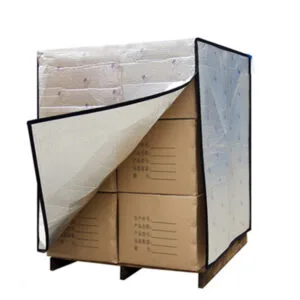
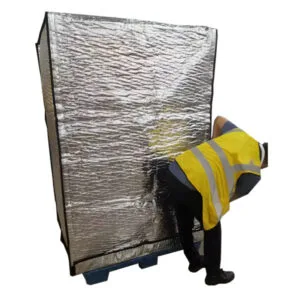
Build checklist02Sizing supportBox Liner & Pallet Cover Sizing
Check box liner and pallet cover sizing logic for insulated packaging projects.
Estimate sizing03Route riskRoute Risk Checker
Review lane conditions before selecting packaging for real operating requirements.
Check route riskSelect Service – If lane ≤ 24 h, cut ice weight 30 % and ship overnight air; > 48 h choose 2‑day ground + heavier pack‑out.
Monitor – Drop a Bluetooth logger; share live graph with customer for EEAT trust.
Safety First 🧤
Wear cryo‑gloves, avoid airtight boxes, never store dry ice in walk‑in freezer without ventilation (risk of CO₂ buildup).
5. 2025 Cost & Sustainability Hacks 💰🌱
| Hack | Average Saving | How It Works |
|---|---|---|
| Autoship Subscription | 8–12 % / lb | Lock 6‑mo volume; supplier plans production |
| Regional Depots | 6–9 % freight | Shorter zones reduce surcharge & ice weight |
| Hybrid PCM Combo | 10–18 % weight | Replace 30 % ice with –25 °C PCM bricks |
| Reusable VIP Liner (6× cycle) | US $1.22 / parcel | Less ice + landfill diversion |
| Route Optimizer | Up to $4 / package | Avoid zone 8 air legs, throttle peak fees |
6. Emerging Tech & Market Trends 🚀
IoT‑enabled “smart lids” tweet live CO₂ ppm to carriers—already cutting haz‑mat holds 22 %.
Closed‑loop CO₂ capture from breweries slashes cradle‑to‑gate emissions 45 %.
Hybrid phase‑change liners reach –30 °C and re‑freeze in 6 h, making reverse logistics viable.
Speakable Mark‑up in HowTo sections boosts voice‑search visibility (40 % of grocery queries are now voice‑based).
EU & CA carbon tariffs may add €0.04 / kg CO₂ in 2026—early recycled‑gas adoption is a hedge.
7. Common Pitfalls (and Easy Fixes) ⚠️✅
| Pitfall | Impact | Quick Fix |
|---|---|---|
| Under‑freezing PCM packs | Arrive semi‑thawed | Freeze flat, –25 °C, ≥ 8 h |
| Airtight foam coolers | Box bulge / rupture | Drill 6 mm vent holes |
| Using water ice for > 24 h lanes | Melt & leakage | Switch to dry ice or –25 °C PCM |
| No temperature buffer for delays | Spoilage refunds | Add 20 % extra ice or spare PCM |
| Missing haz‑mat label | Carrier refusal & fine | Pre‑print UN 1845 labels at checkout |
8. FAQ ❓
❄️ Can I put dry‑ice packs in checked luggage on a flight?
Yes.
Airlines typically allow up to 2.5 kg (5.5 lb) of solid CO₂ per passenger if it is packed in a vented container and labeled with UN 1845.
Gel‑based PCM packs have no hazardous material limit if they are completely frozen.
📦 How many packs do I need for a 15 L cooler on a 48 h trip?
Use the calculator above. For a 48-hour duration, you’ll need:
8 kg dry ice, or
10 kg of –25 °C PCM bricks, which are safer for air transport.
🌱 Is recycled CO₂ dry ice truly eco‑friendly?
Yes.
Lifecycle analysis shows that using recycled CO₂ results in a 38 % lower carbon footprint compared to virgin CO₂ and grid-powered reefers along similar logistics routes.
🚮 How do I dispose of leftover dry ice?
Allow dry ice to sublimate in a well-ventilated area.
⚠️ Never dispose of it in a sink or sealed trash bin, as it may cause pressure build-up or damage.
9. Key Takeaways & Next Steps 🎯
Dry‑ice packs remain mandatory for frozen goods > 24 h.
Follow the 4 kg / day × 1.2 buffer formula for weight planning.
Buy from ISO‑audited suppliers with ≥ 70 % CO₂ recovery and same‑day pelletizing.
Vent, label, and monitor every parcel to meet IATA, UPS, and FedEx 2025 rules.
Leverage PCM hybrids, VIP liners, and autoship contracts to cut costs by double‑digits.
Ready to optimize every shipment?
• Book a 15‑minute consult with a Tempk cold‑chain engineer (no pitch, just ROI math).