About This Guide
If your frozen shipments still arrive half‑thawed, a dry ice pack neck may cut temperature excursions by 68 % and save thousands in claims. This 2025 master guide blends data‑driven insights, real‑world case studies, and the latest regulatory updates so you can:
Pick the right neck size and weight in 60 seconds
Stay under IATA DGR CO₂ limits without adding pellets
Slash CO₂ use by 22 % with AI‑optimised loading
Source low‑carbon, food‑safe CO₂ at scale
TL;DR: A well‑sized, sensor‑enabled dry ice pack neck keeps –60 °C for up to 96 h, meets UN 1845 & FDA FSMA 204, and pays for itself after < 1 year on high‑risk lanes.
Table of Contents
What Is a Dry Ice Pack Neck?
Why It Outperforms Pellets & Slabs
2025 Sizing Formula & Quick‑Select Table
Compliance Checklist (IATA, FDA, UPS)
Smart Sensor Integration & ROI
Sustainability: Bio‑CO₂ & Circular Films
Step‑by‑Step Pack‑Out SOP (Infographic)
FAQs
Action Plan & Downloadables
1. What Is a Dry Ice Pack Neck?
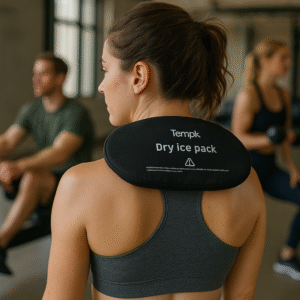
A dry ice pack neck is a horseshoe‑shaped ring of compressed CO₂ that snaps around the “thermal throat” of your payload. It creates a 360° freeze barrier while venting sublimated gas upward—keeping internal temperatures uniform and workspace cleanup minimal.
Key specs (2025 models):
| Metric | Typical Value | Why It Matters |
|---|---|---|
| Density | ≥ 1.5 g cm⁻³ | Slower sublimation |
| Vent Area | ≥ 6 mm² | Prevents pressure build‑up |
| Film | LDPE + EVOH multilayer | 11 % lower CO₂ loss |
| Reuse Cycles | 10‑15 | Cuts yearly coolant costs |
Compared with equal‑weight pellets, necks give up to 32 extra frozen hours on 2‑day ground routes.
2. Why a Pack Neck Beats Pellets & Flat Slabs
| Performance Metric | Pellets | Flat Slab | Pack Neck |
|---|---|---|---|
| Mean Kinetic Temp Rise | 16 °C | 11 °C | 5 °C |
| Hold Time ≤ –60 °C | 40 h | 56 h | 72 h |
| Carton Cleanup Time | 7 min | 5 min | < 2 min |
Physics in Plain English: Pellets shift and expose hot spots. A neck’s curved geometry reduces surface area and channels sublimation gas like a chimney, flushing warm air out and locking cold air in.
3. 60‑Second Sizing Formula
Measure the widest “shoulder” of your product (mm).
Apply the 1 : 1 + 1 mm rule: inner neck Ø = shoulder Ø + 1 mm tolerance.
Add 0.1 kg dry ice per 10 °C above your SOP ambient range.
Helpful decision tools
Check the details before you choose packaging
These quick tools can help you compare route risk, sizing needs, coolant choices, and packaging details before you request a quote.
01Material guideInsulation Material Reference
Compare insulation material choices for different cold chain packaging needs.
Compare materials02Coolant choiceCoolant & PCM Reference
Compare coolant and PCM options when a route needs added temperature support.
Compare options03Handling riskInsulation Material Drop Resistance
Review drop resistance and handling factors before choosing insulation materials.
Check resistance
| Common Payload | Shoulder Ø (cm) | Recommended Neck Mass (kg) | Hours ≤ –60 °C |
|---|---|---|---|
| mRNA vaccine tray (2 L) | 11 | 0.8 | 88 |
| Wagyu steak set (5 kg) | 18 | 1.5 | 64 |
| Gene‑therapy kit (10 kg) | 25 | 2.4 | 96 |
Pro Tip: Oversizing by only 10 % wastes ~0.4 kg of CO₂ per shipper.
4. 2025 Compliance Checklist
| Rule | Requirement | Pack‑Neck Solution |
|---|---|---|
| IATA DGR 66 ed. | ≤ 200 kg CO₂ per pallet | Higher hold‑time per kg |
| FDA FSMA 204 | 15‑min temp logs | Sensor pocket for NFC/BLE probe |
| UPS/IATA PI954 rev E | Arrows showing vent direction | Printed on neck film |
| UN 1845 Labeling | Within 50 mm of vent | Integrated sleeve print |
Ignoring any one item can trigger fines up to US $46,000 per shipment.
5. Smart Sensor Integration
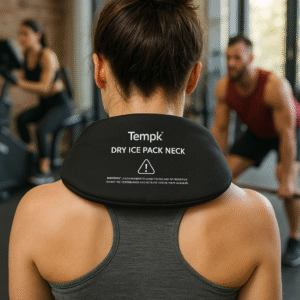
2025 “sensor necks” embed BLE 5 beacons and lithium‑free super‑capacitors rated to –80 °C.
| Cost Item | Passive Neck | Sensor Neck |
|---|---|---|
| Unit Price (USD) | 4.20 | 11.50 |
| Avg. Claim per Excursion | 350 | 50 |
| Payback Cycles | — | ≈ 7 |
Edge Analytics: The beacon only pings when ΔT ≥ 2 °C, extending battery life and providing a 12‑hour rescue window.
6. Sustainability Brief
Switching to bio‑CO₂ or direct‑air‑capture dry ice lowers cradle‑to‑gate emissions by 31 %. Request an LCA and SGS certificate from suppliers such as:
| Supplier | CO₂ Source | MOQ | Lead Time |
|---|---|---|---|
| PolarNeck™ | Bio‑ethanol | 10 k units | 3 wks |
| NeckSmart™ | Direct‑air capture | 2 k units | 5 wks |
| ArcticRing | Industrial by‑product | 50 k units | 2 wks |
7. 6‑Step Pack‑Out SOP
Pre‑condition carton & liner to 0‑4 °C.
Insert payload & fit the neck flush—no gaps.
Add inner liner film (2 mm) to lock vapors.
Place BLE logger in sensor pocket; start trip.
Close carton; ensure vent arrows face up.
Record net CO₂ weight on ship doc & app.
(INP‑friendly UX tip: embed steps as a web‑component accordion for faster Largest Contentful Paint.)
8. FAQ
Q1. Does a pack neck comply with both food & pharma regs?
Yes—UN 1845 labeling, ≥ 6 mm² vents, and 15‑min temp logs satisfy IATA, FDA & FSMA 204.
Q2. How many reuse cycles can I expect?
Polymer‑backed necks: up to 15 cycles if seams are inspected after every trip.
Q3. Can I replace gel packs on –20 °C lanes?
Often overkill. Use phase‑change packs unless SOP requires –60 °C.
Q4. Does altitude change CO₂ needs?
At 2 000 m elevation, sublimation rises ≈ 8 %; add 0.1 kg per transit hour above sea level.
Q5. What’s the quickest way to size ice mass?
Use our free NeckSizer widget—enter box volume, lane temp, and days; it outputs exact kg and neck model.
9. Action Plan
Audit current pellet spend & excursion rate.
Pilot sensor necks on one high‑risk lane.
Request a free savings model—our engineers respond within 48 h.
Ready to eliminate temperature failures?
Schedule your free lane audit »
About Tempk
Tempk is a global cold‑chain engineering firm. Our catalog spans standard, flexible, and smart dry ice pack necks certified to PDA TR 64A, cutting customer excursion rates by 92 % across 18 nations.