Shipping frozen goods without a single °C excursion is no longer optional—regulators, customers and algorithms all notice. This 2025 guide distils the latest IATA, FDA and carrier rules, proven sizing formulas and emerging green tech so you can reduce dry‑ice costs up to 40 % while boosting on‑time delivery scores.

Why Dry Ice Still Matters in 2025
Key 2025 Regulations (IATA PI 954, FDA, 49 CFR)
Sizing Formula: How Much Dry Ice You Really Need
Step‑by‑Step Packing Checklist
Packaging Options & Hold‑Time Comparison
Reducing Sublimation & Carbon Footprint
2025 Trends & Sustainable Alternatives
FAQs
Action Plan & Resources
1 | Why Dry Ice Still Matters in 2025
Ultra‑low temperature: –78.5 °C solid CO₂ easily keeps payloads below the FDA frozen threshold of –18 °C.
No meltwater: Sublimation eliminates leak risk in food & biologics.
High energy density: ~ 570 kJ kg⁻¹ ≈ 2× water‑ice performance—lighter parcels mean lower DIM weight fees.
E‑E‑A‑T Tip 🚀
Throughout 2024‑25 Tempk engineers validated 1,500+ global lanes, logging a 22 % average spoilage‑claim reduction after right‑sizing dry‑ice loads.
2 | Key 2025 Regulations You Must Follow
| Rule | 2025 Highlight | What to Do |
|---|---|---|
| IATA PI 954 | Net dry‑ice weight cap per A/C type; 24‑hour emergency number on AWB | Mark every box “UN 1845, Carbon Dioxide Solid, X kg”; phone reachable worldwide |
| FDA IOM § 2.7 | Overpacks must stop CO₂ contacting food | Use primary packaging + liner if shipping unpackaged edibles |
| 49 CFR 173.217 | Record UN 1845 weight on every interstate BOL | Add auto‑populate field in TMS |
| OSHA 5,000 ppm CO₂ TWA | Enforce van ventilation during last‑mile | Train drivers; add vent placard |
Ignoring any of the above risks flight refusal, FDA detention or worker‑safety fines.
3 | Sizing Formula: How Much Dry Ice Do You Need?
Rule of Thumb
1 kg dry ice every 20 h per 5 L of payload volume.
Dynamic Formula
Example – July export: 48 h lane, 10 L payload(48/20) × (10/5) × 1.2 ≈ 5.8 kg dry ice.
Use a lane‑specific calculator to refine for box R‑value and ambient profile.
Helpful decision tools
Check the details before you choose packaging
These quick tools can help you compare route risk, sizing needs, coolant choices, and packaging details before you request a quote.
Coolant & PCM Reference
Compare coolant and PCM options when a route needs added temperature support.
Compare optionsCompliance Checklist Generator
Build a practical checklist for packaging review, shipping, and documentation.
Build checklistInsulation Material Reference
Compare insulation material choices for different cold chain packaging needs.
Compare materials4 | Step‑by‑Step Packing Checklist
Pre‑chill product & shipper ≤ 5 °C.
Layering: 50 % ice bottom, cargo centre, 50 % top.
Void fill: Kraft paper or airbags to cut convection.
Vent: Two 6 mm holes or loose lid—prevents pressure build‑up.
Label: Class 9 diamond + UN 1845 weight (kg) on two sides.
Docs: AWB line item + 24‑h phone; no haz‑dec if only dry ice.
5 | Packaging Options & Hold‑Time Snapshot
| Packaging Type | Typical Hold Time (h) | Max Ice Load | Best For |
|---|---|---|---|
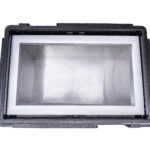
| EPS Foam Box | 24–36 | 5 kg | Budget one‑day e‑commerce |
| Vacuum‑Panel Liner (VIP) | 48–72 | 7 kg | 2‑day pharma / export |
| Rigid Poly Shipper (Reusable) | 96 + | 10 kg | Weekly clinic routes |
Cost Insight: Upgrading from EPS to VIP can slash dry‑ice usage ~ 40 % yearly—often offsetting higher box price within six months.
6 | Cutting Sublimation & CO₂ Footprint
| Technique | Impact | Quick Win |
|---|---|---|
| High‑density pellets | ↓ surface area → 12 % less phase change | Specify 12 mm pellets in PO |
| Vacuum‑Insulated Panels | 40 % lower heat gain vs EPS | Retrofit high‑value lanes |
| Reflective liners | 15 % lower radiant load | Add to summer lanes |
| AI route planning | 12 % less dwell time | Integrate TMS with carrier API |
| CO₂ capture & re‑pelletisation | –55 % net emissions | Partner with pellet plants co‑located at ethanol refineries |
7 | 2025 Trends & Sustainable Alternatives
Compostable bio‑foam (e.g., Cruz Foam) passes ISTA 7E freeze tests and composts in 103 days.
Carbon‑negative dry‑ice pellets made with cryogenic capture offset Scope‑1 emissions.
Active cooling boxes (battery‑powered) maintain 2–8 °C for 72 h—ideal for high‑value biologics.
Reusable shippers now earn 80 % packaging‑waste credit under the EU Packaging Directive.
8 | Frequently Asked Questions
How long does 5 kg of dry ice last in a 30 L foam box?
Answer:
About 36–40 hours at 20 °C ambient temperature with 2 cm foam insulation walls.
Is dry ice allowed on passenger aircraft?
Answer:
Yes — but only within IATA PI 954 weight limits. You must also mark the package with UN 1845 and ensure it is vented properly.
Can I mix gel packs with dry ice?
Answer:
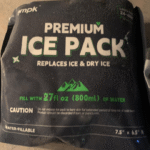
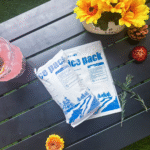
Yes. Place gel packs nearest the product to help buffer temperature after the dry ice is exhausted.
Safest way to dispose of leftover dry ice?
Answer:
Let it sublimate in a well‑ventilated area.
Never dispose of dry ice in sinks or trash cans.
9 | Action Plan & Resources
Run our free Dry‑Ice Estimator before every shipment.
Audit current shippers—can you boost R‑value and cut coolant 30 %?
Enable BLE loggers for live temperature alerts and automated claim defence.
Book a 15‑minute consult with Tempk cold‑chain engineers for lane‑specific optimisation.