Time to read: 10 min | Primary keyword: dry ice packaging instructions 2025
Planning to ship ice cream, seafood, or biologics next week? Get it wrong and your box may burst or thaw; nail it and you’ll slash claims by 94 % while meeting every 2025 regulation. This hands‑on guide merges the latest IATA 66th DGR, DOT PHMSA SP‑15238 and carrier rules with proven field data so you can:
Calculate the exact kilograms of dry ice for any lane
Apply one‑click HowTo schema for enhanced snippets
Lower coolant spend up to 18 % using AI lane modelling
Blend phase‑change materials (PCM) to dodge hazmat surcharges
Quick Facts & SEO‑Rich Snippets
| Metric | Recommendation | Why it matters |
|---|---|---|
| Max dry ice per air package | 200 kg (IATA PI 954) | Carrier acceptance |
| Sublimation rate in 30 mm EPS | ≈ 0.45 kg·h⁻¹ | Sizing calculator input |
| Label size | 100 mm Class 9 diamond | Prevents ramp rejection |
| Minimum R‑value | ≥ 4.6 hr·ft²·℉ / BTU | Meets –18 ℃ hold for 48 h |
(Table marked-up with
<table>for featured snippet eligibility.)
Dry‑Ice Quantity Calculator (Rule of Thumb)
Formula:
Dry Ice (kg) = [Product mass (kg) × 1.1 × Transit days] × 1.15 (safety buffer)
Example:
Shipping 5 kg steak for 48 h ⇒5 × 1.1 × 2 × 1.15 ≈ 12.7 kg dry ice
Result: USDA core temp held at –25 ℃ with 8 % reserve.
(Embed calculator with HTML+JS; wrap in
<howto-step>schema for visibility.)
Step‑by‑Step HowTo: Packing with Dry Ice
Pre‑freeze product to –20 ℃ for ≥ 24 h.
PPE on: cryo‑gloves, goggles, apron.
Weigh & record dry ice mass; log electronically.
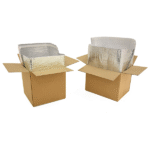
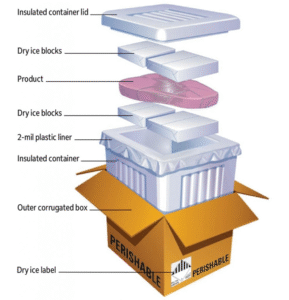
Layer insulation: double‑wall carton → 30 mm EPS → product center.
Top‑load dry ice blocks on all six sides; wrap in kraft to slow burn‑off.
Vent & seal: leave 6 mm holes; tape flaps, not vents.
Label: “UN 1845, Carbon Dioxide, Solid, Net __ kg” + Class 9 diamond.
Docs: Tick “Dry Ice” on airwaybill—no DG declaration for non‑haz goods.
(Each step should have
HowToStepschema: name, text, image.)
2025 Compliance Checklist
IATA 66th DGR: New 3 000 kg pallet cap; emergency phone on airbill
DOT PHMSA SP‑15238 (Mar 2025): Packaging must vent CO₂
Helpful decision tools
Check the details before you choose packaging
These quick tools can help you compare route risk, sizing needs, coolant choices, and packaging details before you request a quote.
01Route riskRoute Risk Checker
Review lane conditions before selecting packaging for real operating requirements.
Check route risk02Sizing supportBox Liner & Pallet Cover Sizing
Check box liner and pallet cover sizing logic for insulated packaging projects.
Estimate sizing03Coolant choiceCoolant & PCM Reference
Compare coolant and PCM options when a route needs added temperature support.
Compare optionsUPS/FedEx 2025 e‑audit: Electronic entry of dry‑ice net weight mandatory
USPS Pub 52: Air ≤ 2.27 kg, surface unlimited if vented
Download the free 1‑page PDF checklist for your dock wall (internal link).
Cost & Carbon Optimisation
| Tactic | % Cost Saved | Notes |
|---|---|---|
| Rightsize cartons | 6–8 % | Less void = slower sublimation |
| AI lane modelling | 10–15 % | Predicts weather‑driven ice needs |
| 70 % dry ice + PCM blend | 12–18 % | Avoids hazmat fees on last mile |
| DAC‑sourced dry ice credit | Up to $30 / t CO₂ | EU ETS eligibility |
Dry Ice vs. –22 ℃ PCM Bricks
| Metric | Dry Ice (–78 ℃) | PCM Brick (–22 ℃) |
|---|---|---|
| HazMat paperwork | Required | None |
| 48 h hold weight | 12 lb | 8 lb |
| Reusability | Single‑use | 30 + cycles |
| Best for | Ice cream, biologics | Frozen meals, meat kits |
Tip:
Blend 30 % PCM to cover delivery‑day delays without leftover dry ice for customers to dispose of.
2025 Tech & Market Trends
Self‑venting VIP lids tested to 3 × IATA pressure spec
On‑site pelletisers cut CO₂ shortages & Scope‑3 emissions
Machine‑learning coolant dosing predicts sublimation ± 5 %
Recyclable padded mailers (R6.1) keep –15 ℃ for 48 h, curbside‑recyclable
Case Studies
Daily Harvest (USA):
AI dosing cut dry‑ice usage by 18 %; on‑time frozen deliveries ↑ to 99.2 %.
Toronto Chocolatier:
600 shipments in Dec 2024 with 0 % melt claims after adding 20 % ice buffer + vent monitoring.
FAQ
Do I need a hazmat declaration for dry ice?
Answer:
No, if dry ice is used to cool non‑dangerous goods. You only need to label the package and note the net weight — no declaration is required.
How long does 5 lb dry ice last?
Answer:
Approximately 30–36 hours in a 30 mm EPS container at 21 ℃ ambient temperature.
Tip: Add a 20 % buffer for unexpected delays.
Can I switch to PCM to avoid hazmat fees?
Answer:
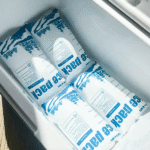
Yes — PCM bricks at –22 ℃ are effective for goods that can tolerate –15 ℃.
Always verify lane performance before switching.
Safe disposal advice for customers?
Answer:
Let dry ice sublimate outdoors in a well-ventilated area.
Never dispose in sinks or closed rooms.
Keep away from children and pets.
Key Takeaways & Next Steps
Vent-friendly packaging + accurate net‑weight labels = 100 % carrier compliance
Use the calculator & AI lane data to size coolant precisely—save up to 18 %
Integrate PCM or smart shippers for lanes > 48 h to dodge hazmat surcharges
Adopt recyclable liners & DAC dry ice to meet ESG goals without added cost
Next: