EPP Insulated Box Distributor for Aerospace: Three Approval Gates
The wrong first question is, “Do you have EPP boxes in stock?” The useful question is whether an EPP insulated box distributor for aerospace can supply one controlled configuration that fits the mission, carries relevant evidence, and remains consistent through replenishment and return. Expanded polypropylene can offer low weight, cushioning, resilience, and insulation. It does not automatically confer aerospace qualification, temperature control, or compliance with a packaging standard. Buyers can cut through that ambiguity by using three approval gates: mission fit, proof for the exact product, and continuity of the supply channel.
The purchase passes only when all three gates stay closed
Packaging decisions often fragment across departments: engineering approves a sample, procurement places an order, quality requests certificates, and operations expects local stock. Each answer can sound plausible while the overall control chain remains open.
Use three gates to keep the decision integrated:
| Approval gate | Core question | Release evidence | Failure if skipped |
|---|---|---|---|
| Mission fit | Does the complete box or packout protect this payload in its real handling and transport conditions? | Defined payload, configuration, route, risks, acceptance criteria, and applicable test or engineering review | A well-made box is used for the wrong job |
| Product proof | Do records support the claims made for the exact material, drawing, revision, and test article? | Controlled specification, identity, inspection, test scope, and document index | A general EPP claim is mistaken for product qualification |
| Supply continuity | Can approved units remain authentic, current, undamaged, documented, available, and controlled through change and return? | Source trail, stock controls, replenishment plan, change process, escalation, and return disposition | The approved sample is not what later sites receive |
The gates are deliberately dependent. Strong thermal data cannot correct a poor payload fit. A perfect sample cannot compensate for uncontrolled alternates. Regional stock is not useful if its revision or documentation is uncertain. Approval should remain conditional until the three evidence sets refer to the same configuration.
The model also assigns authority. The manufacturer controls the molded-product definition and production evidence. The distributor controls source, inventory, preservation, fulfillment, records, and communication. The aerospace customer decides application suitability and alternate approval; the carrier applies transport acceptance requirements. An organization performing multiple roles should state its authority and scope.
Gate one: define the mission before choosing the foam box
EPP is a material family, not a use case. It may be molded into a tote for shop-floor handling, a fitted container for a rotable, a protective case for instruments, or an insulated shell used in a passive thermal packout. Those applications share a material but not an approval basis.
Describe the payload first: envelope, mass, fragile areas, protrusions, orientation, surface and corrosion protection, electrostatic-discharge needs, and storage instructions. State whether the box touches the component or surrounds a sealed inner package. If an insert carries the load, control its fit, material, and revision.
Next, map warehouses, maintenance stations, freight transfers, staging, stacking, vehicles, returns, and idle storage. Define the events the package must tolerate and what counts as success. If ATA Spec 300 is required, identify the applicable revision and provisions in the contract and request evidence for the exact test article. “ATA-style” is not an acceptance record.
Temperature-sensitive contents create a separate system question. An EPP wall slows heat transfer, but it neither produces cooling nor regulates a set point. A passive temperature-controlled packout requires a defined box, coolant, payload, conditioning method, arrangement, closure, route profile, duration, sensor plan, and acceptance limits. Any claimed hold time is meaningful only within those conditions. A logger records exposure; it does not protect the product.
If contents include batteries, chemicals, pressurized items, infectious substances, dry ice, or other regulated goods, qualified personnel must determine current air-transport requirements. Packing, vents, quantity, marking, labeling, documents, and carrier variations may apply. Dry ice requires attention to carbon-dioxide release.
Separate transport packaging from installed or onboard use. Packaging data does not establish airworthiness. Aviation requirements may depend on grade, molded density, thickness, position, and certification basis.
Gate two: make evidence follow the exact configuration
The product record should answer a simple question: what, precisely, was approved? A controlled definition may include manufacturer, manufacturer part number, customer part number, drawing, revision, EPP grade where necessary, molded requirements, body, lid, insert, accessory, label, and unit packaging. It should also state approved alternates rather than leaving equivalence to a catalog search.
Give the sample a unique identity and record its controlled documents, deviations, and reviewed tests. Photographs aid recognition but cannot capture material grade, tolerances, bead fusion, or report content. Preserve a master sample only when its status and storage can be controlled.
Then challenge each claim:
- For impact protection, ask for the method, representative payload, orientations, conditioning, acceptance criteria, and configuration.
- For insulation, request thermal evidence without turning a material property into a route-duration promise.
- For reuse, request inspection, cleaning, repair, and retirement rules rather than a cycle claim.
- For standards conformance, identify the revision, applicable provisions, test sequence, report, and limits.
- For traceability, identify the link to the upstream receipt, manufacturer shipment, lot, or production record.
First-stock inspection bridges the sample and regular supply. Compare identity, revision, key dimensions, insert fit, closure, surface, labels, accessories, and documents. Decide which features require every-receipt verification. The distributor should prove that new stock came from the approved source and was not mixed with returned, obsolete, or unidentified units.
Quality-management certification belongs in this gate but has a limited meaning. IAQG 9100 addresses aerospace quality-management systems broadly, while 9120 is oriented to distributors and 9110 to maintenance organizations. When a certificate is contractually relevant, verify the organization, site, scope, and status. Certification provides evidence about the management system within that scope; it does not approve a specific EPP box, drawing, packout, test result, or temperature-controlled route.
Plan documentation by line item. Define the required certificate, inspection record, material declaration, lot identity, drawing reference, test report, instruction, or change notice. State the permitted issuer, product identifier, and delivery point. A box without release documents is not operationally complete.
Gate three: keep approval intact through the distributor
Stock authenticity begins with the upstream purchase trail. Manufacturer and distributor numbers may be cross-referenced, but the original identity should not disappear. Where lot or batch traceability is required, receiving and dispatch records must preserve the link. If the product is commercial and no lot control is required, the distributor should still be able to show source and revision.
Packaging condition is also a distributor responsibility. Storage controls should prevent crushing, contamination, mixed lids or inserts, lost labels, and inappropriate environmental exposure. Open units need status identification. New, returned, rejected, obsolete, and customer-owned stock should be segregated in a way that prevents unintended picking. Accessories and documents should remain matched to the box they support.
Replenishment requires agreed signals, not optimistic assumptions. Discuss forecasts, order review, stock ownership, reorder points, allocation during shortage, regional transfers, discontinuation, and obsolescence. Ask how the distributor reports a constraint and who owns recovery. Do not publish an MOQ or lead time as if it were permanent; confirm commercial terms for the selected configuration and location.
Change notification is the continuity test many buyers discover too late. The manufacturer may change a grade, tool, process, design detail, label, source, or packing method. The distributor needs to capture that notice, identify affected inventory and orders, separate old and new effectivity, and notify the customer's named contact before shipment when required. Engineering and quality decide whether comparison, testing, or reapproval is necessary.
Helpful decision tools
Check the details before you choose packaging
These quick tools can help you compare route risk, sizing needs, coolant choices, and packaging details before you request a quote.
Insulation Material Drop Resistance
Review drop resistance and handling factors before choosing insulation materials.
Check resistancePackaging Selector
Compare insulated packaging options by product, route, and temperature need.
Find packagingInsulation Material Reference
Compare insulation material choices for different cold chain packaging needs.
Compare materialsApproved alternates follow the same route. The distributor can propose a candidate and assemble a comparison, but it should not ship the alternate as equivalent unless authorized by the customer's controlled process. AOG pressure does not alter that authority. The system should block substitution until the approval and its effectivity are recorded.
Finally, returns must not erase status. A commercial return from an unaccepted delivery belongs in quarantine and nonconformance control. A used reusable box belongs in a return loop with identification, inspection, cleaning, drying, accessory reconciliation, and serviceability disposition. Neither should flow straight into new stock.
Run a release simulation before supplier approval
Stage one transaction from inquiry to return using a representative box, separate insert, document requirement, and a problem such as a revision change or shortage.
Imagine a repair organization has approved an EPP case for a calibrated test set. The approved sample uses insert revision C. During the simulation, the distributor's nearest location holds current outer bodies but insert revision B. Another region holds the complete revision C configuration. The distributor should identify the mismatch, prevent assembly of an unapproved combination, state verified availability, and escalate the choices. It may propose revision B for engineering review, but it must label that option as unapproved.
Follow the selected unit through picking. Check that dispatch links both identities, insert revision, condition, and required document. Reject an incomplete certificate and observe whether correction remains traceable.
Simulate a return with a damaged corner and missing label. Observe quarantine, related-stock containment, and disposition authority. If cleaning or repair is offered, inspect its scope, instruction, acceptance check, and renewed identity.
Use the results as a distributor evaluation module:
- Configuration control: Can the candidate prove that a sample, stock unit, document, and order refer to the same part and revision?
- Source control: Can it show where stock came from and preserve manufacturer identity?
- Condition control: Are storage, inspection, segregation, and handling appropriate for new and returned EPP boxes?
- Exception discipline: Do shortages, alternates, nonconformances, and AOG requests reach authorized decision-makers?
- Continuity: Are replenishment, regional stock, obsolescence, and change notices visible before they interrupt use?
- Documentation handoff: Does the required evidence arrive accurate, complete, and linked to each line item?
Score observable transactions more heavily than unqualified promises. A distributor may be excellent for standard commercial stock yet unsuitable for a program that requires controlled revisions and regional returns. Fit the channel to the risk.
Reuse must be engineered as a logistics loop
EPP's resilience and low weight can make reuse practical, and polypropylene foam may have a recycling route. The environmental result still depends on what happens after delivery. An unreturned box is single-use in practice. A contaminated box that no recycler accepts is not circular simply because its base material is recyclable.
Define ownership, asset identity, return destination, inspection, cleaning, storage, and retirement. Check whether labels, mixed-material inserts, straps, or contamination complicate recycling. Confirm local recycler acceptance. Track trips, losses, rejects, empty transport, cleaning, and replacement without inventing savings.
Cleaning parameters must come from compatible product guidance and the customer's hygiene needs. General chemical resistance does not permit every detergent, solvent, temperature, or sterilization process. If a box carries different product classes, assess cross-contamination and segregation. If temperature qualification depends on the physical condition of the shell or lid, define when wear triggers reinspection or retirement.
Return scans can update pool counts, reveal damage patterns, and trigger replenishment, provided identifiers remain readable and data ownership is clear. Sustainability and availability are connected control problems.
Red flags and the final approval decision
Pause approval if the distributor cannot name the manufacturer; treats a catalog description as a specification; cannot distinguish current and obsolete revisions; promises “equivalent” alternates without customer authorization; provides a test report for another configuration; or claims that a QMS certificate approves the box. The same caution applies when thermal duration is stated without packout conditions or when an IATA claim ignores the shipment contents and current requirements.
Also examine quiet operational gaps: unidentified open stock, lids stored separately without matching control, returned boxes mixed with new units, missing document-to-line-item links, no named change-notification recipient, and no escalation beyond sales. These are leading indicators of a future receiving hold or field mismatch.
Approve the product and channel together. The final record should identify the application, approved configuration, evidence reviewed, limitations, supplier and site, required documents, inspection plan, change route, alternate authority, and return process. If a condition remains open, state it rather than allowing schedule pressure to convert uncertainty into acceptance.
Frequently asked questions
Is EPP automatically aerospace-grade?
No. EPP describes expanded polypropylene, and its properties vary by grade and molded part. Aerospace suitability depends on the exact application, product definition, manufacturing controls, tests, and customer or design-authority approval. Transport packaging and material intended for onboard use also face different requirements. Ask for evidence that matches the specific box and mission.
What does a distributor add if the manufacturer already supplies documents?
The distributor preserves the connection between approved product, inventory, order, and evidence. Its work can include source control, stock identity, revision segregation, condition, regional placement, document handoff, shortage escalation, change notification, and returns. Manufacturer documents remain important, but they lose practical value if the channel cannot link them to the delivered units.
Can one thermal test cover every aerospace shipping lane?
Usually not without a justified bracketing or qualification strategy. Thermal behavior depends on box configuration, payload, coolant, conditioning, ambient profile, duration, packout, and acceptance range. Quality and packaging engineering should assess whether existing evidence represents the intended lane and whether operational qualification or monitoring is needed.
How should an approved alternate be recorded?
Record the alternate manufacturer and part number, configuration and revision, evidence reviewed, approving authority, date, effectivity, limitations, and whether approval is temporary or permanent. Update purchasing and warehouse systems so staff can select it only within that approval. Keep the original item identity rather than collapsing both products into an ambiguous description.
About Tempk
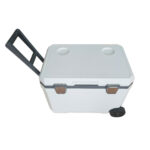
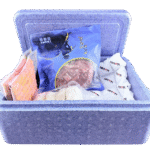
Tempk supplies EPP insulated-box options and can discuss related inserts, accessories, labels, samples, and packing arrangements. For an aerospace project, we use the buyer's application information to frame the conversation: payload, handling chain, controlled identity, documents, test expectations, and repeat-supply needs. We do not assume that a general Tempk EPP box is aerospace-qualified, compliant with ATA Spec 300, or qualified for a particular temperature range or route. Those conclusions require the customer's requirements and product-specific evidence.
Share your three approval gates with Tempk: the mission, the evidence required, and the planned supply-and-return model. Ask for a configuration discussion that keeps open items visible before sample approval or stock planning.