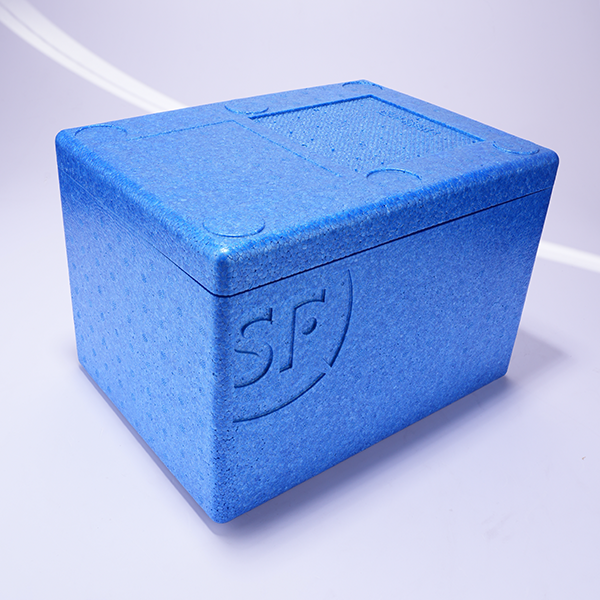
EPP Insulated Box OEM for Aerospace: Build an Approval Evidence Chain
The costliest OEM packaging mistake is approving a sample without approving the conditions that made it acceptable. The sample fits, the lid closes, and tooling is released; months later, a resin substitution, tool repair, payload revision, or packout change produces a box that looks similar but no longer performs the same. A stronger approach to an EPP insulated box OEM for aerospace is to build an evidence chain. Every important requirement should connect to a design feature, a verification method, a production control, and a change trigger. That chain makes EPP’s low weight, cushioning, resilience, and insulation useful without turning material benefits into unsupported aerospace claims.
Define the approved use in one page
Before requesting a design, write an intended-use statement that a technician, supplier engineer, quality auditor, and buyer would interpret the same way. Identify the payload and revisions, where the package travels, whether it returns, and what the box is expected to protect against. State what it is not intended to do.
The payload definition should include controlled CAD, mass, center of gravity, approved support regions, fragile features, no-contact zones, surface concerns, loose accessories, and permitted orientation. For a family design, record each variant rather than designing around a vague maximum envelope. A smaller item can be the worst case if it has more room to move; a lighter item can respond differently to cushioning; a connector added late can invalidate a safe cavity.
Describe the logistics envelope with the same precision. Include packing and unpacking workstations, shelving, carts, conveyors, pallet patterns, vehicle transfers, handling posture, stack conditions, storage, cleaning, labels, seals, and empty returns. External dimensions belong to this system. So do handle locations and the ability to inspect underneath the payload.
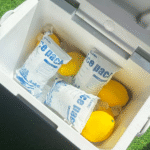
Then state the protection boundary. If the box is only reusable handling packaging, say so. If it is dunnage inside a rigid shipping case, define which structure carries stacking and hardware loads. If it is part of a thermal shipper, identify the complete qualified packout. EPP insulation reduces heat transfer, but no empty-box statement establishes an allowed temperature range or duration. Those results depend on payload, starting state, coolant or phase-change material, arrangement, closures, ambient profile, delays, opening events, instrumentation, and acceptance criteria.
Electrostatic-discharge (ESD) protection needs another explicit boundary. Standard EPP is not inherently an ESD control package. The customer’s ESD authority should define whether the package needs antistatic behavior, dissipation, conduction, shielding, or a combination with bags and handling controls. A specific grade, test method, limits, conditioning, and verification frequency then become controlled requirements. Neither black color nor a general “ESD-safe” description is adequate.
Convert EPP insulated box OEM for aerospace needs into a configuration contract
The approved configuration is more than a part number. It is the set of inputs that must remain stable for the evidence to remain valid. Capture them in a configuration index or product specification that both organizations control.
At minimum, identify body and lid drawings, 3D model revisions, the EPP manufacturer and grade, color/additives, agreed molded condition, insert and accessory part numbers, labels, adhesives, hardware, tool and cavity identities, molding site, secondary operations, inspection plan, packing instructions for delivery, and open deviations. Approved alternates should be named; “equivalent material” is too broad for automatic substitution.
Use functional tolerances. Payload contacts, closure rims, stack interfaces, handles, insert seats, outer envelope, and identification recesses deserve attention because they affect use. A broad decorative surface rarely needs the same control. On compliant foam, datum setup, time after molding, conditioning, and measurement force can change a reading, so the drawing or inspection instruction should describe the method well enough for supplier and buyer to reproduce it.
The tooling agreement should sit beside this technical baseline. State ownership of customer CAD, production CAD, tool design, and the physical mold. Address tool marking, custody, storage, maintenance, repair, access, insurance where relevant, modification rights, transfer, replacement, and end-of-program disposition. Tooling paid for by the buyer is not automatically portable, and supplier process allowances may contain protected know-how. Resolve the boundary before cutting metal.
Commercial scope also needs configuration control. Ask quotations to separate design support, prototypes, production tooling, tool trials, samples, inserts, labels, tests, reports, production parts, and delivery packaging. MOQ, price, and lead time must remain dated project terms tied to forecast, release status, and quoted configuration. Publishing or assuming generic figures would hide the real variables.
Use gates that retire specific risks
An OEM schedule is most useful when each milestone closes a named uncertainty. “Sample approved” is too broad. A gated plan can distinguish these decisions:
| Gate | Risk being retired | Minimum evidence | What is still not approved |
|---|---|---|---|
| Intent freeze | Supplier designs for the wrong payload or route | Signed requirements, controlled payload data, assumptions log | Molded geometry and performance |
| Manufacturability release | CAD cannot be filled, steamed, cooled, or ejected consistently | Design-for-manufacture review covering walls, vents, fill, parting, ejectors, shrinkage and warpage | Production-part conformity |
| Fit confirmation | Payload, operator, or logistics interfaces are wrong | Prototype fit review and issue closure | Production EPP behavior if prototype process differs |
| Tool acceptance | Production mold does not reproduce functional geometry | Tool-trial inspection by tool/cavity, closure and insert checks | Distribution or thermal performance |
| Design verification | Approved package does not protect the representative payload | Pre-approved mechanical, ESD, cleaning or thermal reports as applicable | Routine lot consistency |
| Production release | Normal manufacturing cannot maintain the baseline | Pilot-lot records, control plan, traceability and approved deviations | Unreviewed future changes |
This sequence prevents one result from being stretched beyond its purpose. A machined prototype can support an ergonomic decision without proving molded impact behavior. A dimensionally conforming tool trial can release geometry without qualifying a temperature-controlled route. A successful thermal chamber run can support the tested packout without approving a new coolant arrangement.
Early design-for-manufacture work is particularly important for bead-molded EPP. Filling position, steam paths, core vents, wall transitions, undercuts, ejectors, cooling, and part geometry can affect fusion and distortion. These manufacturing features may also leave marks or local conditions that intersect with labels, seals, contact pads, or gauging points. Supplier feedback should be resolved through controlled CAD and drawing updates, not stored only in meeting notes.
Write tests from the acceptance decision backward
Begin every test plan with the sentence: “We will accept the design if…” That statement forces the team to define the article, hazard, measurement, and failure criterion before seeing results.
For dimensional approval, name the characteristics, datums, instrument or fixture, conditioning state, sampling, and acceptance limits. Inspect multiple trial parts and cavities where appropriate. Mass or molded-density indicators can help monitor a process, but they do not independently prove bead fusion, geometry, cushioning, or thermal performance.
For compression, decide whether the question concerns foam material response, box deflection, stack stability, or payload protection. State where and how the load is applied, orientation, rate or dwell, maximum deformation, recovery period, and damage criteria. ASTM D642 can provide a container-compression method when selected, while material methods such as ASTM D3575 can characterize closed-cell olefin foam under their stated conditions. Their outputs answer different questions.
For impact, use the distribution hazard to select the method. ASTM D5276 can evaluate sudden shock from a loaded-container free fall. ASTM D4169 can organize a sequence of laboratory hazards representing selected distribution cycles. A report should identify the actual box revision, payload or surrogate, mass, center of gravity, stiffness where relevant, closures, preconditioning, orientations, sequence, instrumentation, sample count, anomalies, and post-test inspection. Passing an unspecified “drop test” is not actionable evidence.
The surrogate deserves engineering review. Matching only mass may leave the wrong load path. The surrogate should reproduce support surfaces, center of gravity, stiffness, and vulnerable clearances sufficiently for the test objective. If the goal is to protect a connector, include a measurable way to determine whether it was contacted or overloaded.
Thermal work starts with the product requirement, not a desired marketing duration. If the application needs temperature control, qualify the entire system. A recognized insulated-container qualification process and thermal profile can provide a structured basis where applicable, but a generic parcel profile does not automatically represent a specific aerospace lane or worst case. Define packout instructions and allowable changes, then decide how production and field use will keep the qualified configuration intact.
Helpful decision tools
Check the details before you choose packaging
These quick tools can help you compare route risk, sizing needs, coolant choices, and packaging details before you request a quote.
Ice Pack Calculator
Estimate gel ice pack quantity for chilled shipments and practical route planning.
Estimate ice packsRoute Risk Checker
Review lane conditions before selecting packaging for real operating requirements.
Check route riskInsulation Material Drop Resistance
Review drop resistance and handling factors before choosing insulation materials.
Check resistancePlace standards in the correct layer
Three standards conversations are often mixed together in aerospace packaging: supplier quality, packaging design, and transport regulation. Keeping them separate prevents false assurances.
IAQG 9100 defines quality-management-system requirements for aviation, space, and defense organizations. A customer may require certification and verify its scope and status, but that certification is not product approval. It does not prove that a particular box meets a drawing, protects a component, provides ESD control, or maintains a thermal condition.
ATA Spec 300 addresses packaging of airline supplies and provides design, procurement, and testing guidance for repairable and expendable units, reusable containers, ESD-sensitive devices, and other covered topics. Its applicability varies. The responsible customer should identify the revision, category, sections, and tests that apply. Avoid unqualified phrases such as “ATA-certified box”; retain the report and configuration showing which requirements were actually evaluated.
Transport rules create a further layer. If the package contains dry ice, lithium batteries, dangerous goods, or regulated specimens, current air-transport requirements and state or operator variations may govern packing, venting, quantities, marks, labels, documents, and trained personnel. IATA’s Dangerous Goods Regulations are relevant to that review. An EPP enclosure is only one element and cannot confer compliance on the shipment.
ESD packaging standards likewise support the customer’s ESD control program; they do not turn every package made with a specialty foam into a complete protective system. State the function, verify it, and preserve its configuration.
Make routine production prove continuity
Qualification evidence has value only while production remains connected to the qualified baseline. The supplier control plan should identify incoming material verification, key molding controls, first-off or startup checks, dimensional and functional inspection, tooling/cavity records, nonconformance handling, lot release, and record retention. The exact controls should reflect product risk rather than a copied form.
Every shipment should carry enough identity to connect boxes to the purchase order, part and revision, manufacturing lot, quantity, and conformity or inspection records. If ESD or another special grade is specified, its identity and required lot evidence belong in that link. Serializing every box may or may not be necessary, but the traceability unit must support containment.
Receiving inspection verifies identity first, condition second, and selected characteristics third. Confirm documents, revision, material status, quantity, and deviations. Then examine critical dimensions or functional gauges, lid seating, insert configuration, labels, contamination, tears, incomplete fill, distortion, and transport damage according to the agreed plan. Define critical, major, and minor defects in operational language and establish quarantine and disposition authority.
Sampling should be selected, not improvised. A formal lot-by-lot attribute sampling standard can support an agreed plan, but the buyer and supplier still need to set inspection level, defect classes, acceptance values, switching rules, and treatment of isolated lots. Critical characteristics may require different controls or full verification.
Change control protects all this work. Require advance notice for a material source or grade, additive, colorant, recycled content, molding site, tool repair or new cavity, insert, adhesive, label, inspection method, secondary supplier, or process change that could affect approved requirements. The change package should describe affected inventory, risk, proposed verification, approval, implementation date, and lot breakpoint. “No change in fit” is not enough when ESD, mechanical, cleanliness, or thermal behavior may also be affected.
Practical example: one box, two payload states
Consider an electromechanical actuator that moves to a repair facility in an unserviceable state and returns with protective caps, paperwork, and an added inspection seal. The initial cavity was designed only around the outgoing unit. During fit review, the team discovers that the return-state seal is crushed by the lid and the paperwork pouch pushes a cable toward a hard edge.
Instead of treating those issues as packing technique, the team adds both payload states to the intended-use statement. A protected document area and a keyed removable insert become controlled features. The tool trial checks the lid interface and insert seat with a functional fixture. Loaded-package verification uses both configurations because their mass distribution and clearances differ. Receiving inspection confirms the correct insert revision and seal clearance. Future changes to the cap geometry trigger a fit assessment.
The package is approved through connected evidence. No one needs to claim that EPP, a quality certificate, or a standard title solves every risk.
Questions that expose approval gaps
What belongs in an OEM first-production submission?
Request the items your contract needs, which may include the released drawing and model, material and process declarations, tool/cavity identification, dimensional results, functional-gauge results, traceability example, workmanship evidence, applicable test reports, packing instructions, control plan, and approved deviations. A customer sample alone is weak because it does not show how later lots will be controlled.
When does a packaging change require requalification?
Use a cross-functional risk assessment against the original qualification rationale. Changes to the payload, support geometry, box or lid, material grade, density, insert, coolant, closure, manufacturing site, tool, or route can affect results. Some changes need a documented review only, others targeted tests, and others full requalification. Define that logic before changes occur.
Can the OEM select the applicable aerospace standard?
The supplier can offer informed recommendations, but the customer or designated technical authority should determine contractual applicability. The buyer knows the aircraft program, payload classification, operator expectations, and regulatory context. Record the exact revision and selected provisions so quotation, design, and testing share the same basis.
How do you keep inserts and lids from being mixed?
Give each controlled component clear part and revision identity, design incompatible variants so they cannot be assembled where practical, and define pairing in work instructions. Receiving and packout checks should verify the assembly. Color can assist operators but should not be the sole control because lighting, contamination, and replacement parts can undermine it.
Approve what you can trace and defend.
An aerospace packaging release should be explainable without the original project team in the room. The intended use identifies the risk; the configuration contract fixes the design; gates show which uncertainty was closed; tests answer defined acceptance questions; routine controls preserve the result; and change management protects it over time. That is the evidence chain an OEM program needs.
About Tempk
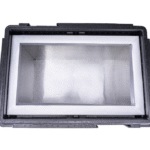
Tempk is a Shanghai Tempk Industrial Co., Ltd. brand with publicly listed EPP insulated boxes, customization, accessories, and OEM service. Those offerings provide a basis for discussing a custom project, but they do not by themselves demonstrate aerospace approval, a particular quality-system certification, or performance on your route. We invite aerospace buyers to frame the inquiry around a controlled use case and required evidence so feasibility, tooling, samples, production controls, and qualification responsibilities can be reviewed without assumptions.
Bring Tempk your controlled payload information, logistics constraints, special requirements, and approval deliverables. Ask for a proposal that shows how each requirement would be designed, verified, controlled in production, and reconsidered after change.