EPP Insulated Box Manufacturer for Pharmaceutical Use: Buy the Evidence, Not Just the Box
The easiest supplier bid to approve is often the hardest package to defend later. It may show an attractive EPP box, an internal-volume figure, and a thermal-duration headline, yet omit the payload, coolant state, ambient profile, and acceptance criteria behind that claim. When choosing an EPP insulated box manufacturer for pharmaceutical use, apply three gates: product-and-lane fit, complete-system evidence, and operational control. A proposal advances only when it passes all three. This keeps a useful material choice from being mistaken for a qualified medicine-shipping solution.
Three Gates for a Defensible Purchase
The gate approach gives procurement, quality, logistics, packaging engineering, and warehouse operations a common decision record. It also makes supplier comparisons fair. One vendor should not receive credit for an unqualified empty box while another is pricing coolant, instructions, test support, and traceability.
| Decision gate | Approval question | Evidence to examine | Reason to pause |
|---|---|---|---|
| 1. Product and lane fit | Is the proposed concept built around the actual medicine, payload, route, and receiving process? | Product requirement, payload drawings, usable-volume check, lane map, risk assessment | The supplier assumed a standard temperature range or planned transit time |
| 2. Complete-system proof | Does data represent the identified shipper, coolant, packout, load cases, and challenge conditions? | Bill of materials, drawings, protocol, raw data, report, qualification rationale | Only a material sheet, empty-box test, or unsupported hold-time claim is supplied |
| 3. Operational control | Can routine sites reproduce, monitor, receive, clean, and change the configuration correctly? | Work instructions, training, inspection, logger workflow, change control, reuse plan | The tested packout cannot be repeated at the warehouse or controlled after launch |
Failure at one gate is not necessarily supplier failure. It identifies work that remains. A promising EPP enclosure may move into engineering development while quality approval waits for a representative packout and qualification. The mistake is allowing a sample approval to masquerade as authorization for routine pharmaceutical shipments.
Gate One: Define the Use Before the Container
Start with the product's approved storage and transport conditions. The required range and excursion policy should come from product labelling, regulatory information, or stability data managed by the pharmaceutical company. The familiar 2°C to 8°C range applies to many refrigerated products and to vaccines licensed for refrigerator storage, but it does not cover all pharmaceuticals or all vaccines. Some products have controlled room-temperature, frozen, deep-frozen, or other requirements. Freeze sensitivity can be as important as protection from heat.
Next define elapsed time. Count from final closure at origin to opening and transfer into approved storage at destination. Include staging, pickup, cross-dock, airport or port processing, customs, failed connections, weekends, delivery windows, and receiving delay. Separate the planned duration from a justified contingency derived from lane risk. There is no universal hold time that can be assigned to EPP.
Payload information should describe geometry and thermal behavior, not only weight or order quantity. Provide the external dimensions and orientation of product cartons, minimum and maximum loads, expected order mix, available thermal-mass information, and any need to keep cold surfaces away from the product. If a surrogate will be used in testing, its relationship to real product must be justified.
Calculate the usable payload envelope after all system components are in place. That remaining payload space is the usable volume. Gross cavity volume is reduced by coolant or PCM, spacers, dividers, dunnage, the logger, and any protected air gap. Internal dimensions should also reflect tolerances and closure geometry. A carton that fits into an empty sample may not fit into the qualified packout.
Finally, map operations at both ends. Can origin condition the necessary media consistently? How long will components be staged? Who verifies the pack state? Does the receiving site have a trained person, compatible software, and controlled storage available at delivery? A theoretically capable system is a poor selection when a routine site cannot operate it.
Gate Two: Lock the System Before Reading the Results
Qualification language becomes clear when each physical and procedural layer has a name.
EPP material is expanded polypropylene foam. Manufacturer technical literature supports material-level attributes such as low weight, thermal insulation, resilience, energy absorption, low water uptake, and chemical resistance. The values and behavior vary with grade, density, processing, and test method.
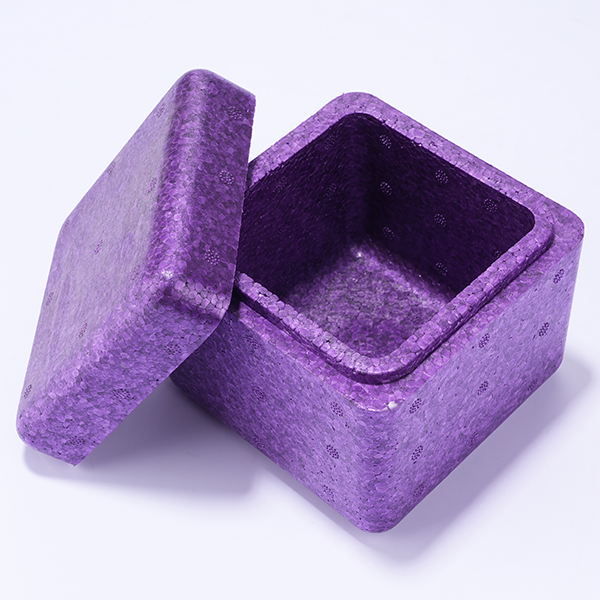
The insulated shipper is the molded EPP body and lid, with any defined inserts or outer protection. It slows heat transfer and adds physical protection. It does not generate cooling.
Coolant or PCM is the finite thermal-energy component. Gel packs, ice bricks, and other phase change materials must be selected and preconditioned for the system. Quantity, state, position, and separation from the payload matter. A gel pack alone does not stabilize a medicine without a designed packout.
The passive system is the shipper, conditioned media, payload arrangement, spacers, dunnage, closure, and operating method used together without powered refrigeration.
The logger records temperature exposure. It can support disposition or analysis when its range, accuracy, calibration, interval, response, memory, placement, activation, and data process are appropriate. It is not a source of thermal protection.
The qualified thermal shipping system is the controlled configuration for which documented testing shows performance against approved criteria under stated payload, ambient, duration, and handling conditions.
Give each critical component a unique identity. The bill of materials should connect the tested samples with routine production. Drawings should control the features that affect lid engagement, wall geometry, PCM location, payload clearance, and closure. If parts are interchangeable, define which combinations are approved.
This is also where a manufacturer proves production discipline. Ask how resin grade, molded density or part weight, dimensions, bead fusion, warpage, surface condition, contamination, and lot traceability are controlled. The exact tests depend on the design. What matters is a reasoned link between a production characteristic and the qualified configuration.
Qualification Is a Structured Argument
WHO shipping-container guidance describes design qualification, operational qualification, and performance qualification. These stages form a useful argument from requirements to routine use.
Design qualification begins with a user requirement specification. It asks whether the proposed design can meet the product-load, ambient, duration, physical-protection, and use requirements under controlled conditions. Operational qualification then assesses the defined packout under controlled challenges and representative load extremes. Performance qualification examines whether the complete arrangement performs in the real operating environment.
The protocol should be approved before testing and should define acceptance criteria, responsibilities, components, conditioning, packout, sensor map, recording approach, payload cases, ambient profiles, duration, handling or distribution stresses where relevant, deviations, and data analysis. The report should identify what actually occurred, not merely restate the plan. Review all payload traces with the ambient trace, calibration evidence, worksheets, exceptions, and conclusions.
ISTA 7E can supply standardized heat and cold profiles for parcel-delivery thermal testing. It is useful when a project needs a recognized, comparable laboratory challenge. ISTA's own description distinguishes those profiles from customized lane data and customized worst-case shipping qualification. A 7E result therefore belongs within the qualification rationale; it does not erase the need to understand the route.
European Union GDP guidance reinforces the operational connection. Packaging selection considers the medicinal product's requirements, shipment space, anticipated external extremes, maximum transport time including temporary storage, and qualification or validation status. It also calls attention to risk-based transport, deviations, transfer hubs, monitoring, cool-pack position, seasonal assembly, and staff training. GDP is not a certification printed onto EPP. It is a distribution framework that shapes how the shipping system is selected and controlled.
Helpful decision tools
Check the details before you choose packaging
These quick tools can help you compare route risk, sizing needs, coolant choices, and packaging details before you request a quote.
Insulation Material Reference
Compare insulation material choices for different cold chain packaging needs.
Compare materialsDry Ice Calculator
Estimate dry ice needs for frozen or ultra-cold shipments before packing.
Estimate dry iceIce Pack Calculator
Estimate gel ice pack quantity for chilled shipments and practical route planning.
Estimate ice packsTreat a supplier's existing report as evidence with a defined scope. It may reduce repeat work if the exact design, packout, payload cases, ambient profiles, duration, and acceptance criteria meet the buyer's user requirements. If a coolant, divider, payload, box, or procedure changes, assess the effect before relying on the report.
Gate Three: Prove the Process Can Survive Routine Work
A field-ready packout should be difficult to misunderstand. The work instruction needs component images or identifiers, preconditioning steps, assembly sequence, payload limits, logger position, closure, seals, labels, and handling precautions. It should define what to do when a component is missing, damaged, in the wrong condition, or outside its permitted staging window.
Preconditioning is often the quiet source of variation. The procedure should state how each coolant or PCM reaches the required state, how readiness is verified, how differently conditioned media are segregated, and how long components may be staged before packing. Confirm that conditioning equipment has enough controlled capacity for peak dispatch and recovers under actual loading practices.
At handover, align the package with the booked service and service agreement. Specify requested external conditions, permitted temporary storage, orientation, security, scan events, delay alerts, contacts, and escalation. For healthcare cargo booked as time- and-temperature-sensitive by air, the applicable IATA handling label communicates the external transport temperature range; it does not guarantee internal product conditions. If dry ice is used, current dangerous-goods rules, carrier variations, packaging ventilation, marking, labelling, quantity, and documentation need specialist confirmation.
Receiving is part of the packout process, not an afterthought. The receiver should verify identity, seal, labels, physical condition, wetness or leakage, logger status, and documents; move product promptly to the appropriate controlled or quarantine location; preserve data; and follow the approved excursion process. A logger alarm is an input to disposition, not a universal discard instruction. Product stability information and quality authority govern the decision.
After launch, review monitoring trends, delay records, damage, packing deviations, inspection rejects, and complaints. These data show whether assumptions remain valid. They may also reveal that a route is harsher than the laboratory profile, that one site stages PCM inconsistently, or that a lid is being damaged by return handling.
Put Manufacturer Evaluation into the Bid Package
Instead of asking suppliers to “quote a pharmaceutical EPP box,” issue a structured request. Include the product condition, freeze sensitivity where relevant, payload drawings and load range, route map, duration basis, ambient strategy, handover and receiving needs, monitoring approach, reuse intent, and documentation expectations.
Require each response to separate four categories:
- Standard product facts: controlled dimensions, material identity, accessory compatibility, and production tolerances.
- Existing evidence: reports and data available for the exact or comparable configuration, with differences clearly identified.
- Project work: sample development, packout design, testing, customization, tooling, or documentation still required.
- Commercial answers: quoted volume basis, minimum order quantity, lead time, tooling ownership, spare components, delivery terms, and change-notification commitments.
This structure prevents an unverified claim from receiving the same score as a documented result. It also exposes lifecycle costs. A cheaper cavity that requires a second packout, extra warehouse labor, or a difficult reverse route may not be the lower-cost program.
Evaluate sample-to-production consistency before scale-up. Qualification units should represent routine tooling, material, and process settings. Define incoming checks and defect handling for bodies, lids, inserts, and coolant components. Agree that changes to resin grade, density specification, mold, geometry, process, component supplier, PCM, or critical instructions will be notified and assessed through change control.
A Procurement Decision in Practice
Imagine two proposals for a freeze-sensitive biologic. Proposal A provides an attractive EPP box and a long-duration statement, but the test used an unidentified payload and does not show coolant conditioning or ambient data. Proposal B offers a slightly different form factor, identifies the complete bill of materials, shows the usable payload envelope, and explains which qualification work remains for the buyer's air lane.
Proposal B is not automatically the final answer, but it is the more reviewable starting point. The team can identify gaps, plan representative minimum and maximum loads, assess freeze risk near the PCM, select logger locations, and connect standardized testing with route data. Proposal A leaves the team guessing which claim survives its actual use. Evidence quality is part of product quality.
Reuse Is a Controlled State, Not a Material Label
EPP's resilience, low weight, and recyclability can support a returnable design. Sustainability depends on the operating model. Count successful trips, return distance, cleaning water and energy, losses, inspection rejects, replacement components, storage, and the actual end-of-life pathway. Recycling potential has little value if no receiving program accepts the used parts.
Define cleaning compatibility and hygiene release for the molded design. Textured areas, joints, labels, gouges, and trapped moisture deserve review. Inspect lid fit, corners, walls, inserts, closures, and identification after every return at the frequency defined by risk. Quarantine contamination, distortion, deep damage, missing parts, persistent odor, or unapproved repairs according to written criteria.
The thermal state can also change with age or damage even when a unit remains visually recognizable. WHO guidance supports risk-based requalification of reusable systems and reassessment after relevant changes. Asset identity, service history, monitoring trends, and rejection data can inform that decision. Avoid promising a universal reuse count without program-specific evidence.
Frequently Asked Questions
What is the first document a buyer should create?
Create a user requirement specification or equivalent decision brief. It should connect the product's approved condition with payload range, usable space, route, door-to-door duration, ambient strategy, packout constraints, monitoring, receiving, reuse, and evidence expectations. A clear requirement lets manufacturers identify an appropriate starting design without claiming that an empty box already solves the lane.
Is a thicker EPP wall enough to extend hold time?
Wall geometry can affect heat flow, but thickness alone does not establish duration. Lid joints, molded density, thermal bridges, PCM selection and placement, payload thermal mass, starting conditions, ambient profile, and opening or handling all contribute. Compare tested complete configurations. A design change intended to improve insulation should still be assessed for payload volume, weight, molding consistency, and qualification impact.
Who is responsible for pharmaceutical compliance?
Responsibilities vary by market and agreement, but the pharmaceutical company and distribution parties retain quality-system duties that cannot be transferred by buying a “compliant” material. The manufacturer should control and document the supplied components and support accurate evaluation. The buyer's authorized functions determine product requirements, approve qualification, control operations, manage excursions, and confirm applicable regulatory obligations.
When should change control be opened?
Open it before a relevant change enters routine use. Triggers can include the EPP grade, density, mold, lid, PCM, divider, logger, payload carton, preconditioning equipment, packout, cleaning process, supplier, carrier, route, schedule, or duration. Compare the change with the qualification basis and decide whether documented equivalence, targeted testing, revised instructions, or requalification is needed.
Approve a System You Can Explain
The purchase is ready when the team can explain why the exact EPP-based system fits the medicine and lane, which evidence supports it, how each site will operate it, and what events trigger review. That is more valuable than a broad material claim and more durable than a catalogue hold-time number.
About Tempk
Tempk offers EPP insulated boxes along with compatible cold-chain components for project development, including gel packs, ice bricks or PCM options, dividers, and monitoring choices. We can help translate payload and route inputs into a defined configuration for sample assessment and planned qualification. We keep the boundary clear: the molded box is one component, while final suitability depends on the complete packout, operating conditions, evidence, and buyer approval.
Share your user requirements, payload range, lane profile, packout constraints, and documentation needs with Tempk. Ask for a proposal that separates verified product facts, existing evidence, and the project work still needed before scale-up.