Yes—solid carbon dioxide dry ice can help keep a freezer cold temporarily during a power outage, but it is an emergency coolant, not a routine way to store dry ice. Keep the freezer door closed, use an appliance thermometer, handle dry ice with insulated gloves and eye protection, and work only in a well-ventilated area. Never tape, clamp or otherwise modify the freezer into an airtight enclosure.
Scope: this guide covers short-term contingency cooling in a household or commercial cabinet freezer. It does not cover routine dry ice storage, walk-in refrigerators, environmental chambers, shipping packouts or validated storage for medicines, vaccines and laboratory materials.

Confirm that the coolant is solid CO₂ dry ice
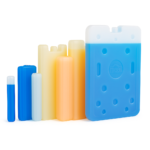
The name “dry ice pack” is also used for water-activated sheets, gel packs and other reusable refrigerants. Those products do not release carbon dioxide and must be conditioned according to their own instructions. The procedure on this page applies only to solid CO₂ supplied as blocks, slabs, pellets or a similar solid form.
Dry ice is extremely cold and changes directly from a solid to carbon dioxide gas. The CDC dry ice safety guide warns that direct contact can cause severe frostbite, an airtight container can expand or rupture, and released CO₂ can displace oxygen in a poorly ventilated space.
Decide whether dry ice is needed before opening the freezer
During a power outage, the first control is to keep the door closed. The U.S. FDA’s food-safety guidance for power outages states that an unopened full freezer can hold its temperature for approximately 48 hours, while a half-full freezer holds it for about 24 hours. These are planning estimates, not guarantees for every appliance or load.
Consider dry ice when the interruption is expected to outlast the freezer’s passive cold reserve or when thermometer readings show that the defined limit may not be maintained. Before adding it, confirm all of the following:
- The material is solid CO₂ and its supplier documentation is available.
- The room has suitable ventilation and is not a confined or routinely occupied small space.
- The freezer is a cabinet appliance, not a walk-in unit or environmental chamber.
- The stored items can tolerate temperatures near dry ice without direct contact damage.
- A responsible person can monitor time, temperature and the remaining dry ice.
If any of these conditions cannot be confirmed, move the load to approved backup storage instead of improvising with dry ice.
Follow a controlled emergency-use procedure
- Restrict the work area. Keep children, untrained staff and pets away. Review the dry ice supplier’s Safety Data Sheet and the site’s emergency procedure.
- Ventilate before handling. Work in a well-ventilated room. Do not take dry ice into a walk-in refrigerator, vehicle, small storage room or other confined area where CO₂ could accumulate.
- Wear the required protection. Use insulated gloves intended for very cold materials and safety goggles. Use suitable tongs or a scoop rather than bare hands.
- Record the starting condition. Note the time, freezer temperature, load condition and amount of usable dry ice available. An appliance thermometer is more useful than assuming the freezer is still cold.
- Protect the load and appliance. Use a dry insulating barrier where needed so dry ice does not touch skin, fragile surfaces or temperature-sensitive packaging. Do not block air paths, drains, controls or temperature sensors. Follow the freezer manufacturer’s and dry ice supplier’s placement instructions; a universal “always put it at the top” or “always put it at the bottom” rule is not reliable for every appliance.
- Close the normal door without making it airtight. Minimize openings, but do not tape, clamp or otherwise alter the appliance so that gas cannot escape through its normal construction.
- Monitor and document. Check the thermometer under the site’s contingency plan. Record openings, additions of dry ice, temperature observations and the time power returns.
- End the contingency safely. After power is restored, assess the stored items against their applicable acceptance rules. Move unused dry ice to a vented insulated container in a well-ventilated controlled area or let it sublimate using the approved disposal procedure.
How much dry ice should you plan?
The FDA gives one emergency planning example: 50 pounds of dry ice for an 18-cubic-foot, fully stocked freezer for two days. Do not treat that example as a universal ratio or a performance guarantee. The actual requirement changes with freezer construction, load, starting temperature, ambient conditions, door openings, dry ice form and time already lost before the dry ice reaches the freezer.
| Planning input | Why it matters | What to record |
|---|---|---|
| Freezer type and usable volume | Cabinet construction, insulation and empty air space affect heat gain. | Manufacturer, model, rated volume and whether the unit is full or partially loaded. |
| Load condition | A fully frozen, grouped load carries more thermal reserve than a sparse or partly thawed load. | Product type, starting temperature and load distribution. |
| Expected outage and elapsed time | Cooling demand begins when power or mechanical cooling stops, not when dry ice is added. | Outage start, dry ice receipt, placement time and expected restoration time. |
| Door openings | Each opening increases warm-air exchange and consumes part of the remaining cold reserve. | Opening time, purpose and duration. |
| Dry ice form and usable mass | Pellets, small pieces and blocks do not necessarily sublimate at the same rate. | Form, mass actually added and replenishment time. |
| Acceptance limit | Food, ingredients and regulated products do not share one universal temperature limit. | The applicable product specification, food-safety rule or approved SOP. |
For operational planning, the Tempk Dry Ice Calculator can help organize assumptions about time and load. Its result is a planning aid; it does not replace thermometer readings, the appliance manufacturer’s instructions or a qualified contingency plan.
Use temperature evidence to decide what happens to food
Before an outage, the FDA recommends keeping a freezer at or below 0°F (-18°C) and a refrigerator at or below 40°F (4°C), with appliance thermometers installed. When power returns, frozen food that still contains ice crystals or measures 40°F (4°C) or below may be refrozen or cooked under the FDA guidance. Appearance and odor are not reliable safety tests.
These values are U.S. consumer food-safety guidance. A food business should also follow its applicable local requirements, hazard controls and product procedures. Do not use this article to release a commercial food load after a temperature excursion.
Helpful decision tools
Check the details before you choose packaging
These quick tools can help you compare route risk, sizing needs, coolant choices, and packaging details before you request a quote.
Box Liner & Pallet Cover Sizing
Check box liner and pallet cover sizing logic for insulated packaging projects.
Estimate sizingCoolant & PCM Reference
Compare coolant and PCM options when a route needs added temperature support.
Compare optionsPackaging Selector
Compare insulated packaging options by product, route, and temperature need.
Find packagingDo not transfer the same procedure to a refrigerator
A refrigerator and a freezer have different targets. The FDA states that an unopened refrigerator keeps food cold for about four hours and recommends dry or block ice if a prolonged outage is expected. Solid dry ice can freeze products that are intended to remain chilled, so it should not be placed in a refrigerator without a controlled arrangement that prevents direct contact and excessive cooling.
If chilled products cannot be held within their defined limit, move them to an approved cooler or backup unit and monitor the temperature. Do not assume that adding more dry ice makes an uncontrolled refrigerator suitable for every product.
Medicines, vaccines and laboratory materials require their own contingency plan
Do not improvise a pharmaceutical or laboratory storage method from food-freezer advice. Confirm the product label, approved temperature range, facility SOP, monitoring method, excursion decision process and backup equipment. The CDC Vaccine Storage and Handling Toolkit warns against using or storing dry ice in confined spaces such as walk-in refrigerators and environmental chambers.
If a regulated load leaves its approved range, quarantine it and escalate the decision to the responsible quality or clinical function. A quantity of dry ice and a single thermometer reading do not establish that the full load remained within specification.
Avoid these common mistakes
- Using the freezer for routine dry ice storage: a normal freezer does not stop sublimation or recreate dry ice that has become gas.
- Sealing the appliance: never tape or modify the freezer into an airtight container.
- Working in a confined space: CO₂ can accumulate without an obvious visual warning.
- Handling with bare hands: brief contact can cause a serious cold injury.
- Relying on a fixed duration: measure temperature and remaining material instead of assuming a universal number of hours.
- Allowing direct contact with sensitive items: extreme local cold can damage packaging, food texture or products intended for a warmer range.
- Disposing of dry ice in a sink, toilet or closed trash container: follow the supplier’s SDS and the approved site procedure for sublimation in a controlled, well-ventilated area.
Frequently asked questions
Can I put dry ice in a freezer during a power outage?
Yes, solid CO₂ may be used as short-term emergency cooling when the room is well ventilated, handling controls are in place and the freezer is not made airtight. Keep the normal door closed as much as possible and monitor the internal temperature.
Will a freezer keep dry ice from sublimating?
No. A normal freezer is much warmer than solid dry ice, so the material continues to change into CO₂ gas. The freezer may slow heat gain compared with an open room, but it does not preserve dry ice indefinitely.
How can I keep dry ice from disappearing too quickly?
Purchase it close to the time of use, minimize unnecessary handling and openings, and keep unused material in a vented insulated container in a well-ventilated controlled area. You cannot stop sublimation in an ordinary freezer.
Should dry ice go at the top or bottom of the freezer?
Do not apply a universal placement rule without checking the appliance and supplier instructions. Protect surfaces and product packaging, keep air paths and sensors clear, and use the arrangement defined in the contingency plan.
How do I know whether frozen food is still safe?
Use a thermometer and the applicable food-safety guidance. Under the FDA’s U.S. guidance, food that still contains ice crystals or is 40°F (4°C) or below may be refrozen or cooked. Do not rely on appearance, smell or taste alone.
Keep this page separate from storage and shipment-duration decisions
Use this guide only for temporary emergency freezer cooling. For receiving, storing and controlling solid CO₂ before dispatch, see where to store dry ice and how to manage reusable cold packs. For elapsed-time and remaining-mass planning, see how long dry ice lasts before dispatch.