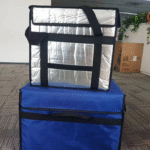
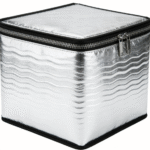
After selecting a bag that its manufacturer permits for dry ice, define how the loaded assembly will be lifted, carried, placed in a vehicle and transferred at receipt. A supported thermal layout can be disrupted by compression or rough handling. Keep the intended closure, restraint and gas-release arrangement consistent through each transfer.
Assign each handling component a role
Identify the insulated bag, handles, straps, separators and any protective outer package. Confirm which parts support the loaded mass and which provide insulation only. Do not assume a liner or lid can carry the assembly because it fits around the product.
Use the manufacturer’s instructions for the exact bag and dry-ice application. Confirm cold compatibility and loading limits before dispatch, rather than adapting a general delivery bag to an unidentified use.
Check the bag in its loaded state
| Handling event | Practical check |
|---|---|
| Lifting | The designated handles support the permitted load. |
| Carrying | Movement does not shift coolant or damage separators. |
| Vehicle placement | Compression and nearby loads do not distort the bag. |
| Transfer | Staff can identify the load and maintain the intended arrangement. |
| Closure | The loaded shape does not force gaps or obstruct gas release. |
| Outer protection | The permitted package protects the bag from relevant transport damage. |
A soft bag changes shape under load. Assess the actual mass, dimensions and loading sequence rather than using an empty-bag demonstration. Record how the assembly is secured and where pressure from other loads could occur.
Create an operator transfer instruction
- Show the designated lifting and carrying method.
- Identify permitted vehicle positions and restraint.
- Keep handling and dry-ice warnings available to staff.
- Specify which opening or intervention is permitted.
- Record damage, unusual handling and delays.
- Identify who receives an uncertain load for assessment.
Do not use additional tape or wrapping as an improvised strength repair if it changes the intended closure or gas-release route. Replace or assess an unsuitable component under the defined procedure.
Check evidence after representative handling
Use the same loaded configuration for relevant physical and thermal assessment. Inspect closure, seams, restraint and component positions after handling. Monitor product locations justified by the actual loading risks.
Helpful decision tools
Check the details before you choose packaging
These quick tools can help you compare route risk, sizing needs, coolant choices, and packaging details before you request a quote.
Dry Ice Calculator
Estimate dry ice needs for frozen or ultra-cold shipments before packing.
Estimate dry iceBox Liner & Pallet Cover Sizing
Check box liner and pallet cover sizing logic for insulated packaging projects.
Estimate sizingPackaging Selector
Compare insulated packaging options by product, route, and temperature need.
Find packaging49 CFR 173.217: carbon dioxide, solid addresses gas-release packaging for applicable US air and water dry-ice transport. CDC: dry ice exposure and ventilation documents enclosed-space CO₂ exposure hazards. Apply suitable work-area and transport handling procedures; a vented bag does not make every surrounding enclosed space suitable.
Carrier acceptance is a separate decision. Confirm whether the selected service requires an outer package or other conditions beyond the bag manufacturer’s instructions.
Frequently asked questions
Can I carry the assembly by the insulation liner?
Use only the designated carrying components and the manufacturer’s load instructions.
Will wrapping the bag tightly improve transport protection?
Do not make unassessed changes that compress the layout or obstruct gas release.
Does an intact handle prove the contents stayed acceptable?
No. Inspect the required package conditions and review product exposure evidence.
Use the right guide for the earlier decisions
Use the supplier evidence checklist before selecting a bag, and the bag closure and duration guide for its thermal assessment.