Insulated EPP Box Wholesale: From Route Requirement to Controlled Order
An insulated EPP box wholesale purchase should be managed as a packaging system and reusable asset, not as a simple bulk commodity. The buyer must define the payload and route, confirm truly usable dimensions, separate insulation from verified thermal performance, compare complete landed and operating cost, approve representative samples, preserve material and drawing identity, and plan receiving and fleet controls. This article brings those decisions into one practical framework. It is designed to help procurement, operations, packaging, and quality teams issue a clearer inquiry, evaluate suppliers on equal terms, and avoid multiplying an unresolved detail across hundreds or thousands of boxes.
Write the route requirement before writing the product specification
A strong specification begins with what happens between packing and return. Describe the payload, starting condition, vehicle or carrier, route duration, ambient exposure, number of handovers, expected openings, stacking, lifting, cleaning, storage, and return path. These facts define the job. The box dimensions and features follow.
For temperature-sensitive goods, state the required product condition and who owns the decision. Do not begin with a supplier’s advertised hold time. The product, route, and quality requirements determine the packout and evidence needed. A local meal-delivery carrier, a seafood container, a laboratory sample box, and a pharmaceutical shipper may all use EPP but have different acceptance criteria.
Record the largest approved payload configuration. Include primary and secondary packaging, coolant, dividers, documents, security devices, and the clearance needed to load and remove items. When several products share the box, decide whether a universal cavity, modular insert, or size family gives the better operational result.
The route requirement also reveals whether reuse is realistic. Who retrieves the box? How long does it dwell at the destination? Where is it cleaned? What happens when it is damaged or contaminated? A durable container without a return process is simply an expensive one-way pack.
Define four dimensions instead of one volume
Wholesale listings often emphasize liters because a single number is easy to compare. Volume alone can hide the geometry that determines fit. Ask for a drawing that identifies four dimension groups.
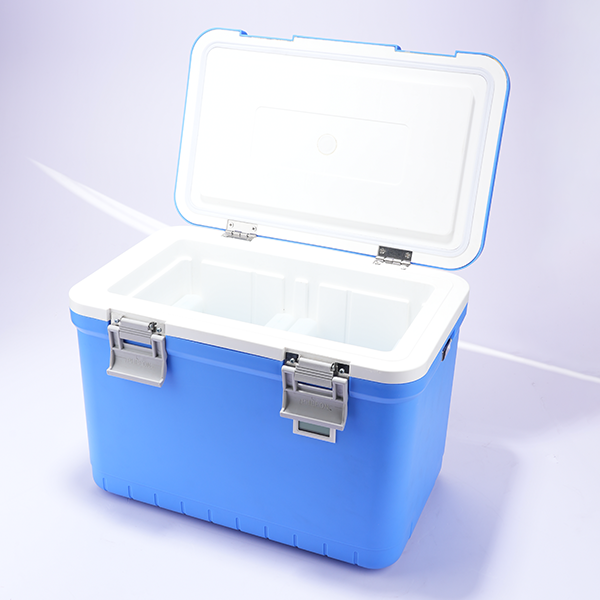
First, the usable internal dimensions show the clear payload space after taper, corner radii, ribs, lid engagement, handles, inserts, and coolant are included. Second, the opening dimensions show whether the payload passes through the top. Third, the external dimensions control vehicle, pallet, rack, shelf, and freight cube. Fourth, the packed dimensions include lid projection, straps, overpack, and any attached identification feature.
Check the lower cavity as well as the upper opening. Molded boxes commonly have draft, so the bottom may be smaller. Confirm flat areas and support points for rectangular trays or equipment. If a coolant plate sits in a wall recess, verify whether the published cavity dimensions include or exclude it.
A dimension drawing should also show the lid interface, stacking registration, handle location, insert datum, and critical tolerances. Mark dimensions that affect equipment or packout as critical-to-function. Avoid imposing tight tolerances everywhere; focus control where variation changes use.
Decide whether standardization or customization creates more value
A standard box can reduce tooling, lead-time risk, and change complexity. It may be ideal when the payload fits well and external footprints already match the network. A custom box can improve cube, restraint, coolant placement, branding, and worker handling. The decision should compare lifecycle value rather than prestige.
Use customization for stable requirements that create repeated operational gains. Examples include a fixed vehicle footprint, a recurring tray stack, a molded divider location, a defined handhold, or a stack interface. Keep changing requirements modular where possible. Removable inserts, color-coded dividers, label panels, or coolant modules can adapt one outer platform to multiple uses.
Before approving a custom tool, ask:
- Who owns and controls the tool?
- Which revision is quoted?
- What trial parts and modifications are included?
- Can inserts or labels change without replacing the main tool?
- How are maintenance, storage, and tool transfer handled?
- What changes require buyer approval?
Customization should reduce operational variation. If it creates too many unique parts, labels, and packout choices, it may increase error instead.
Treat insulation as a verified configuration, not a box adjective
EPP’s cellular structure slows heat transfer, but the finished packout determines temperature behavior. Wall and lid geometry, gaps, payload thermal mass, starting temperatures, coolant type and quantity, empty space, opening frequency, ambient profile, and duration all matter.
A useful thermal report identifies the exact box and lid revision, material configuration, payload or surrogate, coolant conditioning and placement, ambient conditions, sensor locations, acceptance criteria, and result. It should make clear whether the measured variable is air temperature, product temperature, or a surrogate. A bare duration claim cannot be transferred safely from one packout to another.
Mechanical condition also affects insulation. A distorted rim, damaged lid, compressed corner, or worn closure can increase air exchange. Reusable fleets should inspect these features, and thermal re-evaluation may be needed after meaningful design or material changes.
For regulated products, let the responsible quality team decide what qualification and documentation are required. A generic EPP box, a tested packout, and a qualified shipping system are not the same thing. A management-system certificate for the supplier does not convert one into another.
Build a quotation that exposes total cost
Issue the same request for quotation to every supplier. Define the box, lid, inserts, accessories, material, color, artwork, inspection, packaging, delivery term, samples, tooling, and documentation. Ask suppliers to identify exclusions rather than allowing them to disappear in a low unit price.
Separate three cost layers:
- Development cost includes design, tooling, trial parts, revisions, and testing.
- Landed product cost includes molded parts, accessories, decoration, export packing, freight, delivery, and incoming inspection.
- Operating cost includes pack labor, coolant, storage, cleaning, reverse transport, loss, repairs, and retirement.
For bulky lightweight boxes, freight cube deserves its own calculation. Review how boxes are nested or stacked for shipment, how lids are packed, and whether compression creates distortion. A design that is cheaper to mold may cost more to move empty. Conversely, aggressive nesting can create handling or hygiene problems.
Use the following comparison structure:
| Decision area | Evidence to request | Cost or risk revealed |
|---|---|---|
| Product scope | Bill of parts and controlled drawing | Missing lids, inserts, labels, or accessories |
| Material and process | Grade identification and production controls | Unplanned variation or substitution |
| Development | Tool ownership, trials, revision rules | Future change and maintenance exposure |
| Performance | Relevant thermal and distribution test details | Unsupported suitability claims |
| Quality | Control plan, inspection format, change notification | Batch inconsistency and complaint difficulty |
| Logistics | Empty-pack configuration and delivery boundary | Freight cube, damage, and receiving labor |
| Reuse support | Spare parts and identification options | Fleet downtime and premature retirement |
A quotation is stronger when the supplier explains assumptions. Price without configuration identity is difficult to compare and difficult to enforce.
Approve the production state, not just one sample
Sample review should involve the people who pack, carry, stack, clean, scan, and receive the box. Use real payloads and accessories. Observe whether the lid aligns, the opening is sufficient, coolant can be placed consistently, handles remain comfortable at loaded mass, and labels stay visible in a stack.
Inspect several pieces when possible. One carefully selected sample cannot demonstrate routine variation. Distinguish acceptable bead texture or minor cosmetic marks from incomplete fill, poor fusion, distortion, contamination, damaged edges, unstable bases, or functional misfit.
The approval record should tie together:
- Drawing and tool revision
- EPP grade and production control
- Box, lid, divider, and insert identity
- Color and artwork reference
- Critical dimensions and measurement method
- Visual and functional acceptance criteria
- Empty-box packing method
- Required test reports and approved deviations
Then require notification before material, density target, colorant, recycled-content approach, tool, site, subcontractor, or packaging changes. Sample-to-production consistency is not achieved by goodwill; it is achieved by identity, controls, and records.
Helpful decision tools
Check the details before you choose packaging
These quick tools can help you compare route risk, sizing needs, coolant choices, and packaging details before you request a quote.
Insulation Material Reference
Compare insulation material choices for different cold chain packaging needs.
Compare materialsCompliance Checklist Generator
Build a practical checklist for packaging review, shipping, and documentation.
Build checklistInsulation Material Drop Resistance
Review drop resistance and handling factors before choosing insulation materials.
Check resistanceRead supplier certificates without overextending them
When a supplier presents an ISO certificate, check the exact standard and edition, legal entity, manufacturing site, scope, certification body, accreditation information, certificate number, and status. ISO itself does not certify companies or products. Certification is performed by independent bodies.
A quality-management certificate can support confidence in process control. An environmental-management certificate can support assessment of the organization’s environmental system. Neither one proves the thermal duration, impact performance, food-contact suitability, recycled content, or regulatory fitness of the ordered box.
Match evidence to the question. Use a material declaration for the proposed grade and contact condition. Use a controlled drawing and sample for fit. Use a thermal report for the defined packout. Use distribution testing for handling hazards. Use a verified management-system certificate for the supplier’s organizational process. A responsible sourcing file has several layers because the risks are different.
Run a pilot that reflects the difficult parts of the route
A wholesale pilot should include typical payload variation, real workers, actual cleaning equipment, normal vehicles, customer handovers, and return delays. Do not choose only the easiest route. The purpose is to discover operational friction before the fleet expands.
Measure factors that support decisions: packing time, usable capacity, coolant arrangement, lid opening, lifting, vehicle cube, stack stability, temperature evidence where required, return time, cleaning and drying time, label durability, damage, and loss. Record why boxes are quarantined or retired.
Review findings across functions. Procurement sees cost, operations sees labor, quality sees evidence and change control, packaging sees fit and protection, and finance sees asset utilization. A design change may solve a problem, but sometimes the better response is a clearer packout instruction, route rule, or recovery process.
After the pilot, place a controlled initial production batch. Verify that normal production parts match the approved state. Expand only after the first batch performs acceptably in receiving and field use.
Receiving and fleet controls protect the investment
Write incoming inspection criteria before delivery. Confirm identity, quantity, drawing revision, material or batch records where required, critical dimensions, lid fit, stack function, visual condition, printing, accessories, and transport damage. Define sampling and the response to a failed result.
Keep approved references and inspection records. If a complaint occurs, identify the order and production batch when feasible. Separate cosmetic wear from functional damage through photographs or simple gauges. Quarantine boxes with cracked load paths, poor lid engagement, permanent deformation, contamination, or missing critical parts.
A reusable fleet also needs ownership and status. Simple numbering may be enough for a closed loop. Larger networks may use barcodes or RFID, but technology should support real decisions: location, custody, cleaning, inspection, and retirement. Avoid collecting data that no one reviews.
Offer or stock replaceable lids, dividers, inserts, plugs, and labels when those components are expected to wear or disappear. A repairable program can extend service, but repairs must preserve the approved configuration. Improvised adhesives or parts may alter hygiene, fit, or thermal behavior.
Common wholesale mistakes and their consequences
Buying by nominal volume. The payload does not fit because taper, coolant, or lid features reduce the clear cavity.
Comparing unmatched quotations. A low unit price excludes tooling, inserts, packing, inspection, or delivery.
Approving an empty-box sample. Loaded lifting, stack stability, product restraint, and packout access remain unknown.
Treating insulation as a duration guarantee. The route uses a different payload, ambient profile, or coolant arrangement than the supplier’s test.
Accepting a certificate logo without scope review. The certificate belongs to another entity or covers a management system rather than the product claim.
Ignoring return logistics. Boxes dwell at customer sites, the fleet runs short, and emergency one-way packaging becomes routine.
Failing to control changes. A later order uses a different material, colorant, insert, or tool state without review.
Each mistake begins as a shortcut. At wholesale scale, the shortcut becomes a repeated cost or quality problem.
Frequently Asked Questions
What information should be in the first wholesale inquiry?
Include payload and accessory dimensions, packed mass, expected quantity, route and handling, required temperature condition if applicable, external size constraints, cleaning, reuse and return plan, identification needs, target market, and documentation expectations. State which facts are firm and which are open to supplier recommendation. This gives the supplier enough context to propose a relevant standard or custom option.
Is a customized EPP box always more expensive overall?
It normally adds development and tooling cost, but it may reduce wasted space, coolant, labor, product movement, or vehicle cube. The correct comparison is lifecycle cost over the expected program, including revision risk. A standard box is often the better choice when it fits well or product requirements are still changing.
What should a thermal test report show?
It should identify the exact box and lid revision, payload or surrogate, coolant and conditioning, packout method, ambient profile, sensor locations, acceptance criteria, duration, results, and deviations. Buyers should confirm that those conditions represent the intended product and route. A single headline duration without configuration detail is insufficient.
How can a buyer verify an ISO certificate?
Check the standard and edition, certified organization, site, scope, issuing certification body, accreditation details, certificate number, issue and expiry status, and available verification channel. Confirm that the scope covers the manufacturing activity. Remember that the certificate concerns the stated management system unless it explicitly identifies another conformity-assessment scheme.
What makes a reusable EPP box program successful?
Successful programs combine a fit-for-purpose box with a controlled packout, efficient return route, defined cleaning, inspection and retirement criteria, spare components, asset identification, and measured operating data. Material durability helps, but recovery and process discipline determine how many useful trips the fleet actually completes.
Conclusion
The most reliable insulated EPP box wholesale orders are built from a route requirement and protected by configuration control. Define usable dimensions, choose standard or custom architecture deliberately, request evidence at the correct level, compare development, landed, and operating cost, and prove the workflow through samples and a representative pilot. Then preserve the approved material, drawing, test basis, and inspection plan across repeat orders.
About Tempk
Tempk supplies EPP boxes and complementary cold-chain packaging products for wholesale and custom projects. We can review payload dimensions, external constraints, box features, accessories, packout concepts, and order scope so buyers can compare options more clearly. Suitability and thermal performance depend on the exact configuration and route, so final approval should be based on controlled specifications and relevant evidence.
Send Tempk your payload details, route, quantity range, and documentation needs to develop a wholesale EPP box inquiry that is ready for meaningful quotation and sampling.