Reduce pharmaceutical cold-chain loss by identifying why shipments fail and fixing the contributing process. Separate temperature excursions, physical damage, missing evidence and delivery failures. Use product-specific limits, qualified packaging, consistent preparation and monitored routes, then measure whether the corrective action reduces the same failure pattern.
Define loss in a way you can investigate
A late delivery, a temperature alarm, a quarantined shipment and a confirmed product write-off are different events. Record them separately. An excursion does not automatically establish that a product is unusable; disposition depends on the product and the authorized assessment.
Avoid broad global loss percentages or statements that any small temperature deviation destroys every medicine. Product-specific stability information and the actual exposure are needed.
Map the failure to the control
| Observed problem | Investigation focus | Possible control to evaluate |
|---|---|---|
| Repeated warming near delivery | Route dwell and end-of-route reserve | Revise exposure assumptions and receiving arrangements. |
| Local overcooling | Coolant conditioning and product contact | Review separation, placement and cold-spot testing. |
| Variable results from the same kit | Preparation and payload variation | Clarify instructions and supported payload range. |
| No usable temperature record | Device setup, retrieval or record handling | Improve device checks and receipt-data workflow. |
| Wet or damaged goods | Containment and distribution handling | Assess leaks, strength and handling exposure. |
These are investigation prompts, not confirmed diagnoses. Compare dispatch records, route events, temperature traces and receipt observations before selecting an action.
Strengthen the packaging evidence
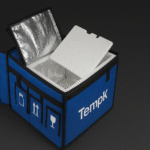
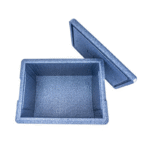
Check whether the existing qualification covers the actual payload, preparation, ambient exposure and duration. A supplier’s test with another load may not represent your shipment. WHO: qualification of shipping containers provides a framework for shipping-container qualification; the resulting evidence still needs to match the system in use.
Record the container, coolant, conditioning, separators and loading arrangement together. A lower purchase price or larger coolant quantity does not establish a better overall result.
Connect monitoring to a response
- Define how dispatch staff check the device and start recording.
- Specify who retrieves and reviews the data at receipt.
- Set product-specific escalation criteria through the responsible quality process.
- Preserve complete traces and relevant handling records for investigation.
- Hold affected product when required and obtain an authorized disposition decision.
Remote alerts can support intervention when the route and responsibilities allow it. They do not repair inadequate insulation, eliminate all delays or establish product release. Evaluate the response process as well as the technology.
Use corrective and preventive action
Corrective and preventive action, often called CAPA, connects a problem to its cause, a defined action and an effectiveness check. Assign the change, record what was implemented and compare later shipments with a relevant baseline.
Helpful decision tools
Check the details before you choose packaging
These quick tools can help you compare route risk, sizing needs, coolant choices, and packaging details before you request a quote.
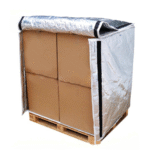
Box Liner & Pallet Cover Sizing
Check box liner and pallet cover sizing logic for insulated packaging projects.
Estimate sizingDry Ice Calculator
Estimate dry ice needs for frozen or ultra-cold shipments before packing.
Estimate dry iceInsulation Material Reference
Compare insulation material choices for different cold chain packaging needs.
Compare materialsFor example, if repeat failures occur during a receiving delay, evaluate revised receiving arrangements and sufficient thermal coverage of that delay. Do not declare success merely because the packaging specification changed; verify the subsequent outcome.
Measure results without hiding variability
Track excursion frequency using a defined denominator, hold and write-off outcomes, route and season, preparation deviations, damage, and data completeness. Separate confirmed product losses from shipments still under review. Include relevant total costs when comparing solutions.
Small or unrepresentative shipment counts can give a misleading improvement rate. State the period, number of shipments, route mix and event definition before claiming a reduction.
Frequently asked questions
Will more coolant eliminate loss?
No. It may not address delays, mishandling or missing records, and can increase overcooling risk.
Does AI monitoring guarantee safe delivery?
No. Alerts or prediction tools need reliable data and an effective operational response. They cannot replace product and packaging evidence.
Can a short excursion be ignored?
Use product-specific assessment and the authorized procedure. Do not invent a generic safe duration.
What should be improved first?
Start with recurrent failures that have credible evidence and significant product or patient consequences, then verify the action’s effect.
Build the study behind the change
Use the cold-chain transport validation guide to define supporting evidence before expanding a revised process.