Cold chain transport is the controlled movement of temperature-sensitive goods between two locations. A workable transport plan does more than name a vehicle or temperature band: it connects the product’s approved limits to every route leg, dwell period, handoff, packaging decision, monitoring point, contingency, and release record.
This guide focuses on that transport-planning task. For the broader concept, start with what cold chain means. For the full storage-to-delivery workflow, see how the cold chain process works.
1. Define the shipment before choosing transport
Transport design starts with the product and its quality requirements, not with a cooler, truck, or courier. Document the permitted temperature range, maximum journey time, sensitivity to freezing or heat, payload dimensions and mass, shipment value or criticality, and any orientation, shock, light, humidity, or security constraints. Use the product label, stability data, quality agreement, food-safety plan, or other approved specification as the source of truth.
Do not substitute a familiar temperature range for the product requirement. Two items described as “chilled” may have different tolerances, and the same item may need different controls when its pack size, route, season, or regulatory market changes.
Minimum shipment definition
- Product limits: target range, excursion limits, and other sensitivities.
- Payload: quantity, dimensions, thermal mass, and starting condition.
- Route: origin, destination, transport modes, hubs, customs, and last mile.
- Time: planned duration plus credible delay allowance.
- Evidence: records required for shipment release, customer acceptance, or audit.
2. Match the control method to each route leg
A route may combine a refrigerated vehicle, an airport warehouse, an aircraft hold, a parcel network, and an unrefrigerated final-mile van. Treating that journey as one uninterrupted environment hides the points where risk changes.
Active systems use powered heating or cooling, such as a qualified refrigerated vehicle or active air-cargo container. Passive systems use insulation and conditioned refrigerants inside a shipping container. A shipment can use both: passive packaging may protect the payload during transfers even when the main line-haul vehicle is temperature controlled.
For each leg, record who controls the environment, what equipment is used, how long the product may wait, how doors or containers are handled, and what happens if the planned service fails. A refrigerated truck is not by itself proof of control; loading conditions, airflow, set-point management, equipment condition, calibration, door openings, and handoffs still matter.
3. Turn the itinerary into a route risk profile
A route profile translates an itinerary into conditions a packaging or transport system must withstand. Review routine and worst-credible exposure rather than relying only on the scheduled transit time.
- Origin and destination seasonal temperatures.
- Dock, ramp, customs, security-screening, and sort-center dwell.
- Weekend, holiday, missed-connection, and border delays.
- Transfer points where powered control may be unavailable.
- Differences between outbound and return routes.
- Carrier service limits, cut-off times, and recovery options.
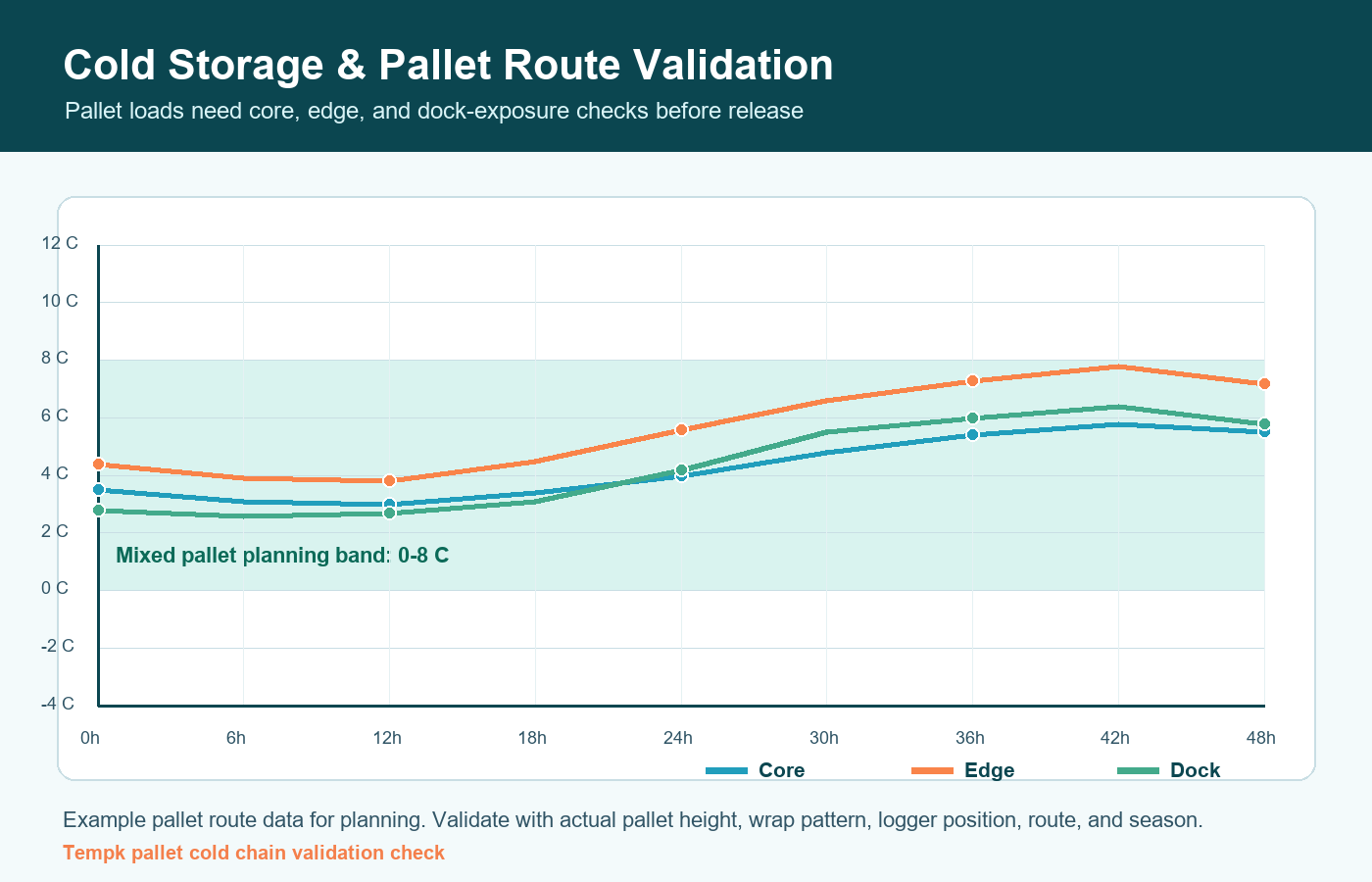
A practical first pass is the Route Risk Checker. Its output supports planning; it does not replace product-specific risk assessment or formal qualification.
4. Specify packaging as a complete system
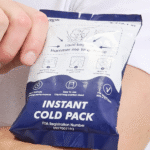
Passive packaging performance comes from the complete assembly: outer container, insulation, refrigerant type and quantity, payload, internal arrangement, void fill, closure, and conditioning procedure. Changing one element can change the thermal result.
A supplier’s component specification is useful, but it is not the same as evidence for your assembled shipper. Request clear packout instructions and define refrigerant conditioning, payload preconditioning, loading sequence, acceptable assembly time, and closure method. If you are still comparing formats, use the Packaging Selector to narrow the starting options, then confirm the final configuration with appropriate evidence.
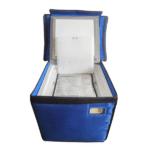
There is no universal hold time for a “cold-chain box.” Performance depends on the exact configuration and exposure profile. For a container-focused explanation, see the cold-chain box guide.
Helpful decision tools
Check the details before you choose packaging
These quick tools can help you compare route risk, sizing needs, coolant choices, and packaging details before you request a quote.
Ice Pack Calculator
Estimate gel ice pack quantity for chilled shipments and practical route planning.
Estimate ice packsPackaging Selector
Compare insulated packaging options by product, route, and temperature need.
Find packagingDry Ice Calculator
Estimate dry ice needs for frozen or ultra-cold shipments before packing.
Estimate dry ice5. Plan monitoring and every handoff
Monitoring answers what happened at the logger location; it does not by itself prove that every part of the payload stayed within limits. Choose sensors according to the product risk and the question the data must answer. Define device accuracy, calibration status, sampling interval, start and stop method, placement, time zone, alarm handling, data ownership, and retrieval responsibilities before dispatch.
Handoffs deserve the same detail. A shipment may remain thermally protected but become unreleasable if its seal, chain of custody, logger record, or receipt procedure is incomplete. At each transfer, specify who checks identity and condition, who records time and temperature, who has authority to accept or quarantine, and whom to contact when something is wrong.
6. Request evidence in proportion to the risk
Evidence should match the decision being made. A low-risk local delivery and a high-value international medical-product lane do not need identical documentation, but neither should rely on an unsupported claim.
| Evidence | What it can support | What to verify |
|---|---|---|
| Component data | Initial comparison of insulation, refrigerant, or equipment | Test method, conditions, date, and relevance to the proposed use |
| Complete-system qualification | Performance of a defined packout under defined profiles | Payload, configuration, conditioning, sensor map, acceptance criteria, and report approval |
| Vehicle or equipment qualification | Capability of an active transport environment | Mapping, calibration, maintenance, loading limits, set points, and seasonal conditions |
| Route profile or lane qualification | Exposure and handling conditions on the intended route | Representative seasons, dwell, transfers, delays, and change-control triggers |
| Shipment record | Review of one actual movement | Logger data, events, seals, handoffs, deviations, and receiving decision |
The WHO guidance on shipping-container qualification and its route-profiling supplement provide useful medical-product frameworks. Apply them within your organization’s quality system and the regulations that govern the product and market.
7. Treat an excursion as a quality decision
An alarm or out-of-range reading should trigger a documented response, not an automatic assumption that the product is safe or unusable. Protect the shipment from further exposure, identify and quarantine it when required, preserve the logger and handling records, and notify the designated quality or food-safety owner.
The release decision should consider the approved product limits, data quality, sensor location, duration and magnitude of the event, relevant stability or food-safety evidence, and any cumulative exposure. Record the decision, rationale, disposition, and corrective actions. Packaging staff or a carrier should not invent acceptance limits after an event.
8. Apply the right regulatory scope
Cold-chain transport is governed by the product, jurisdiction, mode, and parties involved. A single regulation does not cover every shipment.
- Medical products: the WHO good storage and distribution practices and applicable national rules support risk-based transport controls, documentation, qualification, and deviation handling. In the European Union, the GDP guidelines for human medicinal products address transport equipment, monitoring, mapping, qualification, and risk assessment.
- Food in the United States: the FDA sanitary transportation rule establishes requirements for covered shippers, loaders, motor and rail carriers, and receivers. Its scope and exemptions must be checked; it is not a universal air- or sea-freight rule.
- Air cargo: confirm the current applicable IATA Temperature Control Regulations, dangerous-goods requirements where relevant, airline instructions, and airport handling constraints for the shipment date and route.
Turn the applicable requirements into a lane-specific checklist with named owners and retained records. The Compliance Checklist Generator can help structure that review, but the governing authority and your quality team remain decisive.
9. Cold-chain transport release checklist
- Confirm the product specification and shipment-release criteria.
- Approve the payload, packout, conditioning, and loading instructions.
- Review the route, season, handoffs, dwell points, and delay allowance.
- Confirm carrier, vehicle, container, and facility responsibilities.
- Verify equipment maintenance, qualification, and calibration status where required.
- Place configured monitoring devices according to the approved plan.
- Provide deviation, emergency, and communication instructions.
- Check labels, documentation, seals, and chain-of-custody records.
- At receipt, inspect the shipment and review required data before release.
- Feed route events and deviations into change control and the next review.
Frequently asked questions
Is a refrigerated truck enough for cold chain transport?
Not on its own. The vehicle must be suitable for the product and route, correctly maintained and operated, and integrated with loading, airflow, monitoring, handoff, contingency, and receiving procedures. Some routes also need qualified passive protection during transfers.
Does a temperature logger prove the product remained protected?
A logger provides evidence for its position and configured measurement conditions. The conclusion depends on placement, calibration, sampling, data integrity, thermal mapping, and the product’s approved limits. One logger reading should not be generalized to every payload location without supporting evidence.
Can one qualified package be used on every route?
No. Qualification applies to a defined configuration and test profile. A new payload, packout, duration, climate, carrier network, or route may fall outside that evidence and require a documented assessment, additional testing, or requalification.
Bottom line: reliable cold chain transport is a controlled route, not a product label. Start with the shipment requirements, design for real handoffs and delays, require evidence that matches the risk, and make receiving and excursion decisions through the responsible quality or food-safety process.