


Run the coolant estimate
Use payload weight, box size, route time, and seasonal temperature before finalizing gel pack or PCM mass.
Tuna steaks are sensitive to warm dwell time, color change, odor transfer, and pressure marks. A useful packout keeps the product close to ice temperature, shortens uncontrolled pickup or receiving time, and keeps coolant from touching the steak surface or vacuum pack directly.
The coolant amounts below are starting ranges for planning. Final packout should be validated with the exact payload, insulation size, carrier lane, and season.
| Route condition | Temperature intent | Tempk packaging setup | Coolant planning range | Coolant position |
|---|---|---|---|---|
| Same-day premium delivery, 8-18 h | 0-2 C chilled | EPP shipper or insulated carton, sealed product bag, absorbent layer, odor barrier. | 0.7-1.3 kg conditioned gel packs or 0 C PCM for 1-3 kg payload. | Perimeter coolant. Keep frozen packs away from the steak face and vacuum seal edges. |
| Overnight route, 18-36 h | Near-ice route with short dwell | Thicker insulation, tighter void fill, leak liner, temperature logger near product. | 1.4-2.4 kg gel packs or PCM for 1-3 kg payload. | Use side plus top coolant separated by board or pouch; prevent pressure dents. |
| Hot lane or remote delivery, 36-48 h | Validated chilled lane only | Pre-qualified shipper size, reduced headspace, route risk check before launch. | 2.5-4.0 kg gel packs or PCM for 1-3 kg payload. | If validation cannot hold target, upgrade insulation or service level before adding uncontrolled coolant mass. |
For a tighter first estimate, use the Ice Pack Calculator and then compare coolant families in the Coolant & PCM Reference.
Small layout changes can decide whether the receiver sees a clean chilled seafood parcel or a wet, pressured, partially frozen product.
Keep tuna cold before handoff. A warm staging table can create more risk than the parcel transit itself.
Add a divider between coolant and product, then use void fill that prevents movement without crushing steak edges.
Do not tape the logger to the coolant. The receiver needs to see the environment the tuna experienced.
Check receiving temperature, surface color, odor, package leaks, vacuum seal condition, and evidence of coolant contact.
Use these receiving checks when adjusting coolant quantity, insulation thickness, or internal separation.
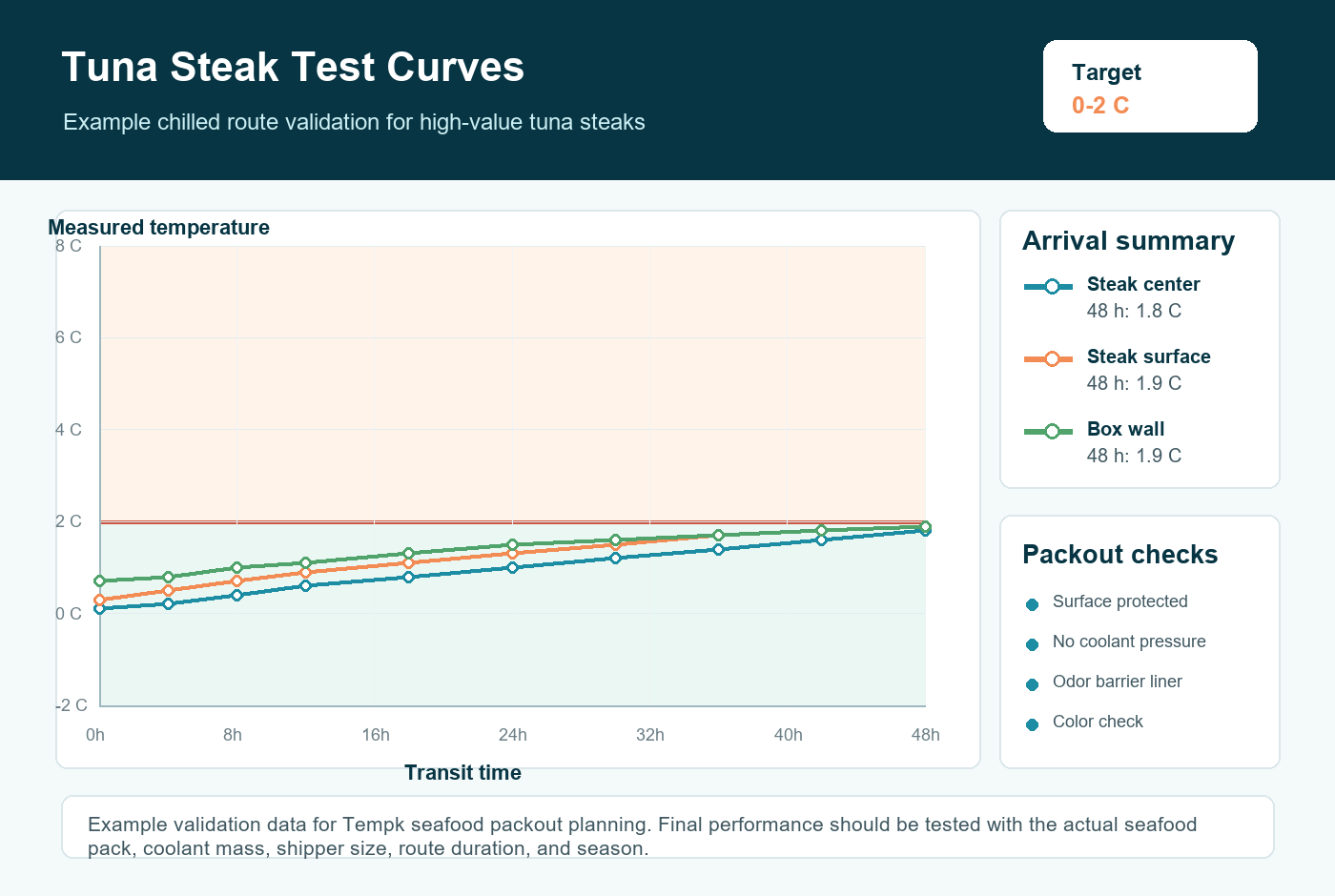
Use the product page for the packaging logic, then use the tools to size the first trial packout before a lane test.
Use payload weight, box size, route time, and seasonal temperature before finalizing gel pack or PCM mass.
Compare frozen gel packs, conditioned gel packs, and 0 C PCM so the product is cooled without direct freeze injury.
Review lane time, pickup dwell, last-mile delay, and receiver process before launch.
Share the seafood form, payload weight, box size, service level, origin temperature, lane season, and receiving window. Tempk can help compare insulation, coolant mass, placement, and validation steps.
Custom packout support
For fixed carton sizes, payload limits, branding requirements, seasonal lanes, or validation targets, Tempk can adapt this solution into a custom cold-chain packout.