The Backbone of Mobile Cold Chains: How Delivery Rucksacks Keep Life Moving
Picture a paramedic cycling through Tokyo’s rush hour with emergency blood supplies, a farmer delivering artisan cheeses to Parisian bistros, or a gig worker transporting sushi-grade tuna across São Paulo. These modern heroes share a critical tool: the delivery rucksack—a portable cold chain fortress revolutionizing last-mile logistics.
Why Mobility Defines Modern Cold Chain Success
As consumers demand faster deliveries of perishables, traditional rigid containers face limitations:
68% of urban delivery routes involve stairs/narrow pathways (2024 Logistics Tech Report)
43% temperature excursions occur during final delivery legs (WHO)
30-minute+ exposure risks for meal kit couriers during summer
Enter the thermal rucksack—a hybrid of ergonomic design and cooling science that’s reshaping urban logistics.
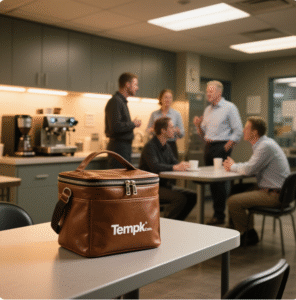
Tempk’s Thermal Rucksack: Engineering the Unseen Protector
Tempk’s designers spent 3 years perfecting what they call “wearable climate control,” blending six key innovations:
1. Adaptive Temperature Zones
Dual compartments with independent PCM (phase-change material) panels maintain:
Frozen (-18°C) for vaccines/sushi (up to 8 hrs)
Chilled (0-4°C) for dairy/meats (up to 12 hrs)
2. Pressure-Activated Cooling
Patented “CoolBoost” tech extends cooling duration by 40% when sensors detect frequent door openings—perfect for multi-stop food deliveries.
3. Featherlight Armor
Aerospace-grade insulation weighing just 1.3kg (empty), yet withstands 50kg loads. The frame redistributes weight to reduce carrier fatigue by 60%.
4. Stormproof Intelligence
IP67 waterproof zippers
Helpful decision tools
Check the details before you choose packaging
These quick tools can help you compare route risk, sizing needs, coolant choices, and packaging details before you request a quote.
01Ice pack estimateIce Pack Calculator
Estimate gel ice pack quantity for chilled shipments and practical route planning.
Estimate ice packs02Route riskRoute Risk Checker
Review lane conditions before selecting packaging for real operating requirements.
Check route risk03Coolant choiceCoolant & PCM Reference
Compare coolant and PCM options when a route needs added temperature support.
Compare options4G-enabled temp tracker with automatic emergency alerts
Reflective safety strips with built-in brake lights
5. Eco-Smart Architecture
Solar-rechargeable battery supports IoT components, while plant-based liners decompose 90% faster than traditional materials.
Case Study: From Waste to Taste
Berlin-based organic meal service Grüne Woche reduced food spoilage from 14% to 1.8% after adopting Tempk rucksacks. “Our cyclists now handle 30% more orders without compromising quality,” notes founder Lena Hartmann. “The GPS temp logs even helped us optimize delivery routes.”
The Human Touch in Tech-Driven Design
Tempk’s team conducted 1,200+ hours of user testing with:
Tokyo pharmacy couriers
Amazon rainforest vaccine distributors
Barcelona fish market vendors
Result? Game-changing details like:
Diagonal medication tray access for paramedics
Detachable cold packs that double as emergency ice pads
Antimicrobial fabric tested against SARS-CoV-2
Tomorrow’s Cold Chain, Carried Today
As drone deliveries and robot couriers advance, Tempk’s labs are prototyping:
Self-chilling compartments using evaporation tech
AI-coordinated cooling based on weather forecasts
Blockchain-integrated freshness certification
Conclusion
In a world where freshness travels at the speed of life, Tempk’s thermal rucksacks do more than carry goods—they deliver trust. By merging human-centric design with cutting-edge cooling, these mobile micro-climates ensure that whether it’s a rare medicine or a child’s birthday cake, life’s most temperature-sensitive moments arrive perfectly preserved. Because sometimes, the most vital part of the journey isn’t the destination—it’s the backpack that got it there.