Do not use an ordinary household or commercial freezer as the routine storage solution for solid dry ice. A freezer does not turn carbon dioxide gas back into dry ice or stop sublimation. Store solid CO₂ in a vented insulated container intended for dry ice, in a well-ventilated controlled area, and follow the supplier’s Safety Data Sheet and the site’s safety procedure. Reusable water, gel, phase-change material (PCM) and hydratable packs require different storage and conditioning instructions.
Scope of this guide: this page covers storage and inventory control before dispatch. It does not estimate shipment hold time and it does not explain emergency freezer cooling during a power outage.

Identify the coolant before deciding where to store it
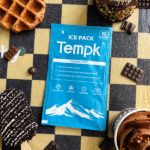
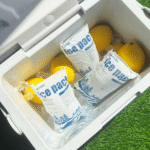
The sales name “dry ice pack” does not establish what is inside a product. Read the label, specification and applicable safety information before assigning a storage location. Solid carbon dioxide is a consumable cryogenic material. A sealed gel pack, a PCM pack and a water-activated sheet are reusable components only when their construction and supplier instructions permit reuse.
| Material or product | Where and how to store it | What to verify before use |
|---|---|---|
| Solid CO₂ dry ice | Use a vented insulated container intended for dry ice in a well-ventilated controlled area. Never use an airtight container. | Identity, remaining usable mass, container condition, elapsed storage time and dispatch requirement. |
| Sealed water or gel pack | Protect the enclosure from puncture and contamination. Condition it using the supplier’s specified method. | Seal integrity, leakage, swelling, contamination and required starting condition. |
| PCM pack | Use the documented conditioning temperature and procedure for that PCM. A generic freezer setting is not automatically suitable. | Correct product identity, conditioning state, enclosure condition and packout instruction. |
| Hydratable sheet | Keep unused sheets clean and dry unless the product instruction specifies activation. Store activated sheets only as the supplier permits. | Activation status, enclosure integrity, contamination and whether reuse is allowed for that exact product. |
Keep these inventories physically or electronically separated. A shared shelf labelled only “cold packs” can conceal a material substitution, an unconditioned pack or an unidentified return.
Can you store dry ice in a freezer?
For routine storage, an ordinary freezer is not the correct control. Solid CO₂ sublimates directly into gas at temperatures far below the operating range of normal food or commercial freezers. The freezer therefore does not recharge the dry ice or restore material already lost.
A closed freezer or walk-in space may also allow released CO₂ to accumulate if ventilation is inadequate. The CDC dry ice safety guide recommends a container that allows gas release, such as a vented cooler, and a well-ventilated room. The NIH cryogen safety sheet likewise warns against storing dry ice in tightly sealed containers or unventilated confined areas.
If a facility uses specialized equipment or a purpose-designed dry ice storage system, follow its manufacturer instructions, the dry ice supplier’s SDS and the site’s environmental health and safety approval. Do not assume that a low temperature setting alone makes equipment suitable.
Where should solid dry ice be stored?
A suitable operating arrangement has four controls:
- Ventable containment: use an insulated container designed to release gas. Do not latch, tape or modify it into an airtight enclosure.
- Room ventilation: keep the container in a well-ventilated area where carbon dioxide cannot accumulate. Do not treat a walk-in refrigerator, vehicle, small storage room or environmental chamber as safe merely because its door can be opened.
- Controlled access: restrict handling to trained personnel using the PPE and procedure required by the SDS and site risk assessment.
- Protected placement: keep the container away from incompatible surfaces, traffic damage and locations where released gas could collect or affect occupied areas.
The U.S. FDA’s current inspection manual states that dry ice should be stored and handled in well-ventilated areas, should not be stored in sealed containers and requires suitable protective equipment. These are safety controls, not a claim that one container will preserve a fixed amount for a guaranteed number of hours.
Use a receive-to-dispatch dry ice inventory procedure
Manage solid CO₂ by actual available mass and elapsed time rather than by the number of unopened cartons purchased. The useful quantity begins declining after receipt, including during staging, packing queues and carrier delays.
- Confirm the delivery. Record the supplier, receipt time, material identity and received mass using the site’s approved method.
- Inspect the storage arrangement. Verify the vented container, storage area, ventilation and access controls before loading.
- Allocate by dispatch need. Reserve material against a defined shipment or operating task; do not assume purchase mass equals packing mass.
- Check before packing. Measure or otherwise verify the usable material available at the point of use.
- Record deviations. Note unexpected loss, a delayed pickup, damaged containment, an alarm or any period outside the approved storage arrangement.
- Release or escalate. Pack only when the available mass and the complete packout instruction meet the defined requirement. Escalate shortages or uncertain handling conditions instead of compensating by guesswork.
Use the Dry Ice Calculator as a planning aid, then verify the actual packout, route, payload and usable dry ice at dispatch. A calculator result is not a substitute for a qualified shipping configuration or a site safety procedure.
Decide what to do with dry ice left after packing
Remaining solid material has not been “refrozen”; it is simply material that has not yet sublimated. It may be allocated to another compatible task only when its identity is known, the container and handling history are acceptable, sufficient mass remains and the site procedure permits that use.
Helpful decision tools
Check the details before you choose packaging
These quick tools can help you compare route risk, sizing needs, coolant choices, and packaging details before you request a quote.
Ice Pack Calculator
Estimate gel ice pack quantity for chilled shipments and practical route planning.
Estimate ice packsInsulation Material Reference
Compare insulation material choices for different cold chain packaging needs.
Compare materialsRoute Risk Checker
Review lane conditions before selecting packaging for real operating requirements.
Check route risk| Observation | Inventory decision |
|---|---|
| Known material, controlled handling and measurable remaining mass | Hold for a defined compatible use under the approved storage procedure. |
| Unknown identity, mixed material or uncertain exposure | Quarantine; do not release it to a shipment. |
| Damaged or unsuitable storage container | Move personnel away from risk and follow the site’s incident procedure; do not improvise a sealed replacement. |
| Material is no longer required | Allow it to sublimate only through the approved disposal procedure in a secure, well-ventilated location. Do not place it in a sink, toilet or closed waste container. |
For the material distinction, see why solid dry ice cannot be refrozen in an ordinary freezer. For dispatch timing, use the separate guide to account for dry ice loss before dispatch.
Control returned reusable packs separately
Reusable cold packs do not belong in the same inventory status as solid CO₂. A returned pack must pass the inspection and cleaning steps defined for its exact enclosure and formulation before it can be conditioned again.
| Status | Minimum control | Release rule |
|---|---|---|
| Returned / awaiting inspection | Identify the batch or unit and isolate it from ready stock. | Do not condition or pack until inspection is complete. |
| Rejected or unidentified | Segregate leakage, puncture, damaged seals, unknown products and unacceptable contamination. | Dispose of or investigate according to the approved procedure. |
| Accepted / awaiting cleaning | Use only a cleaning method compatible with the pack material and intended application. | Release only after the required cleaning and drying checks. |
| Conditioning | Apply the specified temperature, duration, loading arrangement and equipment procedure. | Confirm the defined starting condition; do not rely only on an “overnight” label. |
| Ready for packing | Protect from damage and distinguish from unprepared stock. | Issue only to the matching packout instruction. |
The reusable cold-pack return-to-service checklist covers inspection and retirement decisions in more detail. Teams evaluating a reusable alternative can also review the gel ice pack category; the required conditioning and performance evidence still depend on the selected product and full packout.
Match storage capacity to the dispatch schedule
Storage control fails when the receiving quantity, preparation equipment and packing schedule are planned separately. Review expected receipt time, shift coverage, container capacity, freezer loading for reusable packs, dispatch cut-off and credible carrier delays as one workflow.
For reusable packs, a denser freezer load may require a different conditioning time or arrangement. For solid CO₂, a longer queue means additional sublimation before packing. In both cases, verify the defined starting condition rather than assuming the original schedule remains valid after volume changes.
Frequently asked questions
Can I store dry ice in my freezer?
Do not use an ordinary freezer as the routine storage method. It does not stop sublimation or recreate dry ice, and an enclosed or poorly ventilated area can allow CO₂ to accumulate. Use a vented insulated dry ice container in a well-ventilated controlled area under the supplier’s SDS and site procedure.
Where can I store dry ice before a shipment?
Use an insulated container designed to vent gas, located in an approved well-ventilated area with controlled access. Confirm the container, room and work procedure with the supplier’s SDS and the responsible safety team.
How long can dry ice be stored?
There is no universal storage time. Loss depends on the amount and form of dry ice, container, ambient conditions, openings and elapsed time. Plan from supplier receipt to dispatch and verify the usable mass when packing.
Can leftover dry ice be reused?
Remaining known material may be assigned to another compatible use if the approved procedure permits it and sufficient mass remains. That is use of a remaining consumable, not refreezing or restoring the original amount.
Are all products called “dry ice packs” made from solid CO₂?
No. The term is also used for hydratable sheets, gel packs and other reusable coolants. Verify the actual material before deciding how to store, condition, reuse or dispose of it.
Keep the page roles separate
Use this guide for pre-dispatch storage, inventory status and handling decisions. Use the solid CO₂ duration guide for depletion and dispatch timing, and the reusable-pack checklist for return-to-service decisions. Keeping those tasks separate prevents a storage instruction from being mistaken for a shipment hold-time claim.