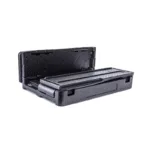
Regular ice and dry ice can be present in a suitably designed cooler, but mixing them is not automatically a safe or effective shipping method. Check dry-ice compatibility, gas release, meltwater containment and the product’s temperature limits. For commercial cold-chain shipments, evaluate the mixed arrangement as its own packout.
Understand the two coolants
Regular ice is frozen water and produces meltwater as it warms. Dry ice is solid carbon dioxide and releases gas as it sublimates. They create different containment and handling needs. Combining them does not produce a universal temperature or predictable shipping duration.
Water contacting dry ice can accelerate sublimation. Do not add water to make a shipping cooler colder or use gas bubbling as a demonstration during packing. CO₂ accumulation is a serious hazard; see CDC: carbon dioxide exposure associated with dry ice.
Decide whether the product needs this combination
| Product concern | Decision point |
|---|---|
| Freeze-sensitive load | Avoid assuming that separation alone prevents freezing; measure cold spots. |
| Frozen load | Confirm the product limit and validate the complete loading arrangement. |
| Moisture-sensitive cartons | Plan for meltwater and condensation without sealing in CO₂. |
| Mixed chilled and frozen goods | Separate temperature requirements may need separate qualified systems. |
For food, packaging should prevent unwanted contact with coolant or contaminated meltwater. For medicines, use the labeled transport conditions and approved handling procedure. Do not infer acceptability from a product remaining visibly frozen or cool to the touch.
Keep the gas path open
Use only a container intended for dry ice and the manufacturer’s specified closure and arrangement. A leakproof pouch intended for water ice may be unsuitable for containing dry ice. Never put solid CO₂ in a sealed bottle, bag or inner vessel.
Maintain appropriate ventilation around the shipment during preparation, storage and receipt. For aircraft or other regulated transport, check 49 CFR 173.217: carbon dioxide, solid and the carrier’s current requirements. A mixed-coolant packout still contains dry ice and does not escape the applicable handling rules.
Helpful decision tools
Check the details before you choose packaging
These quick tools can help you compare route risk, sizing needs, coolant choices, and packaging details before you request a quote.
Insulation Material Drop Resistance
Review drop resistance and handling factors before choosing insulation materials.
Check resistanceCoolant & PCM Reference
Compare coolant and PCM options when a route needs added temperature support.
Compare optionsBox Liner & Pallet Cover Sizing
Check box liner and pallet cover sizing logic for insulated packaging projects.
Estimate sizingTest the configuration you will actually ship
- Record both coolant quantities and their initial state.
- Document the locations of dry ice, water ice, payload and separators.
- Check the worst expected warm and cold positions using suitable sensors.
- Include representative ambient exposure, duration and any openings.
- Assess temperature records, moisture effects and packaging condition against predetermined criteria.
If a mixed arrangement is changed later, do not carry over a hold-time claim from the earlier test without a justified assessment. More coolant can change local temperatures and available payload space.
Frequently asked questions
Does regular ice make dry ice last longer?
There is no universal answer. Heat transfer, water contact and the configuration affect sublimation. Measure the intended arrangement.
Can I seal the cooler to stop gas loss?
No. Dry ice needs safe gas release, and the surrounding space needs suitable ventilation.
Should I use both coolants for every frozen shipment?
No. Choose the configuration that meets the product requirements with evidence; adding a second coolant introduces additional variables.
Estimate quantity separately from performance
See estimating dry-ice quantity, then verify the product temperatures in your selected packout.