Use actual solid carbon dioxide (CO₂) dry ice in a soft cooler bag only when the manufacturer explicitly approves dry ice for that exact model and explains the required configuration. A zipper, waterproof liner or thick-looking insulation does not prove compatibility. If the manual is silent, treat the answer as no until the manufacturer confirms the bag’s materials, closure and gas-release design can handle it.
This guide is about flexible soft coolers, not all coolers. Soft bags can fold, flex and depend on stitched or welded seams, liners and zippers that may behave differently at dry ice temperature. The decision also depends on the payload: a cooling method suitable for frozen food can damage a chilled or freeze-sensitive product.
Start With a Go/No-Go Decision
Do not begin by asking how many pounds of dry ice will fit. First establish whether the bag is approved for actual solid CO₂ and whether the surrounding setting can be ventilated. Use this decision table before buying or packing dry ice.
| What the manufacturer says | Decision | Next step |
|---|---|---|
| Dry ice is explicitly prohibited | Do not use it | Choose a compatible hard container or a coolant suited to the required temperature. |
| The manual says nothing about dry ice | Do not assume compatibility | Ask for model-specific written guidance or select another container. |
| Dry ice is explicitly permitted | Conditional go | Follow the manufacturer’s placement, separation, quantity, closure and inspection instructions. |
| The product must remain chilled or cannot freeze | Reconsider the coolant | Assess a gel pack or suitable PCM in a tested configuration instead. |
A product-specific answer matters. For example, YETI states that its Hopper soft coolers are not compatible with dry ice, even though some of the company’s hard coolers are. This is evidence that brand reputation, insulation thickness or price cannot replace the instructions for the exact model.
Why Soft Cooler Bags Need a Separate Safety Check
Liners, seams and closures may have different limits
Dry ice is about −78.5°C (−109.3°F). At that temperature, a flexible liner, adhesive, coating, foam, welded seam, stitched joint or zipper may stiffen, crack, separate or lose its seal if the design was not intended for the exposure. A cardboard layer or towel may reduce direct contact, but it cannot certify the underlying bag or closure.
A zipper gap is not an engineered vent
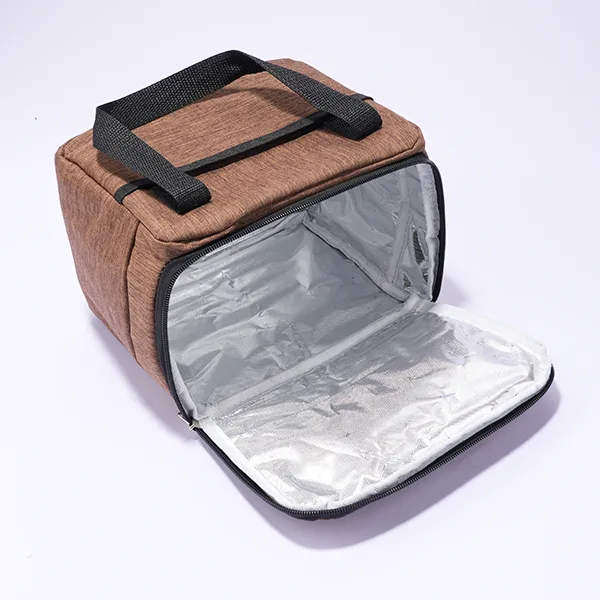
Solid CO₂ sublimates into gas. The package must not trap that gas, but leaving a zipper partly open is not the same as a manufacturer-approved gas-release design. It can close during handling, become obstructed or expose the contents. Do not punch holes, cut the liner or modify a soft cooler to create a homemade vent; that can weaken insulation, damage the bag and still fail to control gas release.
Package venting and room ventilation solve different problems
A non-airtight package helps prevent pressure buildup inside the cooler. Ventilation around the package helps prevent carbon dioxide from accumulating where people breathe. One does not replace the other. The CDC dry-ice safety guidance calls for a container that allows gas release and a well-ventilated area.
Check Five Conditions Before Any Approved Use
| Check | Evidence to obtain | Stop condition |
|---|---|---|
| Model approval | Current manual or written manufacturer confirmation for dry ice | No model-specific approval |
| Material exposure | Permitted placement, barrier and contact conditions | Unknown liner, seam, foam or closure tolerance |
| Gas release | Approved non-airtight closure or venting method | Sealed bag or improvised opening |
| Payload temperature | Product limits and evidence from the intended packout | Freeze-sensitive product or uncontrolled cold spots |
| Use environment | Ventilated handling and transport plan | Confined room, closed vehicle or unattended parked vehicle |
The cold source must also be identified correctly. In product listings, “dry ice pack” may describe a reusable gel, hydrate or phase-change pack rather than solid CO₂. Those products do not sublimate into carbon dioxide, so their handling rules differ. Check the product label and safety data sheet instead of deciding from the name.
How to Handle Dry Ice When the Bag Is Specifically Approved
Manufacturer approval is the starting point, not permission to improvise. Keep the supplied instructions with the packout and confirm they apply to the current model.
Protect hands, eyes and the bag
Wear insulated gloves intended for very cold materials and use eye protection. Direct skin contact can cause severe frostbite, so do not touch dry ice with bare skin or place it where children or pets can reach it. Use only the separation and placement arrangement specified for the cooler; do not assume that any cloth, towel or newspaper creates adequate protection.
Inspect before and after use
Before packing, look for worn zipper tracks, damaged seams, punctures, delamination, brittle areas or a liner pulling away from the insulation. Stop using the bag with dry ice if its approved gas-release path is blocked or if the materials change shape, crack or separate. After use, allow remaining dry ice to sublimate according to the dry ice disposal guide before cleaning or storing the bag.
Control the surrounding area
Keep the cooler in a well-ventilated location and never leave dry ice in a parked passenger vehicle. Carbon dioxide is colorless and odorless; the NIOSH carbon dioxide guide lists headache, dizziness, breathing difficulty, unconsciousness and asphyxia among possible effects. If anyone develops symptoms, move to fresh air and seek emergency assistance rather than entering or remaining in the affected space.
Helpful decision tools
Check the details before you choose packaging
These quick tools can help you compare route risk, sizing needs, coolant choices, and packaging details before you request a quote.
Insulation Material Drop Resistance
Review drop resistance and handling factors before choosing insulation materials.
Check resistanceCoolant & PCM Reference
Compare coolant and PCM options when a route needs added temperature support.
Compare optionsInsulation Material Reference
Compare insulation material choices for different cold chain packaging needs.
Compare materialsChoose the Coolant From the Required Temperature
Dry ice is not automatically the “strongest” or best answer. It is an ultra-cold source for compatible frozen applications. A chilled payload may need a different phase-change range and protection from freezing.
- Chilled food, groceries or routine delivery: consider conditioned gel ice packs or water-based packs in a tested arrangement.
- Freeze-sensitive medicine or biological material: use a documented system matched to the product label, monitoring plan and excursion procedure.
- Frozen contents: use a dry-ice-compatible container and validate the complete packout rather than forcing solid CO₂ into an unapproved soft bag.
- Reusable last-mile delivery: compare soft thermal bags with the appropriate conditioned coolant, cleaning method and route duration.
If dry ice is justified and the container is compatible, the Dry Ice Calculator can provide a starting estimate for a frozen shipment. Its result is not compatibility approval or thermal validation.
Air Travel Adds a Separate Rule Set
Soft-cooler compatibility does not establish airline acceptance. For U.S. passenger baggage, the FAA PackSafe dry ice page currently allows up to 2.5 kg (5.5 lb) per package and passenger for perishables, requires airline approval, prohibits airtight packaging and requires specified marking for checked baggage. Airlines may be more restrictive, and rules can change.
Confirm the airline before travel and check the requirements that apply to the departure, connection and destination. A bag that cannot meet both its manufacturer’s instructions and the applicable transport rules is not an acceptable package.
Common Mistakes to Avoid
- Assuming “waterproof,” “leakproof” or “heavy duty” means dry-ice compatible.
- Treating a zipper opening as a reliable vent or cutting holes into the bag.
- Placing a soft cooler inside another sealed tote, trunk or compartment.
- Using a universal 18- or 24-hour hold-time claim without the amount, payload, ambient profile and test result.
- Using solid CO₂ for a chilled product without assessing freezing risk.
- Confusing a reusable dry ice-style pack with actual solid carbon dioxide.
For broader container selection and hard-cooler questions, use the general dry ice cooler safety guide. For a compatible system that has already passed the go/no-go check, see the separate dry ice packing guide.
Frequently Asked Questions
Can I put dry ice in any insulated soft cooler?
No. Insulation alone does not prove the liner, foam, seams, closure and gas-release design are suitable. Use dry ice only when the manufacturer approves it for the exact model.
Can I wrap dry ice in a towel first?
A wrap may reduce direct contact, but it does not make an unapproved bag compatible and does not control gas in the surrounding area. Follow the model-specific instructions.
Can I put dry ice in a YETI Hopper?
No. YETI’s current Hopper FAQ states that Hopper soft coolers are not compatible with dry ice. Follow the latest instructions supplied with the product.
Are gel packs safer for a soft cooler?
They avoid CO₂ gas release and are commonly used in soft coolers, but the coolant must still be conditioned and arranged for the required product temperature. “Safer” does not mean every gel pack suits every payload.
Page Scope and Final Decision
This page addresses the unique material, seam, zipper and closure questions of soft cooler bags. It does not replace the general cooler decision guide, a detailed packout design or a dry ice quantity calculation.
The practical rule is simple: explicit model approval, an approved gas-release method, adequate surrounding ventilation and a payload that can tolerate the temperature are all required. If any one of those conditions is missing, choose another coolant or a container designed for the job.