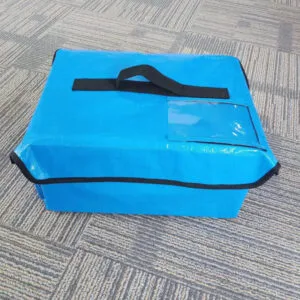
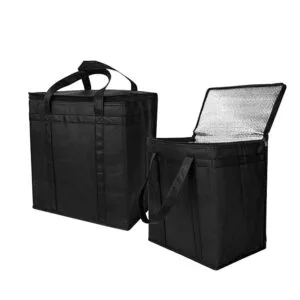
A “dry ice pack” is not necessarily dry ice. Dry ice is solid carbon dioxide (CO₂). By contrast, many products sold as dry ice packs are hydratable sheets, gel packs or phase-change-material (PCM) packs that are frozen before use and contain no solid CO₂. Identify the material first; then choose it from the product temperature limits, route, package and transport rules.
The name on a sales page is not enough to classify a coolant. Ask for the product specification, use instructions and Safety Data Sheet (SDS), where applicable. If the material is solid CO₂, treat it as dry ice. If it is a sealed or hydratable coolant pack, use the manufacturer’s composition, conditioning and transport information rather than assuming that “dry ice” in the product name describes its chemistry.
Why the phrase “dry ice pack” causes confusion
Buyers use the phrase for at least three different things: a package that physically contains dry ice, a reusable frozen coolant pack marketed as a dry-ice alternative, or a hydratable sheet intended for frozen shipments. Those products do not share one temperature, composition or transport classification.
Use unambiguous names in specifications and work instructions:
- Solid carbon dioxide / dry ice: the substance is CO₂ in solid form.
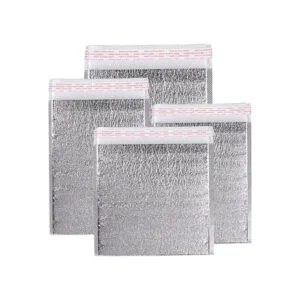
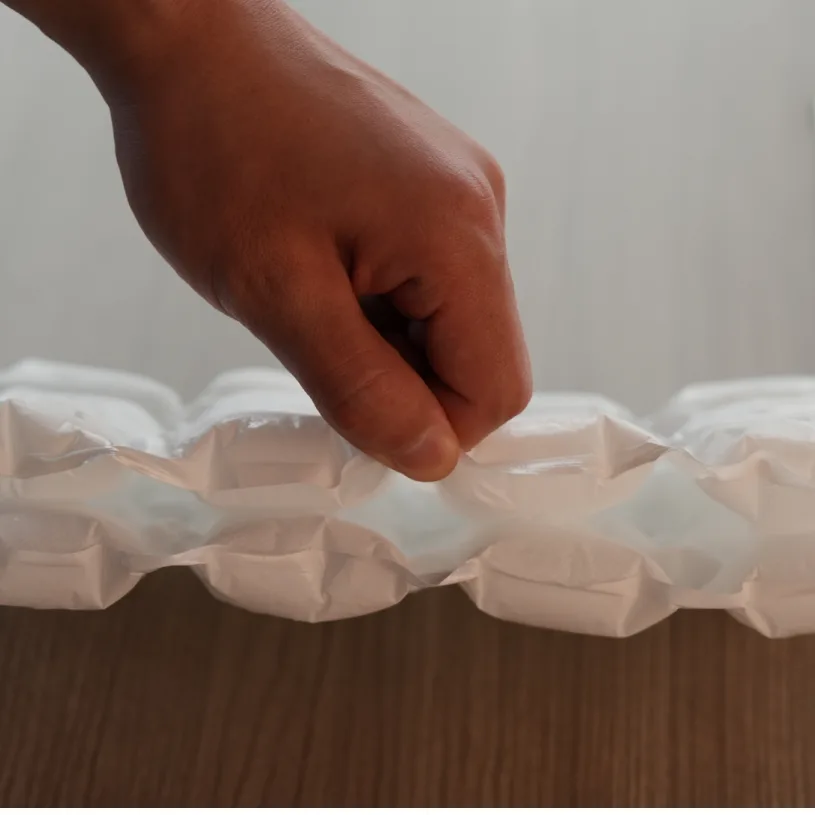
- Hydratable frozen coolant sheet: a cell-based sheet is hydrated and frozen according to its instructions.
- Gel pack: a sealed flexible pack whose formulation must be confirmed from the supplier’s documents.
- PCM pack: a pack selected for a specified phase-change range; the exact formulation and conditioning method are product-specific.
This naming step prevents a purchasing team from ordering one material while the packaging instruction, carrier booking or warehouse team prepares for another.
Dry ice pack vs dry ice: the practical differences
| Decision point | Hydratable, gel or PCM “dry ice pack” | Dry ice |
|---|---|---|
| Identity | A supplier-defined coolant pack; composition varies by product | Solid carbon dioxide, UN 1845 |
| Thermal behavior | Freezes and later warms or melts according to its formulation | Sublimates directly from solid CO₂ to gas |
| Temperature basis | Use the documented conditioning method and performance data for the exact pack | Dry ice itself sublimates at about −78.5°C (−109°F), but payload temperature still depends on the complete packout |
| Gas release | A conventional sealed or hydratable coolant pack does not generate CO₂ by sublimation | Releases CO₂ gas; packaging must permit gas release |
| Handling | Follow the product instructions and inspect for leakage or damage | Protect skin and eyes from cold contact and control CO₂ exposure in enclosed areas |
| Transport review | Check the exact product’s SDS and transport information; do not assume every pack is unregulated | Air transport triggers dry-ice packaging, communication and carrier-arrangement requirements |
| After use | May be reusable if the manufacturer allows it and the pack passes inspection | Is consumed as it sublimates |
The temperature of the cold source is not the same as the temperature of the product. Direct contact, separation, insulation, coolant mass, payload mass and placement all affect the temperature seen by the cargo. A colder material is not automatically the safer choice.
Choose from the cargo requirement, not the coldest option
Start with the cargo’s approved temperature limits, including the lowest allowable temperature. A freeze-sensitive payload can be damaged by direct contact with a deeply frozen coolant even when the average box temperature looks acceptable. A frozen payload may need a different approach from an ultra-cold payload.
| Shipment situation | Starting direction | What must be verified |
|---|---|---|
| Chilled or freeze-sensitive product | Review a gel or PCM pack matched to the approved range | Phase-change range, conditioning, contact protection and cold-spot risk |
| Frozen food or another frozen payload | Compare a frozen coolant pack with a dry-ice-compatible design | Product limits, route time, delay allowance, insulation and representative testing |
| Deep-frozen or ultra-cold requirement | Review dry ice only if the product, complete package, carrier and route permit it | Dry-ice mass and placement, venting, handling, transport communication and receiving controls |
| Air or expedited route | Confirm the material identity before booking | Carrier acceptance and the current rules for the exact origin, destination and contents |
| Reusable distribution loop | Review a reusable pack and return process | Inspection criteria, cleaning, reconditioning and retirement rules |
Do not select a coolant from a generic one-day or multi-day promise. Hold time belongs to a complete configuration under stated conditions, not to the coolant name alone.
Use a five-step selection process
- Define the payload limits. Record the acceptable temperature range, freeze sensitivity, starting temperature, payload mass and any product-specific restrictions.
- Identify the coolant. Record the manufacturer, product code, composition description, conditioning instructions, SDS or transport classification, and whether the pack is approved for reuse.
- Describe the whole route. Include packing, pickup, staging, transport, transfer, customs or other dwell, delivery and a credible delay allowance.
- Build the complete packout. Specify insulation, usable internal space, coolant mass and position, payload separation, void control, closure and—in a dry-ice system—the intended gas-release path.
- Test and release the configuration. Use representative payload, conditioning and ambient profiles; place sensors where hot and cold risks are credible; then freeze the approved bill of materials and work instruction.
The Packaging Selector can help narrow the packaging family, but its result is a starting point rather than a validated packout.
Dry ice adds hazards and transport controls
The U.S. Occupational Safety and Health Administration lists carbon dioxide as subliming at −109°F, approximately −78.3°C. Contact with such a cold material can injure skin, while the released gas can accumulate where ventilation is inadequate. Use suitable handling controls and never place dry ice in an airtight package.
Helpful decision tools
Check the details before you choose packaging
These quick tools can help you compare route risk, sizing needs, coolant choices, and packaging details before you request a quote.
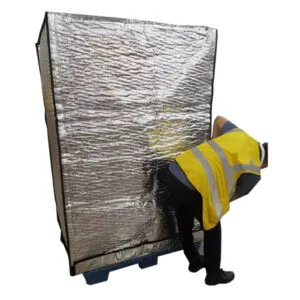
Box Liner & Pallet Cover Sizing
Check box liner and pallet cover sizing logic for insulated packaging projects.
Estimate sizingInsulation Material Reference
Compare insulation material choices for different cold chain packaging needs.
Compare materialsRoute Risk Checker
Review lane conditions before selecting packaging for real operating requirements.
Check route riskFor U.S. transport by aircraft, 49 CFR 173.217 requires packaging designed to release carbon dioxide gas and requires the shipper to make arrangements with the operator for each shipment. The FAA dry-ice fact sheet also explains that expedited shipments may enter air transport and that carrier instructions apply in addition to the regulation.
A coolant pack should not be classified by contrast alone. “Not dry ice” does not automatically mean non-hazardous, suitable for air, food-contact safe or approved for a specific product. The FAA advises shippers to use the manufacturer’s SDS and transport information when determining whether a product is regulated. Confirm the exact material rather than relying on color, flexibility or a marketing label.
What each related Tempk page is responsible for
This page owns the comparison and first selection decision. After choosing a direction, continue with the page that matches the next task:
- Review the available hydratable frozen coolant sheet formats when that product family fits the shipment.
- Use the coolant-pack preparation and release guide to control product identity, conditioning and substitutions.
- Use the dry-ice packaging design guide for insulation, gas release, sensor placement and thermal verification.
- Use the dry-ice packaging and carrier-acceptance checklist when preparing a FedEx shipment.
Keeping these tasks separate prevents a comparison page from becoming an incomplete packing instruction.
Questions buyers commonly ask
Is a dry ice pack the same as dry ice?
Not necessarily. The phrase is ambiguous. Dry ice is solid CO₂; a product marketed as a dry ice pack may instead be a hydratable, gel or PCM coolant. Confirm the product documents.
Can a hydratable or gel pack replace dry ice?
Sometimes, but not by name alone. It must meet the cargo’s temperature limits in the proposed package for the full route and delay allowance. A validated substitution requires evidence for the new complete packout.
Which one stays cold longer?
There is no responsible universal answer. Compare complete systems using the same payload, insulation, ambient profile, starting conditions, coolant mass, sensor positions and acceptance criteria.
Is a gel or PCM pack always easier to ship?
It avoids dry-ice sublimation only when it contains no solid CO₂, but the exact formulation and transport classification still need review. Leaks, conditioning errors, product contact and route performance remain separate controls.
The selection record to keep
Record the coolant’s exact product code, preparation state, mass and placement; the payload and package configuration; the route and delay assumptions; the applicable transport review; and the test or qualification evidence. That record turns “dry ice pack vs dry ice” from a naming debate into a controlled packaging decision.