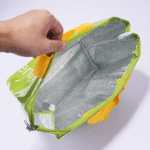
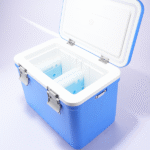
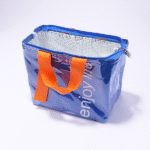
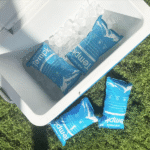
For a planned three-day shipment, durability means the packing system remains physically suitable as well as thermally effective under the intended exposure. A coolant advertised as “durable” does not guarantee that its enclosure, separators or outer container survive handling. Assess damage and temperature together for the actual configuration.
Define the component being assessed
Confirm whether the product is solid CO₂, a sealed gel or phase-change pack, or a sheet requiring preparation. Record its specification and permitted use. Solid dry ice is a consumable; a reusable enclosure has a separate serviceability question.
Describe the complete loaded container, restraints, separators and closure. The physical assessment should represent the components used in the thermal study, rather than a stronger demonstration package with different padding.
Look for damage pathways in the loaded system
| Physical risk | What to inspect |
|---|---|
| Puncture or abrasion | Contact with product edges and other components. |
| Movement | Coolant or payload shifting out of the specified positions. |
| Compression | Changes to gaps, separators and closure. |
| Cold exposure | Material compatibility with the intended conditions. |
| Moisture | Outer-package integrity and permitted containment. |
| Return handling | Condition of reusable components before another use. |
Use the manufacturer’s handling limits and an assessment suited to the actual distribution process. Do not invent a universal drop height, crush load or cycle count for every product.
Combine physical and thermal evidence
- Photograph or record the initial loading arrangement.
- Apply representative handling under a defined protocol.
- Check seams, walls, closure and component positions.
- Monitor justified product locations during the assessed exposure.
- Record damage and temperature departures together.
- Investigate changes that make the result uncertain.
If handling moves a separator or tears a coolant enclosure, a temperature trace from an undamaged package may no longer describe the shipment. Conversely, an intact-looking box cannot prove that its product stayed within limits.
Specify what happens after a defect
Define which observations require rejection, component replacement or further assessment. A reusable component should return to service only under its permitted inspection and preparation procedure. Do not repair an unidentified enclosure and assume its original evidence remains valid.
Helpful decision tools
Check the details before you choose packaging
These quick tools can help you compare route risk, sizing needs, coolant choices, and packaging details before you request a quote.
Dry Ice Calculator
Estimate dry ice needs for frozen or ultra-cold shipments before packing.
Estimate dry iceInsulation Material Drop Resistance
Review drop resistance and handling factors before choosing insulation materials.
Check resistanceCoolant & PCM Reference
Compare coolant and PCM options when a route needs added temperature support.
Compare optionsWHO: qualification of shipping containers offers a pharmaceutical container qualification framework. Use an appropriate protocol for the product and distribution system, including physical risks where relevant.
Dry-ice handling and carrier acceptance remain separate. Gas release must not be obstructed by a repair, added film or tighter closure.
Frequently asked questions
Does durable mean the coolant always lasts 72 hours?
No. Physical integrity and useful thermal duration are different results.
Can a reusable pack be returned after a small leak?
Use the exact component’s serviceability instructions. Do not assume a leaking enclosure remains fit.
Is a clean outer box enough to accept the load?
No. Review required component checks and product exposure evidence.
Connect durability to the three-day protocol
Use the 72-hour route study guide for thermal exposure design, and the return-to-service checklist for reusable-pack eligibility.