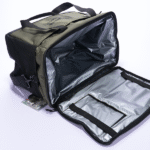
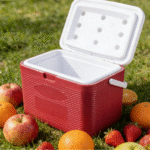
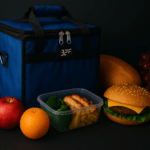
Best thermal cooler bag industrial Strategy for 2026 Buyers?
The best thermal cooler bag industrial decision in 2026 combines product education, material evidence, supplier control, and market awareness. You need a bag that protects the payload, fits the route, supports cleaning, looks professional, and can be repeated at scale. This optimized guide brings together buyer guidance, material science, compliance context, industry scenarios, and sustainability planning for industrial buyers, maintenance teams, food processors, chemical sample coordinators, and equipment distributors. Use it to build a stronger sourcing brief, compare samples fairly, and choose a thermal cooler bag industrial that works in real operations.
What should a thermal cooler bag industrial solve for your business?
A thermal cooler bag industrial should solve a specific operating problem. For plant-floor sampling, shift handovers, technician kits, maintenance routes, and field testing, that problem may be temperature drift, moisture, slow packing, driver confusion, customer complaints, or short bag life. The right bag reduces those problems without creating new ones.
Start by writing a simple use profile. Include product type, payload weight, target temperature range, route duration, outside temperature, coolant plan, handoff steps, cleaning routine, and branding needs. This profile is more useful than a generic catalog request because it tells the supplier what performance means.
Then define pass and fail conditions. A thermal cooler bag industrial passes if it protects temperature, keeps products presentable, survives handling, and fits the team workflow. It fails if it only looks good in a photo but leaks, collapses, overheats, freezes goods, or slows the route.
| Business goal | Bag requirement | How to check it | Success signal |
|---|---|---|---|
| Protect product quality | Right insulation and closure | Thermal pilot with real payload | Temperature remains in range |
| Improve delivery speed | Easy loading and clear sorting | Timed packing trial | Staff can repeat the process |
| Support brand trust | Clean print and professional handoff | Customer-facing sample review | Presentation looks consistent |
| Control cost | Durable design and right size | Cost per use estimate | Fewer replacements and complaints |
| Support sustainability | Reuse, right-sizing, or clearer materials | Lifecycle comparison | Lower waste without higher failure |
How do you choose thermal cooler bag industrial materials wisely?
Material choice should follow risk. If the route is wet, focus on liner and seam management. If the route is hot, focus on insulation and closure. If the route involves repeat use, focus on reinforcement and cleaning. If the product is sensitive, focus on pack-out testing and temperature evidence.
Closed-cell foam, reflective film, woven or nonwoven outer layers, leak-resistant liners, and reinforced stitching can all be useful in a thermal cooler bag industrial when they are chosen for a reason. Do not buy insulation by thickness alone. Do not buy waterproof claims without checking seams. Do not buy a printed bag without rubbing, cleaning, and folding the sample.
The best material stack balances thermal hold, payload space, durability, cleaning, cost, and brand appearance. A small improvement in closure design may outperform a large increase in insulation thickness. A cleaner liner may save more money than a cheaper outer fabric if it extends service life.
Material decision matrix for thermal cooler bag industrial
| Route condition | Recommended focus | Sample question | Reason |
|---|---|---|---|
| Hot weather | Insulation plus tight closure | How was warm exposure tested? | Heat enters through walls and openings |
| Wet or frozen goods | Waterproof liner and seam design | Where can liquid escape or collect? | Moisture causes odor and damage |
| High reuse | Reinforced handles and cleanable liner | How many cycles are expected? | Durability controls cost per use |
| Brand program | Print durability and shape retention | Will the logo scuff or distort? | Presentation affects trust |
| Sensitive payloads | Qualified pack-out and data logging | Where were loggers placed? | Evidence reduces excursion risk |
What testing should a thermal cooler bag industrial program include?
Testing should be simple enough to run and strong enough to guide a decision. Start with a bench test to compare designs. Then run a route pilot with real staff. For parcel or shipping stress, consider ISTA 3A or ASTM D4169 style thinking. For refrigerated services, ISO 23412 language can help structure responsibilities and communication.
Use standards as a practical language for risk, not as decoration. ISO 23412 defines requirements for indirect temperature-controlled refrigerated delivery services for food parcels in land transport, while IATA Temperature Control Regulations and CEIV Pharma guide pharmaceutical air cargo. ISTA 3A helps teams test parcel delivery stress, and ASTM D4169 is often used to evaluate shipping units against distribution hazards in a laboratory.
Thermal tests should include product mass, coolant type, loading temperature, ambient profile, logger location, route time, and opening frequency. Durability tests should include load carrying, closure cycling, stacking, cleaning, and abrasion. A thermal cooler bag industrial that passes both thermal and usability checks is far safer to scale.
| Test type | What it reveals | Minimum practical method | When to repeat |
|---|---|---|---|
| Thermal hold | Temperature protection over time | Logger test with real payload and coolant | New product, route, or coolant |
| Closure cycling | Air leak and wear risk | Repeated opening under normal use | New zipper, flap, or liner |
| Load handling | Handle and seam strength | Carry at expected weight | New size or heavier payload |
| Cleaning test | Hygiene and service life | Use normal cleaning method | New liner or reusable program |
| Carton and shipping | Distribution damage risk | Stack, drop, and vibration review | New carton or export lane |
How does thermal cooler bag industrial fit compliance and standards?
Compliance begins with intended use. A food delivery thermal cooler bag industrial needs hygiene, temperature discipline, and cleaning control. A biotech or healthcare bag may need qualification records, temperature logs, and documented pack-out steps. An export program may need carton marks, material declarations, and destination-specific review.
IATA TCR and CEIV Pharma are important references when pharmaceuticals move by air. ISO 23412 is relevant for indirect refrigerated delivery services in land transport for refrigerated parcels, especially foods. ISTA and ASTM references help buyers discuss distribution hazards. These standards do not replace local law, but they give teams a shared vocabulary.
For global B2B distribution, build compliance into the sourcing brief. Ask where the bag will be used, who will clean it, what product it touches, how it is labeled, and whether it crosses borders. Your supplier should support evidence, but your team should define the final operating procedure.
Compliance-ready sourcing checklist
Define the exact product category and temperature range.
Confirm whether the bag touches food, medicine, samples, or only outer packaging.
Request material and production details that match your risk level.
Create pack-out instructions that normal staff can follow.
Record pilot data before approving repeated shipments.
Review market-specific labeling, import, and waste rules when products cross borders.
What does sustainability mean for thermal cooler bag industrial in 2026?
In 2026, sustainability is no longer only a brand message. The EU Packaging and Packaging Waste Regulation generally applies from August 12, 2026 and pushes packaging toward recyclable design by 2030, so buyers increasingly ask for reusable formats, clear material choices, and less single-use waste.
A sustainable thermal cooler bag industrial should reduce waste without increasing product loss. That means the bag must protect temperature first. Then evaluate reuse cycles, material clarity, carton size, coolant quantity, cleaning resources, repairability, and end-of-life options. Sustainability is strongest when performance data supports the claim.
Reusable designs are attractive when routes repeat and returns are practical. Single-use or limited-use designs may still be needed for some long-distance or one-way shipments. The right answer depends on service life, failure rate, labor, cleaning, and customer behavior.
| Sustainability path | Works best when | Risk to manage | Metric to track |
|---|---|---|---|
| Reuse | Routes repeat and bags return | Cleaning and loss rate | Cycles per bag |
| Right-sizing | Payload is predictable | Too little buffer space | Carton volume and coolant use |
| Material clarity | Customers or teams handle disposal | Confusing claims | Material specification and label clarity |
| Durability | High handling frequency | Higher first cost | Cost per use |
| Waste prevention | Product value is high | Under-tested packaging | Spoilage or complaint rate |
How should you compare thermal cooler bag industrial suppliers?
Compare suppliers with the same brief. Give each supplier the same dimensions, payload, route time, temperature target, artwork, quantity, packaging requirements, and evidence expectations. If one supplier receives a vague request and another receives details, the quotes will not be comparable.
Look beyond the sample. Ask about retained approval samples, incoming material checks, print controls, seam inspection, final random inspection, carton packing, and reorder stability. A thermal cooler bag industrial program succeeds when production repeats the approved design.
For custom production, wholesale supply, and repeat replenishment, communication is part of quality. A supplier who asks specific questions may seem slower at first, but those questions prevent mistakes. A supplier who immediately says yes to every request may be hiding risk.
Helpful decision tools
Check the details before you choose packaging
These quick tools can help you compare route risk, sizing needs, coolant choices, and packaging details before you request a quote.
Box Liner & Pallet Cover Sizing
Check box liner and pallet cover sizing logic for insulated packaging projects.
Estimate sizingIce Pack Calculator
Estimate gel ice pack quantity for chilled shipments and practical route planning.
Estimate ice packsInsulation Material Drop Resistance
Review drop resistance and handling factors before choosing insulation materials.
Check resistance| Supplier factor | Why it matters | Strong signal | Weak signal |
|---|---|---|---|
| Technical questions | Shows understanding | Asks about route, payload, and cleaning | Only asks quantity |
| Sample control | Protects repeat orders | Keeps golden sample and written spec | No clear approval record |
| Testing support | Reduces risk | Offers pilot or lab-style data | Only makes hour claims |
| Production QC | Protects scale | Defines inspection points | Vague final checks |
| After-sales support | Helps long programs | Handles feedback and revisions | Disappears after shipment |
Decision tool: build a thermal cooler bag industrial sourcing brief
Use this brief before contacting a supplier. It reduces back-and-forth, improves sample relevance, and makes quotes easier to compare. It also helps internal teams agree on what the thermal cooler bag industrial must accomplish.
Product and payload: list item types, dimensions, weights, and sensitivity.
Temperature goal: define chilled, frozen, hot, or controlled room temperature range.
Route profile: include time, ambient temperature, door openings, and transport mode.
Handling profile: describe packing, carrying, stacking, return, and storage.
Cleaning plan: define who cleans the bag and how often.
Branding: include logo size, print method, color, and customer-facing instructions.
Testing: define pilot duration, logger locations, pass-fail range, and review date.
Commercial terms: include quantity, delivery schedule, carton requirements, and reorder plan.
When a supplier responds, score each thermal cooler bag industrial sample on thermal fit, usability, durability, cleaning, supplier control, and sustainability. A sample that scores well across all categories is more valuable than one feature that looks impressive but does not support the route.
2026 trends shaping thermal cooler bag industrial programs
In 2026, buyers are moving toward evidence-based sourcing. They want bags that protect product quality, fit route operations, reduce waste, and support customer experience. This is especially clear in grocery, beverages, biotech, healthcare, and regional distribution, where small failures can create visible complaints or costly product loss.
More teams also evaluate total cost per use. A higher-priced thermal cooler bag industrial may be cheaper if it lasts longer, reduces complaints, lowers coolant use, or prevents replacements. Procurement, operations, sustainability, and brand teams should review the same pilot data before final approval.
Latest developments at a glance
Cold chain packaging demand is rising across healthcare, food, beverage, and e-commerce.
Reusable systems are gaining attention where routes repeat and cleaning can be controlled.
Buyers increasingly ask for test data, not only catalog claims.
Packaging rules and brand standards are pushing clearer material and end-of-life decisions.
Temperature loggers and simple monitoring workflows are becoming more common in pilot programs.
Frequently asked questions
What is the first step in buying a thermal cooler bag industrial?
Write the route profile before choosing a product. Include payload, temperature range, time, climate, coolant, cleaning, quantity, and branding. This makes the thermal cooler bag industrial sourcing process more accurate.
How many thermal cooler bag industrial samples should I test?
Test at least two designs when risk or volume is meaningful. Compare a baseline option and a higher-performance option under the same route conditions so the decision is based on evidence.
Can a thermal cooler bag industrial replace refrigerated transport?
Usually no. It can add a passive temperature buffer, support last-mile delivery, or protect small payloads, but it should be tested for the specific route and product. Active refrigeration may still be needed for long or high-risk lanes.
How do I avoid overpaying for a thermal cooler bag industrial?
Avoid buying features you do not need, but do not underbuy core performance. Calculate cost per use, failure cost, cleaning labor, replacement rate, and customer complaint risk.
What makes a thermal cooler bag industrial suitable for custom branding?
A good branded bag has stable shape, durable print, clean seams, and a surface that stays presentable after use. Branding should not weaken insulation, closure, or cleaning.
How does Tempk help with thermal cooler bag industrial projects?
Tempk helps define the use case, suggest material stacks, create samples, support pilot testing, and control production details so the final bag matches the approved plan.
Summary and recommendation
A thermal cooler bag industrial should be selected through a practical process: define the route, choose materials for the real risk, test the pack-out, review compliance needs, plan sustainability honestly, and compare suppliers with the same brief. This gives you a bag that protects product quality and supports the team using it.
Do not approve bulk production until the sample performs in your pilot. The best thermal cooler bag industrial is not the most expensive or the most heavily promoted. It is the one that keeps your product, team, customer, and budget aligned.
About Tempk
Tempk provides cold chain packaging solutions for food, beverage, healthcare, grocery, and industrial logistics. We support thermal cooler bag industrial projects from route analysis and material selection to custom printing, sample review, testing support, and production control. Our focus is practical protection that can be repeated at scale.
Prepare your payload details, target temperature range, route time, climate exposure, quantity, and branding goals. With those details, Tempk can help create a sample plan that is easier to test and approve.