customizable EPP box with a premium price: How to Choose the Right Box Without Overclaiming Performance
A customizable EPP box with a premium price is worth considering when you need reusable insulation, impact protection, and practical handling in a temperature-sensitive workflow. It should not be treated as a magic answer to every cold-chain problem. The box, coolant, payload, closure, route exposure, and documentation process all work together. For a serious buyer, the goal is to define the operating conditions first, then ask whether the EPP box can support them with evidence, samples, and consistent production.
The practical answer: choose it when your shipment or delivery program benefits from reusable insulation, molded impact resistance, and easier manual handling. Do not choose it only because the product name sounds attractive. Confirm the payload, required temperature range, route duration, coolant plan, cleaning routine, and supplier support before placing a bulk order.
The decision frame: material, route, payload, and proof
A customizable EPP box with a premium price should be evaluated against the full working lane, not only against the moment of delivery. Before shipment, the box may be staged in a warehouse. During transport, it may sit in a van, truck, aircraft acceptance area, restaurant rack, or outdoor event space. After arrival, it may wait again before the payload is unpacked. Each waiting point matters.
If the shipment involves pharmaceuticals or other regulated products, the route review becomes even stricter. Product temperature limits must be confirmed, and quality teams may expect documented handling procedures, monitoring, and evidence that the chosen packaging system was reviewed for the intended use. For food and takeaway, the regulatory language may be different, but hygiene and product quality still depend on a disciplined process.
The safest buying habit is to write down the lane assumptions before asking for a quote. State the payload, desired use, handling frequency, approximate route profile, cleaning process, and whether the box is part of a temperature-controlled system. This gives the supplier a chance to recommend responsibly instead of guessing.
Where an EPP box helps and where it is not enough
EPP is attractive in transport packaging because it combines several traits that are difficult to balance in daily logistics. It is light enough for hand carry, tough enough for repeated handling, and insulating enough to support a passive packout. In a customizable EPP box with a premium price, those traits are most valuable when workers need to move goods often rather than treat the box as a single-use shipping shell.
The word insulated should be read carefully. Insulation slows heat movement; it does not automatically maintain a chosen temperature. If your goods are sensitive to heat or freezing, the customizable EPP box with a premium price should be paired with the correct refrigerant or PCM, a clear packing layout, and a receiving process that checks product condition. This is especially important for healthcare, seafood, dairy, prepared meals, or other high-risk loads.
Separate tooling, structure, insulation, branding, handles, lid design, sampling, and testing support when comparing quotes. This simple question separates a real packaging conversation from a surface-level sales pitch. A supplier that can discuss material limits and operating conditions is usually more useful than one that only repeats broad claims.
Verification points before ordering
| Buying decision | What to check | Why it affects the result |
|---|---|---|
| Route fit | Duration, waiting points, vehicle conditions, and handovers | Insulation performance is affected by how the box is handled in real movement. |
| Payload fit | Shape, weight, fragility, and space left after coolant | A box that is too large or too tight can create packing errors. |
| Closure and lid discipline | Lid seating, seal pressure, latch behavior, and user habit | Heat gain often happens through gaps, repeated opening, or poor closure. |
| Reuse program | Cleaning, inspection, return storage, and damage control | Reusable value depends on operational discipline, not only material recyclability. |
| Supplier evidence | Samples, datasheets, test basis, and production consistency | Evidence helps prevent unsupported performance or quality claims. |
A customizable EPP box with a premium price is a practical container, but the decision should be made as a system decision. The table helps separate visible features from the checks that actually affect field performance. It also gives procurement, operations, and quality teams a common language for reviewing samples.
Using the box inside a real packout
For pharmaceutical shipping, treat the customizable EPP box with a premium price as one component of a passive temperature-controlled packaging system. Many refrigerated healthcare products are planned around defined temperature ranges such as 2°C to 8°C, but the exact requirement must come from the product owner, label, quality team, or approved shipping procedure. Some products require different conditions, and some are sensitive to freezing as well as warming.
Air cargo shipments booked as time and temperature sensitive healthcare cargo may require specific labeling and documentation practices. The important buying point is not to memorize every rule from a packaging article. It is to confirm which rules apply to your route, product category, carrier, and destination market, then choose packaging that can support those requirements.
A responsible supplier should avoid saying that an EPP box is compliant for every medicine. The better answer is to discuss packout, coolant, monitoring, qualification evidence, and how your team will retrieve and review temperature records after delivery. In pharma, the record of how the shipment was handled can be as important as the container itself.
Procurement notes for sample-to-production control
Wholesale and bulk sourcing changes the risk profile. With one sample, a buyer can tolerate a slow review. With a recurring order, every small mismatch becomes expensive: lids that do not seat smoothly, dimensions that vary, surfaces that are harder to clean than expected, handles that interfere with stacking, or cartons that allow damage before the boxes even enter service.
Helpful decision tools
Check the details before you choose packaging
These quick tools can help you compare route risk, sizing needs, coolant choices, and packaging details before you request a quote.
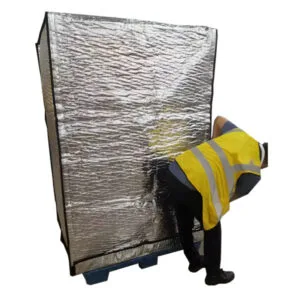
Box Liner & Pallet Cover Sizing
Check box liner and pallet cover sizing logic for insulated packaging projects.
Estimate sizingDry Ice Calculator
Estimate dry ice needs for frozen or ultra-cold shipments before packing.
Estimate dry iceRoute Risk Checker
Review lane conditions before selecting packaging for real operating requirements.
Check route riskBefore ordering in volume, ask the supplier how the sample is approved, how production changes are controlled, and how finished goods are inspected. If customization is involved, separate tooling decisions from branding decisions. A logo change is different from changing a handle, lid, wall shape, or folding joint. Structural changes can affect packing behavior and should be reviewed with more care.
Separate tooling, structure, insulation, branding, handles, lid design, sampling, and testing support when comparing quotes. A serious procurement file should include not only the quote and photo, but also the agreed dimensions, material description, packaging method, sample notes, expected use case, and the person responsible for approving changes.
Risk notes buyers should not skip
Several mistakes appear again and again when buyers evaluate a customizable EPP box with a premium price. Most are not technical failures at first; they are assumption failures. The box is expected to solve problems that should have been defined earlier by route planning, packout review, or supplier qualification.
- Do not assume that the phrase customizable EPP box with a premium price proves the box is qualified for your exact shipment. Qualification depends on application, route, packout, and evidence.
- Do not compare price without comparing usable volume. Coolant, documents, dividers, and payload protection can turn a large-looking box into a tight packout.
- Do not ignore closure behavior. Poor lid seating, repeated opening, or dirty sealing surfaces can reduce the practical value of insulation.
- Do not approve a custom design from drawings alone. Handles, lids, corners, and fold lines should be checked with loaded samples where possible.
- Do not let sustainability claims replace operational planning. Reuse, cleaning, return logistics, and end-of-life sorting determine whether the greener idea works in practice.
Typical scenario: correcting the specification before bulk purchase
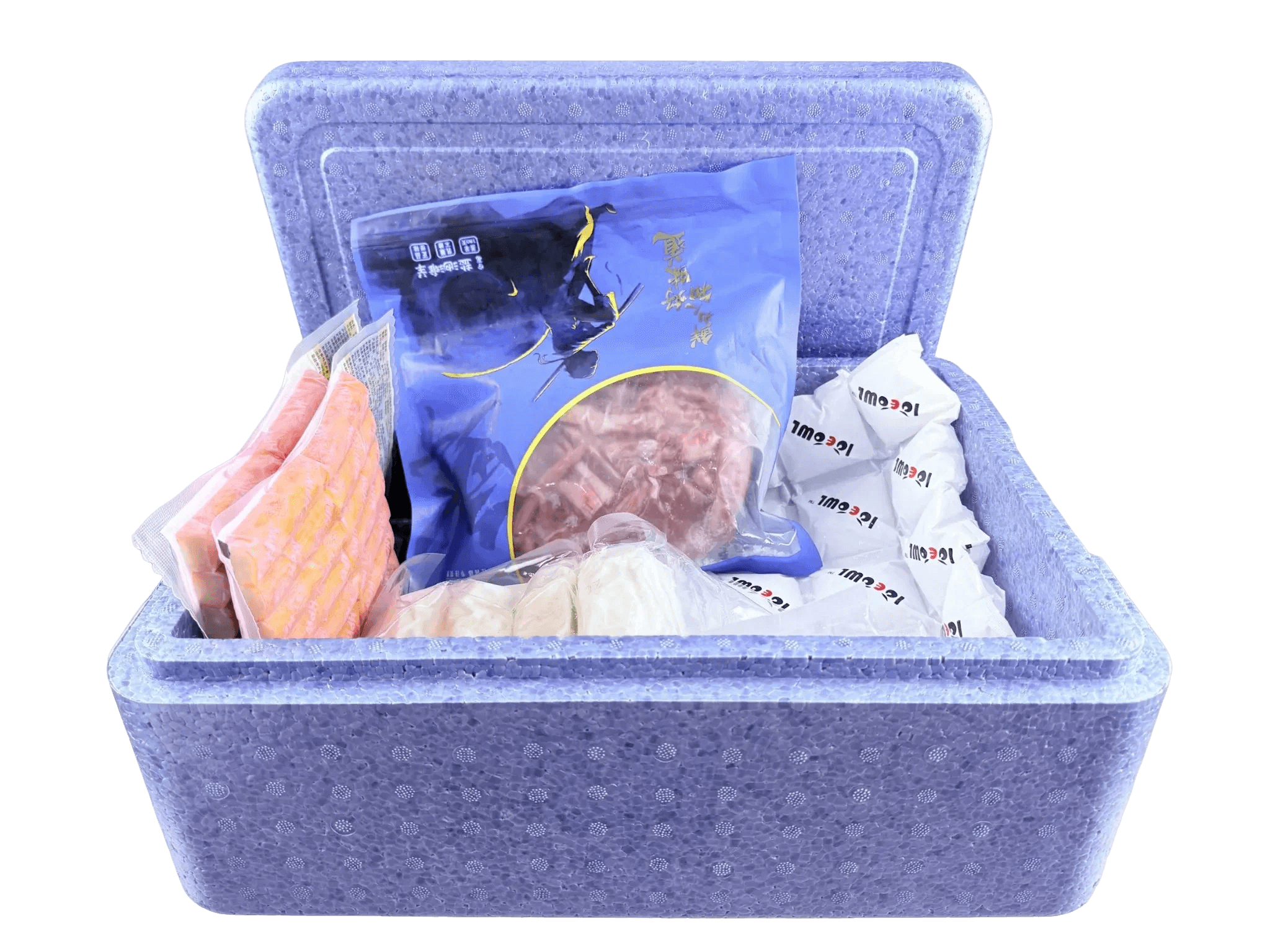
Imagine a buyer preparing to use a customizable EPP box with a premium price for branded delivery boxes, medical coolers, food logistics, outdoor products, and reusable transport programs. The first sample looks strong, and the empty box is easy to carry. During a trial, the team discovers that once coolant and dividers are added, the actual payload space is smaller than expected. A second issue appears during cleaning: food residue or label adhesive collects around a handle recess. The box is not a bad product, but the first specification missed the working details. The buyer updates the packout, asks the supplier to confirm handle and surface options, and records a simple receiving checklist before placing a larger order. This kind of trial is more useful than relying on a headline claim because it shows how the box behaves inside the buyer’s real process.
The lesson is not that every buyer will face the same issue. The lesson is that a reusable insulated container should be approved through a working trial, not only by appearance, price, or a broad material claim. When the trial captures real handling, the specification becomes more useful for both the buyer and the supplier.
Operational details that usually decide long-term value
Long-term value depends on the rhythm of use. A customizable EPP box with a premium price may perform well during a controlled trial but struggle when workers are rushed, vehicles are crowded, or returned boxes are stacked without inspection. Define who owns the box after delivery, where it is stored, who cleans it, who checks damage, and how missing lids or broken handles are recorded. These ordinary controls often decide whether reusable packaging becomes an asset or a source of confusion.
Labeling deserves more attention than many buyers give it. Boxes used in food, medical, or delivery programs may need product identifiers, route codes, return instructions, cleaning status marks, or customer-facing branding. Labels should be readable without blocking closure surfaces or creating residue that makes cleaning harder. If the box is customized, plan the label area together with the handle and stacking design rather than adding it at the end.
Storage is another hidden cost. Rigid boxes need room; collapsible, foldable, or nestable systems need confirmation that the space-saving feature does not weaken the working structure. For a bulk order, warehouse teams should be part of the review. They can tell you whether the boxes are easy to count, stack, pick, return, and separate when damaged.
FAQ
Is a customizable EPP box with a premium price enough for temperature-controlled shipping?
Not by itself. A customizable EPP box with a premium price can provide insulation and impact protection, but temperature-controlled shipping also depends on the product requirement, coolant or PCM, packout layout, route exposure, handling time, and monitoring or documentation where required. Treat the box as one component in a system, especially for pharmaceuticals, seafood, dairy, or other sensitive goods.
What is the most important specification to compare?
There is no single specification that decides the purchase. Usable payload space, closure reliability, carrying comfort, stackability, cleaning fit, and packout compatibility often matter more than a single headline dimension. If the box will support cold-chain work, ask how it is used with coolant and how performance is verified for the intended lane.
How should I test a sample before approval?
Load it with the real payload or a close substitute, add the expected coolant if needed, close the lid as workers would, carry it, stack it, clean it, and inspect it after use. The goal is to see whether the box fits the workflow, not only whether it looks correct when empty.
Is EPP recyclable and reusable?
EPP is widely described as recyclable and is often used in reusable molded packaging. The practical sustainability result still depends on your return loop, cleaning process, damage rate, local recycling route, and retirement plan. Buyers should verify how used boxes will be collected, sorted, and handled at end of life.
When should I avoid this type of box?
Avoid it when your team cannot define the route, product requirement, cleaning routine, or payload fit. Also avoid treating a box as qualified cold-chain packaging without packout evidence. If the shipment is high-value, regulated, or highly temperature-sensitive, involve quality, logistics, and packaging teams before approval.
Conclusion
The right customizable EPP box with a premium price is chosen by matching material advantages to operating reality. EPP can support low weight, reusable handling, insulation, and impact protection, but those advantages only become useful when the box fits the route, payload, coolant plan, cleaning process, and supplier controls. Before buying, define the use case, test a sample, verify any performance claim, and make sure the approved design can be repeated in production.